
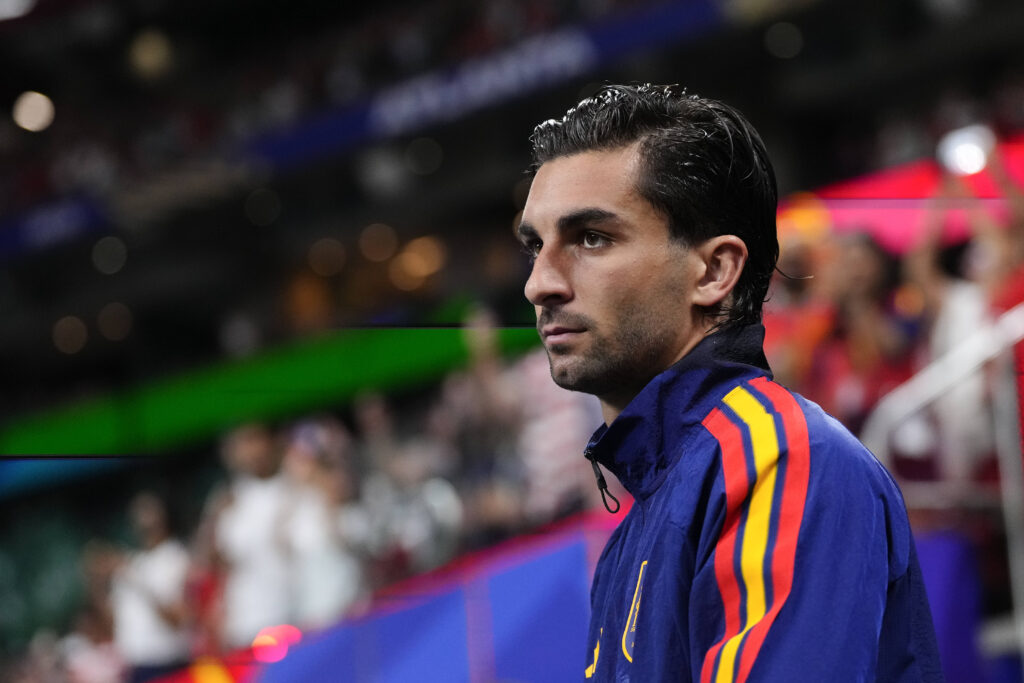
Paris Saint‑Germain are closing in on Ferran Torres, a forward good enough to start for most elite clubs yet destined to be the super‑sub powering their European dynasty.
Ferran Torres to Paris Saint‑Germain is not the kind of deal that grabs headlines like a nine‑figure Galactico signing, but it has the potential to quietly reshape two dressing rooms at once. For PSG, he profiles as the ideal luxury squad piece; for Barcelona, he becomes the useful sacrifice in a summer built around funding a new No 9.
A stacked PSG attack that still has gaps
On the surface, PSG hardly look like a club in desperate need of another forward. They have just lifted back‑to‑back UEFA Champions League titles with an attack built around the dynamism of Dembele, the versatility of Desire Doue and the 1v1 threat of Khvicha Kvaratskhelia.
Yet scratch beyond the medals and you see fault lines that explain why Luis Enrique has pushed so hard for Ferran. Bradley Barcola and Ibrahim Mbaye are both exploring exits in search of greater responsibility, which leaves PSG short of trusted rotation pieces out wide and through the middle.
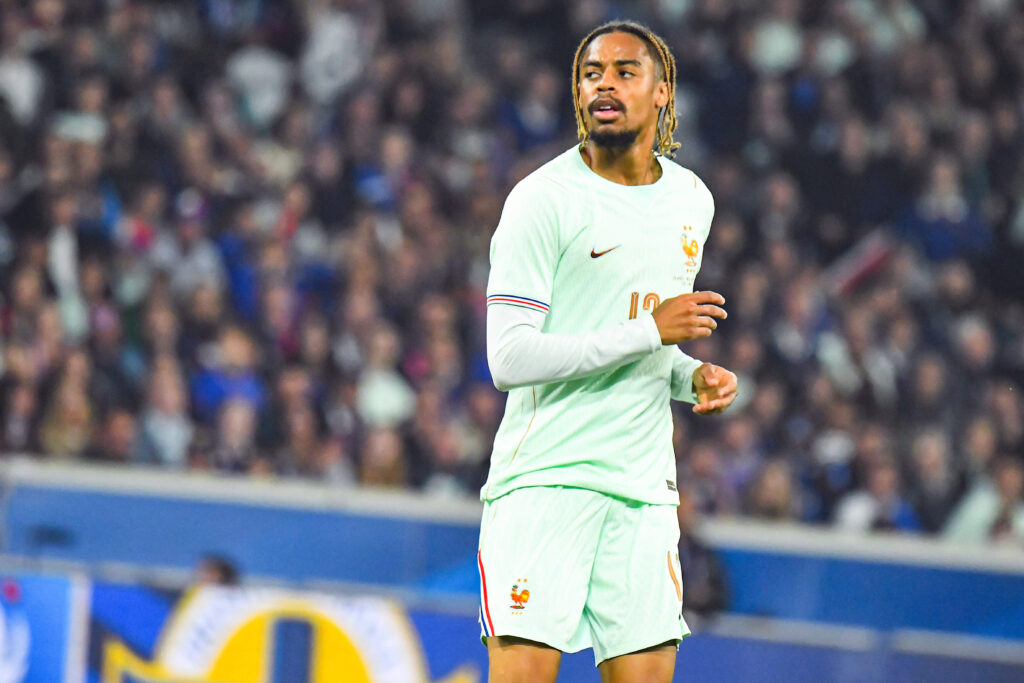
Enrique’s football demands constant movement, pressing from the front and wingers that can step inside to become extra forwards or midfielders depending on the phase. Torres, who produced 21 goals and three assists in 49 appearances for Barcelona last season despite not always being first choice, fits that profile better than a pure touchline winger.
Tactical fit under Luis Enrique
At Barcelona, Ferran Torres has been used across the front line. But he saw most minutes as a centre-forward, often acting as a connector rather than a traditional penalty‑box predator. His movement is based on clever starting positions between centre‑back and full‑back, curving runs into the half‑spaces, and a willingness to press aggressively from the front, all pillars of Enrique’s approach in Paris.
Crucially, Torres is comfortable starting from the left, right or through the middle, which means he can cover for Ousmane Dembele centrally, support Khvicha Kvaratskhelia on the left or act as a false nine when Enrique wants more fluidity in attack.
With Dembele’s injury record, having a forward who can replicate some of the pressing intensity and off‑ball discipline, even if not the same dribbling chaos, is invaluable over a 60‑game season. He may not walk into the XI, but as a manager, Enrique values repeatable movements and tactical obedience, and Ferran offers exactly that.
The value of an elite “super‑sub”
If there is one role Torres has quietly mastered, it is that of the game‑changing substitute. Last season at Barcelona he built a reputation for impacting matches off the bench, whether by stretching tired backlines with direct runs or by arriving late into the box to finish moves that others started.
For a PSG side that often finds itself trying to unlock deep blocks in the last half‑hour, that kind of profile is more important than another ball‑to‑feet creator. In Paris, he would essentially become the backup star, not the face of the project, but the player who keeps standards high when Enrique rotates and ensures there is no dramatic drop in intensity when a starter is injured or rested.
His understanding with the coach from their time together with Spain only strengthens the logic: Enrique knows his strengths, Ferran understands the demands, and that shortens the usual bedding‑in period for a big‑club signing.
Why Barcelona are prepared to cash in
From Barcelona’s perspective, letting go of a forward who just delivered 24 goal contributions in all competitions might appear counter‑intuitive at first glance. But the context of their summer changes the picture.
With the club deep into a rebuild, they have already moved for Anthony Gordon and agreed a deal for Karim Adeyemi, effectively refreshing their wide options with younger, high‑ceiling wingers.


The priority now is to find a long‑term successor to Robert Lewandowski, whose departure has left a clear vacancy for a leading centre‑forward. Hansi Flick is understood to favour a more proven out‑and‑out goalscorer to spearhead his attack, rather than a multifunctional forward like Ferran who drifts between positions.
In that context, Torres turns from useful squad player into one of the few saleable assets capable of generating a sizeable fee without ripping out the spine of the team.
Financial logic and sporting risk for Barcelona
Barcelona have reportedly set a firm asking price in the region of €50 million, knowing PSG have both the means and the motivation to pay for a player who is entering the final stretch of his contract.
With Torres open to the move and renewal talks stalling, the club face a classic “renew or sell” scenario; holding on for another season risks losing leverage and reducing a potential transfer windfall.
That money is vital if Barcelona are to stay active in the market while working around financial restrictions. Funds from Torres’s sale could be channelled directly into a marquee No 9, the kind of signing that defines a new era, while Gordon and Adeyemi cover the wide areas alongside existing options.
There is sporting risk in losing a reliable, tactically intelligent forward, but the Blaugrana are effectively betting that a specialist striker plus their new wingers will outweigh what Torres offered as a flexible alternative.
A transfer that suits all parties; on paper
Strip this deal back to its basics, and it is the sort of move modern superclubs increasingly rely on. PSG add a high‑level, tactically plugged‑in forward who can keep their European machine humming even as the cast of supporting attackers shifts. Barcelona, meanwhile, convert a versatile but non‑undroppable attacker into the financial breathing space required to address the most important position on the pitch.
If it all goes through as expected, Ferran Torres will swap Camp Nou for Parc des Princes not as a failed project, but as a player whose usefulness made him both desirable to Paris and valuable to Barcelona’s rebuild.