
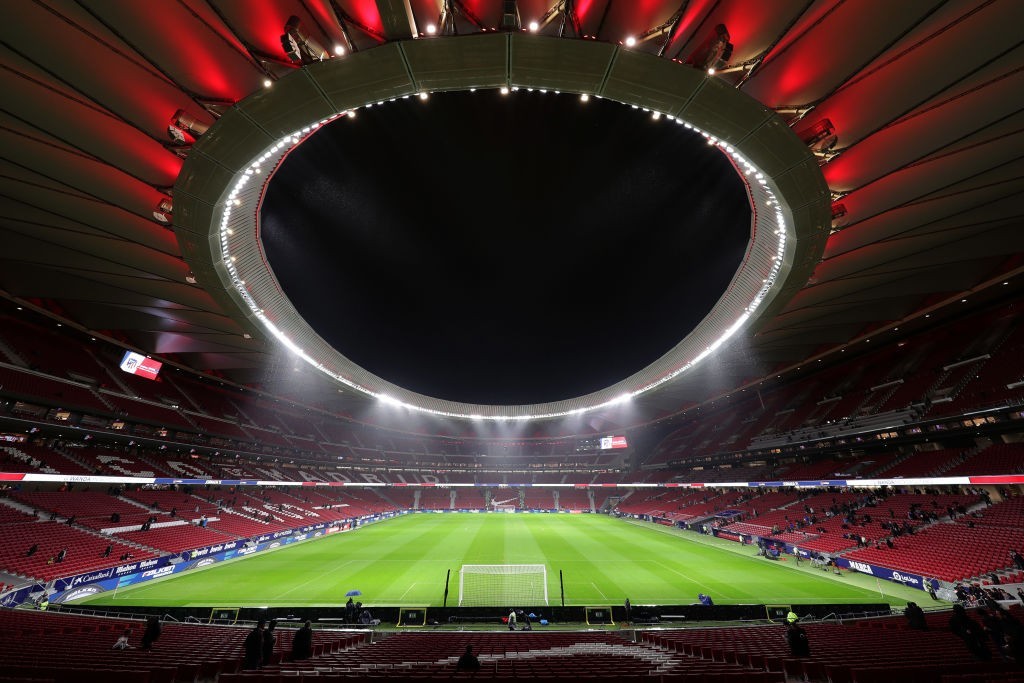
Atletico Madrid vs Manchester United at Estadio Metropolitano on Tuesday will feature two teams on heavily contrasting runs of form.
Atletico Madrid’s late 2-1 win over Deportivo Alaves set the tone for this Champions League meeting, with Cristian Romer’’s header deciding a match that also featured a red card for the visitors. Manchester United, meanwhile, drew 1-1 at home with Tottenham Hotspur after Bryan Mbeumo’s opener was cancelled out in stoppage time.
The contrast is clear. Atletico arrive with momentum and a settled project, while United are trying to stop a difficult domestic run from becoming a European problem. The result matters to both clubs, but not in exactly the same way.
Los Rojiblancos have the stronger platform and the chance to turn home advantage into another step towards their European ambition. Manchester United need a response under pressure, yet the available stakes do not make this a must-win contest. A draw would still leave both sides with something to build on, although it would feel much more useful to United than to a home side expected to impose itself.
For Atletico, the victory over Alaves reinforced their position near the top of the domestic race and extended an unbeaten start after the opening-day defeat by Liverpool. They bring belief, a settled manager in Diego Simeone and the expectation that their stronger recent level should carry into Europe.
The cost of failing to win is not elimination or a confirmed change in their campaign, but it would leave a favourable fixture feeling underused. Their selection therefore looks designed to take the initiative rather than protect a point. Meanwhile, Manchester United’s draw with Tottenham was more damaging because it followed a run that has left morale low and Michael Carrick under pressure, though he is not at risk of a sack yet.
The visitors have still shown enough attacking quality to make this dangerous, but their recent results have not offered the same foundation as Atletico’s. Carrick’s side need to show that the controlled approach can survive against a stronger opponent; if it cannot, the pressure around the manager will increase even if the competition remains open.
Team News: The two elevens and the jobs they must perform
Nobody is listed as missing for Atlético, and the home side should line up in the 4-4-2 that has been their leading recent choice. Jan Oblak remains in goal behind a back four of Alejandro Grimaldo, Dávid Hancko, Cristian Romero and Marc Pubill. Romero’s defensive authority is important in a pairing that must deal with Matheus Cunha’s movement, while Hancko is expected to continue after starting the last match in the supplied squad record.
The midfield gives the shape its balance. Álex Baena should start on the left, where his creative responsibility is supported by Grimaldo’s attacking contribution; Baena has one key pass from his only start, while Grimaldo has produced two key passes in thirty-one minutes. Johnny Cardoso is expected to play alongside Morten Hjulmand, with Giuliano Simeone on the right. Cardoso has not yet appeared this season, so his role is less about carrying recent output and more about protecting the centre when Atlético’s wide players advance.
Atlético’s front two should be Julián Alvarez and Kang-in Lee. Alvarez created one big chance and supplied one assist from three shots on target in his only start, while Kang-in Lee has already scored and registered four shots on target against Osasuna. Lee can move towards the centre from the right, giving the home side a way to crowd the spaces around United’s midfield without abandoning the two-forward structure.
United will be without Manuel Ugarte because of a cruciate ligament tear, while Benjamin Sesko is out with a calf injury after scoring five goals in his last seven Champions League starts. That removes both a midfield option and an established central finishing threat. Matheus Cunha therefore carries more of the attacking burden, while Carlos Baleba should make his full debut beside Andrey Santos in the double pivot. The visitors are expected to keep the 4-2-3-1 they have used in each of their last five matches, with Senne Lammens behind Diogo Dalot, Lisandro Martínez, Harry Maguire and Leny Jean-Luc Yoro.
Marcus Rashford should occupy the left attacking role and Bryan Mbeumo the right, with Bruno Fernandes operating centrally behind Cunha. Fernandes has four key passes and one big chance created from his only start, while Mbeumo has added three key passes and an assist. Cunha has scored once from four shots on target and should provide the mobility United need if Atlético’s centre-backs step forward. Andrey Santos has contributed two key passes and one assist from his only start, but his defensive positioning will be tested immediately by Atlético’s two forwards.
Tactics: Grimaldo and Mbeumo decide how open this becomes
Atletico Madrid’s 4-4-2 setup is intended to carry the game forward with two forwards occupying the centre-backs and wide midfielders helping the full-backs advance. It gives the hosts a simple route to pressure: keep Manchester United’s double pivot occupied, pin the first line of defence and use the wide players to stretch the visitors before crossing or combining around the box.
The risk is that the full-backs may be caught high if Manchester United escape the first pressure. Speaking of the visitors, their system is built for a more controlled attempt to win. The double pivot gives Bruno Fernandes room to receive between the lines, while Marcus Rashford, Bryan Mbeumo, and Matheus Cunha can attack the spaces around Atletico’s midfield quartet.
The visitors should not need to chase from the first whistle, but they must still offer enough threat to stop Atletico compressing the pitch around Fernandes. The shape can protect them, although only if the two holding midfielders remain close enough to the centre-backs.
The main system-versus-system question is whether Atletico Madrid can keep their front two and wide midfielders connected. If they do, Manchester United’s central cover may spend too much time defending and too little time building.
If Michael Carrick’s men play through that pressure, Fernandes becomes the link between the pivot and the front three, and Atletico’s 4-4-2 may be forced to retreat. That is why the home side’s attacking ambition is also a defensive test. The decisive duel is Alejandro Grimaldo against Bryan Mbeumo.
Grimaldo has to provide Atletico’s width without leaving space behind him, while Mbeumo is United’s clearest right-sided outlet and arrives with the stronger current attacking signal. If the Atletico Madrid full-back controls that exchange, the home side can keep the home side’s structure high and make United defend for long spells.
If Mbeumo wins it, United can attack the space left by the advancing full-back and preserve the protection of their chosen shape. There is a second central battle behind that duel. Johnny Cardoso must screen Bruno Fernandes, who will look to receive between Atletico Madrid’s midfield and defence.
If Cardoso keeps Fernandes facing away from goal, Atletico’s pressure can remain compact. If the Manchester United skipper escapes, the Red Devils can connect Cunha with the wide attackers and force Atlético’s midfield to turn. The consequence is larger than either player; it decides whether the match is played in United’s half or whether the visitors can make their controlled plan meaningful.
Prediction: Atletico have the stronger case, but not a free pass
We predict an Atletico Madrid win with medium confidence. The hosts have the more convincing recent attacking and defensive platform. They average 2.18 expected goals for and 0.73 against over the past five matches, compared with Manchester United’s 1.56 for and 1.14 against.
That difference supports the home call, especially when combined with Los Rojiblancos’ settled environment and United’s need to repair confidence under pressure. The strongest argument against Atletico Madrid is that Mancheester United may keep the 4-2-3-1 intact for long enough to make the game uncomfortable.
If Carlos Baleba and Andrey Santos protect the centre, Bruno Fernandes escapes Johnny Cardoso’s screen and Bryan Mbeumo attacks the space behind Alejandro Grimaldo, the visitors can create the late threat their shape is designed to preserve. Atletico would then have to break down a protected block rather than simply overwhelm an unsettled opponent.
The likely scoreline range is 2-1, 1-0 or 2-0 to Atletico Madrid. Manchester United have enough individual quality to score, but the hosts are likelier to control the important phases and create the greater volume of pressure.
Simeone’s back-three switch gives Atletico a second route
The late tactical lever belongs to Atletico Madrid. If Manchester United’s front line begins to threaten the space behind the full-backs, Diego Simeone can move to a 3-4-2-1 and add another centre-back without abandoning attacking support around the forwards. That change would allow the hosts to protect the lead or stabilise the match while still keeping enough players forward to punish United when the visitors commit numbers.