
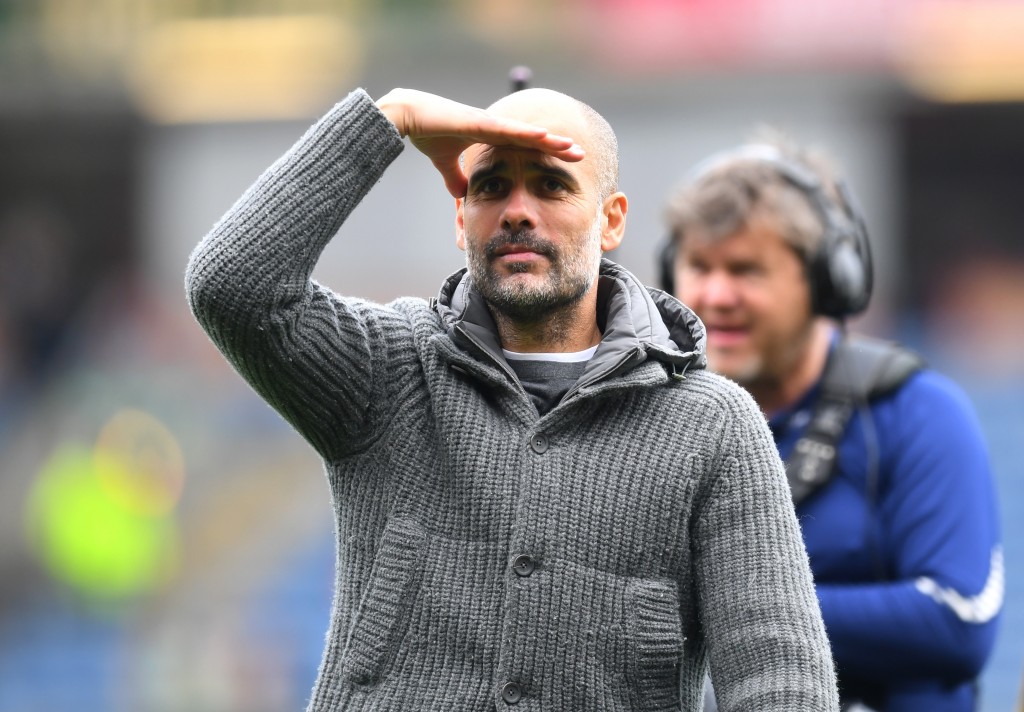
Pep Guardiola’s decision to walk away from Manchester City closes a chapter that reshaped English football, and it could now be time for him to take charge of a national team.
For ten years, Guardiola turned Manchester City into a template; not simply a dominant club but a footballing idea that others chased. Relentless positional play, meticulous pressing, and a tactical fluency made the team feel like a single organism rather than a collection of individuals.
Six Premier League titles, the long-sought UEFA Champions League and the treble, and a raft of domestic cups are the tidy numbers that record his success. The broader imprint is less tidy to measure: the way academies, rivals, and pundits rethought how the modern game should look.
Now, freed from the weekly grind of club football, Guardiola faces a different question many managers never get to choose: what next? An international job, with its shorter calendar and different pressures, looks like a logical, tempting next step. Here are three national teams where the Spanish tactician could plausibly land, and what each path would mean for him and for his prospective country.
Why an international job fits now
Managing a top club is a year-round avalanche. Transfer windows, domestic leagues, and European competition compress into a relentless cycle.
International management offers a different rhythm: intense bursts of preparation around qualifiers and tournaments, with long windows for reflection and planning in between. For an obsessive planner like Pep Guardiola, that breathing room could be appealing, giving him a chance to sculpt a national philosophy without the daily noise of club football.
It is also a stage where his fingerprints could be transformative: international teams are often tied to older tactical habits, and a manager who has retooled club-level play could do the same for a national side.
Spain | Probability: 6/10
Spain is the most natural, sentimental fit. Guardiola is Catalan, steeped in the Barcelona academy culture that once defined Spain’s golden cycle. La Roja would present a homecoming where the chemistry between manager and footballing identity is obvious.
However, the immediate obstacle is continuity. Luis de la Fuente has overseen a strong era by winning multiple honours and, barring a catastrophic World Cup showing, a resignation is unlikely to happen. The Spanish federation has shown patience, and the current squad blends youth with experience effectively.
Still, Guardiola’s name will surface in any conversation about Spain simply because of what he represents: a blueprint for possession-based, high-intensity football closely aligned with Spain’s own football DNA. If Spain were to stumble at a major tournament, the federation could be tempted by the former Barcelona manager’s ability to both win and modernise.
Even without a vacancy, Guardiola might prefer a national role precisely because it allows him to return to his roots and to work with a pool of players who already understand a certain stylistic language. The question would be whether the 55-year-old, after decades of club perfectionism, wants to adapt to the constraints of international tournaments: limited training time, rotating player form, and the need to blend differing club styles into a coherent national identity.
England | Probability: 5.5/10
England will be a logical contender for different reasons. Guardiola has spent a decade remaking Premier League football, and a return to England in a national guise would be a chance to apply that influence at the international level.
The current England setup has fissures. Thomas Tuchel, depending on how the World Cup plays out, faces increasing pressure after controversial selection decisions that left out big names. If England’s campaign falters, the FA could see Guardiola as the near-perfect remedy: a manager who understands the nuances of the domestic game and commands the respect of the country’s top players.
The fit would be complicated. England’s player pool is different from a single club’s, as it is a mix of styles, managers, and tactical roles. Guardiola would need to reconcile his exacting tactical demands with the messy reality of a national squad where players arrive with diverse instructions from their clubs.
Yet his familiarity with the Premier League, its strengths and weaknesses, could cut both ways; he would be able to identify how to tweak England’s game to be more coherent without abandoning the physical and direct attributes that have historically defined the national team.
There is also the symbolic angle: Guardiola returning to England as national coach would close an arc, from continental innovator to the man chosen to lead the country whose league he reinvented. For the FA, it is a high-risk, high-reward appointment: Guardiola’s methods could accelerate England into genuine tournament favourites, or the compromises of international life could blunt his usual impact.
Italy | Probability: 4/10
Italy presents perhaps the most intriguing strategic challenge. After the shock of missing three consecutive World Cups and the departure of manager Gennaro Gattuso, the Azzurri are in a phase of soul-searching. The federation has already installed caretakers while searching for a long-term fix.
Hiring Guardiola would be a statement: an acknowledgement that Italian football needs not only tactical refreshment but a cultural reboot at the elite level. His arrival in Italy would demand adaptation from both sides.
As veterans like Fabio Capello have noted, Guardiola would need to understand and respect Italy’s footballing traditions: defensive organisation, tactical nuance, and a certain pragmatism in tournament football. But that is also precisely Guardiola’s strength: taking cultural traits, refining them, and integrating them into a new identity.
With Italy’s deep talent pool and storied footballing infrastructure, a Guardiola-led program could rebuild from the back, instilling possession principles without erasing the defensive pragmatism that has won Italy trophies.
The job would be hard: convincing a federation and fanbase accustomed to a particular identity, and reassembling a squad missing from recent World Cups. Yet the payoff could be enormous; restoring the four-time World Cup winners to the top of the international game would be one of the most significant managerial achievements possible.
Honourable mention
Argentina | Probability: 3/10
Argentina may be an interesting wild card. Lionel Scaloni has delivered unparalleled success, including a World Cup win, and has frequently spoken about the emotional and personal toll of the job. If Scaloni were to step down after the tournament, the thought of Guardiola taking over Argentina makes for fascinating conjecture.
On paper, Guardiola and Argentina could mesh: top-tier attacking talent, a national appetite for beautiful football, and players accustomed to elite tactical coaching. But the political and emotional stakes around Argentina’s football are immense; replacing a beloved and successful manager would be contentious.
Still, if the stars aligned, Guardiola could be tempted by the raw talent and passionate context; it would be less a rebuild and more a pursuit of perfection.