
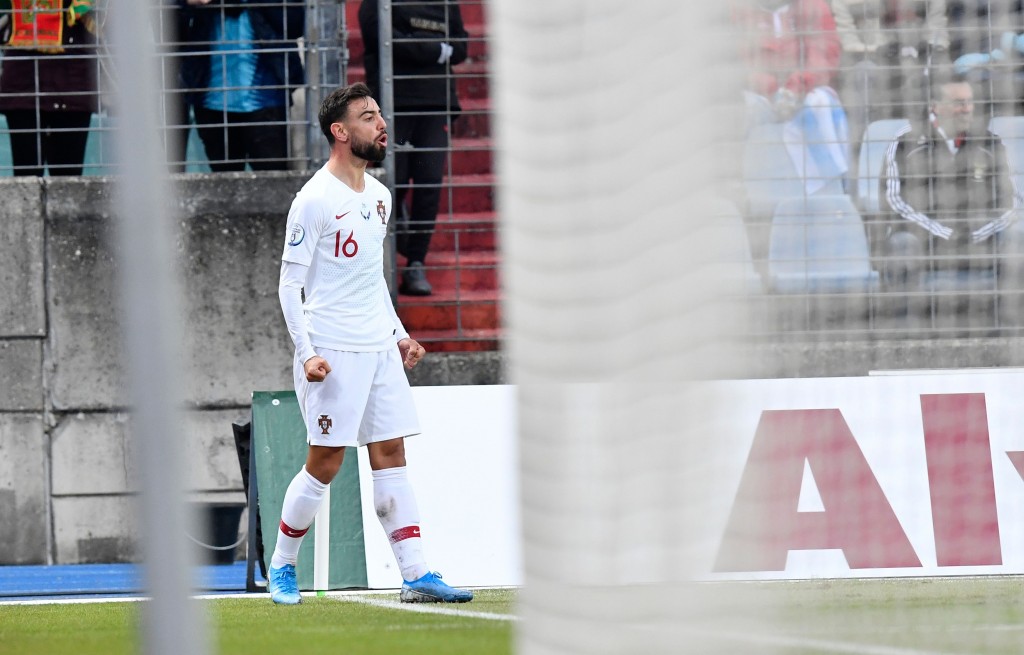
The Hard Tackle lists five midfielders who can make the difference for their national sides in the 2026 FIFA World Cup.
The 2026 FIFA World Cup arrives with a scope never seen before: 48 teams, 104 matches, and a tournament stretched across three North American nations. That expansion promises more drama, more upsets, and a longer tactical grind for managers and players alike. In a competition where squads will be tested over a greater number of fixtures and travel legs, balance, and control in midfield could decide who endures and who burns out.
Midfielders remain the fulcrum of modern international football. They link defence to attack, set tempo, shield backlines and unlock stubborn defences, often all within the same ninety minutes. In tournaments, when margins are thin, the side whose midfield asserts control most consistently usually finds itself in the latter stages.
With that in mind, we pick five midfielders who are likely to shape the 2026 World Cup. Each brings a different skill set, from creative impetus and goalscoring to industrious control, and each will carry heavy expectations for their nations. Selection for a global tournament is as much about form as it is about fitness and adaptability.
Some of these players arrive having enjoyed exceptional domestic seasons; others return from injury or are stepping into new roles for their countries. The following profiles explain why these five midfielders matter and how their performances could tilt the balance in a competition where small moments create lasting memories.
Bruno Fernandes
Bruno Fernandes arrives at the 2026 FIFA World Cup off the back of another influential Premier League season. His campaigns in England have been remarkable for a creative midfielder, mixing goals with assists, pressing intelligently, and thriving in late, decisive moments. In club football, he has delivered record-breaking numbers, turning Manchester United’s attacking third into his theatre of operations, overtaking Thierry Henry and Kevin De Bruyne for most assists in a Premier League season (21).
That statistical reliability translates neatly to international duty, where Portugal now expect him to run the show in the final third. For the Selecao, Fernandes is more than a playmaker; he is the heartbeat of a side built around technical superiority and forward movement. Cristiano Ronaldo’s era is ending, and a new attacking core has emerged.
The Manchester United skipper’s ability to find pockets between the lines and to orchestrate counter-pressing transitions will be central to how Portugal create chances. His knack for set-pieces and late runs into the box also makes him a consistent scoring threat, providing a double-edged utility: chance-creator and finisher. The tactical nuance Portugal will seek is to free the 31-year-old from defensive rigidity so he can influence the game in the areas where he’s most dangerous.
Pedri
Pedri’s presence on this list is partly a projection of potential and partly a call to expectation. The Spaniard is yet to play at a World Cup, but he arrives in North America experienced beyond his years, having proven his worth for Barcelona and for Spain despite periodic fitness setbacks.
The youngster’s game is predicated on short, precise passing, impeccable spatial awareness, and an ability to maintain possession under pressure. After a season in which he managed his minutes more conservatively, the Barcelona playmaker appears poised to make his World Cup bow at full strength.
Spain’s 2024 European Championship win underlined the value of a composed midfield. The team’s passages of play often began with short, clever exchanges and progressed into high-quality chance creation. Pedri is integral to that model.
The 23-year-old midfielder’s role will be to keep tempo, recycle possession and supply the forwards with high-quality final passes, but also to provide defensive cover by intercepting passes and cutting channels. If he remains fit and navigates the tournament schedule well, Pedri could be the decisive factor in Spain’s bid to follow up their continental success with a global triumph.
Declan Rice
Declan Rice has emerged as a commanding presence in Arsenal’s midfield and carries that authority into the England setup. His transformation from a promising youngster into a complete midfielder who can screen, distribute, and drive forward has been one of the storylines of recent seasons. For the Three Lions, the 27-year-old is expected to marshal the middle of the park: protect the back four, win duels, and launch attacks with progressive passes.
At the World Cup, Rice’s importance goes beyond statistics. England have often possessed talented attackers and creative midfielders; what they have sometimes lacked is a consistent midfield fulcrum who combines game intelligence with defensive reliability. Rice provides that blend.
His positional discipline helps his teammates maintain structure off the ball, while his capacity to break lines with measured passes can spark quick transitions. Should he rise to the occasion in 2026, Rice could be the engine that guides England back toward the summit of world football after decades of near-misses.
Martin Odegaard
Martin Odegaard is the type of playmaker who can turn a respectable team into a dark horse. His vision, passing range and capacity to control tempo make him Norway’s principal creative outlet through the central areas. Under his influence, the Lions have developed a more cohesive attacking identity that leans on his ability to find forwards in advanced positions and to orchestrate possession-based build-ups.
For a side with dangerous forwards and athletic wing play, Odegaard’s role is to pull strings and create chances from pockets where defenders are least comfortable. There is a caveat: the Arsenal skipper’s recent seasons have been hampered by fitness issues, which have limited his minutes and arguably dulled his sharpness at times.
The 2026 FIFA World Cup will demand consistency across multiple intense matches; the key for Norway is whether the 27-year-old can rediscover and sustain his best touch. If he does, he will not only draw attention from opposing markers but also open spaces for teammates, making Norway a team that can spring surprises deep into the tournament. If not fully fit, Norway’s creative spark could dim, reducing their threat in the knockout rounds.
Florian Wirtz
Florian Wirtz carries the promise of creativity and unpredictability for Germany. He possesses a rare ability to combine tight-space dribbling with incisive final passes, often producing moments of individual brilliance that break defensive lines. However, the youngster’s first season at Liverpool proved inconsistent, raising questions about adaptation and rhythm after a major move.
For Germany, Wirtz must translate flashes of club-level quality into sustained international performances. Tournament football rewards players who can produce repeatable influence. If the former Bayer Leverkusen prospect rediscovers the consistent, attacking verve that marked his early breakthroughs, he can become Germany’s chief creator, linking midfield and attack while contributing goals and assists.
His skill set suits a Germany team that will likely balance structured buildup with rapid transitions; Wirtz’s capacity to operate between the lines will be invaluable in unlocking tight matches. The observers will be watching whether he can combine fitness, confidence and form to become a match-winner on the world stage.
Honourable mentions
- Vitinha: key driving force in Portugal’s engine room.
- Relebohile Mofokeng: South Africa’s emerging midfield talent.
- Granit Xhaka: experienced Swiss organiser with leadership traits.
- Casemiro: Brazil’s defensive shield and tournament-proven winner looking to overcome stereotypes.
- Jamal Musiala: Germany’s versatile attacking midfielder coming off a long-term injury.
- Frenkie de Jong: the Netherlands’ metronome and transition specialist.
- Kevin De Bruyne: Belgium’s world-class creator when fit.
- Federico Valverde: Uruguay’s dynamic box-to-box operator.
- N’Golo Kante: legendary defensive midfielder if selected and fit.
- Alexis Mac Allister: creative and industrious presence for Argentina.
- Enzo Fernandez: Argentina’s ball-progressor and passer.
- Jude Bellingham: England’s all-action star with box-to-box impact.
- Luka Modric: Croatia’s enduring maestro and tournament veteran.
These players, alongside the five we have focused on, represent the midfield heartbeats likely to influence the 2026 World Cup. Control of the middle will determine who thrives in an expanded format that rewards depth, fitness and tactical acumen. Watch how these names perform early: the teams that secure midfield dominance will be the ones lifting the trophy in July.