
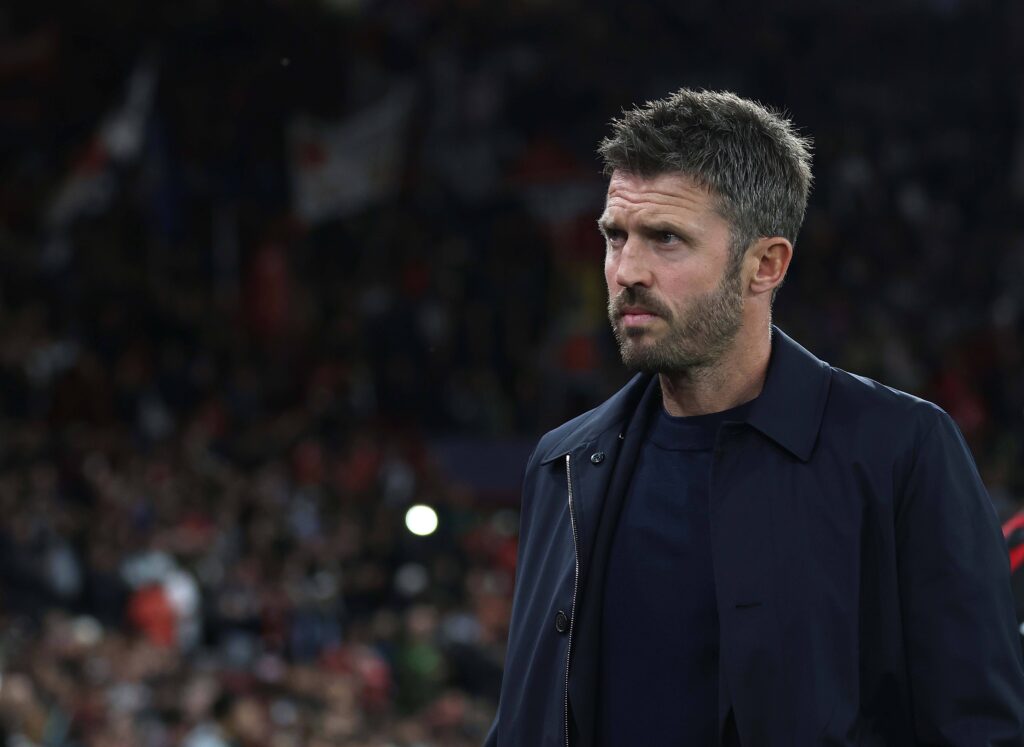
When the 2026/27 season kicked off, a genuine wave of optimism swept through Old Trafford. There was a palpable sense that Manchester United, under the tutelage of Michael Carrick, had finally found the structural stability that had eluded them for over a decade.
This hope was not built on blind faith, but on tangible momentum. From the moment Carrick took over as head coach during the previous campaign until the final whistle of the 2025/26 season, no team in the Premier League had secured more points than Manchester United. The Englishman had transformed a fractured squad into an efficient machine, earning himself the full-time managerial hot seat and leaving fans dreaming of a trophy-winning campaign.
However, the opening weeks of the new campaign have rudely shattered that illusion. The early optimism has evaporated, replaced by a string of alarming performances that have exposed deep structural fractures within the side. Instead of kicking on, the Red Devils have looked completely devoid of inspiration, managing to win just two of their first seven games across all competitions.
It is a staggering drop-off for a team that looked so resolute only a few months ago, leaving the team struggling for answers as the season threatens to unravel before October even arrives. The crisis is starkly illustrated by a look at the Premier League table, where Manchester United languish in a dismal 12th place after managing only a solitary victory in their first five matches.
Five points from five games represents the joint-worst start to a Premier League campaign in the club’s history. To make matters worse, the frustration has spilled over into the domestic cups, as Manchester United have already bowed out of the EFL Cup in the third round.
They suffered a humiliating 3-2 defeat to Brighton & Hove Albion after squandering a comfortable two-goal lead. The nature of that capitulation broke a proud 50-year historic record, marking the first time since 1976 that United have thrown away a two-goal advantage to lose a match at Old Trafford across all competitions.
Carrick’s protective blind spot

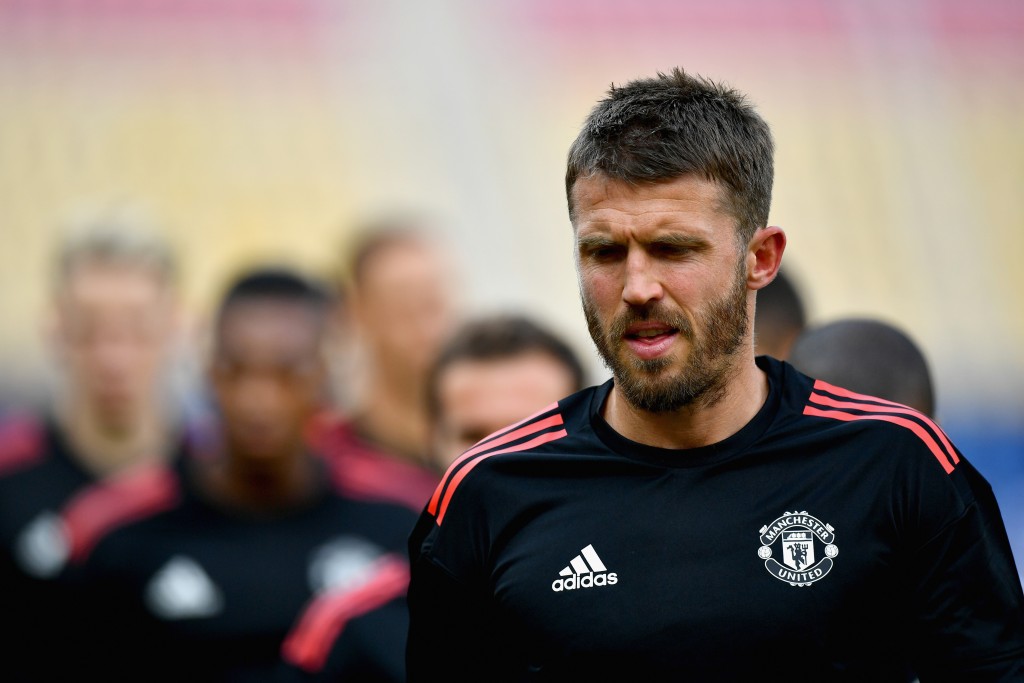
In the face of mounting criticism, Michael Carrick has chosen a path of public defiance, fiercely protecting his squad rather than pointing fingers. The head coach has consistently gone out of his way to praise his players and unearth silver linings where few exist. Following Sunday’s lacklustre 1-1 draw against Fulham at Craven Cottage, where a late deflected equaliser saved Manchester United from another demoralising defeat, Carrick remained steadfastly upbeat.
“It’s not been ideal,” Carrick admitted in his post-match press conference. “I know we can do better, we need to do better at certain things. But at the same time, I’m not despondent and down because I think we’re showing some good signs as well.”
While loyalty is an admirable trait in management, there is a growing concern that Carrick’s refusal to publicly demand accountability is morphing into a protective blind spot, shielding a group of underperforming players from the harsh realities of their dismal output.
Possession without purpose
On the pitch, Manchester United’s primary tactical roadblock under Michael Carrick has been an agonising inability to progress the ball effectively. The Red Devils have looked frustratingly passive for the vast majority of the campaign, showing little to no urgency in possession, bar a few fleeting, desperate phases when chasing games.
The fluid, forward-thinking transitions that defined their late-season surge last term have been replaced by a slow, sideways monotony that makes them entirely predictable to defend against. In truth, across seven matches in all competitions, only the fixtures against Ipswich Town and Sabah yielded performances where the tactical positives outweighed the negatives.
In every other outing, Manchester United have dominated the ball but done virtually nothing with it, with the lowest ebb coming against Manchester City, where they had a numerical advantage for most of the game but failed to do little of substance. Passing themselves into cul-de-sacs and failing to break the lines of even the most modest opposition mid-blocks has clearly become the running theme for Carrick’s men.
The Matheus Cunha conundrum

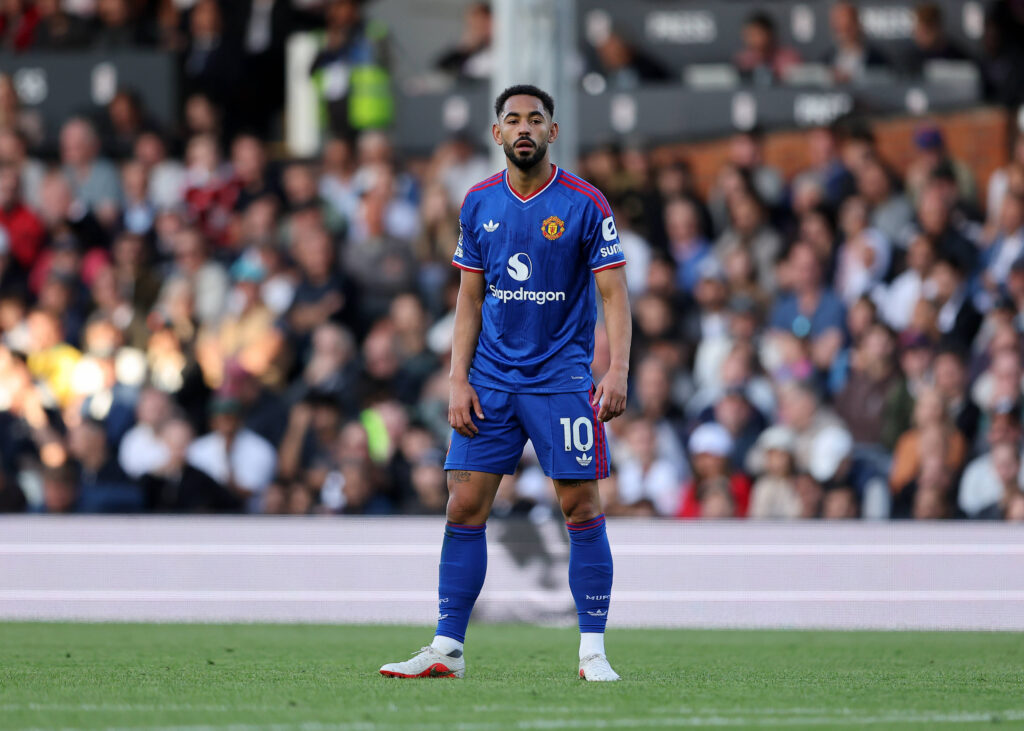
A significant portion of Manchester United’s attacking stagnation stems from Michael Carrick’s persistent tactical mistakes, none more glaring than his stubborn insistence on deploying Matheus Cunha as a false nine. The Brazilian forward has spent the opening weeks of the season looking isolated and tactically unfulfilled, entirely failing to perform in a central role that completely stifles his natural instincts.
The folly of this experiment was proved beyond doubt on Sunday against Fulham. Cunha was virtually invisible as the central striker. However, the moment Marcus Rashford was substituted and Cunha shifted to his favored left-wing berth, his demeanour changed. The Brazilian immediately looked dangerous, drifting inward to fire the shot that secured a point for United.
It was a stark reminder of last season’s exploits, where Cunha terrorised full-backs and proved immensely impressive from a wide left-sided role. By continuing to shoehorn him into the middle, Carrick is actively blunting his most dynamic attacking weapon. Sure, Benjamin Sesko has not been ready to start week-in, week-out, but Bryan Mbeumo has proven himself as a far better option up front than the former Wolverhampton Wanderers star.
The red flags and the weird walkabout
As poor as Manchester United have been with the ball, it is their dreadful work off the ball that presents the biggest crisis of the season. The first major red flag emerged during pre-season, when summer arrival Youri Tielemans revealed in an interview with Rio Ferdinand that the squad had done almost no rigorous physical work under Carrick, focusing instead entirely on ball retention.
That lack of physical conditioning has manifested on the pitch, drawing a scathing attack from Gary Neville, who branded a 15-minute second-half spell against Fulham as a “genuine disgrace” and criticised the players for acting like motionless “mannequins” out of possession.
The former Manchester United captain said, “I’ve never seen a Manchester United team walk out of possession as much as that. Michael has just said there was nothing wrong with the team’s energy. Michael has got to stop defending them. I get why he’s defending them; he’s loyal, he wants his players to work for him, and obviously there’s a long way to go in the season.”
“Both teams were the same. I called them mannequins. I’ve never seen a United team walk around as much as that. No alertness, no aliveness. No ‘on your toes’. You should always be on your toes. I’m always very careful to say that, but in those first 15 minutes of that second half, Manchester United and generally for the first 60 minutes, were a genuine disgrace. Nowhere near good enough without the ball.”
🚨MANCHESTER UNITED 👀👀 pic.twitter.com/4vN0nQNp2c
— EPL – Analytics (@DataAnalyticEPL) September 21, 2026
Neville’s eye-test is backed up by damning, definitive data that exposes a team simply unwilling or unable to run:
- The Walking Culture: Manchester United spent an astonishing 52.98% of their time out of possession at Fulham simply walking. Their season average for walking in a game stands at 51.13%, ranking them a lazy 17th in the Premier League.
- Outrun Across the Board: Fulham covered 6.5km more than Manchester United on Sunday, the second-biggest distance differential between two 11-man teams in the Premire League this season. They ran just 110.2 km as a team, the second-lowest total of the entire Premier League weekend. Furthermore, they have been comfortably out-run by Hull City, Ipswich Town, and Everton this term. The only team United have out-run this season is Manchester City, who played with 10 men for 67 minutes after Phil Foden was sent off.
- Bottom of the League Metrics: Manchester United currently rank joint-bottom of the Premier League for high-speed runs. Additionally, they rank dead bottom of the entire division in several crucial physical averages per game: Distance at high intensity (19.03 km), Time spent at high intensity (49.6 minutes), Sprints (243), and Total time spent sprinting (9.2 km).
A tipping point beckons?
The numbers do not lie; they paint a picture of a team that is physically unprepared, structurally flawed, and tactically stubborn. Manchester United are being out-worked and out-muscled by virtually every opponent they face, and Michael Carrick’s public indulgence of these performances is only enabling the slide.
Ball retention is a wonderful philosophy, but it is entirely useless if the players refuse to run out of possession or if they show little urgency with the ball at their feet. The international break has arrived at the perfect time for a hard reset. If this lazy, passive pattern of play continues into October, the board will be forced to look past Carrick’s historical goodwill, and this alarming slump will ultimately cost him his job as Manchester United head coach.