
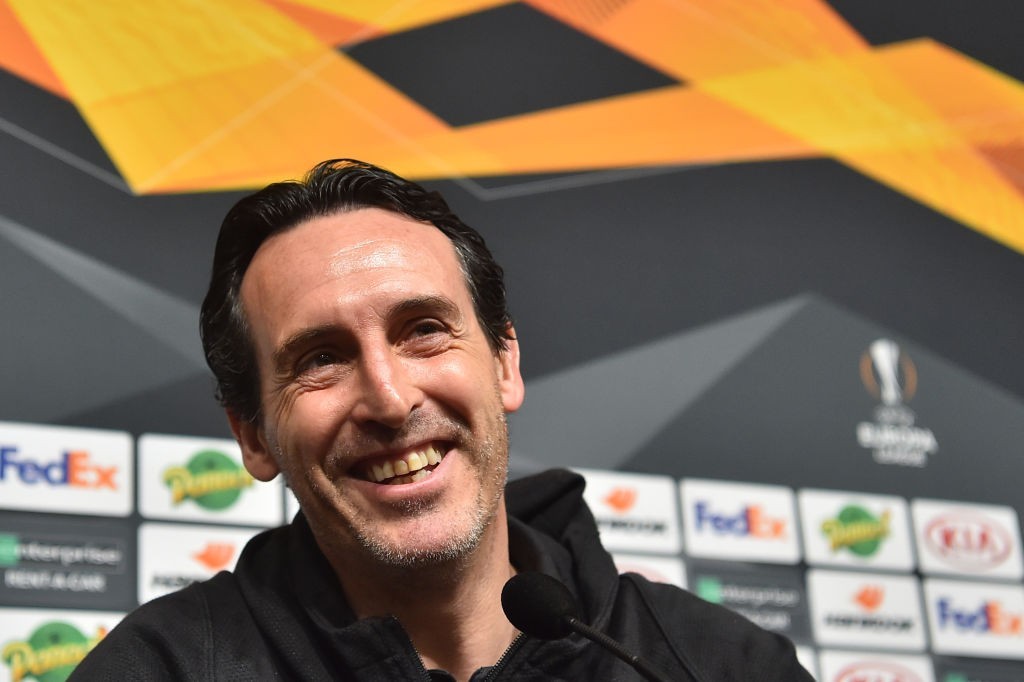
Unai Emery’s fifth Europa League title crowns a historic Aston Villa season, but questions over his elite status and ultimate ceiling still linger.
Unai Emery has made a career out of thriving in spaces where others hesitate. But even by his own remarkable standards, this latest achievement feels different. Aston Villa’s Europa League triumph marks the fifth time the Basque manager has won the competition, adding to his three titles with Sevilla and one with Villarreal.
It is a record that stands unmatched in the modern era and reinforces Emery’s enduring relationship with Europe’s second-tier tournament. Yet, despite this consistency, his place in the upper echelon of elite managers remains a subject of debate.
There is something quietly defiant about Emery’s trajectory. He has rarely been the headline name when discussions turn to Europe’s coaching aristocracy, often overshadowed by UEFA Champions League-winning contemporaries.
Yet, when it comes to delivering silverware in demanding knockout formats, few can rival his expertise. His Villa side did not simply win the competition; they navigated it with the kind of clarity and structure that has become synonymous with his teams.
This triumph, however, does more than add another medal to Emery’s collection. It invites a broader conversation about how success is measured in modern football. Is repeated excellence in the Europa League enough to elevate a manager into the highest bracket, or does the absence of Champions League glory still define the ceiling?
A Season to Remember for Unai Emery and Aston Villa
Aston Villa’s campaign under Emery will be remembered as one of the most significant in the club’s modern history. Securing a top-five finish in the league alongside Europa League glory represents a level of consistency and ambition that has transformed expectations around the club.
The magnitude of this achievement is amplified by context. This is Villa’s first European trophy in 44 years and their first major silverware in three decades. For a club with a rich but distant history of success, this season feels like a reawakening.
Unai Emery’s influence has been central to this resurgence. He has not only delivered results but has instilled a clear tactical identity, improved squad cohesion, and elevated the performances of key individuals. In doing so, he has quickly positioned himself as a modern legend at Villa Park, with supporters now daring to imagine what might come next.
The Europa League Specialist Debate
Five Europa League titles inevitably shape how Unai Emery is perceived. It is a record that invites comparison, even if indirectly, with managers who have built their reputations on Champions League success.
However, the comparison is not entirely straightforward. The UEFA Champions League carries a different weight, defined by the presence of Europe’s elite clubs and players. Success in that competition often serves as the ultimate benchmark for managerial greatness.
That said, Emery’s dominance in the Europa League cannot be dismissed as secondary. Winning the competition once requires tactical precision and mental resilience; doing it five times suggests a level of mastery. In that specific context, he can reasonably be described as the greatest Europa League manager of his generation, if not of all time.
His legacy, therefore, sits in a unique space. It is not defined by universal acclaim, but by a sustained excellence in a competition that demands its own distinct skill set.
The Ceiling Question
For all his success, questions around Unai Emery’s ceiling persist. His spells at Paris Saint-Germain and Arsenal continue to influence perceptions, particularly when evaluating his suitability for clubs with the very highest expectations.
At PSG, the Spaniard struggled to assert control in a dressing room filled with global superstars, while his time at Arsenal was marked by inconsistency and an inability to deliver long-term stability. These experiences have contributed to a narrative that Emery thrives best outside the absolute elite tier.
There is some validity to this argument. His strengths—meticulous preparation, tactical adaptability, and knockout expertise—are often most effective in environments where structure and clarity can be fully implemented. At clubs where egos and expectations are more volatile, those qualities can be harder to impose.
Still, it would be reductive to suggest that his capabilities are limited to the Europa League level. His current work at Aston Villa suggests a manager who continues to evolve.
What Comes Next for Aston Villa?
The more intriguing question now is not what Unai Emery has achieved, but what he can build. Aston Villa are no longer outsiders; they are a team with momentum, belief, and a manager who knows how to navigate European competition.
A sustained push for a Premier League title may still feel ambitious, given the financial and structural advantages of the league’s traditional giants. However, Villa’s trajectory under Emery suggests they can at least position themselves as credible challengers.
In the UEFA Champions League, the test will be even more revealing. Emery’s record in Europe offers encouragement, but competing against the continent’s elite over a longer format presents a different kind of challenge. Whether he can translate his Europa League mastery into deeper Champions League runs remains an open question.
What is clear is that Aston Villa are no longer content with incremental progress. Under Emery, the club has rediscovered its ambition.
Unai Emery’s fifth Europa League title does not settle the debate around his place in football’s managerial hierarchy, but it sharpens it. He remains a figure who defies easy categorisation, as he is too successful to be overlooked, yet still short of the universal recognition afforded to Champions League-winning peers. That tension is what makes his story compelling.
At Aston Villa, however, the conversation feels more grounded. Here, his achievements carry immediate and tangible significance. The 54-year-old has ended decades of waiting, delivered a European trophy, and re-established the club as a force with direction and purpose. In doing so, he has earned a level of admiration that transcends abstract debates about legacy.
The next phase will define how his story evolves. If Emery can guide Villa into sustained domestic contention or make a meaningful impact in the Champions League, perceptions around his ceiling may begin to shift. Until then, he stands as a specialist of rare distinction, a manager whose relationship with the Europa League has become one of modern football’s most enduring narratives.