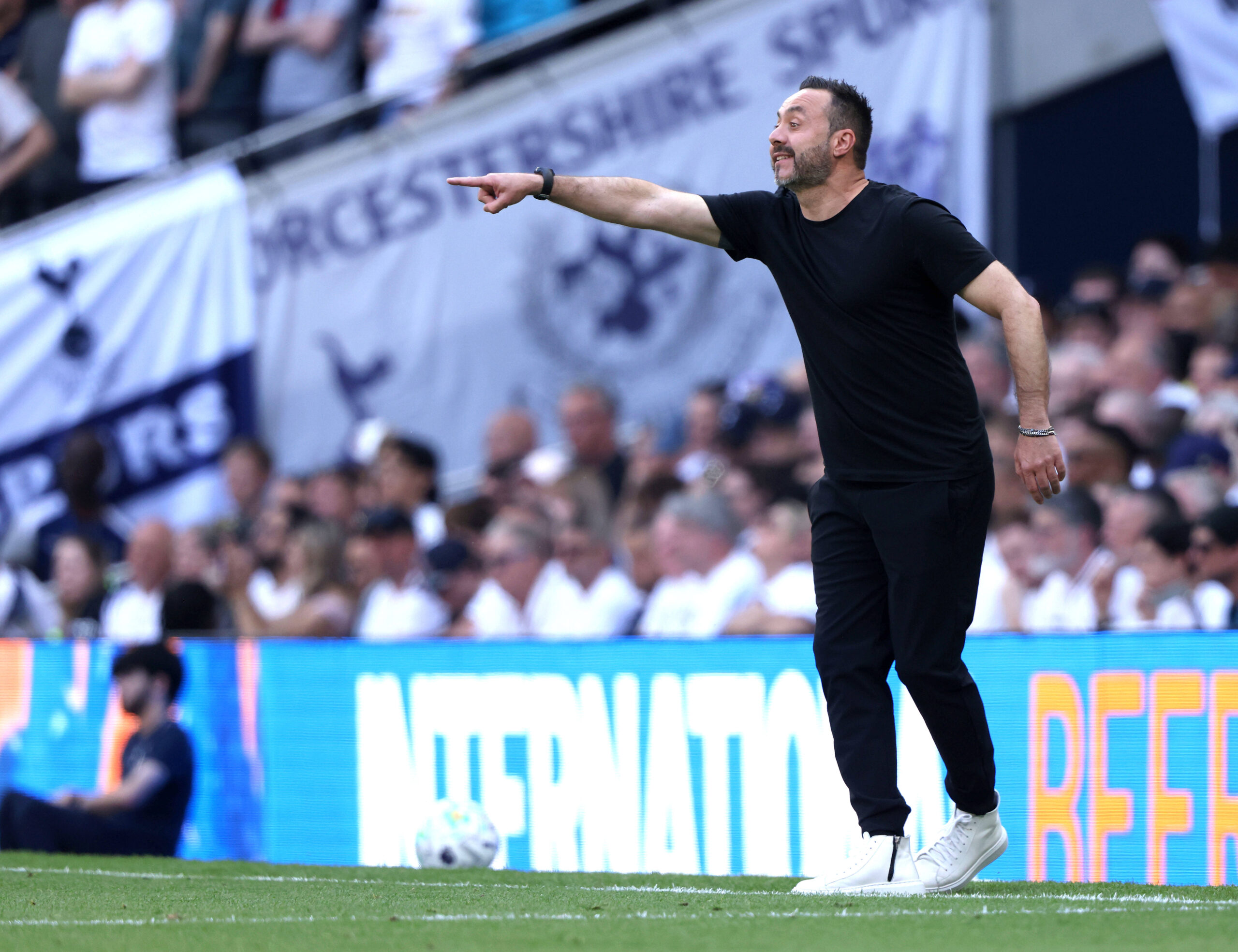
They spent two seasons staring down the trapdoor; now, under Roberto De Zerbi, Tottenham look ready to swap relegation scraps for a serious crack at the UEFA Champions League.
Tottenham Hotspur have gone from clinging on to their Premier League status to quietly assembling a squad that can talk about UEFA Champions League football without sounding delusional. The transformation has been driven by Roberto De Zerbi’s clear ideas, a ruthless focus on problem areas, and a summer window that finally matches the club’s ambition.
From survival to something more
Back‑to‑back 17th‑placed finishes told a brutal story. Tottenham were flirting with relegation rather than the top four, and another misstep could easily have sent them into the Championship. De Zerbi arrived late last season and did just enough to steady the ship, but the limitations of the squad were obvious, particularly in defence and midfield, where Spurs looked soft, disorganised and short of control.
This summer has brought a very different tone. Spurs have already made five senior signings, and a sixth, Sandro Tonali, is set to follow as part of a spending spree that will reach around £237 million; more than any window in the club’s history. It is not just the money, though; it is the profile and purpose of the recruits. Nearly every move directly addresses a fault that dragged them towards the drop last season.
Fixing the backline: structure, experience, depth
The defence was Tottenham’s biggest weakness, often leaving Guglielmo Vicario exposed behind a line that struggled to defend space and crosses with any consistency. Roberto De Zerbi’s first full window has gone hard at that problem.
Jan Paul van Hecke has arrived from Brighton & Hove Albion for around £52 million, a player De Zerbi knows intimately from their time together on the south coast. At Brighton, van Hecke developed into a ball‑playing centre‑back who is comfortable stepping into midfield, pressing high and defending large spaces, exactly the kind of defender the Italian manager needs in a proactive system.
The Dutchman is expected to form a partnership with compatriot Micky van de Ven, giving Spurs a pairing with pace, aggression and the ability to start attacks from the back. Alongside him, Marcos Senesi has joined on a free after helping Bournemouth to a remarkable sixth‑placed finish last season.
Senesi is a rugged, left‑footed centre‑back who brings leadership and positional discipline; crucially, he offers a reliable option if Cristian Romero departs, as widely expected, and raises the overall level of competition at centre‑half.
With Senesi, van Hecke and van de Ven in tow, Tottenham finally have a central defensive group that looks designed for De Zerbi’s high‑risk, high‑reward football rather than being patched together.
On the flanks, Andrew Robertson’s arrival on a free from Liverpool adds a weight of Premier League and Champions League experience that this squad simply lacked. Destiny Udogie remains the long‑term project at left‑back, but Robertson gives Spurs an elite option who understands how to balance attacking overlaps with defensive positioning in big matches.
In a dressing room with plenty of younger players, his presence should be invaluable on the pitch and in the training ground. In goal, Martin Dubravka has come in from Burnley to add depth and competition. At 37, he is not a long‑term solution, but De Zerbi praised his “experience and strong mentality”, and he is expected to back up Antonin Kinsky, who finished last season impressively and is set to take over as the number one if Vicario moves on.
For a side that has too often felt fragile under pressure, stacking the defensive unit with experienced, vocal players matters almost as much as the technical upgrade.
Tottenham’s midfield revolution: Fernandes and Tonali
If the defence has been rebuilt, the midfield has been transformed. Last season Spurs often lacked anyone who could consistently dictate tempo, win second balls and connect their possession with meaningful chances. That changes dramatically with Mateus Fernandes and Sandro Tonali.
Fernandes, signed from West Ham United for a club‑record £85 million, arrives as one of the Premier League’s most coveted young midfielders. At just 21, he combines energy and tenacity with a calmness on the ball that allowed him to stand out even in a West Ham side under pressure. His ability to press, win tackles and then carry the ball or play progressive passes makes him an ideal “engine” in De Zerbi’s midfield.
And if Fernandes set a new record, Tottenham have immediately moved to break it. Tonali is expected to join from Newcastle in a package worth up to £100 million, with an initial fee around £92.5 million and add‑ons linked to Champions League qualification. He is widely regarded as one of the best central midfielders in Europe, a regista who can both orchestrate play from deep and step higher to combine with the forwards.
The relationship between Tonali and De Zerbi has been central to this move. Both are from the Brescia region, and Tonali has spoken openly about how his compatriot convinced him that Spurs was the right project, even amid reported interest from Manchester City.
He described the transfer as a “life choice” for his family and credited De Zerbi for doing “a great job” in showing the work behind his vision and commitment. That kind of personal connection is rare, and it underlines how central the head coach is to this rebuild.
On the pitch, a double pivot of Tonali and Fernandes gives Tottenham something they have not had since the peak years of Mousa Dembele and Christian Eriksen, and arguably even more variety. Tonali can sit deep, receive under pressure and fire diagonal passes to the flanks, while Fernandes hunts the ball, drives forward and supports attacks.
Together they should offer control against the ball, composure in build‑up and the capacity to dominate midfield battles that Spurs have been losing for far too long. De Zerbi is known for asking his midfielders to take brave positions, inviting pressure before playing through it to create space for forwards.
With Tonali’s passing range and Fernandes’s dynamism, Spurs suddenly look capable of playing that way without constantly risking costly turnovers. It is also telling that existing midfielders such as Joao Palhinha and Lucas Bergvall are likely to depart, while Conor Gallagher, Rodrigo Bentancur and others become secondary options. This is a proper changing of the guard.
How De Zerbi’s Tottenham might play
The new signings only make sense if they fit a clear tactical picture and De Zerbi has that. It is widely expected that he will favour a back‑four as his default shape, with flexibility to shift into a back‑three when required.
A likely XI could see Kinsky in goal, Pedro Porro and Robertson or Udogie at full‑back, and van Hecke alongside van de Ven in central defence. In front of them, Tonali and Fernandes would anchor midfield, with James Maddison reclaiming the number 10 role if he returns to full fitness after an injury‑hit campaign.
Out wide, Mohammed Kudus and Xavi Simons (once he completes his recovery from an ACL injury) provide creativity and goal threat, while Dominic Solanke or Richarlison lead the line.
That structure suits De Zerbi’s preference for controlled build‑up and aggressive pressing. Centre‑backs split wide, full‑backs push into high areas, and the double pivot offers passing angles to draw the opposition out. Once the press is beaten, Spurs can find Tonali in space to switch play, Fernandes driving through the middle, or Maddison between the lines.
Importantly, the squad now looks deeper and more balanced. Van Hecke, Senesi and van de Ven can all start in different combinations; Robertson can support or rotate with Udogie; midfield competition is fierce, and wide options like Dejan Kulusevski, Mathys Tel, Wilson Odobert and youngster Mikey Moore give De Zerbi different profiles for different games.
There are still gaps up front; Spurs are linked with another big‑money forward, such as Eli Junior Kroupi, but the spine of the team no longer feels fragile.
From relegation battle to Champions League talk
Going from survival scrap to genuine Champions League push in one season is never straightforward. The Premier League’s top end is unforgiving, and there is always the risk that new signings need time to adapt or that injuries hit at the wrong moment. Yet there are reasons to believe Spurs can at least enter that conversation.
First, the quality of the incoming players is undeniable. Fernandes and Tonali would walk into most midfields in Europe, while van Hecke, Senesi and Robertson all bring proven Premier League pedigree. Second, the work has been done early. Agreements were in place by the start of July, a stark contrast to previous summers where Spurs drifted through late‑window sagas and missed key targets.
Financially, the club is backing De Zerbi like never before. The combined £185 million on Fernandes and Tonali alone pushes total spending to £237 million, surpassing any previous window, and yet Spurs remain confident of complying with the new Squad Cost Ratio rules thanks to strong revenues from their stadium and regular European participation over the past two decades.
Under new leadership, with Vinai Venkatesham and Peter Charrington working under the Lewis family, the wage structure has been relaxed enough to make Spurs competitive with the very top clubs. That change in strategy is crucial when trying to attract elite talent, especially after finishing 17th.
Then there is the intangible shift. Tonali has already spoken about wanting to help ensure “everything is new and everything is positive” at a club coming off two difficult seasons. De Zerbi is described as the most hands‑on Spurs head coach in transfer matters for a long time, and players talk about being impressed by what he has done at the training ground.
That combination of tactical clarity, personal influence and institutional backing can turn a flat atmosphere into a hungry one very quickly. None of this guarantees a top‑four finish. There will be bumps, particularly as De Zerbi tries to implement complex patterns of play across an almost rebuilt spine.
But for the first time in years, Tottenham’s squad and strategy look aligned to the idea of pushing for a Champions League place rather than merely clinging to a Premier League one. After two seasons spent looking anxiously over their shoulders, Spurs now have both the players and the coach to look up the table instead.