
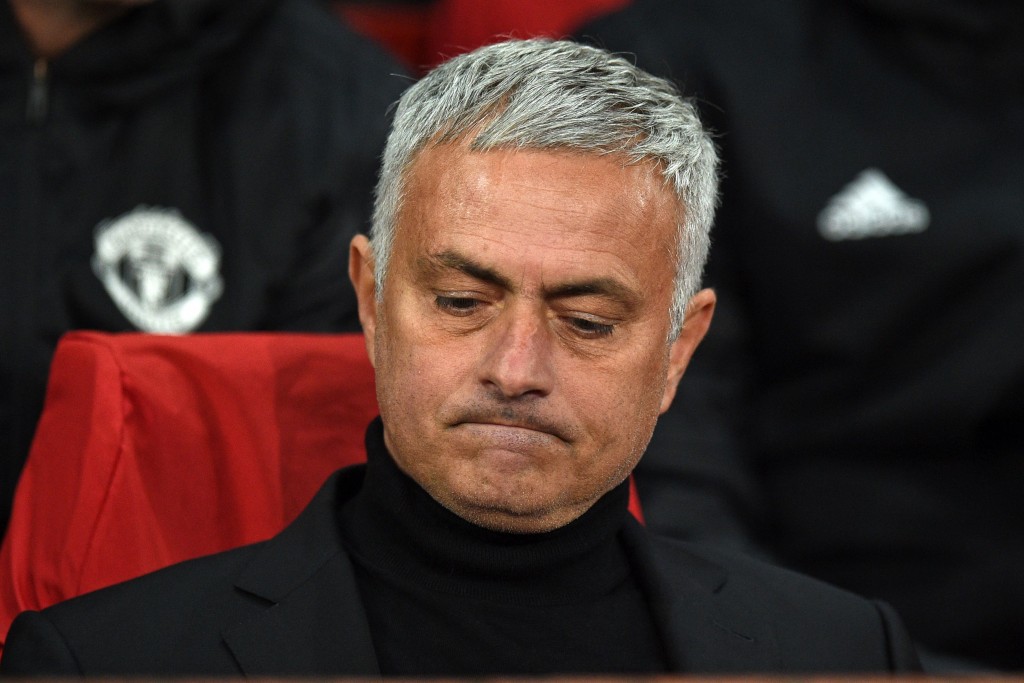
Real Madrid’s season began with promise, but two league defeats and a six-point gap to Barcelona already feel like more than a blip.
The familiar cracks are showing again at Real Madrid despite the return of Jose Mourinho, and the underlying numbers suggest this is not merely about bad luck or refereeing decisions.
The headline statistic is stark. Real Madrid rank 96th out of 96 teams across Europe’s top five leagues for distance covered per match, averaging just 83.46 km in La Liga. In Spain alone, they are last for total distance, with reports putting their average at 89.46 km per game compared to Elche’s 105.61 km and Barcelona’s 104.64 km.
That lack of running is not an isolated quirk; it is the engine behind a broader pattern of passivity. This season in La Liga, Real Madrid are last in defensive actions, last in clearances, last in fouls, 18th in tackles and 17th in interceptions. In other words, they are neither chasing opponents aggressively nor protecting their box with the volume of interventions that title-chasing sides typically produce.
When a team runs the least and engages the least defensively, margins disappear quickly. Opponents find more time on the ball, second balls go unchallenged, and transitions become dangerous. For a side built on controlling games, this is an uncomfortable foundation.
Midfield control, or the lack of it

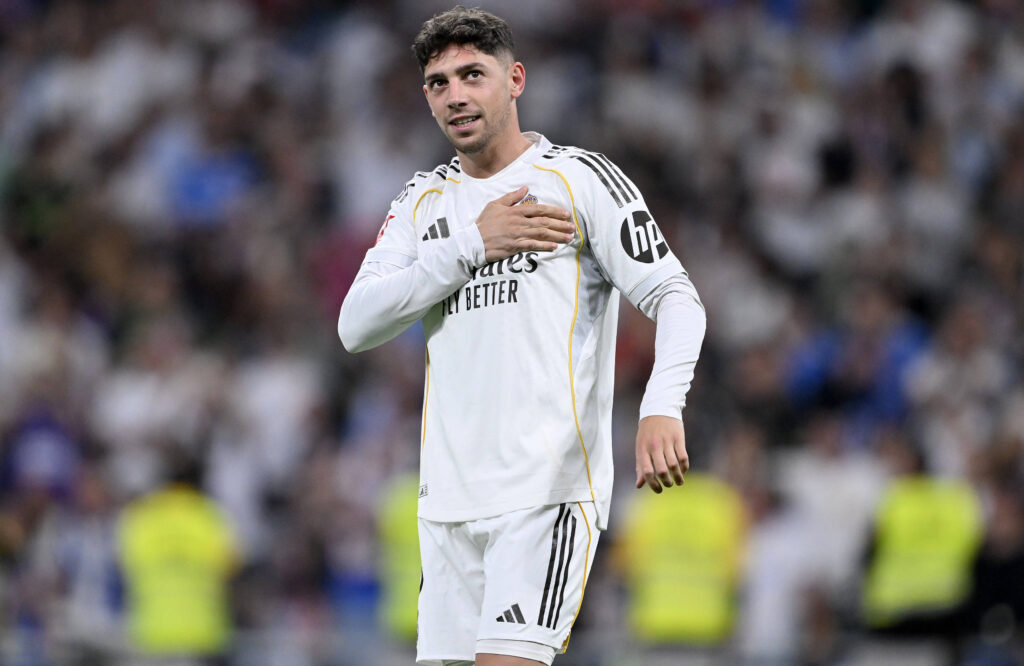
Jose Mourinho has leaned on a double pivot of Aurelien Tchouameni and Federico Valverde, a setup intended to add steel and structure. Yet in key away fixtures, especially the Madrid derby, the midfield has struggled to dictate tempo or win enough duels to suffocate opponents.
Atletico Madrid were more aggressive in challenges, more compact without the ball and better at turning possession into territory. That left Los Blancos’ creative players disconnected and forced the forwards to drop deeper or receive in isolated positions. The result was a familiar sight: individual quality present, but no sustained rhythm in attack from open play.
This is not purely about personnel. It is about organisation and intensity. When the midfield does not press or recover with sufficient urgency, the distance between lines grows, and the defence is exposed to transitions, exactly how Atletico carved out their second goal through Giuliano Simeone and Jonathan David.
Defensive fragility despite new faces
Mourinho has reshaped the backline with signings such as Ibrahima Konate, Marc Cucurella, and Denzel Dumfries. Yet, Real Madrid remain as vulnerable as in recent seasons when injuries disrupted the defence.
Every opponent bar Malaga has found a way past Thibaut Courtois, and the derby highlighted how space behind the full-backs and between centre-backs can be punished.
Dean Huijsen’s red card tilted the Madrid derby, but the bigger issue was the situation that forced him into a desperate challenge. Atletico attacked the channel, stretched the Merengues’ shape and left their young centre-back with little support.
That points to a structural problem. When possession is lost, the gaps between midfield and defence are too large, and full-backs caught high leave huge spaces in behind. Add to that Cucurella’s uncharacteristically poor display and Huijsen’s repeated slips at the Metropolitano, and the narrative becomes clear. New names have not solved the underlying vulnerability.
The Mbappe-Vinicius dilemma on the left

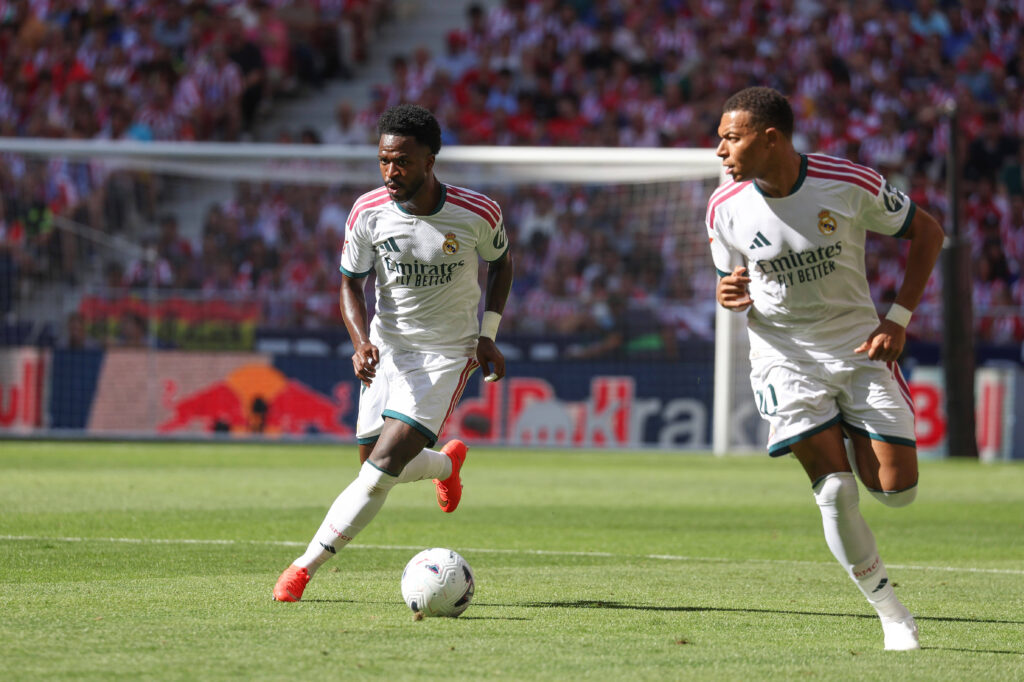
Another recurring theme is the congestion on the left flank. Kylian Mbappe and Vinicius Junior both favour that side, and their coexistence has yet to produce consistent harmony. Mbappe has managed only two goals in six Madrid derbies, while Vinicius, despite his new contract, has one goal in 625 minutes this season and has faced growing scrutiny from the Bernabeu.
Yan Diomande’s emergence on the left has intensified the debate, especially after he showed he can exploit that channel with direct running and pressing. Jose Mourinho now faces a selection dilemma that is as much about balance as it is about form: how to get the best out of two elite attackers without clogging the same zones or leaving the rest of the team defensively exposed.
A six-point gap with historical warning signs
The table does not lie. After seven games, Barcelona have 21 points from seven wins, while Real Madrid sit fourth with 15 points, having already lost twice. That six-point gap in September is rare for a Mourinho side and carries historical weight. Only once, under Fabio Capello in 2006/07, have Madrid overturned a six-point deficit to a Barcelona team leading the standings.
Mourinho has pointed to refereeing decisions as a factor, even arriving at the Metropolitano press conference with printouts to illustrate his grievances. While those debates will continue, they do not explain the midfield passivity, the lack of defensive actions, or the attacking disconnection against well-organised opponents.
What needs to change before the restart?
The international break gives Mourinho time to address patterns, not just personnel. The data suggests three clear priorities. First, increase intensity. Real Madrid cannot remain last in distance covered and expect to control games against top sides.
Second, tighten the midfield–defence distance to prevent easy transitions and protect the full-backs. Third, find a more coherent structure for Kylian Mbappe and Vinicius Junior, even if it means one of them accepting a more central or rotated role.
Real Madrid still possess enough quality to win matches without playing at their best, but Atletico exposed the limits of that approach. If the same old problems persist, the gap to Barcelona could feel less like an early-season dip and more like the start of a familiar, uncomfortable story.