
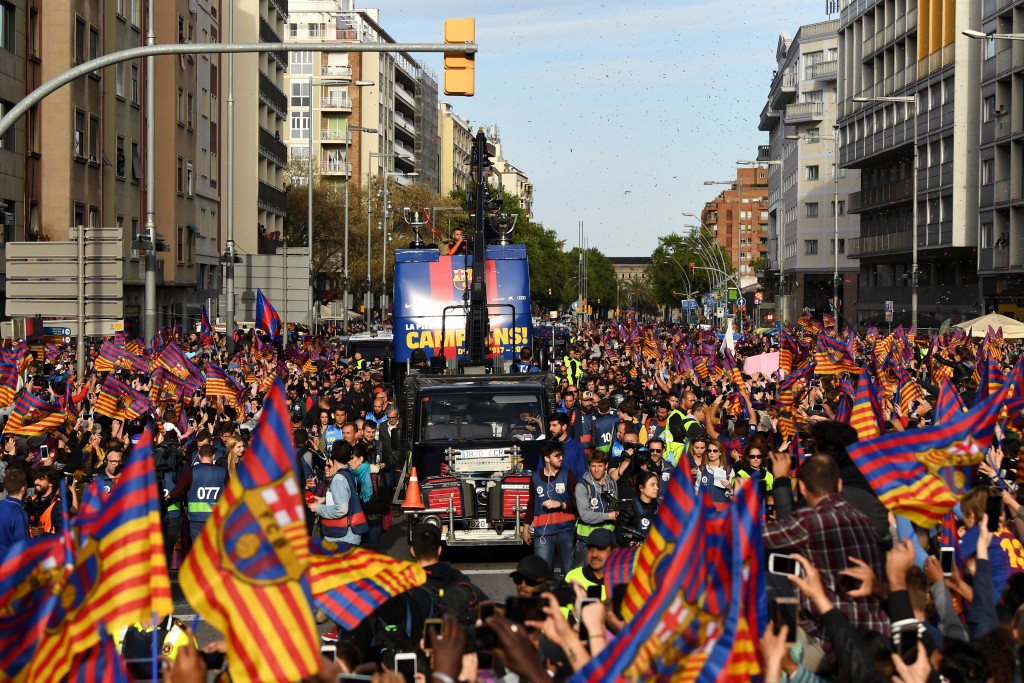
Barcelona’s La Liga crown in 2025/26 did not just land in their lap; it was forged through smart risks, relentless execution, and a rival’s meltdown.
Despite a rocky couple of seasons, Hansi Flick’s side have now wrapped up back-to-back league titles. Barcelona have racked up the division’s most goals, conceded fewer than the challengers, and turned Camp Nou into a fortress while picking up crucial points on the road. This was not vintage tiki-taka poetry; it was pragmatic, high-octane football that mixed German efficiency with Catalan flair.
Flick’s men have averaged over two goals per game, blending youth and experience into a machine that hummed from the opening whistle. But titles are not won on numbers alone. Let us unpack the five standout reasons why the Blaugrana pulled away from the pack.
Hansi Flick’s Tactical Edge and Dressing Room Mastery
Hansi Flick arrived at Barcelona with a reputation built on Bayern Munich’s treble glory, and he wasted no time imprinting his vision. His coaching style thrives on high pressing, quick transitions, and fluid positional play; think relentless waves of attack that suffocate opponents before they can breathe.
At Barcelona, he adapted this to a squad brimming with speedsters and finishers, turning their 4-2-3-1 into a weapon that shifted seamlessly into overloads on the flanks. They have stuck to their guns for the last two seasons, and it has worked wonders.
What set Flick apart was not just the whiteboard tactics; it was how he glued the dressing room together. Coming off internal turbulence, he fostered a culture of accountability and hunger. Players bought in because Flick demanded intensity without ego, drills emphasised collective pressing triggers, and rotation kept legs fresh.
The result? The Blaugrana led La Liga in possession recovered in the final third, per season logs, and their goals from turnovers spiked. He rotated smartly, avoiding burnout in a gruelling calendar that included deep runs into the UEFA Champions League.
Youngsters like Lamine Yamal got a license to roam, while veterans like Robert Lewandowski stayed sharp and were used when it actually mattered. Flick’s legacy here echoes his Bayern days: not revolutionising the wheel, but spinning it faster and harder. Without his calm authority, Barcelona’s talent pool might have stayed a puddle.
The Marcus Rashford Loan Gamble That Paid Off Big
Few moves raised eyebrows like Barcelona snapping up Marcus Rashford on loan from Manchester United last summer. The Englishman had not hit peak form for a couple of years, plagued by inconsistency and off-field noise. However, Hansi Flick saw untapped potential there. It was a low-risk punt, as there was no massive fee, and just wages to be covered, with Rashford hungry for redemption.
The bet exploded into brilliance. Rashford terrorised defences with his bursts down the left, linking with Lamine Yamal on the right for devastating overlaps. In El Clasico, he dismantled Real Madrid single-handedly, earning headlines as the first Englishman to win La Liga with Barcelona.
His stats screamed impact: double-digit goals and assists in limited starts. What made it work? Flick repositioned him as a wide forward, not a central striker, letting his explosiveness shine without the weight of lone-wolf duties.
Rashford’s pressing stats aligned perfectly with Flick’s system, winning back possession high up the pitch. Critics called it a PR stunt; instead, it became a masterstroke. He added English steel to Barcelona’s silk, proving gambles on motivated misfits can tilt titles. Insiders are now urging keeping him; it is a steal if he sustains this fire. The Englishman surely wants to continue at Camp Nou.
Attacking Depth That Overwhelmed Everyone
Barcelona did not just score goals; they drowned teams in options. Their attack was the league’s most productive by miles, piling up goals at a clip no one could match. The secret? Depth that lets Hansi Flick mix and match without dipping quality.
Raphinha terrorised right-backs with his cut-ins and crosses. Robert Lewandowski, still a fox in the box, notched clinical finishes. Lamine Yamal, the teenage wizard, dazzled with dribbles and vision beyond his years.
Then there is Rashford’s loan magic on the left, Ferran Torres as the super-sub who flipped games, while Roony Bardghji injected raw pace off the bench if and when needed. Even midfield maestros like Dani Olmo and Fermin Lopez slotted onto the wings when needed, adding goals from makeshift positions. This was not a top-heavy unit reliant on two stars; it was a barrage.
Rotations covered fitness issues seamlessly, particularly when Raphinha was unavailable. Defences faced fresh legs every half-hour, leading to late collapses for rivals. Barcelona’s tally topped the charts because they attacked in packs, exploiting tired markers. In a league of tight margins, this firepower turned draws into romps and losses into unlikely wins. Depth like this is not luck; it is squad-building genius.
Joan Garcia’s Goalkeeping Revelation
Goalkeeping had been Barcelona’s Achilles’ heel for seasons due to leaky shots and shaky commands. Enter Joan Garcia, signed from Espanyol, whose debut campaign rewrote the script. At 25, he arrived untested in top-flight title chases, but his numbers silenced doubters.
Garcia topped La Liga saves with a stoppage rate hovering near 80%, including clutch stops in big games. His distribution launched counters, with the Spaniard averaging 70% long-ball accuracy to the feet of the attackers. What stood out was his sweeper-keeper instincts. Hansi Flick’s high line demanded a keeper bold enough to rush out, and Garcia nailed it, averaging 2.5 claims per game.
He marshalled a young backline with vocal commands and precise positioning, cutting goals from set-pieces by half. Rivals tested him relentlessly, but he grew into the spotlight. Garcia was not flashy; he was reliable, turning potential disasters into clean sheets. In a title race, one position’s solidity can define everything, and his did.
Real Madrid’s Stunning Implosion
No Barcelona triumph writes itself without rivals stumbling, and Real Madrid’s collapse was seismic. The Merengues started hot, leading by five points after Matchday 10, but cracks widened into chasms. Defensive lapses multiplied, conceding soft goals from transitions, and their attack, once lethal, sputtered without rhythm.
Injuries hit hard: key midfielders were sidelined, and Vinicius Jr. was out of form. But the real killer was mentality. Los Blancos dropped points in derbies and against mid-table sides, haemorrhaging a 12-point lead by spring. Tactical tinkering under their Xabi Alonso failed before Alvaro Arbeloa arrived; they chased shadows while Barcelona pressed on.
Real Madrid’s away form crumbled, as they suffered six losses on the road, a far cry from prior dominance. Barcelona capitalised, grinding out results while Madrid panicked. Titles are relative, and Los Blancos’ tragedy handed the Blaugrana the runway. It is a reminder: even giants falter when focus slips.