
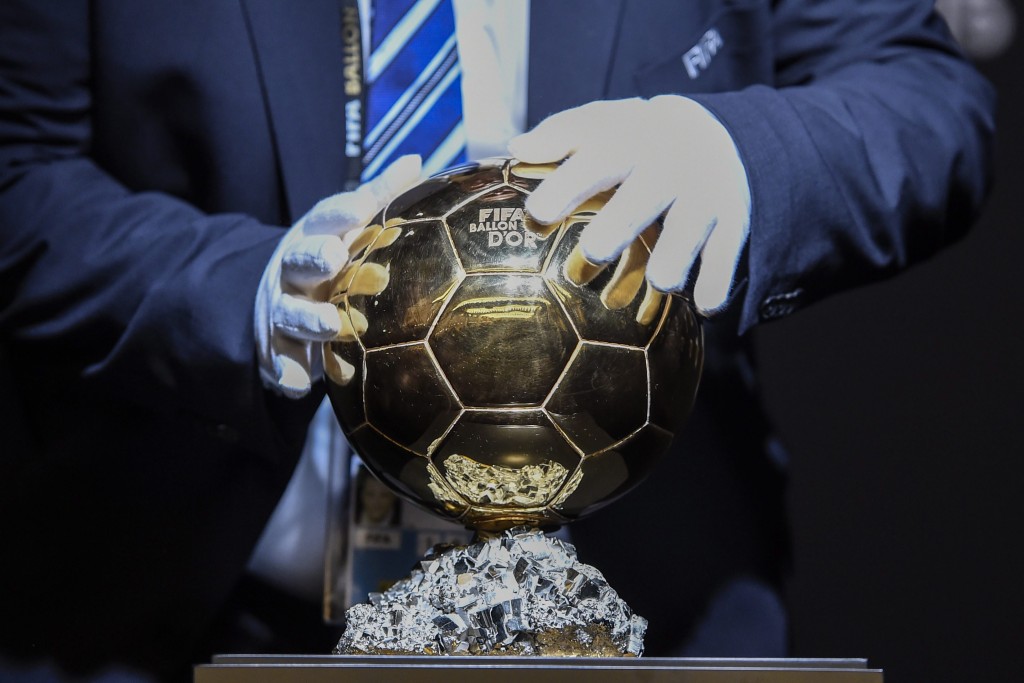
In a year of bold claims and trophy-led arguments, the most convincing Ballon d’Or case may belong to the man saying the least.
The 2026 Ballon d’Or conversation has taken a curious turn. Kylian Mbappe and Lamine Yamal are making unmistakable cases for themselves, yet Harry Kane’s numbers suggest he may be the most deserving candidate on pure merit. It is a debate that pits confidence and narrative against output and consistency.
Mbappe’s individual argument
Kylian Mbappe has been unequivocal. In an interview with France Football, the Real Madrid forward insisted no player was better than him last season, pointing to goals in the biggest arenas and a record-breaking World Cup as proof.
“There was no player better than me,” he said, adding that he would be disappointed not to win.
The statistics back parts of that claim. Mbappe scored 25 goals in La Liga and 15 in the UEFA Champions League, then finished as the World Cup’s all-time leading scorer with 10 goals in the tournament. That is an extraordinary haul across club and country, and it explains why he views the award as a short-term objective.
But the counter-argument is equally clear. Real Madrid faded in the second half of the 2025/26 La Liga title race and exited the Champions League in the quarter-finals, while France finished fourth at the World Cup despite his 10 goals. For all the individual brilliance, the question remains whether his performances translated into decisive impact when trophies were on the line.
Yamal’s trophy-led case
Lamine Yamal, who finished second in last year’s voting, believes this is his time. The Barcelona prodigy has said he and Mbappe are the two best players in the world, but that he deserves the Ballon d’Or because of what he has won: a La Liga title with Barcelona and the World Cup with Spain.
“I honestly believe there are two of us who are the best in the world, and this year I’d deserve it because of what I’ve won,” Yamal told Movistar via TNT Sports.
He has also questioned modern criteria, suggesting people prioritise factors that have little to do with football when debating the award.
Yamal’s domestic season was excellent: 16 goals and 12 assists in 28 La Liga appearances in 2025/26, earning him the league’s best player award as Barcelona retained the title. Yet his World Cup contribution (one goal and one assist) was modest, partly because he arrived in North America still regaining full sharpness after injury.
At 19, he looks primed to win a Ballon d’Or in the future, but this year his claim leans more on team success than dominant individual numbers on the very biggest stage.
Kane’s quiet, overwhelming numbers
If the Ballon d’Or is truly about the best player over a season, Harry Kane has the strongest numerical case. The Bayern Munich and England captain scored 73 goals across the 2025/26 campaign, continuing his ruthless finishing for both club and country.
That volume of goals, sustained over a full season, is rare even in an era of high-scoring forwards. Kane’s consistency has been remarkable. The Englishman finished as the Bundesliga’s top scorer while carrying Bayern’s attack, and remained England’s focal point in front of goal at the World Cup.
On pure output, he has done enough to stake a serious claim for the award, and many observers believe his year rivals the very best in recent memory. Yet context complicates the picture. Michael Olise was named Bundesliga Player of the Year, even though Kane topped the scoring charts, suggesting narrative and style can outweigh raw totals.
For England, Jude Bellingham was arguably the standout performer at the World Cup, raising questions about who truly drove the team’s most important moments. Those factors weaken Kane’s standing in a vote that often rewards visibility and perceived influence as much as goals.
What the debate reveals about the Ballon d’Or
This race exposes a tension at the heart of the award. Mbappe and Yamal are effectively campaigning: one stressing unmatched individual numbers in major competitions, the other leaning on a trophy-laden season and a belief that titles should matter most.
Kane, by contrast, has let his goals do the talking, even if the surrounding storylines have not always favoured him. There is also the ghost of past eras. Lionel Messi and Cristiano Ronaldo collected Ballons d’Or with such regularity that the award sometimes felt inevitable.
Yet even at their peak, neither appeared to be begging, for a lack of a better word for it. By 24, Messi had already won four Ballons d’Or, but he never seemed overly bothered about the chase. Ronaldo, spurred on by Messi’s early lead, locked in and produced the numbers to win five times, but he never ran an overt campaign to secure one.
Today, two players are openly making their cases, while a veteran striker posts numbers that arguably surpass them both. It is a reminder that the “best player” can mean different things: the most decorated, the most prolific, or the most influential in decisive moments.
In 2026, the voters must decide which definition they prefer. If trophies are the priority, Yamal’s La Liga and World Cup double is compelling. If individual dominance in the biggest games is the measure, Mbappe’s goal tally across competitions is hard to ignore.
But if the award is about who stood out consistently across an entire season, then Kane’s 73-goal campaign makes him the most logical winner on merit. Whichever way it goes, the conversation itself is telling. The Ballon d’Or is no longer just handed to the obvious choice; it is argued over, campaigned for, and dissected. And in that noise, the quietest case of Kane may yet be the strongest.