
There was an unmistakable irony about Spain’s semi-final victory when on paper, France possessed one of the most frightening collections of attacking talent in world football.
The French attack was packed with pace, individual brilliance, and match-winning quality. Yet, over the course of the contest, Spain rarely looked like a team under sustained pressure, thus sealing a berth in the FIFA World Cup final against Argentina.
It was not because France lacked elite attackers. It was because they lacked the players capable of delivering the ball to them in dangerous situations. Against Spain’s suffocating defensive structure, the game is rarely won by simply possessing elite forwards. It is won by the midfielders who can manipulate space, evade pressure, and progress possession through intelligent passing and movement.
Les Bleus simply could not do that consistently enough, allowing Spain to dictate where the game was played. Argentina represent an entirely different challenge. The reigning world champions possess one of the most technically gifted midfield units in international football, complemented by perhaps the greatest creator the sport has ever seen.
Unlike France, Argentina have multiple players capable of solving tactical puzzles rather than simply waiting for individual brilliance to rescue them. And that could make Sunday’s World Cup final a completely different contest.
Spain’s greatest strength starts without the ball
Spain’s resurgence under Luis de la Fuente has been built around defensive organisation every bit as much as it has been around attacking quality. Their pressing structure is coordinated. Their midfield distances are compact. Their backline rarely loses its shape, while every player understands exactly when to press and when to retreat into a compact block.
Rather than chasing the ball recklessly, La Roja force opponents into predictable passing lanes before aggressively closing them down. It is a system designed to suffocate creativity. France experienced this firsthand.
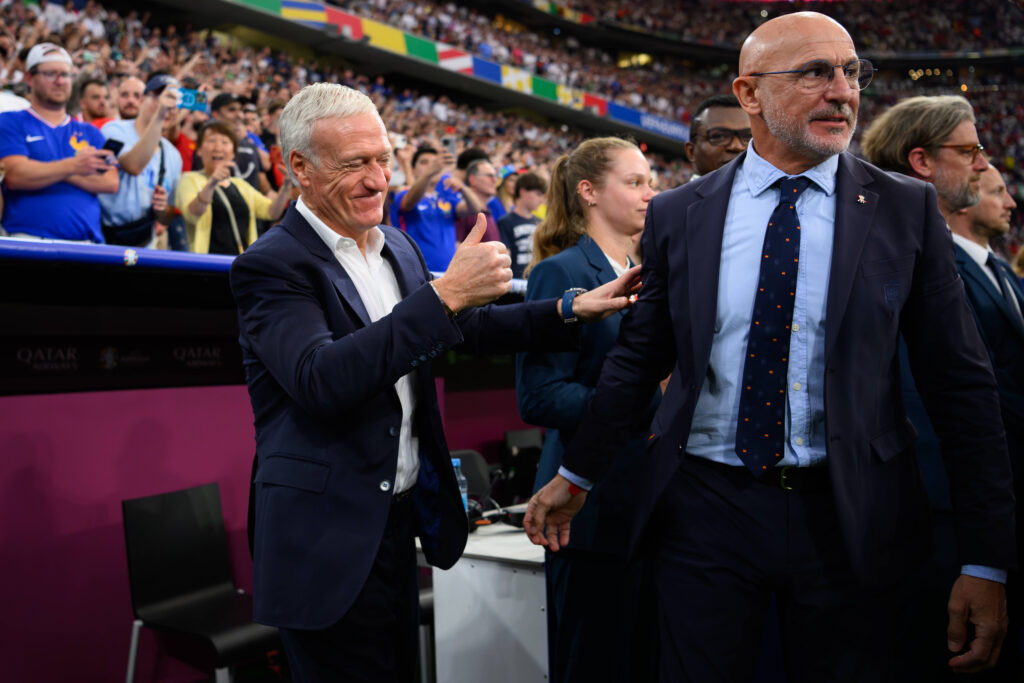
Time and again, their midfield struggled to receive possession facing forward. Their build-up became slow and predictable, forcing repeated sideways passes rather than progressive ones. Their talented attackers frequently received possession with defenders already tight behind them, leaving little room to accelerate or isolate defenders.
The result was a frustrating evening where France’s attacking stars were largely disconnected from the game. Spain did not simply defend well. They controlled where Les Bleus were allowed to attack.
The missing piece in France’s attack
Modern football often celebrates goalscorers and wingers, but elite international tournaments are frequently decided elsewhere. The best attacking sides possess midfielders capable of breaking pressure through passing rather than dribbling alone. France lacked that profile.
Their midfield worked hard defensively and covered enormous ground, but when Spain compressed the centre of the pitch, there was little invention. Breaking compact defensive systems requires players who can:
- Receive under pressure.
- Turn quickly.
- Manipulate defenders with body positioning.
- Play vertical passes between defensive lines.
- Switch play before the defensive block can shift.
France rarely managed any of those consistently. Without progressive passing, even the world’s fastest forwards become isolated. Spain understood this. Their defensive block narrowed the central spaces, forcing France wider before comfortably defending crosses and predictable attacks. It became as much a tactical victory as a technical one.
Argentina possess exactly what France lacked
Argentina’s greatest strength may not actually be Lionel Messi, as ludicrous as it sounds. It might be the players surrounding him. Unlike France, Argentina do not rely on one creative outlet. Their creativity comes from multiple areas of the pitch, making them significantly harder to contain over 90 minutes. That begins with Enzo Fernandez.
The Chelsea vice-captain has developed into one of world football’s finest distributors. Whether operating as a deep-lying playmaker or arriving higher up the pitch, Fernandez possesses an extraordinary passing range capable of changing the entire angle of an attack within seconds. Spain’s narrow defensive shape naturally leaves space on the opposite flank.
Fernandez has repeatedly demonstrated the ability to exploit exactly those spaces through long diagonal switches that immediately place wide players into 1v1 situations. Those passes bypass entire defensive structures.
Instead of patiently circulating possession, Argentina can instantly attack the weak side before Spain have time to recover their defensive shape. That is something France rarely managed.
Alexis Mac Allister may become the game’s quiet hero
If Enzo Fernandez stretches opponents horizontally, Alexis Mac Allister attacks them vertically. The Liverpool midfielder has become one of the most intelligent connectors in world football. His movement between the lines constantly creates passing options that many defenders struggle to anticipate.
Rather than remaining static, Mac Allister continually drifts into half-spaces, offering angles that allow Argentina to progress possession through central areas. This is exactly the area where France struggled.
Spain were comfortable because they rarely had midfielders receiving between their defensive and midfield lines. Mac Allister specialises in doing precisely that. His awareness under pressure allows Argentina to maintain rhythm while gradually pulling Spain’s compact block out of shape. Perhaps more importantly, he understands when to accelerate attacks.
Not every possession requires patience. Sometimes one perfectly timed forward pass completely changes the complexion of the move. Mac Allister excels at recognising those moments.
Then there is Lionel Messi
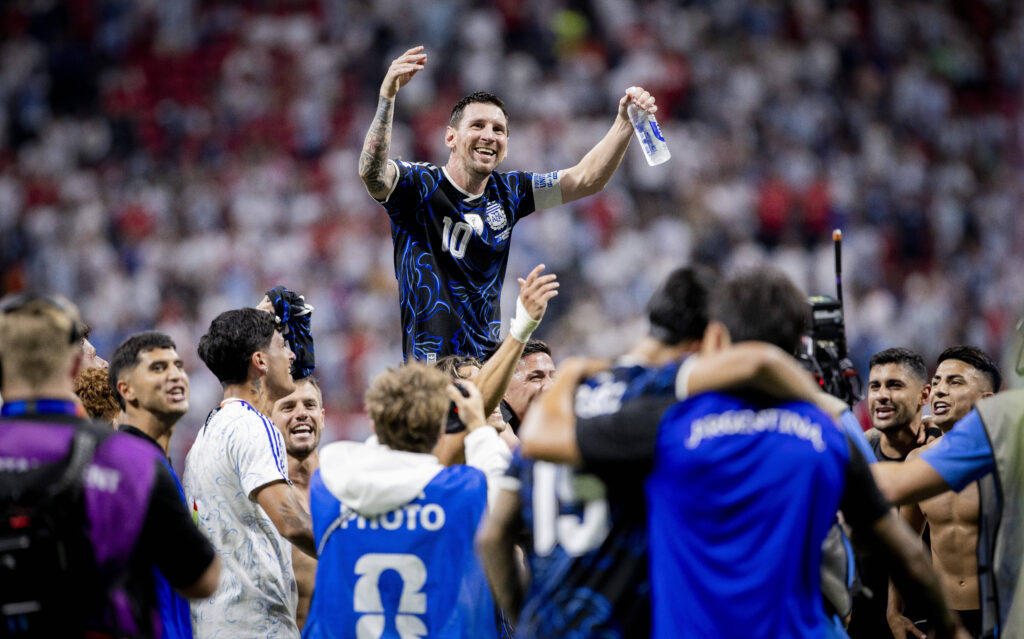
Every tactical preview eventually arrives at the same conclusion. How do you stop Lionel Messi? The uncomfortable truth for opponents is that there often isn’t a satisfactory answer. At 39, Messi may no longer dominate games through explosive acceleration, but his understanding of space remains unmatched. He no longer needs ten touches. Sometimes he only needs one.
Spain’s defensive organisation is outstanding precisely because every player follows their tactical responsibilities. Messi has spent nearly two decades exploiting exactly that kind of structure. He notices tiny defensive movements invisible to almost everyone else.
One defender steps forward. Another shifts slightly wider. A midfielder hesitates for half a second. Those microscopic changes create passing lanes that only Messi consistently identifies. Against organised defensive blocks, creativity becomes priceless. Few players in football history have produced more decisive moments against elite defensive teams than Messi.
He does not simply create chances. He creates opportunities that seem impossible until the ball has already reached its destination.
Argentina’s creativity comes from everywhere
Perhaps the biggest difference between Argentina and France lies in unpredictability. France often attacked through similar patterns. Argentina attack in waves. The ball might begin with Cristian Romero stepping forward into midfield. It could move through Enzo Fernandez before Mac Allister receives between the lines.
Messi might drift inside to combine. A full-back overlaps. A winger attacks the far post. Every player contributes to progression. This diversity makes Argentina extremely difficult to prepare for.
If Spain successfully close one passing lane, Argentina simply construct another. Their midfield possesses the technical quality to continually adapt during matches rather than stubbornly repeating the same patterns. That flexibility becomes invaluable in World Cup finals where games often evolve dramatically.
Can Spain press Argentina the same way?
Spain’s high press was devastating against France because France rarely escaped the first wave cleanly. Argentina present a different problem. Enzo Fernandez and Mac Allister are both exceptionally comfortable receiving possession under pressure. Both possess excellent first touches, can play forward immediately upon receiving, and they understand how to manipulate pressing traps.
If Spain commit numbers aggressively, Argentina have the technical quality to bypass that pressure. Once the first line is beaten, the game changes completely. Messi becomes dangerous, wide spaces open, and Spain’s defenders are forced into uncomfortable recovery runs. The match could become far more stretched than Spain would prefer.
Transitions may decide everything
Spain generally prefer long periods of controlled possession. Argentina are comfortable playing multiple styles. They can dominate possession, counter-attack, or defend deep before breaking with devastating speed. That tactical versatility could become decisive.
If Spain push their full-backs aggressively forward, Argentina possess the passing quality to exploit the vacated spaces almost immediately. Enzo Fernandez’s long-range distribution becomes especially valuable in transition.
One accurate pass can eliminate five or six Spanish players. Mac Allister’s intelligent movement then provides support. Messi arrives between defenders. Suddenly, Spain’s carefully organised defensive structure disappears because the transition has prevented them from resetting. France rarely generated those situations consistently, but Argentina can.
Experience matters on football’s biggest stage
World Cup finals are rarely decided solely by tactics. Composure, decision-making, and understanding pressure matter. Argentina possess a spine that has already experienced football’s biggest occasions.
Messi has played in and won multiple major international finals. Enzo Fernandez has already shone on the biggest stage. Mac Allister continues to deliver in high-pressure club and international matches. Several members of this squad understand exactly what these moments demand. That experience does not guarantee victory. But it reduces the likelihood of panic when momentum inevitably swings.
Spain still deserve enormous respect
None of this should diminish what Spain have achieved. They have arguably been the tournament’s most complete side. Their pressing is exceptional, their defensive organisation borders on flawless, and their attacking combinations remain among the best in international football. Any team reaching a World Cup final deserves immense respect.
Spain absolutely possess the quality to lift the trophy. However, tactical match-ups often matter more than overall quality. France entered the semi-final with frightening attacking talent but lacked the midfield profile needed to expose Spain’s defensive structure. Argentina do not have that problem.
A final worthy of the world’s biggest stage
This is what makes the World Cup final so compelling. It is not simply Spain’s attack against Argentina’s defence. Nor is it Messi against Yamal. It is a fascinating tactical duel between two midfields built to solve football’s hardest problems.
Spain will attempt to compress space, dominate possession and deny Argentina the central areas where they thrive. Argentina will attempt to stretch their opponent’s shape through Enzo Fernandez’s distribution, progress through Alexis Mac Allister’s intelligence, and trust Lionel Messi to produce the moment that no tactical system can fully account for.
France showed that elite forwards alone are not enough to dismantle Spain. Argentina arrive with something far more dangerous. They arrive with creators, progressors, and midfielders capable of manipulating space rather than simply occupying it.
Above all, they arrive with Lionel Messi, a player who has spent an entire career proving that even the most perfectly organised defensive systems can be undone by one extraordinary moment of imagination.
If Spain are to become world champions, they will have to survive a challenge unlike the one they faced in the semi-finals. France tested their defensive discipline. Argentina will test their tactical limits.