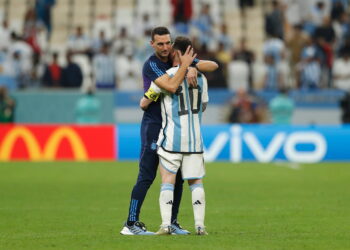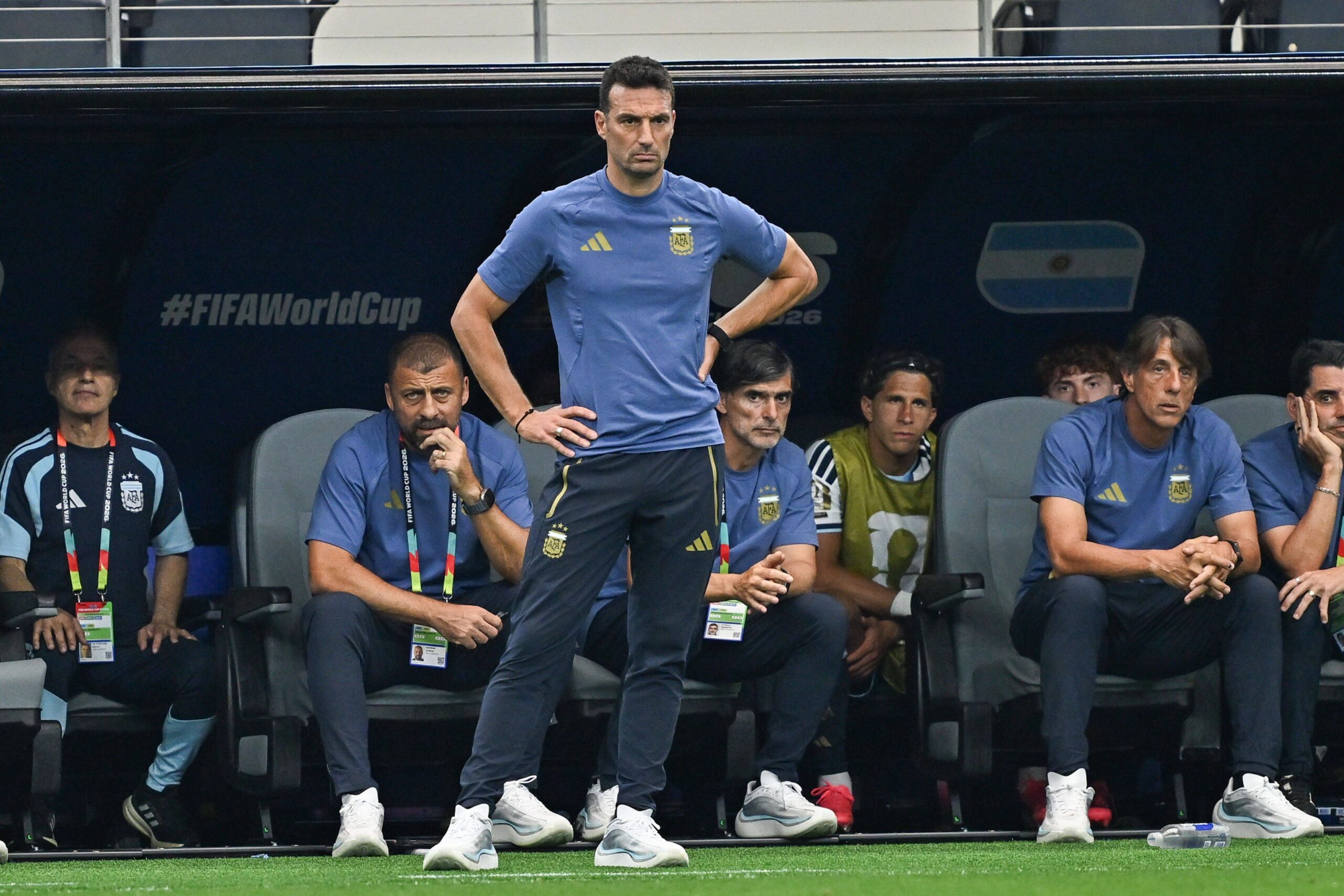
Lionel Scaloni has taken Argentina to the brink of history again; now he must show they can beat Spain without Lionel Messi carrying the whole load.
Lionel Scaloni has already turned Argentina into a trophy machine, but beating Spain in the FIFA World Cup 2026 final on Sunday will demand tweaks to a winning formula rather than blind faith in what has worked before by being over-dependent on Lionel Messi.
Easing Argentina’s Messi over-dependence
Argentina’s run to another World Cup final has again revolved around Lionel Messi’s ability to change games on his own, whether through a disguised pass, a late run into the box or a trademark finish.
Against England, it was his timing and creativity that dragged Argentina through a tricky spell and unlocked a defence that had largely kept its shape. The pattern has been familiar for years: when Argentina need inspiration, the ball gravitates to the No. 10 and everyone else waits for the magic.
Spain, however, are built to suffocate that kind of dependency. Luis de la Fuente’s side press high, keep the ball relentlessly and are prepared to give Messi special attention without committing to a naive man-marking job that would open other spaces.
With Rodri patrolling in front of the back four and a compact midfield line sliding side to side, Messi is unlikely to find the roomy half-spaces he enjoyed earlier in the tournament. Instead of standing off and hoping he cannot hurt them, Spain will try to dictate where he receives the ball and what direction he can turn.
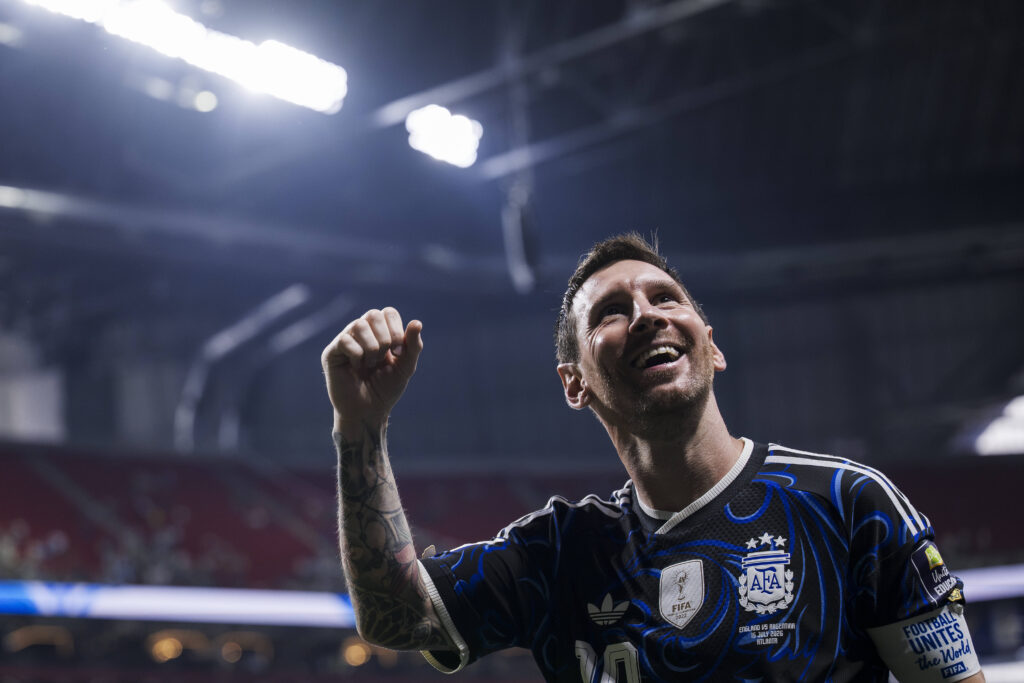
Scaloni’s first task, therefore, is to ensure Argentina’s attacking plan does not read, “Give it to Messi and hope.” That means more responsibility for the supporting cast. Alexis Mac Allister, one of the brains of this side, has spoken about Scaloni “always knowing what game we have to play”, but this is the night when he must move from facilitator to genuine playmaker.
Messi is not a classic runner in behind, especially at this stage of his career, so the vertical threat has to come from Julian Alvarez, Lautaro Martinez and wide runners arriving from deeper positions. If they offer sharp movement beyond Spain’s defensive line, Messi can stay central, receive under pressure and still hurt Spain by playing first-time passes around the corner. Without that coordinated movement, he will simply be surrounded and forced to circulate possession harmlessly.
Fixing the flanks against Spain’s width
If Argentina’s attack leans too heavily on one genius, their defence has often been stretched by the most basic threat of all: pace and quality out wide. England’s wingers caused repeated problems before retreating into their shell to protect a lead, and Anthony Gordon’s goal came directly from Argentina failing to manage Morgan Rogers on the right and then losing Gordon’s delayed run from the left into the box.
It was a reminder that this back line can be manipulated horizontally, dragged across the pitch and then punished by the runner they forget to track. Spain are arguably the worst possible side to face with those issues unresolved. De la Fuente has built his team around quick ball circulation and wide players who either stay high and wide or drive infield at the perfect moment.
Their semi-final against France underlined just how well-drilled they are without the ball, but going forward they rely on stretching opponents so that Rodri and the attacking midfielders can play through gaps that open almost automatically.
If Argentina’s full-backs continue to get isolated or jump out of the line at the wrong time, Spain’s wingers will keep receiving in good positions and force centre-backs to defend in the channels they least enjoy.
Scaloni has shown himself to be a flexible coach, praised by his players for adapting his approach to each opponent, and that quality is needed more than ever now. He may have to consider a tweak in personnel on the flanks, a more conservative full-back, or a wide midfielder doubling up, or a change in structure, such as moving to a back three in possession that becomes a five when Spain attack.
What he cannot afford is a repeat of the England scenario where wide overloads slowly sap confidence until a decisive lapse arrives. Against a side that thrives on repetition and rhythm, even one weak link on the flank can become a fatal flaw.
Controlling the first goal and the tempo
For much of this tournament, Argentina have found ways to survive awkward spells, whether by defending deep, dominating the ball or breaking quickly when the opportunity arises. That versatility has been a hallmark of Scaloni’s reign and a reason why his players talk about giving their lives for him; they trust that there will always be a plan B and C when plan A hits trouble.
Yet Spain pose a particular threat in terms of game-state. If they score first, they are far less likely than Cape Verde, Egypt or even England to drop back and invite pressure. Instead, they tend to keep the ball, slow the game, and gradually frustrate opponents who chase shadows. We have seen it happen to Portugal as well as France.
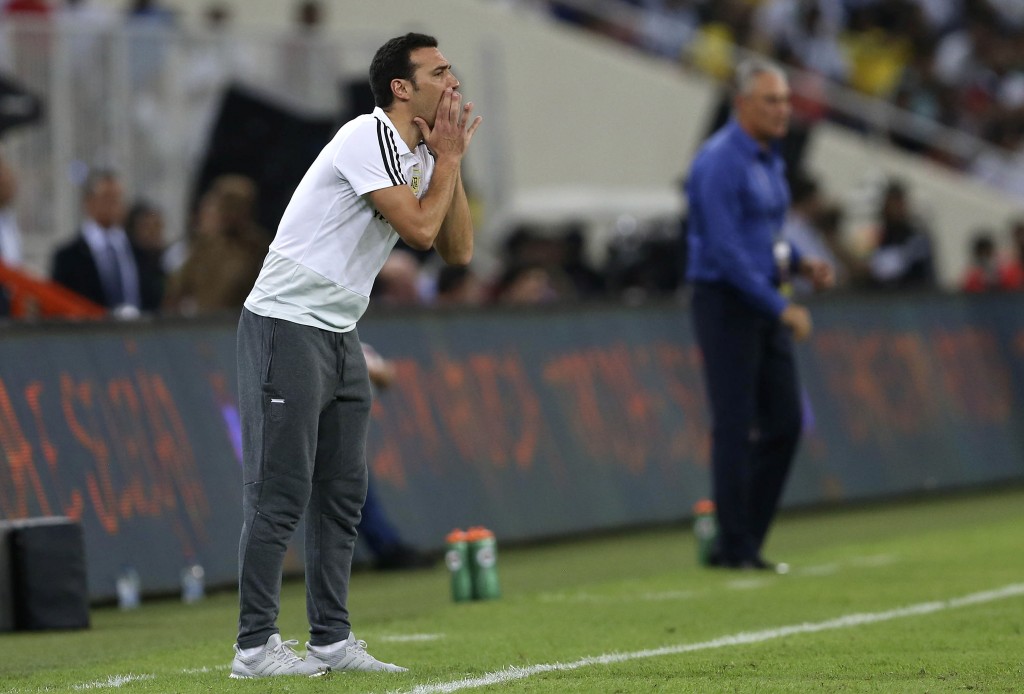
That is why avoiding the concession of the opening goal feels almost like a non-negotiable. Even if Argentina cannot dominate from minute one, they must manage the first passages of play in a way that prevents Spain from settling into their comfort zone of patient, controlled possession.
That might mean accepting shorter spells on the ball but ensuring that transitions are sharp and that any Spanish counter-press is met with calm rather than rushed clearances. If Argentina can reach half-time level or ahead, their experience in tight knockout games should tilt the psychological balance.
Scaloni’s in-game reading will be crucial here. His ability to “read games and react accordingly”, whether by switching the pressing height, altering the front line or closing down a central channel that has become too open.
Against Spain, the moment to move from mid-block to more aggressive pressing, or to introduce an extra runner from midfield, could hinge on something as small as Rodri starting to receive less pressure. Those decisions, timed correctly, can prevent Spain from freezing the match into a slow, passing exercise that drains Argentina’s attacking energy.
Building beyond Messi for one more title
Both finalists arrive with clear identities and strong collective spirit, but they have been constructed in different ways. Spain’s project under de la Fuente has focused on family, long-standing relationships and a balanced platform for several stars.
Argentina’s, by contrast, has been built to platform one superstar while still keeping the group united, with veterans such as Nicolas Otamendi and Emiliano Martinez highlighting Scaloni’s man-management as the glue that holds everything together.
If Argentina are to become back-to-back world champions, the evolution of that project must accelerate on Sunday night. Messi will still be the reference point, and in a final of this magnitude it would be foolish not to lean on his mind and left foot.
But the supporting structure around him, wider defensive security, more varied routes into the box, and a clearer plan for controlling the tempo when Spain threaten to take over, will decide whether his influence is enough.
In short, Scaloni does not need to reinvent Argentina; he needs to refine them. Reduce the burden on Messi, repair the leaks on the flanks, and treat the first goal as a tactical battleground rather than a mere statistic.