Spain’s route to the final was built on control and nerve, but against Argentina, the real test is whether they can cage Messi and strike first.
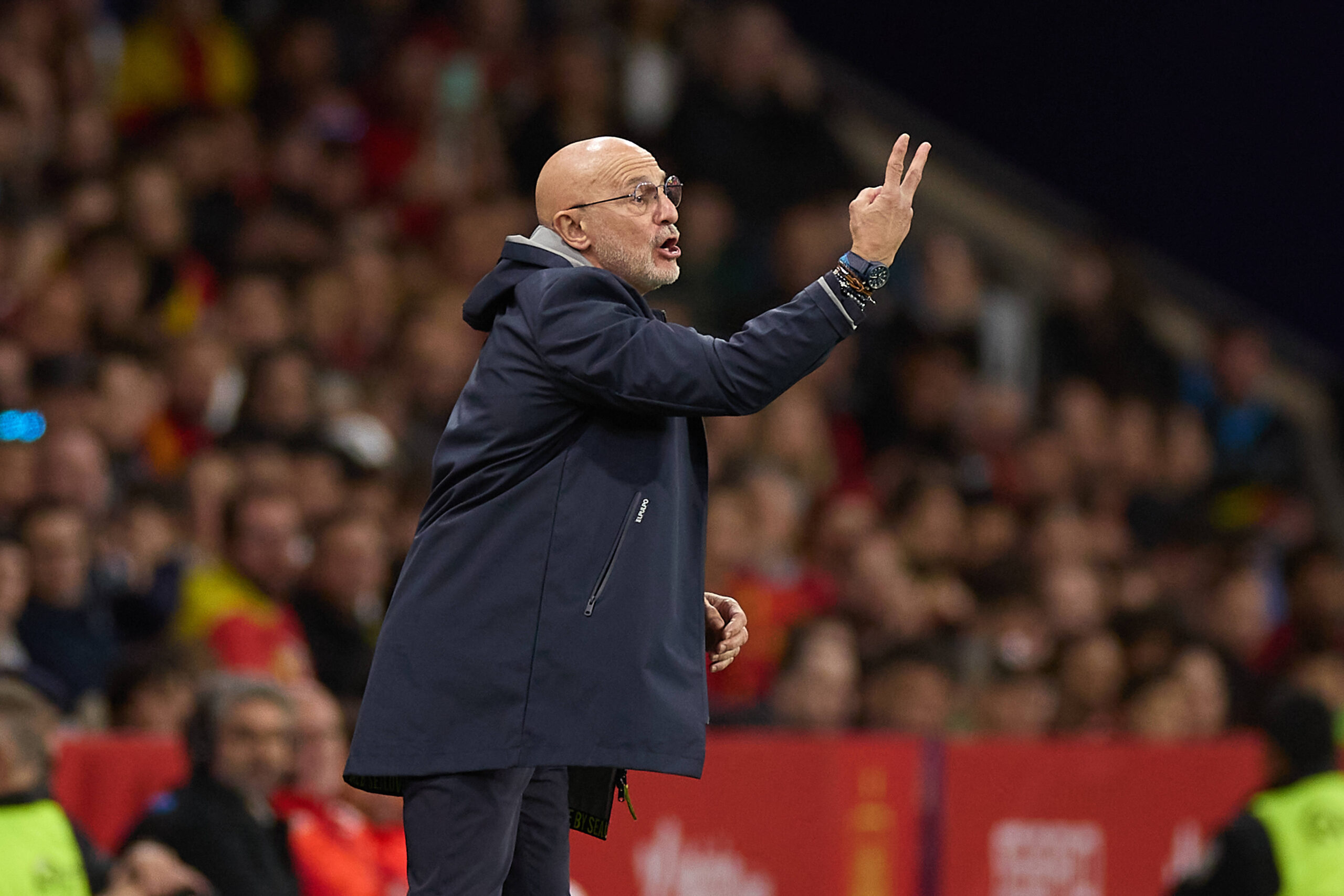
Spain have reached Sunday’s World Cup final in East Rutherford, New Jersey, after a run that has confirmed Luis de la Fuente’s side as the tournament’s most complete team, with victories over Portugal, Belgium and France sending them into a meeting with defending champions Argentina.
They have conceded only one goal in seven matches, and that statistic alone explains why so many opponents have looked beaten even before kick-off. Yet finals are rarely won by reputation, and if Spain are to take the trophy, they will need more than control, more than neat possession and more than the glow of a brilliant semi-final against France.
That semi-final was the clearest statement of all. France arrived in Dallas after scoring 16 goals and conceding only two in their previous six matches, but Spain reduced that fearsome front line to a collection of isolated sprints and blocked shots.
Mikel Oyarzabal’s penalty and Pedro Porro’s cool finish settled a 2-0 win, but the score only told half the story because Rodri, Fabian Ruiz and Dani Olmo owned the rhythm of the match and never allowed Didier Deschamps’s side to settle into their usual attacking flow. Spain had already shown a different kind of steel against Portugal in the last 16, where an awkward contest seemed destined for extra time before Mikel Merino struck in stoppage time to earn a 1-0 victory.
Those two knockout wins matter because they revealed both faces of this Spain team. Against Portugal, they were patient enough to wait for the door to open; against France, they were sharp enough to kick it off its hinges once the gap appeared.
That blend of calm and cruelty is why they are here, and it is also why Argentina will not simply be facing another team determined to have a go at Messi and friends. Spain have the structure, the midfield intelligence and the collective discipline to make this final about details, and details are where Argentina can be hurt.
Use Yamal as the decoy, not just the star
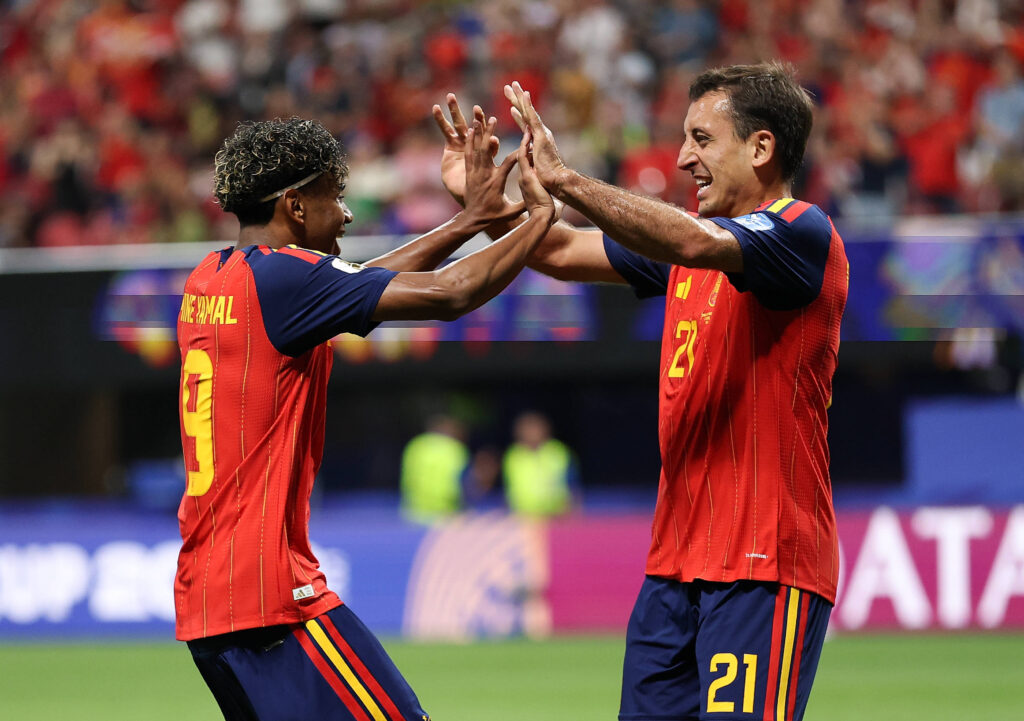
The obvious headline is Lamine Yamal against Messi, but Spain’s smartest route may be to make Yamal the bait rather than the centre of every move. Spain’s attacking shape is built on wide triangles, with Rodri holding behind the play, a winger-high structure on each side and a striker pinning central defenders so that the wide overload can develop properly.
Spain wants Yamal 1v1 against Argentina’s full-back, but the real damage may come from what happens next rather than from the dribble itself. The key detail is the “pin”. In Spain’s best moments against Portugal and France, one attacker fixed a centre-back in place while another player, often Dani Olmo or Fabian Ruiz, occupied the inside lane and stopped the defence from shifting across too early.
When one attacker fixes a centre-back while Olmo occupies the inside lane, it creates a corridor for Porro to underlap or overlap on the right, and once the defender turns his eyes to Yamal, Spain attacks the blind side with a run that arrives from outside his field of vision.
This is not showboating football; it is geometry with studs on, and it is precisely the sort of movement that can disturb an Argentina side which usually thrives on compact numbers around the ball. That is why Yamal does not need to spend the night trying to beat four players and curl one into the far corner. He needs to attract attention, force Argentina to lean towards him and then release the space for Porro, Olmo, or Ruiz to attack behind the watching defender.
Spain saw several moves flash across the face of the goal against Portugal without enough runners arriving in the box, so the final adjustment is clear: if the blind-side run works, the penalty area must be filled with conviction. Argentina can live with a winger receiving to feet; what they do not want is a rotating front that turns one duel on the flank into panic across the back line.
Play through the midfield, then crush the second ball
Argentina’s midfield block is difficult to play through because it closes central lanes quickly and often protects the defence with a holding player screening in front. England found some joy in wider spaces during the first half of the semi-final, but Spain are built to solve a different problem: not just how to go around the block, but how to stretch it until a pass can go through it.
The most important phrase from the tactical breakdown is “up, back and through”, which captures Spain’s more vertical version of possession under de la Fuente. Older Spanish sides could keep the ball for the sake of it, but this team have been praised for playing more directly through pressure, using a forward pass to draw an opponent out, a return pass to reset the angle and then a penetrating ball into the gap that has just appeared.
Rodri, Olmo, Ruiz, and the defenders behind them have repeatedly found those central passes during the tournament, and that has made Spain less decorative and more dangerous. It also means there will be turnovers, because riskier passes create broken moments, but Spain are prepared for that better than anybody else left in the competition.
The number from the tactical analysis is striking. Spain’s average time to win the ball back after losing it is 10.1 seconds. That reflects a fierce counter-press, rooted in the old six-second idea of swarming the ball immediately and either regaining possession at once or dropping back into shape before the counter-attack gathers speed.
Against Argentina, that reaction could decide everything because one failed press, one lazy recovery run or one loose spacing behind the ball is all Messi needs to turn a harmless steal into a final-winning transition. So Spain should not try to avoid risk altogether. They should keep playing through Argentina’s midfield, but only with the rest-defence behind the move ready for the second phase.
If Spain can force Argentina to defend narrow and then immediately smother the first outlet pass after a turnover, they can spend long spells pinning Scaloni’s side back rather than allowing the game to become the emotional, end-to-end contest Argentina often enjoy. In a final, territory matters almost as much as possession, and Spain have the tools to make Argentina defend deeper than they would like.
Stop Messi by stopping the picture around him
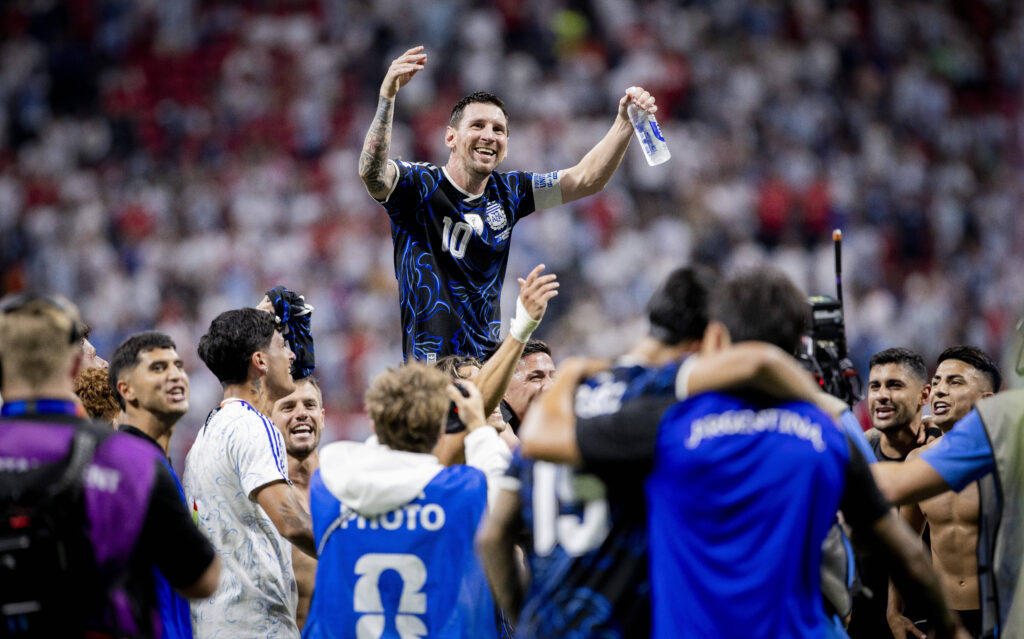
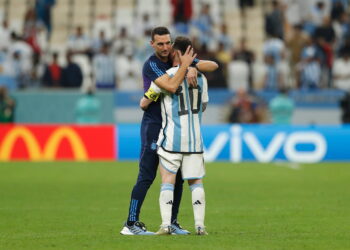
Every conversation about Argentina begins with Messi, and for good reason. He did not score in the semi-final against England, but did supply two decisive assists in the late comeback that sent La Albiceleste into a second straight World Cup final, and he remains tied on eight tournament goals with Kylian Mbappe.
More revealing still is the tactical figure from the pre-final analysis, as 88 per cent of Argentina’s chances in this tournament have involved Messi, whether through the pass before the assist, the assist itself or the shot. That is not just influence; that is authorship.
But the lesson is not that Messi must be man-marked from the first whistle. The lesson is that Argentina build pictures around him, with wide runners, midfield surges and clever spacing designed to drag defenders away from the zone where he wants to receive.
Scaloni has alternated shapes, including a 4-1-3-2 and a 4-4-2, but the purpose remains the same: get Messi on the ball in spaces where the next runner is already moving beyond him. Against England, the adjustment after half-time was less about a dramatic reinvention than about creating fresh lanes for Messi to drift wide, attract pressure and release the runners around him.
Spain’s answer should begin with Rodri. The tactical analysis suggests he is vital not as the first presser, but as the reader of the next pass, the player who holds his position so that if Argentina do escape the initial press, Messi does not receive on the turn with Spain’s centre-backs exposed behind him.
That role is critical because Messi’s genius lies not only in his touch but in his positioning; the same analysis argued that he often keeps himself roughly 15 yards from the defensive line or the passing lane he wants, a distance that makes him almost impossible to reach before he controls and swivels away. Spain therefore have to defend the pass before the reception, not merely the reception itself.
That means compact centre-backs, midfielders alert to third-man runs and wide players willing to recover without switching off when Messi wanders away from the obvious danger zone. If Spain can deny him those clean, 15-yard connections and force Argentina to build attacks without his immediate touch, the final becomes less about the greatest player of his generation and more about whether the holders can invent a second route to goal.
That is where the crack in Spain’s armour may never appear at all, because if de la Fuente’s side combine their blind-side attacking patterns with a disciplined counter-press and a Rodri-led shield against Messi, they will not need perfection; they will simply need to be true to the structure that brought them here.