The Hard Tackle lists three candidates Crystal Palace should consider if they pull the plug on the Pierre Sage project during the international break.
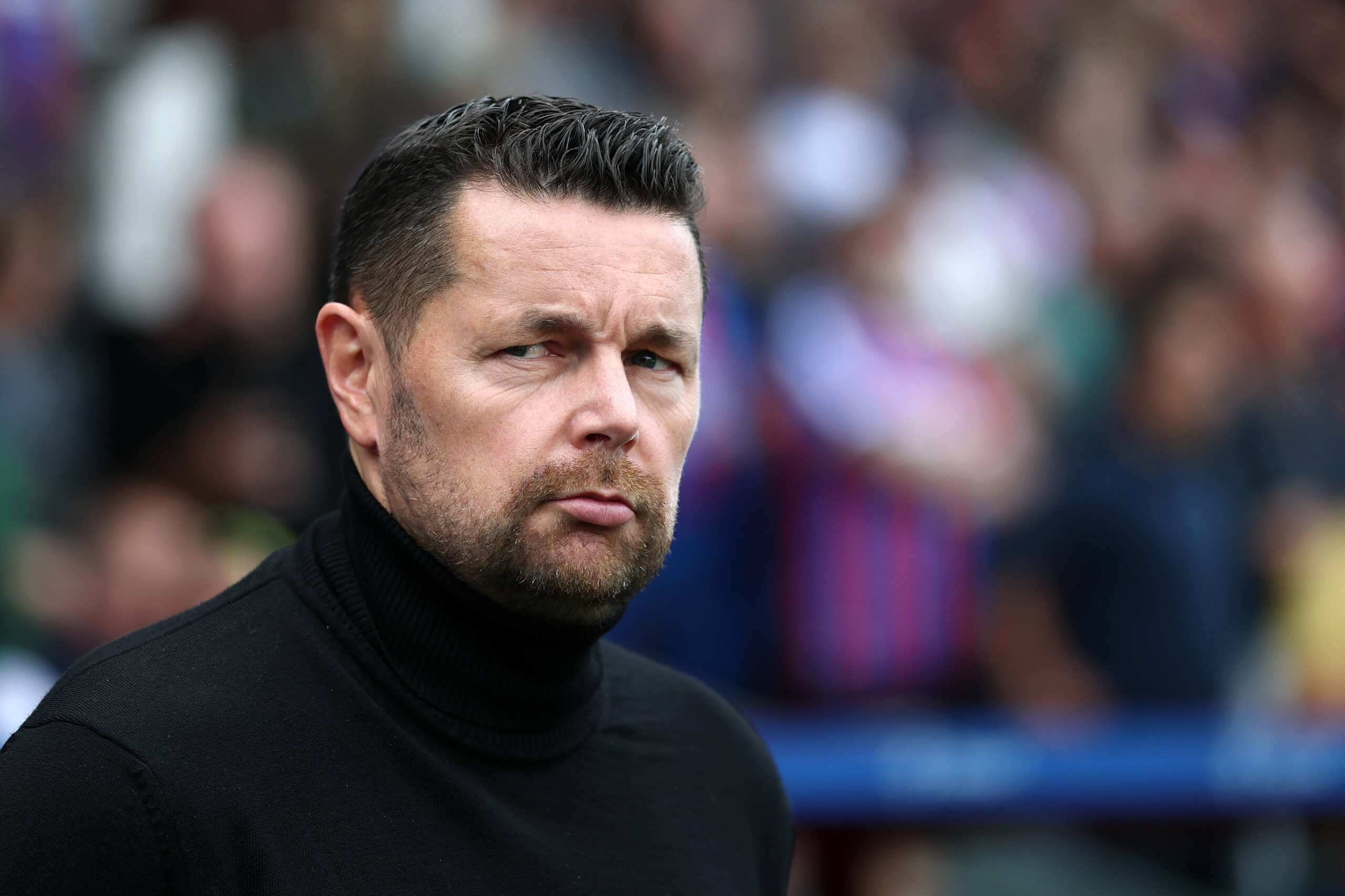
The mood around Selhurst Park has turned decisively bleak. Just five months after arriving in South London with a stellar reputation, Pierre Sage finds himself on the brink of being sacked by Crystal Palace. A devastating 3-1 home defeat to Liverpool could serve as the final straw. This loss condemned the Eagles to rock-bottom of the Premier League table going into the international break.
Speculation regarding Sage’s future has reached a fever pitch after a dreadful start to the campaign. Crystal Palace have registered a mere two wins from their opening ten Premier League matches, leaving them rooted to 20th place with just seven points. Their continental ventures have offered little comfort; in the UEFA Europa League, Sage’s men have stumbled to just one win in four matches, struggling to produce the European pedigree the fans expected.
The only solitary crumb of comfort has come in the EFL Cup, where a hard-fought run has successfully guided them into the quarter-finals. Palace’s agonising downfall since Oliver Glasner’s departure can be traced directly to an unprecedented collapse at both ends of the pitch.
Defensively, Sage’s tactics have left the backline exposed, resulting in the worst defensive record in the Premier League with 24 goals conceded. Up front, the team has suffered from equally poor finishing, with only two teams in the entire division scoring fewer goals than them. This tactical imbalance has been severely exacerbated by a brutal crisis.
The Eagles failed to adequately replace departed defensive stalwarts Daniel Munoz and Maxence Lacroix. Concurrently, injuries to key figures like Dean Henderson, Ismaila Sarr, and Jean-Philippe Mateta have stripped the spine out of the team at different junctures.
With the threat of a prolonged relegation battle looming large, Steve Parish looks poised to act decisively to rescue Crystal Palace’s season. To turn things around, the board must shift their gaze toward these three distinct, high-profile replacements.
Thomas Frank
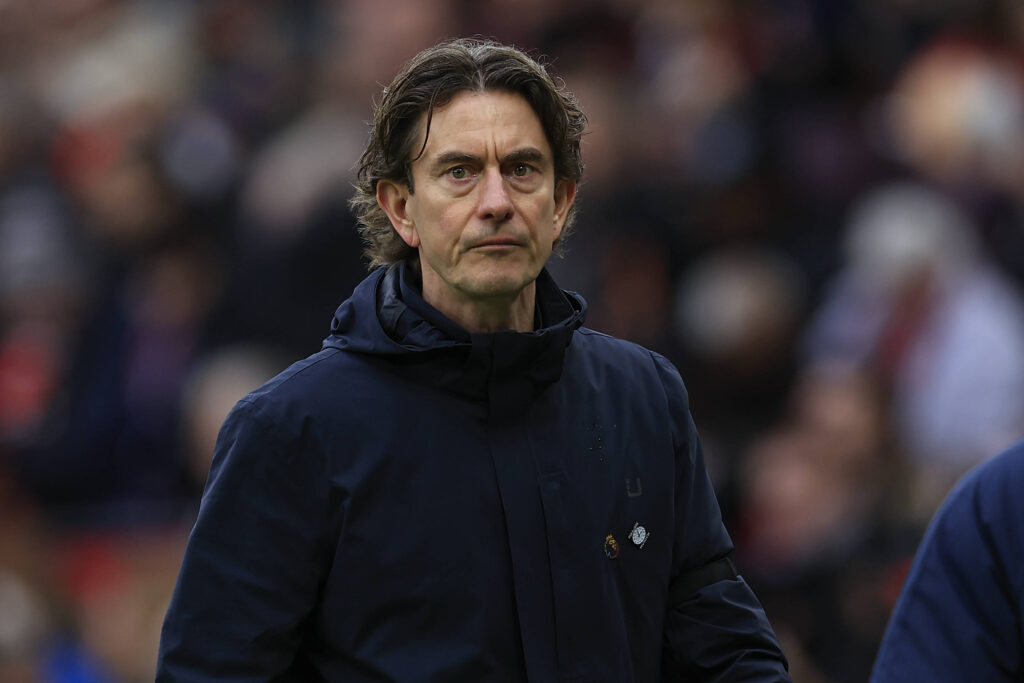
Thomas Frank was widely regarded as one of the most innovative and adaptable tactical minds in the Premier League before his move to Tottenham Hotspur. Renowned for his remarkably successful tenure at Brentford, where he guided the Bees from the Championship into a stable mid-table Premier League outfit, Frank specialises in data-driven structures.
The Danish tactician’s teams are versatile, blending a high-pressing 4-3-3 with an incredibly disciplined 3-5-2 system depending on the opposition. Frank excels at squeezing maximum tactical output out of limited resources by utilising highly advanced set-piece routines and rapid vertical transitions.
- Elite Pragmatic Flexibility: Frank is the ideal replacement because of his proven ability to restructure leaking defenses. At Brentford, his organised, low-block transitions routinely restricted top-six sides, registering an impressive average of 1.35 points per game over a multi-year Premier League span.
- Mastery of Underlying Metrics: The Dane’s tactical setup consistently outshines raw results. During his peak Premier League campaigns, Frank’s sides maintained a positive Expected Goals Differential (+0.12 xGD per 90), proving that his systemic design limits high-quality opposition chances.
- Potential Acquisition Hurdles: The primary roadblock is his demand (Sunderland are reportedly interested) and recent professional trajectory. Having previously held discussions with elite clubs, Frank may be hesitant to step directly into a 20th-place rescue mission mid-season without extensive January transfer window guarantees.
Sean Dyche

Sean Dyche represents the ultimate safety net for a club sleepwalking toward catastrophe. The former Burnley and Everton manager is a master of top-flight survival, renowned for establishing an uncompromising, physically dominant 4-4-2 framework.
Dyche prioritises absolute defensive solidity, low-block discipline, and maximum efficiency from set-pieces. The Englishman eliminates unnecessary risks in the defensive third, demanding total positional accountability from his players to aggressively choke out the opposition’s creative spaces.
- The Ultimate Survival Record: Dyche has never been relegated from the Premier League when managing a full season, famously maintaining Burnley’s top-flight status for several years on a shoestring budget, including a historic seventh-place finish.
- Immediate Defensive Turnaround: His teams’ underlying defensive metrics are precisely what Palace desperately require. Dyche’s setups traditionally rank in the Premier League’s top five for clearances (averaging over 22 per game) and aerial duels won (54%), which would instantly fix the Eagles’ current status as the league’s most fragile backline.
- Long-Term Aesthetic Limitations: The main reservation surrounding Dyche is the stylistic friction his appointment might cause. The Englishman’s direct, direct-to-forward brand of football could alienate a Selhurst Park fan base that has grown accustomed to dynamic, expansive wing play.
Frank Lampard

Frank Lampard brings a distinct blend of elite top-flight experience, transitional leadership, and a proven track record of getting a team to play as far more than the sum of its parts. As a manager, the former Chelsea boss relies heavily on psychological empowerment, open communication, and fostering an intense, high-energy environment.
The Englishman famously galvanised a young Chelsea squad under a transfer ban to secure a top-four finish and engineered a dramatic, emotional Everton survival charge in 2022 by uniting a fractured dressing room. His latest job has seen him guide Coventry City back to the Premier League after over two and a half decades as the 2025/26 EFL Championship winners.
- Unlocking Underperforming Talent: Lampard is an exceptional developmental coach who excels at lifting the confidence of demoralised players. His high-octane, attacking style has historically benefited dynamic modern forwards, which would help ignite Palace’s currently stagnant attack.
- Proven Transitional Impact: During his initial spell at Everton, Lampard adjusted his philosophy to average a crucial 1.4 xG per match over the final stretch of the season. This tactical shift maximised localised momentum to pull the club out of the drop zone.
- Defensive Structural Concerns: The most prominent counter-argument against Lampard is his historically loose defensive positioning. His teams often suffer from counter-attacks due to an expansive style, an unsettling trait for a side that has already let in 24 goals.
- Dealing with Coventry City: The biggest issue for Crystal Palace will be to deal with Coventry City, considering the former Chelsea manager is committed to overseeing the club’s first Premier League campaign since 2001.
Honourable Mentions
Should the primary targets prove unattainable, the hierarchy could pivot to three highly capable structural alternatives:
- Vitor Pereira: An experienced continental traveler who has also masterminded high-stakes relegation escapes in the Premier League with Wolverhampton Wanderers and Nottingham Forest. Pereira offers a fiercer, foreign alternative to Sean Dyche’s rigid survival blueprint.
- Rob Edwards: Renowned for installing an eye-catching, high-intensity style while heavily utilising a progressive setup, Edwards serves as an excellent alternative to Frank Lampard, bringing pristine man-management skills capable of instantly reinvigorating a squad in the doldrums.
- Kieran McKenna: A tactically astute, meticulous young coach who has earned plaudits across the English pyramid. McKenna stands as the ideal pivot if the board decides to replicate Thomas Frank’s intellectual, long-term building methodology.