One of modern football’s greatest paradoxes is that the people entrusted with protecting the game often seem astonishingly detached from the people who actually sustain it.
At a time when supporters are increasingly frustrated by ticket prices, bloated schedules, player welfare concerns, governance scandals, geopolitical controversies, and the relentless commercialisation of football, the sport’s most powerful executives continue to produce comments that range from ill-judged to downright tone-deaf.
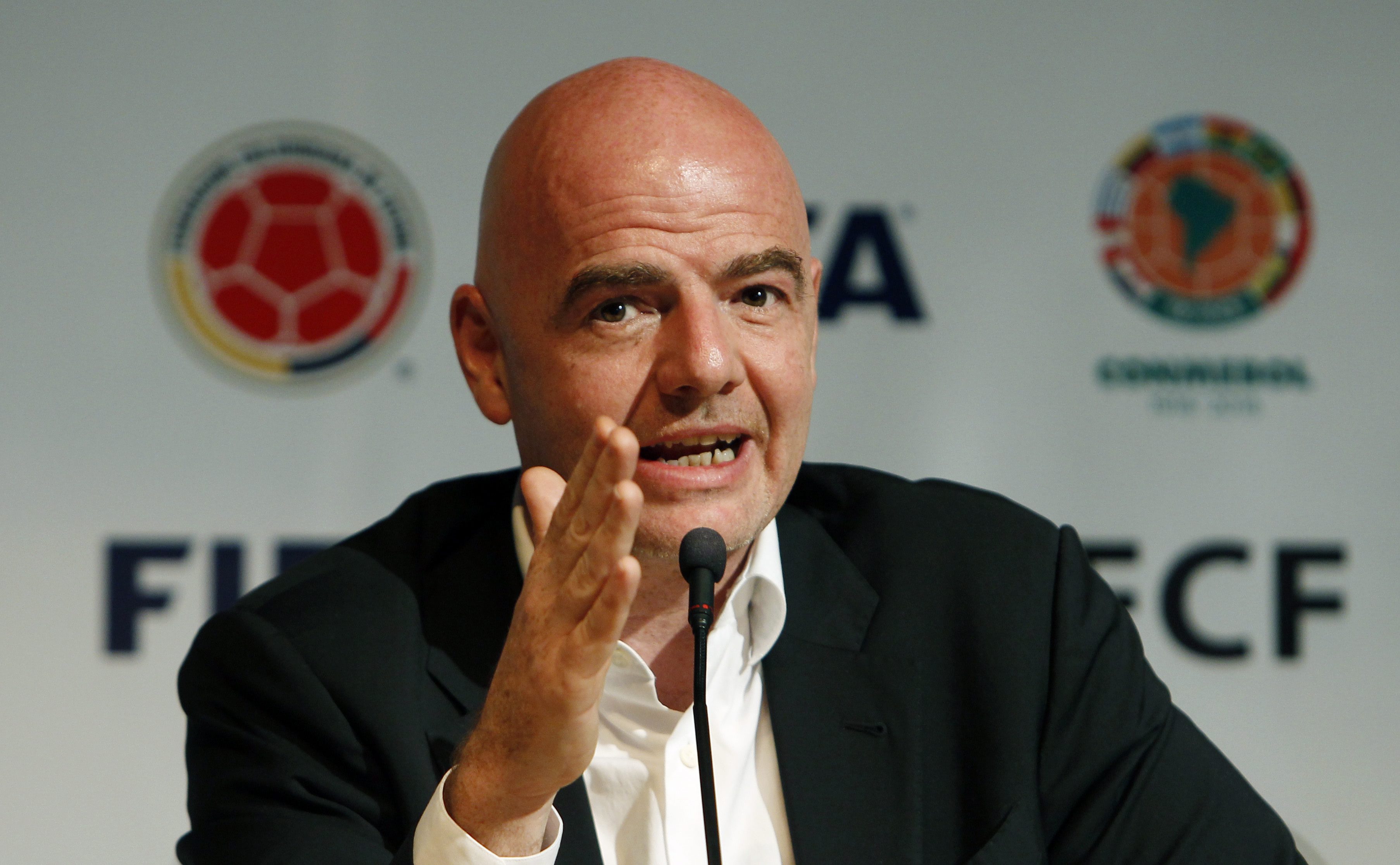
The latest example came from FIFA president Gianni Infantino’s response to the controversy surrounding Somali referee Omar Artan, who was denied entry into the United States ahead of the World Cup. Rather than acknowledging the seriousness of the issue, Infantino’s message was essentially for everyone to “chill and relax.”
For many supporters, it was another reminder of a growing problem at the top of football: an inability, or unwillingness, to recognise why people are angry.
Artan’s case was not some trivial administrative hiccup. Here was a referee, officially Africa’s best, set to become the first Somali official at a World Cup, only to be denied entry by one of the tournament’s host nations. Whatever one’s view of immigration policy or border security, the optics were terrible. This was supposed to be a celebration of football’s global inclusivity.
Instead, it became a story about exclusion. FIFA’s response felt less like leadership and more like damage control. The issue is not merely that Infantino said the wrong thing. It is that he has developed a remarkable habit of saying the wrong thing at exactly the wrong moment. Many fans still remember the eve of the 2022 World Cup in Qatar, when Infantino delivered one of the most bizarre press conferences football has ever witnessed.
Attempting to address criticism over Qatar’s human-rights record, he declared, “Today I feel Qatari. Today I feel Arab. Today I feel African. Today I feel gay. Today I feel disabled. Today I feel like a migrant worker.”
The backlash was immediate and predictable.
What appeared to be an attempt at empathy instead came across as a performance. Critics argued that Infantino was trivialising the lived experiences of marginalised groups while deflecting attention from legitimate concerns surrounding migrant workers and LGBTQ+ rights. The comments quickly became a symbol of FIFA’s broader communications problem.
Perhaps the most striking aspect of that episode was that nobody in FIFA’s inner circle seemed to realise how it would be received. That remains a recurring theme.
Whether discussing scheduling concerns, tournament expansion, climate issues, political controversies or player welfare, football’s leadership class often behaves as though public relations is simply about repeating positive slogans until criticism disappears.
It rarely works.
Take the current debate surrounding hydration breaks at major tournaments. While there are valid medical reasons for introducing cooling measures during extreme temperatures, supporters are increasingly frustrated by a calendar that appears to stretch football beyond reasonable limits.
Matches are being staged in hostile climates, tournaments are expanding, and players are being asked to perform more often than ever before. Fans see hydration breaks as a symptom of a larger issue: football authorities creating problems and then congratulating themselves for implementing solutions.
The optics matter.
Supporters are not foolish. They understand that extreme weather requires precautions. What they question is why football keeps placing itself in situations where such extraordinary measures become necessary in the first place.
That disconnect between administrators and supporters is not exclusive to FIFA.
UEFA president Aleksander Ceferin has often positioned himself as the sensible alternative to Infantino. Compared to FIFA’s president, he can appear measured and pragmatic. Yet UEFA has repeatedly demonstrated its own blind spots.
Recent controversy over comments attributed to Ceferin that expanded World Cup matches are “uninteresting” triggered a furious reaction from 13 national associations, particularly those from Africa and smaller footballing nations. UEFA subsequently disputed the reporting, but the outrage itself revealed a deeper issue.
For emerging football nations, qualification for a World Cup is not merely another sporting achievement. It can be a once-in-a-generation moment of national significance. Any suggestion that their participation makes tournaments less appealing understandably generates resentment.
This is where football’s governing bodies frequently lose sight of reality.
The game’s executives increasingly speak from the perspective of television markets, sponsorship portfolios and commercial growth projections. Supporters, meanwhile, experience football emotionally. They care about stories, communities, identity and belonging.
That is why seemingly minor comments can generate such major backlash. The problem is not simply poor phrasing. It is the impression that football’s leaders fundamentally view the sport differently from the people who love it.
Fans see a football ecosystem in which ticket prices continue to rise, kickoff times are dictated by broadcasters, competitions expand endlessly, and players are pushed towards physical exhaustion.
Administrators see revenue opportunities.
Fans see traditions being eroded.
Administrators see globalisation.
Fans see local communities struggling to remain connected to their clubs.
Administrators see market expansion.
Neither Infantino nor Ceferin created these tensions on their own. They inherited many of them. But both have become symbols of a governance culture that often appears insulated from criticism.
This insulation is dangerous.
Football has historically survived crises because supporters maintained an emotional connection to the game even when they distrusted its institutions. Yet that goodwill is not infinite.
The European Super League fiasco in 2021 demonstrated how quickly fan anger can mobilise when supporters believe the sport’s custodians have crossed a line. The backlash was not merely against specific owners or clubs. It was a rejection of a broader trend in football governance that prioritised commercial interests over sporting integrity.
Three years later, many of the same frustrations remain.
The irony is that football does not have a popularity problem. The sport is stronger globally than ever. Attendance figures remain healthy, television audiences are enormous and major tournaments continue to attract worldwide attention. What football has is a credibility problem.
Every time a governing body dismisses legitimate concerns, every time an executive delivers a tone-deaf soundbite, every time supporters feel patronised rather than heard, that credibility erodes a little further.
Infantino’s “chill and relax” response may not become as infamous as his Qatar monologue. It may disappear from headlines within days. But its significance lies in what it represents. It is another example of football’s leadership failing to recognise the mood of the room.
Supporters are not demanding perfection. They understand that global football is complex. They recognise that difficult decisions must sometimes be made. What they want is honesty, accountability, and a basic awareness of how decisions affect the people who invest their time, money, and emotions in the sport.
Too often, football’s most powerful figures offer none of those things. Instead, they offer slogans. And in a sport increasingly defined by public scepticism, slogans are no substitute for leadership.