
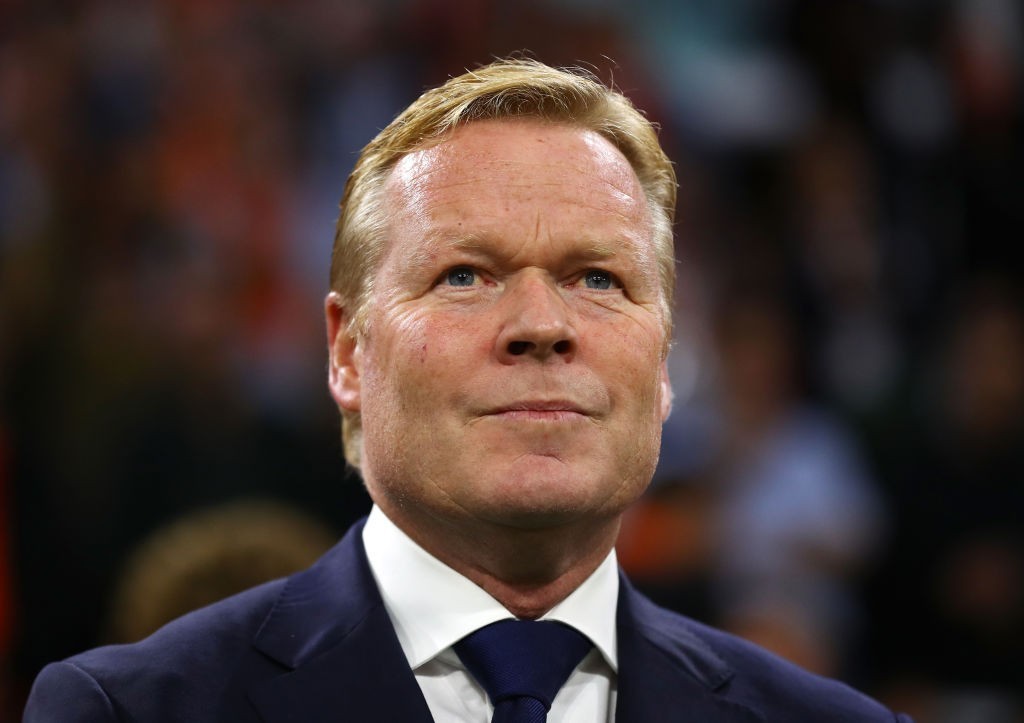
Welcome to Team Spotlight, and today, we analyse the Netherlands’ style, form, key players, and predictions as Ronald Koeman fine-tunes his plans for the 2026 FIFA World Cup.
The Netherlands. A nation synonymous with Total Football, tactical revolution, and a legacy that has shaped the modern game like few others. From Johan Cruyff’s artistry in the 1970s to the near-misses of 1974, 1978, and 2010, the Oranje have long been football’s great romantics, admired as much for how they play as for what they achieve. Yet, despite producing some of the most iconic teams in history, the Netherlands remain without a World Cup triumph.
That paradox defines Dutch football. Three-time runners-up, semi-finalists in 2014, and consistent innovators, yet still chasing the one prize that has eluded them for generations. Their most recent World Cup journey in 2022 ended in heartbreak, losing to eventual champions Argentina on penalties in a dramatic quarter-final that perfectly encapsulated their history, brilliance, resilience, and ultimately, frustration.
Now, as the 2026 FIFA World Cup in Canada, Mexico, and the United States approaches, the Netherlands once again stand on the edge of possibility. With Ronald Koeman back at the helm and a new generation blending with experienced leaders, the question returns. Can this be the tournament where Dutch football finally completes its story?
Road to FIFA World Cup 2026: Solid yet spectacular
Netherlands’ qualification campaign was defined by control, efficiency, and occasional inconsistency. Competing in UEFA’s notoriously demanding qualifying structure, the Oranje secured their place without major drama but also without the dominance expected of a top-tier European side.
They finished top of their group, collecting 20 points from eight matches, with six wins and two draws. Their goal difference of +23 reflected a team that was defensively stable but also potent in attack at times. While they rarely looked in danger of missing out, they also imposed themselves as one of Europe’s standout sides.
Koeman’s approach leaned heavily on structure. The Netherlands were difficult to break down, conceding a goal every two games, but at times struggled to unlock compact defences. Matches against lower-ranked opposition sometimes became exercises in patience rather than dominance, exposing a lack of cutting edge in the final third.
Their UEFA Nations League performances offered a similar narrative. Competitive against elite sides but rarely convincing, the Dutch have settled into a tier just below the very top nations. They are good enough to challenge anyone on their day, but not yet consistent enough to be considered favourites.
Still, qualification was never truly in doubt. And for Koeman, the campaign served its primary purpose: establishing a tactical identity and integrating emerging talent into a cohesive system ahead of the World Cup.
The System: Koeman’s balance between tradition and pragmatism
Ronald Koeman’s Netherlands are not the free-flowing, positionally fluid side of the Johan Cruyff era. Instead, they are a modern interpretation of Dutch principles, structured, disciplined, and tactically flexible.
Koeman has alternated between a 4-2-3-1, a 4-3-3, and a 3-4-3 system, depending on opposition and available personnel. The back three, in particular, has become a key feature against stronger teams, allowing the Netherlands to maintain defensive solidity while utilising their wing-backs for width and progression.
Possession remains central, but it is no longer dogmatic. This is not Total Football reborn; it is controlled football with calculated risks. The emphasis is on building from the back, using technically proficient defenders and midfielders to progress the ball, but without overcommitting numbers forward.
The midfield operates as the team’s engine room, with Frenkie de Jong dictating tempo and transitions. Around him, Koeman prioritises physicality and tactical discipline, ensuring balance rather than pure creativity.
Up front, the system relies heavily on wide forwards cutting inside and a central striker capable of linking play. However, this is also where the Netherlands’ biggest issue lies: the absence of a truly elite, consistent goal-scorer. Koeman’s philosophy is clear. Control the game, minimise risk, and trust in moments of quality. It is a pragmatic evolution of Dutch football, designed for tournament success rather than aesthetic purity.
The Squad: Experience meets a new generation
The Netherlands’ 26-man squad reflects a carefully constructed blend of established stars and emerging talents. There is a strong defensive core, a technically-gifted midfield, and an attack filled with potential, if not certainty.
Goalkeepers: Bart Verbruggen (Brighton & Hove Albion), Mark Flekken (Bayer Leverkusen), Robin Roefs (Sunderland)
Defenders: Nathan Ake (Manchester City), Virgil van Dijk (Liverpool), Denzel Dumfries (Inter Milan), Jorrel Hato (Chelsea), Jan Paul van Hecke (Brighton & Hove Albion), Jurrien Timber (Arsenal), Micky van de Ven (Tottenham Hotspur)
Midfielders: Ryan Gravenberch (Liverpool), Frenkie de Jong (Barcelona), Teun Koopmeiners (Juventus), Tijjani Reijnders (Manchester City), Marten de Roon (Atalanta), Guus Til (PSV), Quinten Timber (Marseille), Mats Wieffer (Brighton & Hove Albion)
Forwards: Brian Brobbey (Sunderland), Memphis Depay (Corinthians), Cody Gakpo (Liverpool), Justin Kluivert (Bournemouth), Donyell Malen (AS Roma), Noa Lang (Galatasaray), Crysencio Summerville (West Ham United), Wout Weghorst (Ajax)
This squad is balanced but not flawless. The defensive unit is among the strongest in international football, anchored by world-class centre-backs. The midfield offers technical quality and versatility. The attack, however, remains a work in progress.
Much like previous Dutch teams, there is no shortage of talent. The challenge lies in turning that talent into a cohesive, tournament-winning unit.
Key Players: The pillars of Dutch ambition
Virgil van Dijk
Virgil van Dijk remains the heartbeat of this Netherlands side. The Liverpool captain, now in his mid-30s, remains one of the most dominant defenders in world football. His leadership, positioning, and composure provide the foundation upon which Koeman’s system is built.
Van Dijk’s aerial dominance and ability to read the game make him indispensable, particularly in knockout football where margins are razor-thin. However, age is beginning to factor into his performances. While still elite, he is no longer as quick across the ground as he once was, which could be exposed against pace-heavy attacks. His experience, though, is invaluable. Few players understand high-pressure matches better, and his presence alone elevates the entire defensive unit.
Frenkie de Jong
Frenkie de Jong is the Netherlands’ most important outfield player. The Barcelona midfielder dictates tempo, controls transitions, and links defence with attack seamlessly. At his best, de Jong is press-resistant, intelligent, and capable of carrying the ball through midfield under intense pressure. His ability to progress play is crucial in Koeman’s system, particularly against teams that sit deep.
However, De Jong’s impact can sometimes be neutralised against highly organised midfields. Without sufficient movement ahead of him, his influence diminishes. The Netherlands’ attacking effectiveness often depends on how much support he receives in advanced areas.
Cody Gakpo
Cody Gakpo has emerged as the Netherlands’ primary attacking threat. The Liverpool forward combines physicality, technical ability, and a keen eye for goal, making him a versatile weapon across the front line.
Gakpo was one of the standout performers in the 2022 World Cup, and his development since then has only strengthened his case as the team’s focal point in attack. His ability to cut inside from the left and deliver decisive contributions will be vital.
Yet, consistency remains a concern. While capable of brilliance, Gakpo can drift out of games, particularly against well-drilled defences. For the Netherlands to progress deep into the tournament, they need him to deliver consistently.
Memphis Depay
Memphis Depay continues to divide opinion. On his day, he is unplayable, creative, confident, and capable of producing moments of magic. He is also one of the Netherlands’ most experienced attackers and a proven performer in international tournaments.
But inconsistency and injuries have plagued his career. Memphis can be both the solution and the problem, capable of inspiring victories or disrupting attacking rhythm with overly ambitious play. Koeman’s faith in him suggests he will play a key role, but whether he can deliver consistently remains a major question.
Notable Absentees: Tough calls and tactical decisions
As with any major tournament squad, there are notable omissions that have sparked debate.
Sven Botman: Despite strong performances at club level, the Newcastle United defender misses out due to Koeman’s preference for more experienced options.
Steven Bergwijn: Once a regular, his move away from Europe and inconsistent form have seen him fall out of favour.
These decisions highlight Koeman’s intent to prioritise tactical cohesion over individual narratives.
Fixtures: A favourable Group Stage path
The Netherlands have been drawn into a manageable group, offering a clear pathway to the knockout stages.
Netherlands’ World Cup 2026 Schedule So Far:
June 14, 2026: Netherlands vs Japan in Dallas
June 20, 2026: Netherlands vs Sweden in Houston
June 25, 2026: Tunisia vs Netherlands in Kansas City
Japan bring tactical discipline and technical quality, Sweden offer athleticism and unpredictability, while Tunisia provide experience and resilience. None of these opponents can be taken lightly, but the Netherlands will be expected to top the group.
Koeman’s side should have enough quality to navigate these fixtures comfortably, though any slip-ups could complicate their path in the knockout rounds.
Prediction: Another deep run, but familiar limitations
The Netherlands enter the 2026 FIFA World Cup as dark horses rather than outright favourites. Their squad is strong, their system is clear, and their experience in tournament football is undeniable.
However, the same issues that have defined recent campaigns remain unresolved. The lack of a truly elite striker, occasional attacking inconsistency, and a tendency to fall short against the very best teams could once again prove decisive.
Against top-tier nations like France, Argentina, or England, the Netherlands may struggle to impose themselves offensively. While their defensive structure will keep them competitive, knockout football often hinges on moments of attacking brilliance.
Ronald Koeman’s pragmatism gives them a solid foundation, and their defensive unit is capable of carrying them deep into the tournament. But without a consistent cutting edge in attack, their ceiling appears limited.
A quarter-final or semi-final finish feels realistic. Beyond that, it would require everything to align perfectly: form, fitness, and fortune.
The Netherlands will be organised, resilient, and tactically sharp. They will compete with anyone. But as has been the case for decades, the final step may remain just out of reach. For now, Dutch football continues its pursuit of destiny, chasing a World Cup triumph that feels both inevitable and perpetually elusive.