
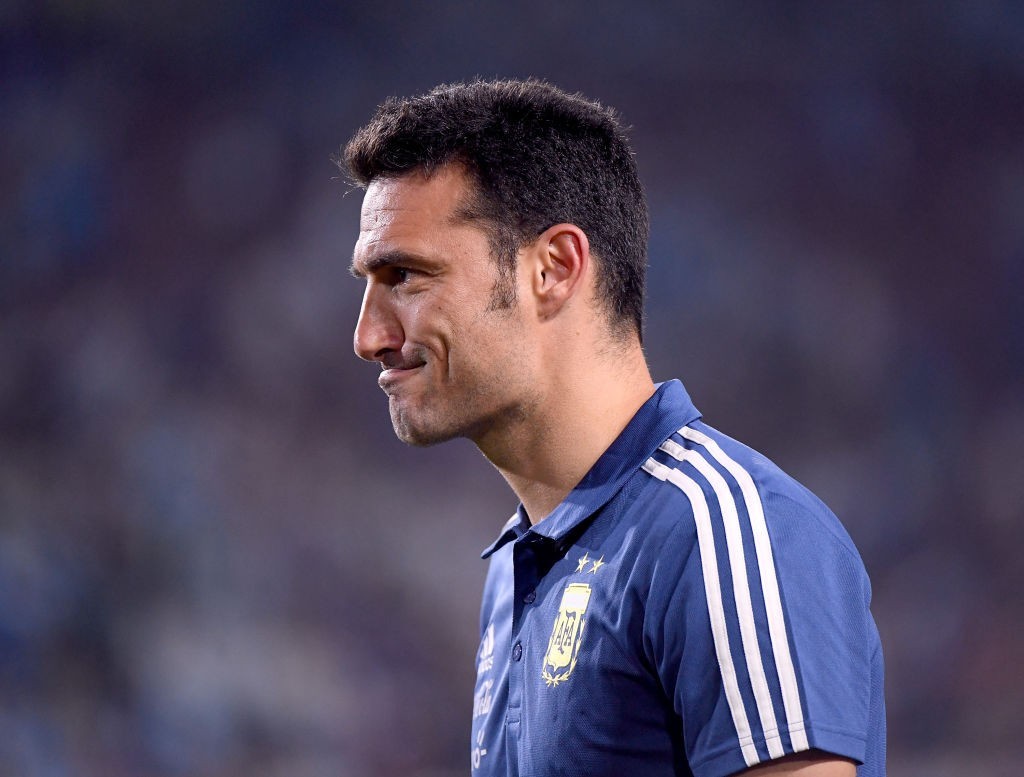
Welcome to Team Spotlight, and today, we analyse Argentina’s style, form, key players, and predictions as Lionel Scaloni finalises his preparations for the 2026 FIFA World Cup.
Argentina’s World Cup journey has been a rollercoaster of sublime triumph and crushing despair. The nation that gave the world Diego Maradona’s “Hand of God” and “Goal of the Century” spent nearly four decades chasing that magic again after the triumph in 1986. After limping to runners-up finishes in 1990 and 2014, enduring a group stage exit in 2002 and a disappointing round of 16 choke in 2018, it appeared another generation might fall short of their ultimate destiny.
The narrative seemed destined for tragedy when Lionel Messi, arguably the greatest footballer ever, approached his twilight years without a World Cup trophy. Many feared the sport’s most complete player would retire with the one major honour missing from his illustrious cabinet. Then came Qatar 2022, where La Albiceleste produced a tournament-defining performance, navigating penalty shootouts, battling back from deficits, and ultimately lifting the Jules Rimet trophy in a coronation that felt like destiny fulfilled.
That victory completed football for Messi, cementing his status as the sport’s undisputed king while restoring Argentina’s place at the summit of world football. Now, nearly four years later, the South American behemoths arrive in North America not as underdogs dreaming, but as defending champions with a point to prove. The question hanging over the 2026 tournament is simple yet profound: can this ageing squad defend their crown and add a final feather to Messi’s cap, or will the weight of expectation finally break them?
Road to FIFA World Cup 2026: A straightforward path to glory
Argentina’s qualification campaign for the 2026 World Cup was nothing short of dominant, as they became the sixth team to secure their place in Canada-Mexico-USA, achieving automatic qualification as early as March 2025. The Albiceleste topped the CONMEBOL qualifying table with a comfortable nine-point margin over second-placed Ecuador, demonstrating the continuity and tactical maturity that has defined the Lionel Scaloni era.
The numbers tell a compelling story: 12 wins, 2 draws, and only 4 losses in 18 matches, scoring 31 goals while conceding just 10 for a +21 goal difference. This impressive record reflected a team that had mastered the art of winning without necessarily dominating every possession, a hallmark of Scaloni’s approach. The consistent core that brought home the 2022 World Cup and the 2021 and 2024 Copa America wins led the qualification effort, with minimal disruption to the established hierarchy.
The crowning achievement of the qualifying campaign came in a historic Superclasico at the Maracana, where Argentina handed Brazil their first-ever home loss in World Cup qualifying history with a 1-0 victory. This psychological blow was followed by a ruthless 4-1 thrashing of their arch-rivals later in the campaign, demonstrating the team’s ability to perform when it matters most. These victories against South America’s powerhouse validated their status as the continent’s undisputed kings and sent a clear message to the world.
Lionel Scaloni: The pragmatic architect of glory
Lionel Scaloni has transformed from a caretaker manager into Argentina’s legendary architect, amassing an extraordinary record of 67 wins, 18 draws, and only 9 losses in 94 games. His tactical philosophy blends traditional creative flair with elite modern flexibility, creating a system that maximises Lionel Messi’s genius while demanding relentless work ethic from every player. Rather than forcing high-octane transitions, the 48-year-old controls games through short, rhythmic passing, and an aggressive collective defensive structure.
Scaloni’s tactical flexibility is his greatest weapon. He rarely plays the same formation twice consecutively, adapting his shape based on opponent weaknesses. The 4-3-3 dominates midfield control and patient build-up, while the 4-4-2 diamond clogs central areas and allows midfielders to push higher. Occasionally, he deploys a 3-5-2 to match back-three systems or gain numerical superiority in high-stakes matches. This pragmatism has masterminded Argentina’s triumphs in at the 2022 FIFA World Cup, and the 2021 and 2024 Copa America.
His platforming of Messi has been tactical genius at its finest. Scaloni surrounds the ageing superstar with industrious midfielders like Rodrigo De Paul and Alexis Mac Allister, with De Paul acting as a “bodyguard” covering vast spaces on the right to shield Messi from defensive duties. This freedom allows Messi to operate as a roaming playmaker, orchestrating attacks without burning out defensively.
The asymmetrical attack relies on full-backs Nicolas Tagliafico and Nahuel Molina providing width, creating central overloads that confuse opponents and breach tight defensive blocks. Scaloni’s aggressive off-the-ball pressing completes his tactical masterpiece. Argentina defend as a cohesive, narrow unit, initiating an immediate press upon losing possession.
Julian Alvarez spearheads this relentless pressure while the midfield four tucks compactly to block passing lanes. This mid-block and counter-press allows quick ball recovery in dangerous attacking areas, a system that has proven devastating in cup competitions and cemented Scaloni’s legendary status.
The Squad: Experience Meets Youthful Promise
Goalkeepers: Emiliano Martinez (Aston Villa), Juan Musso (Atletico Madrid), Geronimo Rulli (Marseille)
Defenders: Nicolas Otamendi (Benfica), Cristian Romero (Tottenham Hotspur), Lisandro Martinez (Manchester United), Nicolas Tagliafico (Lyon), Nahuel Molina (Atletico Madrid), Gonzalo Montiel (River Plate), Leonardo Baledri (Marseille), Facundo Medina (Marseille)
Midfielders: Rodrigo De Paul (Inter Miami), Alexis Mac Allister (Liverpool), Enzo Fernandez (Chelsea), Valentin Barco (RC Strasbourg), Exequiel Palacios (Bayer Leverkusen), Leandro Paredes (Boca Juniors), Giovani Lo Celso (Real Betis)
Forwards: Lionel Messi (Inter Miami), Julian Alvarez (Atletico Madrid), Lautaro Martinez (Inter Milan), Nicolas Gonzalez (Atletico Madrid), Thiago Almada (Atletico Madrid), Giuliano Simeone (Atletico Madrid), Nico Paz (Como 1907), Flaco Lopez (Palmeiras)
The defending champions’ squad is a careful balance between the experienced core that conquered Qatar and fresh faces bringing youthful energy. Lionel Messi, Alexis Mac Allister, Julian Alvarez, Emiliano Martinez, and Cristian Romero form the bedrock of this team, players who know exactly how to navigate tournament pressure. Their championship experience is invaluable, providing calmness in crisis moments that separates good teams from great ones.
Yet Scaloni has wisely integrated promising talents like Valentin Barco and Nico Paz, ensuring the squad is not entirely dependent on ageing legs. Barco’s ingenuity from the midfield positions offers a different dimension, while Paz’s vision provide depth behind the established stars.
This blend of experience and youth gives Argentina options off the bench, crucial for a gruelling 70-day tournament across three nations. The selection reflects Scaloni’s confidence in his system while acknowledging the need for freshness as the squad navigates their third major tournament under his leadership.
Key Players: The Architects of Argentina’s Destiny
Lionel Messi
At 38, Lionel Messi remains Argentina’s heartbeat, his influence transcending statistics. Playing for Inter Miami in MLS, he has maintained remarkable form, scoring 13 goals and providing seven assists in only 16 appearances this season. His ability to read the game, create chances from nothing, and deliver in crucial moments remains unparalleled. The veteran attaker reprises a roaming playmaker role under Scaloni, which allows him to drift between lines, pulling defenders apart and releasing teammates with surgical through balls.
However, a legitimate concern surrounds his lack of recent experience against elite opposition. The MLS, while improving, does not match the intensity of Europe’s top five leagues. Messi has not faced teams like Manchester City, Real Madrid, or Bayern Munich regularly since leaving PSG, raising questions about whether he can cope with the relentless pressing and tactical sophistication of Europe’s finest at this tournament. His physical durability over 70 days in North America’s heat also remains uncertain despite the acclimatisation in MLS.
Enzo Fernandez
Enzo Fernandez has matured into Argentina’s midfield general, orchestrating play alongside Alexis Mac Allister with composure beyond his years. The Chelsea midfielder completed 91% of his passes in Argentina’s qualifying campaign, winning 3.2 tackles and 1.8 interceptions per 90 minutes.
His ability to progress the ball through central zones and break up opposition attacks makes him indispensable. Fernandez’s vision and long-range passing ability unlock defensive blocks, while his work rate ensures Argentina maintains defensive solidity. Yet his mindset remains questionable following a tumultuous campaign with Chelsea.
The club’s chaotic transfer policy, managerial instability, and poor team performance have left him frustrated, potentially affecting his concentration and confidence. If the West London club’s struggles have dent his self-belief, Argentina might see a less decisive Fernandez when it matters most.
Julian Alvarez
Julian Alvarez has evolved into Messi’s preferred attacking partner, forming a devastating partnership that terrorised qualifying defenses. The Atletico Madrid striker has been impressive at the club level with the Spanish giants, demonstrating clinical finishing and intelligent movement. His pressing intensity leads Argentina’s defensive efforts, while his versatility allows him to play as a second striker, winger, or false nine.
However, the 26-year-old has a surprisingly modest record for Argentina. Only 14 goals in 51 appearances translates to 0.28 goals per game, a figure that is underwhelming for a player of his calibre. Compared to Lautaro Martinez’s superior strike rate or the prolific output expected from a primary striker, Alvarez sometimes lacks the decisiveness. His dependency on Messi’s creativity raises questions about whether he can lead the attack independently if the 38-year-old is neutralised or rested.
Notable Absentees: Shock omissions that raise eyebrows
Marcos Senesi’s exclusion stuns many observers after his impressive performances for Bournemouth in the Premier League. The 28-year-old defender has been a rock at the back for the Cherries this season, leading to his impending move to Tottenham. His modern ball-playing ability and defensive positioning seemed perfectly suited to Lionel Scaloni’s system, yet he remains outside the 26-man squad, leaving fans wondering what tipped the balance against him.
Similarly, Matias Soule’s omission disappoints after his breakthrough season at Roma. The 23-year-old winger has been impressive for AS Roma, showcasing the creativity and end product that could have come in handy on the right flank. His ability to cut inside from wide positions and deliver dangerous crosses mirrors aspects of Angel Di Maria’s game, yet Scaloni opted for more experienced options.
Fixtures: The Group Stage Gauntlet
Argentina face a challenging but manageable group stage draw:
- Argentina vs Algeria (June 16, 2026, Arrowhead Stadium, Kansas City)
- Argentina vs Austria (June 22, 2026, AT&T Stadium, Arlington)
- Jordan vs Argentina (June 27, 2026, AT&T Stadium, Arlington)
This group presents a mix of familiar and unfamiliar opponents. Austria possess technical quality and tactical discipline that could trouble Argentina. Algeria offer physicality and experience, while Jordan bring the underdog spirit that can trouble La Albiceleste at crucial junctures, Saudi Arabia did in 2022. However, squad depth and tactical flexibility should see them through, although complacency could prove costly in what promises to be a competitive group.
Prediction: Defending champions with real credentials
Argentina will be genuine contenders to win the World Cup again this year. La Albiceleste possess an experienced squad that knows how to deliver in major tournaments, with players who have walked the path before and conquered it. While ageing legs will inevitably become factors as the tournament progresses, bringing elite teams like Germany, Spain, and England into the picture as serious threats, their squad depth provides crucial solutions.
The integration of youthful exuberance through players like Valentin Barco and Nico Paz ensures Lionel Scaloni has fresh options off the bench to maintain intensity in the latter stages. More importantly, Lionel Scaloni’s tactical acumen and tournament know-how gives Argentina a psychological and strategic advantage over rivals still searching for their championship identity.
His ability to adapt formations, manage player workloads, and inspire belief in high-pressure moments has already produced two Copa América titles and a World Cup.
The prediction is bold but justified: Argentina will reach the final and have a real chance to lift the trophy for the third time. Their blend of experience, tactical sophistication, and championship mentality makes them the team to beat, even as younger contenders emerge.
If Lionel Messi can stay fit through the knockout stages and the midfield trio of Enzo Fernandez, Alexis Mac Allister, and Rodrigo De Paul maintain their qualifying form, Argentina will write another chapter in their glorious footballing history. The world awaits, but La Albiceleste are ready.