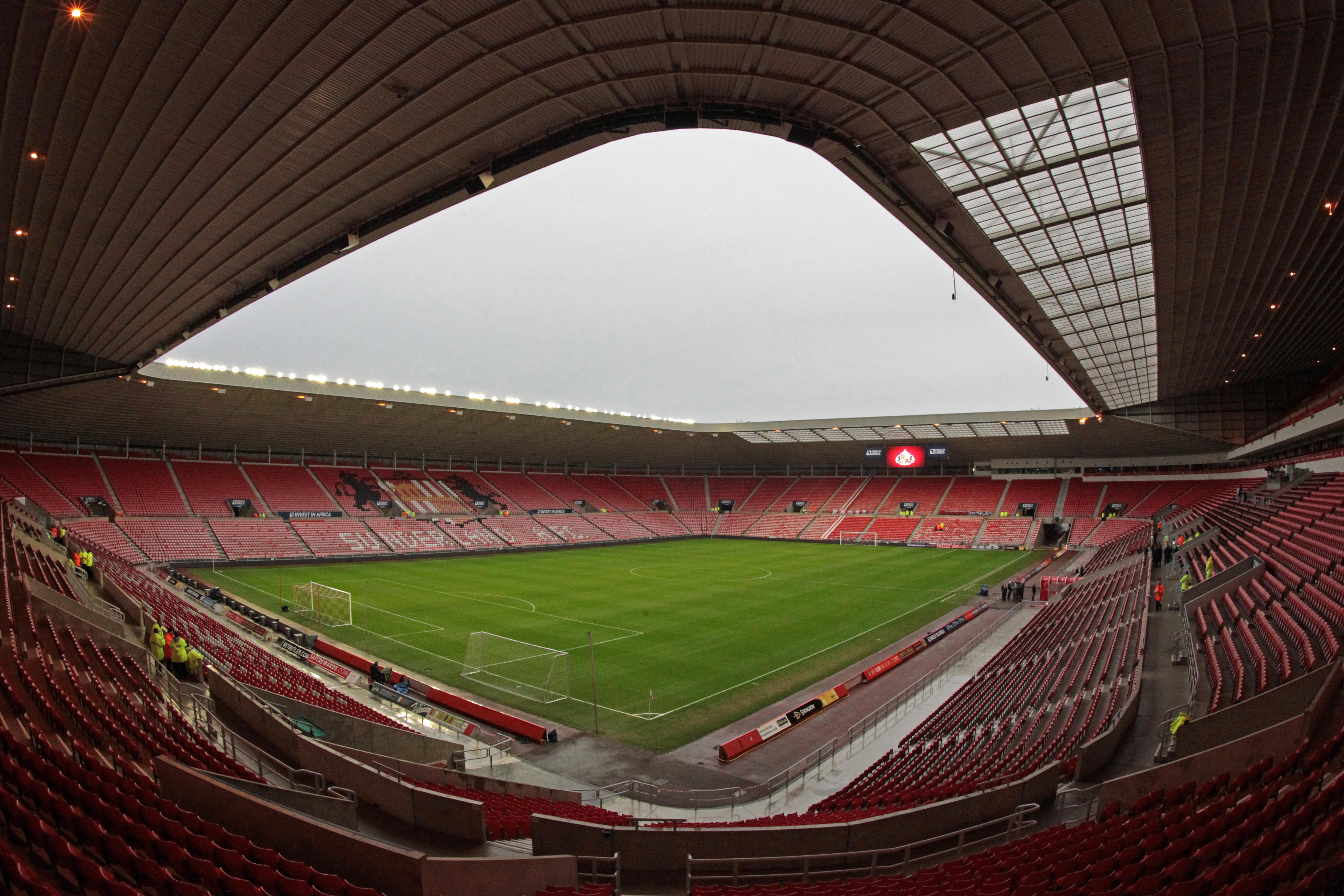
Sunderland vs Brighton & Hove Albion at the Stadium of Light on Saturday will feature two teams experiencing vastly different starts to the 2026/27 season.
Brighton’s 3-0 win vs Arsenal showed the attacking force Sunderland must contain. Meanwhile, the home side’s 5-3 defeat to Manchester City showed how quickly an open match can escape them. The Seagulls arrive with the Premier League’s highest goals-for total in the early-season record, whereas Sunderland are trying to reduce the errors that turned a competitive display into a chaotic loss.
This is meaningful for both sides rather than decisive. Brighton must continue a strong start to the season, while Sunderland need points to improve their position without being forced into an all-or-nothing approach.
For the home side, the value is in finding consistency rather than chasing a result at any cost. They sit 14th with four points from five matches, and defeat would leave them vulnerable to sliding further into the lower reaches of the table. Their last outing at Manchester City contained enough attacking quality for Regis Le Bris to praise the resilience of his team, but the defensive concessions remain the concern.
Sunderland have scored six and conceded eight across their last five matches. The absence of their usual central reference changes the attacking problem, even though Le Bris has continued to stress belief and improved squad depth. Brighton, on the other hand, have more room to manage the match.
They are third, and another victory would strengthen their position near the leading group, but a draw or defeat would not immediately undo an excellent start. Their 3-0 victory over Arsenal at the Emirates was the clearest recent statement of their threat, and they have scored 12 times while conceding five across their last four matches.
Fabian Hurzeler’s side carry confidence and a settled structure into this game, with Pascal Gros central to a surge that also brought him the league’s September Player of the Month award. Brighton can therefore pursue control without needing to turn every phase into a risk.
Team News: The replacement striker changes Sunderland’s attacking reference
The in-demand Brian Brobbey is out for Sunderland after a minor injury on Netherlands duty, while Romaine Mundle, Habib Diarra, and Dan Ballard are also unavailable. Mundle and Ballard’s absences reduce the available depth in the defensive unit, while Diarra’s status affects midfield options.
Brobbey’s situation matters most to the shape. Wilson Isidor is expected to lead the line, giving Sunderland a different central outlet and leaving Enzo Le Fee to provide more of the connection between midfield and attack.
Sunderland will line up in the 4-2-3-1 formation vs Brighton & Hove Albion, used in each of their last five matches. Robin Roefs should keep goal behind Reinildo Mandava, Omar Alderete, Kevin Danso, and Nordi Mukiele. Reinildo is back after serving a suspension, and he will be eager to make up for lost time. The back four will need to hold together rather than allow Brighton to isolate individual defenders.
Granit Xhaka should anchor the double pivot alongside Noah Sadiki, with Le Fee ahead of them. Xhaka has started all five matches and leads the squad for key passes with 14; his positioning is therefore about more than protection. Le Fee is the main progression link in the shape, with one goal, one assist and eight key passes from five starts.
Thomas Meunier should provide the right-sided outlet, while Nilson Angulo remains the settled left-sided option after one goal and one assist in his five starts. Isidor has made five appearances but no starts, and his selection is a consequence of the uncertainty around Brobbey rather than a settled attacking hierarchy.
The Haitian striker has scored once and put two of five shots on target, so Sunderland will want him to occupy the centre and make the first forward pass useful. The alternative is to rely too heavily on Le Fee and Xhaka to carry the ball through Brighton’s pressure.
Probable Sunderland Lineup (4-2-3-1): Roefs; Mukiele, Danso, Alderete, Reinildo; Xhaka, Sadiki; Meunier, Le Fee, Angulo; Isidor
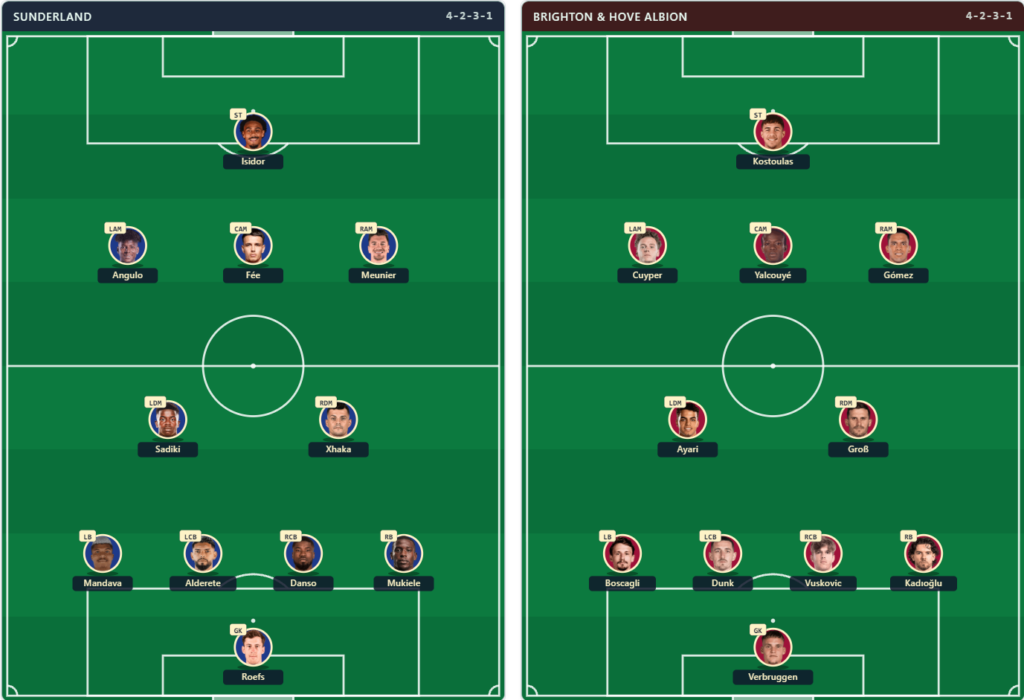
Probable Brighton & Hove Albion Lineup (4-2-3-1): Verbruggen; Kadioglu, Vuskovic, Dunk, Boscagli; Gross, Ayari; Gomez, Yalcouye, De Cuyper; Kostoulas
Brighton also have doubts around Yankuba Minteh and Kaoru Mitoma, while Stefanos Tzimas and Evan Ferguson are out with longer-term injuries. Those absences narrow the attacking depth, but the chosen front four remains intact.
Bart Verbruggen starts behind Olivier Boscagli, Lewis Dunk, Luka Vuskovic and Ferdi Kadioglu. Dunk has scored once in four starts, while Vuskovic has started all five matches and carries a 7.25 average rating, giving Brighton a settled centre-back pairing for the aerial and central work.
Yasin Ayari and Pascal Gross should form the deeper midfield pair. Ayari has contributed one goal and one assist in four starts, but Gross is the key organiser. The German midfielder has three goals, three assists and 15 key passes from five starts, with a 7.83 average rating.
Malick Yalcouye is expected to play behind Charalampos Kostoulas after scoring twice and putting five of seven shots on target. Maxim De Cuyper supplies the left-sided creativity, with two assists and 12 key passes, while Diego Gomez should continue on the right after registering two assists.
Both lineups preserve the same basic structure, but they do not offer the same level of certainty in attack. Sunderland are adapting around a possible Brobbey absence; Brighton are trying to keep their established attacking relationships functioning despite missing alternatives.
Tactics: Xhaka and Gross decide whether Brighton can turn control into pressure
Sunderland’s 4-2-3-1 setup is designed to keep two midfielders behind Enzo Le Fee, then use him to connect the first forward pass to Wilson Isidor or the wide outlets. They are more willing to go over midfield than pass through it. Sunderland play 57 long balls per match against a league typical figure of 49, while Brighton play 55 against the same typical figure.
That places both sides in the higher directness range, but Sunderland’s route is more central to their identity because it is how they intend to bypass Brighton’s pressure. On the other hand, Brighton’s system keeps two midfielders behind Pascal Gross and two wide attacking roles around Charalampos Kostoulas.
They want to occupy Sunderland with the ball, then use the front four to stretch the home side’s two banks. Brighton average 69% possession against a league typical 47%, while Sunderland average 45% against that same figure. The difference is substantial in the meeting. Brighton are likely to have the ball and Sunderland must make their first pass out of pressure count. The visitors also carry the greater appetite for shots.
Brighton take 20 per match and Sunderland 12, against a league typical figure of 12.5. That does not guarantee better chances, but it means the home side’s defensive cover will be tested repeatedly if Brighton establish their normal territory. Both teams are prepared to pursue a win while still accepting the value of a draw, so neither should need to abandon its structure early.
Brighton can keep attacking without exposing themselves unnecessarily; Sunderland can remain compact and still send runners forward. The key system pattern is what happens after Sunderland’s direct outlet. If Isidor or Nilson Angulo can receive the first pass, Sunderland may force Brighton to defend facing its own goal and turn the visitors’ possession into a less comfortable contest.
If the pass is cleared or isolated, Brighton can recover the ball high and keep the home side pinned in. Sunderland’s recent expected-goals figures suggest they can create danger, but their defensive record means they cannot afford repeated failed exits.
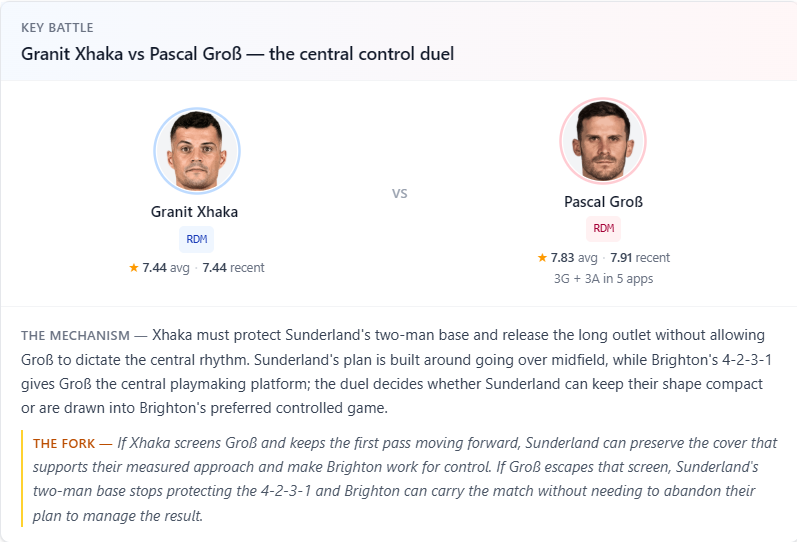
That makes Granit Xhaka against Pascal Gross the central duel. Xhaka must screen the space in front of Sunderland’s centre-backs, then release the long pass without allowing Gross to dictate the next phase. The Brighton midfielder wants to receive between the lines and keep his team moving through the middle rather than merely circulate possession around the outside.
Both players are steady organisers, but their jobs point in opposite directions: one protects the compact shape, the other tries to pull it apart. If Xhaka wins that contest, Sunderland can keep the two-man base connected and send the game into the areas where their direct approach is most useful.
If Gross escapes him, the home side’s midfield cover can be stretched, leaving Le Fee too far from the ball and the centre-backs exposed to Brighton’s repeated attacks. There is no spare holder behind Xhaka to repair that space, which is why the duel carries more weight than a simple battle for possession.
The other important collision is on Sunderland’s left, where Reinildo Mandava must deal with Diego Gomez. Reinildo’s current form gives him a chance to hold the channel, but Gomez’s movement can pull him away from the back four and open a route for Brighton’s other attackers. If Sunderland keep that side intact, they retain a defensive platform. If Gomez drags Reinildo out, Brighton can stretch the whole 4-2-3-1 without changing shape.
Prediction: Brighton have the edge, but Sunderland can make the scoreline narrow
We are leaning towards a Brighton win, albeit with medium confidence rather than conviction. The visitors have the stronger control profile, the more productive recent attack and the better central playmaking platform, while their ability to accept a draw should stop them from taking unnecessary risks.
The most important difference is not simply that Brighton will have more of the ball; it is that they have several ways to turn that control into shots while Sunderland must make their direct attacks efficient. Sunderland’s strongest case is that the away side’s defensive record has allowed the home side a route into the game.
Lean: Brighton win
Range: 1-2/1-1/0-2
The Black Cats average 2.20 expected goals for across their latest five-match window, while Brighton average 2.01 expected goals against across their latest four. If Enzo Le Fee can find space behind Yasin Ayari and Pascal Gross, and Wilson Isidor gives the long pass a reliable target, Sunderland can punish Brighton before the visitors settle. The home side also have enough attacking intent to make this uncomfortable even if they spend long periods without possession.
That is why the likely scoreline range is 1-2, with 1-1 and 0-2 also credible outcomes. Brighton’s control gives them the clearest route to victory, but Sunderland’s ability to create chances prevents this from becoming a strong dismissal of the home side.
Sunderland’s late switch gives Le Bris one practical answer
If Sunderland fall behind, Regis Le Bris can move to a 4-4-2 by adding a second striker, changing the problem Brighton’s centre-backs have to solve without immediately dismantling the rest of the side.
That adjustment would give Sunderland a more direct target near Wilson Isidor and could make second balls more important late on. Brighton’s own established shape is less likely to need changing unless they are chasing the match, so the home side have the clearer in-game switch available.