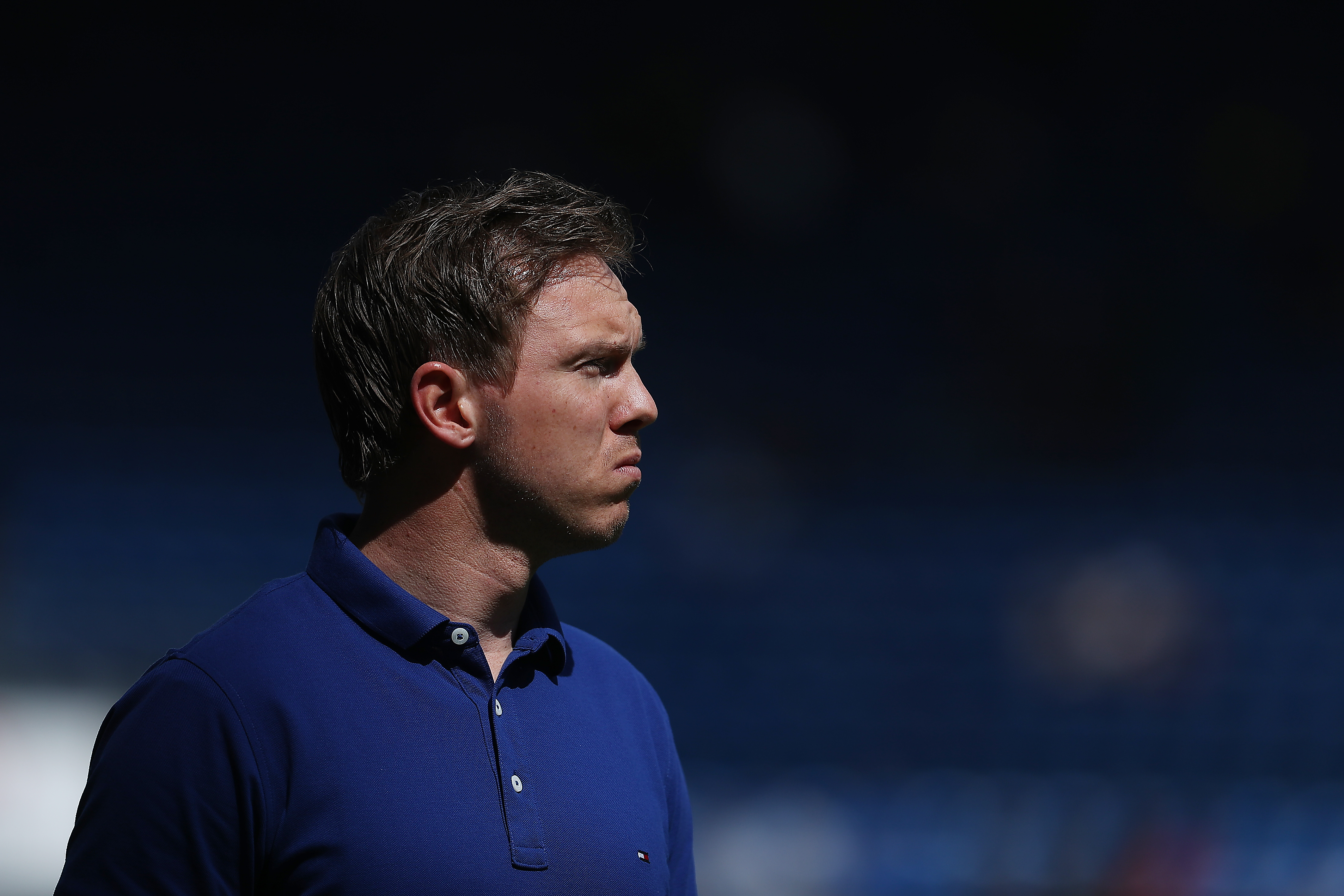
Welcome to Team Spotlight, and today, we analyse Germany’s style, form, key players, and predictions as Julian Nagelsmann finalises his preparations for the 2026 FIFA World Cup.
Germany’s name is etched deeper into the FIFA World Cup’s history books than many other nations. With four titles (1954, 1974, 1990, and 2014) and 20 appearances out of 22 tournaments, they are the one of the most consistent and successful teams in World Cup history.
From the legendary “Miracle of Bern” to the triumphant 2014 campaign in Brazil, Germany have always been a team that rises when the lights are brightest. Yet, the last two editions have been jarring reminders that past glory does not guarantee future success, exiting at the group stage in 2018 and 2022.
Now, as the world turns its eyes to North America for the 2026 FIFA World Cup, Germany arrive with a mix of nostalgia, hope, and uneasy questions. After qualifying convincingly with a dominant 6-0 demolition of Slovakia, Julian Nagelsmann’s side rebuilt around youth and tactical innovation.
Die Mannschaft are at a crossroads. Can Nagelsmann’s reinvented Germany reclaim their throne, or will another early exit write yet another chapter of underachievement in a storied legacy?
Road to FIFA World Cup 2026: A convincing campaign
Germany’s journey to the 2026 World Cup was far more commanding than recent memories suggest. In UEFA Group A, they finished top with authority, securing their place with a 6-0 thrashing of Slovakia in their final qualifier. The performance was a statement: four goals in the first half alone, pummeling Slovakia into submission and sending them into a playoff instead.
Earlier in the campaign, Germany toiled to a 2-0 win over Luxembourg, with Nick Woltemade scoring twice in the second half to seal the victory. While the first half was sluggish, the team showed resilience and clinical finishing when it mattered.
Their defensive record remained solid throughout, and the attack, though occasionally sluggish against compact defences, delivered when facing weaker opposition. Qualifying was not without moments of concern.
Germany struggled to break down low blocks in some matches, but the final numbers tell a story of dominance rather than struggle. The 6-0 victory over Slovakia erased any doubts about Germany’s readiness, showing they can still overwhelm opponents when fully focused.
The Architect: Nagelsmann and his tactical blueprint
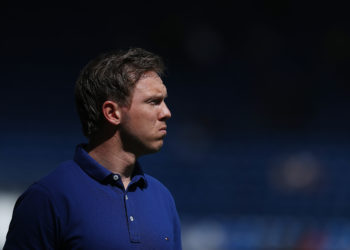
Julian Nagelsmann, at 38, is Germany’s youngest head coach in history. His managerial philosophy is a blend of high-intensity pressing, positional flexibility, and an almost obsessive focus on player psychology; he once said, “30% of coaching is tactics, 70% social competence.”
At TSG Hoffenheim, RB Leipzig, and Bayern Munich, he built teams that pressed aggressively, rotated positions fluidly, and adapted formations mid-game based on opponent weaknesses.
For Germany, Nagelsmann has moved away from the traditional “possession-heavy, free-flowing” identity toward a more structured, pragmatic system. He favours a 4-2-3-1 out of possession that morphs into a 3-4-3 or 4-3-3 when attacking, using versatile players like Joshua Kimmich and Jamal Musiala to overload central channels.
His pressing triggers are sharp, and his teams are known for regaining possession in advanced areas. Bayern under him recorded a surge in “regains in the attacking third.” Though Nagelsmann lacks a major international trophy, his cup record at club level is impressive, including a Bundesliga title with Bayern and an impressive UEFA Champions League run.
His adaptability was key in Bayern’s seasons, where he shifted formations mid-game against tough opponents. For Germany, this means a team that can switch between defensive solidity and attacking fluidity, a necessary skill in a 48-team World Cup where margins are razor-thin.
The Squad: Neuer’s shock return
The headline of Germany’s 26-man squad is undeniably Manuel Neuer’s return. The 40-year-old goalkeeper, who retired from international football after UEFA Euro 2024, was coaxed back by Nagelsmann after a series of heroic displays for Bayern, including standout performances in the Champions League.
His inclusion is a psychological boost, and Nagelsmann has named him the No. 1 goalkeeper ahead of Oliver Baumann, who had been expected to start.
Squad
Goalkeepers: Manuel Neuer (Bayern Munich), Oliver Baumann (TSG Hoffenheim), Alexander Nubel (VfB Stuttgart)
Defenders: Joshua Kimmich (Bayern Munich), Nico Schlotterbeck (Borussia Dortmund), Nathaniel Brown (Eintracht Frankfurt), David Raum (RB Leipzig), Waldemar Anton (Borussia Dortmund), Pascal Gross (Brighton & Hove Albion), Antonio Rudiger (Real Madrid), Malick Thiaw (Newcastle United), Jonathan Tah (Bayern Munich)
Midfielders: Jamal Musiala (Bayern Munich), Jamie Leweling (VfB Stuttgart), Aleksandar Pavlovic (Bayern Munich), Nadiem Amiri (FSV Mainz 05), Felix Nmecha (Borussia Dortmund), Angelo Stiller (VfB Stuttgart), Leon Goretzka (Bayern Munich)
Forwards: Kai Havertz (Arsenal), Deniz Undav (VfB Stuttgart), Maximilian Beier (Borussia Dortmund), Florian Wirtz (Liverpool), Nick Woltemade (Newcastle United), Lennart Karl (Bayern Munich), Leroy Sane (Galatasaray)
Neuer’s return overshadows Oliver Baumann, who was told he would be the No. 1 until the last minute. Meanwhile, Marc-Andre ter Stegen, Neuer’s natural successor, has been excluded from the squad.
Key Players: The stars who could define their campaign
Manuel Neuer: The veteran sentinel
Neuer’s 124 caps and a World Cup title make him the squad’s emotional anchor. His shot-stopping and sweeping ability remain world-class, and his leadership in high-pressure moments is unmatched. At 40, he’s proving age is just a number, with heroic displays for Bayern in the Champions League.
However, the veteran goalkeeper is returning almost two years after his international retirement, with recurring calf issues. His last competitive international was Euro 2024’s quarter-final loss to Spain. Can he withstand a month-long tournament where games come thick and fast?
Jamal Musiala: The resurgent magician
Musiala returned from a broken leg suffered at the Club World Cup in July 2025, making his comeback around January 2026 after approximately six months on the sidelines. He has since hit his stride at Bayern, scoring 5 goals and providing 6 assists in 24 appearances during the season. However, the youngster’s return is recent, and football sharpness after such a long layoff is never guaranteed.
Florian Wirtz: The adapting playmaker
Wirtz officially joined Liverpool in the summer of 2025 for a British record £116 million from Bayer Leverkusen. His vision and passing range are elite, and he is transitioning to the Premier League’s physicality and tempo. Early signs suggest he is adapting, though the league’s demands are steep. His adaptation period is ongoing, and international tournament pressure adds another layer of complexity.
Antonio Rudiger: The defensive rock
Rudiger’s aerial dominance and aggression make him Germany’s defensive leader. He has made regular appearances for Real Madrid this season and reportedly agreed to a one-year contract extension at the Bernabeu. His presence in defence is invaluable.
However, the former Chelsea defender struggled with meniscus issues earlier in the season and missed key UEFA Champions League games. While Rudiger has extended his stay, his form has been questioned at times, particularly in high-stakes European matches.
Notable Absentees: The shock omissions
Four players’ exclusion sent ripples through German football:
These omissions suggest Nagelsmann is betting heavily on form over reputation, a risky move in a tournament where benches can decide ties.
Fixtures: Group E – Doable on paper, dangerous in reality
Germany face Curacao, Ivory Coast, and Ecuador in Group E:
-
June 14: Germany vs Curacao (Houston) — First-ever meeting; expected win, but Curacao’s underdog spirit could cause problems.
-
June 19: Germany vs Ivory Coast (Toronto) — Physical African side that could test Germany’s defence; previously drew 2–2 in a 2009 friendly.
-
June 24: Ecuador vs Germany (East Rutherford) — Germany won both previous meetings (3–0 in the 2006 World Cup, 4–2 in a 2013 friendly).
A narrow path to the Round of 32 lies ahead, but one slip against Ivory Coast or Ecuador could spell disaster in a 48-team tournament with expanded knockout rounds.
Prediction: A shock exit in the round of 16
Despite their historical pedigree and squad quality, Germany’s lack of experience in the final third, Julian Nagelsmann’s unproven international track record, and the emergence of stronger contenders point to a challenging campaign.
Teams like France, Argentina, and England are stronger this time around, and Germany’s attack often stalls against compact defences. We predict Die Mannschaft to top Group E but fall in the Round of 16 to a more experienced side, perhaps a tactical masterclass from one of the European giants. The early exit fear is real because while Germany have enough quality in their ranks, they lack the final-third precision and tournament-tested depth to go deeper.