
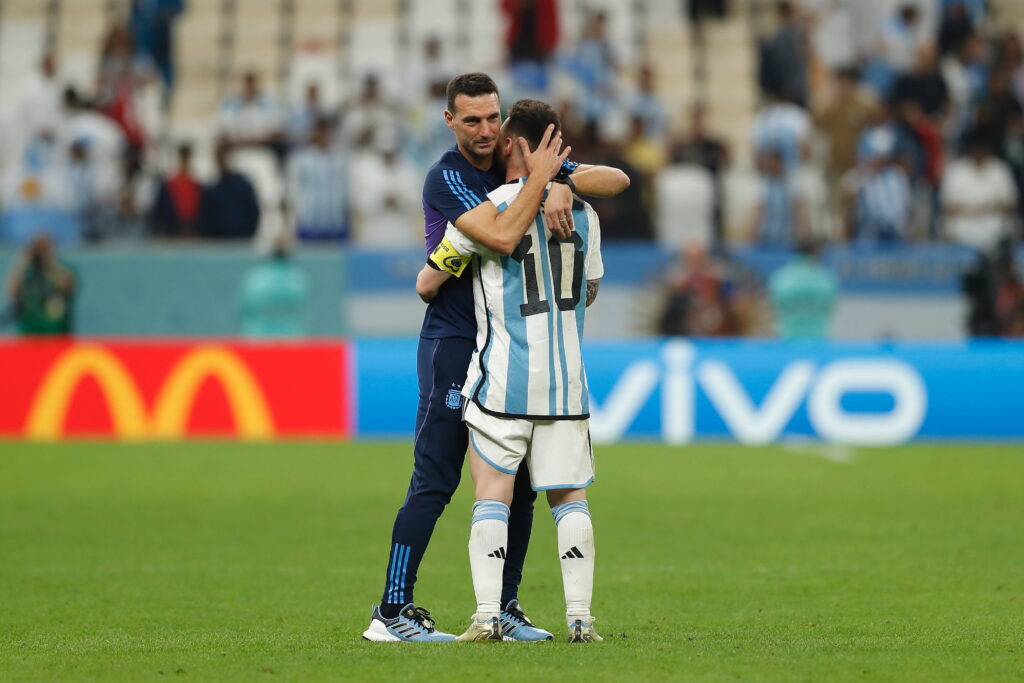
Argentina’s defence of their World Cup crown has rarely looked comfortable, but it remains alive.
The reigning world champions have reached the quarter-finals, Lionel Messi continues to bend the tournament around his left foot, and another tense knockout test now awaits against Switzerland at Arrowhead Stadium in Kansas City.
On paper, Argentina will enter Saturday’s clash as favourites. They have the pedigree, the attacking quality and the tournament’s standout individual performer. Yet their route to the last eight has been anything but straightforward. After needing extra time to get past Cape Verde, Lionel Scaloni’s side survived another major scare against Egypt, recovering from two goals down with a dramatic late surge to win 3-2.
Switzerland, meanwhile, arrive with a very different profile. Murat Yakin’s side may not carry Argentina’s attacking glamour, but they have been organised, disciplined and extremely difficult to break down. Their penalty shootout victory over Colombia was another reminder that this is a team built for knockout football: patient, compact, mentally strong and backed by a goalkeeper in Gregor Kobel who is growing into one of the stories of their campaign.
This quarter-final, therefore, is not simply about Argentina’s star power against Swiss resistance. It is a meeting between a champion side that keeps finding a way and an underdog that has forgotten how to be intimidated.
Argentina have won all five of their matches at this World Cup, but the last two have revealed both their resilience and their vulnerability. Their group-stage victories over Algeria, Austria, and Jordan suggested a team capable of controlling games with authority. Since the knockout rounds began, however, the champions have been forced to live on the edge.
Against Cape Verde, Argentina twice surrendered leads before eventually progressing in extra time. Against Egypt, they dominated long spells of the first half but still found themselves behind. When the Pharaohs struck again after the interval, Argentina looked in serious danger of a shock exit. What followed was the sort of late comeback that only elite tournament teams tend to produce: three goals in the closing stages, a furious change of rhythm and yet another Messi-led escape.
Messi has been the defining figure of Argentina’s tournament. With eight goals, he leads the Golden Boot race and remains the player around whom the attack revolves. Even at this late stage of his career, his ability to slow the game down, pick the final pass and punish defensive hesitation continues to separate Argentina from most teams in the competition.
But Argentina’s defensive record will concern Scaloni. They have conceded in their last three matches, and both Cape Verde and Egypt found ways to unsettle them in transition. That is where Switzerland will believe they have a route into the contest. They are not likely to dominate possession, but they have the structure, athleticism and set-piece threat to make Argentina uncomfortable.
Switzerland’s run has been built on balance. They defeated Bosnia and Herzegovina 4-1, edged past Canada 2-1, beat Algeria 2-0 and then held Colombia scoreless before winning on penalties. Their defensive numbers have been impressive, and Kobel’s performances have given the back line an added layer of confidence.
There is also history between these two nations. Argentina are unbeaten in four previous meetings with Switzerland, winning three and drawing one. They have also beaten the Swiss twice at the World Cup: 2-0 in 1966 and 1-0 in 2014, when Angel Di Maria’s extra-time goal decided a tight round-of-16 tie.
That 2014 meeting is relevant because Switzerland once again have the tools to drag Argentina into a narrow, uncomfortable match. If they can deny space between the lines, limit Messi’s influence around the penalty area and force Argentina to chase second balls, this could become far more complicated for the holders than the rankings suggest. The Hard Tackle takes a look at how both sides could line up and what tactics they might employ on the day.
Team News & Tactics
Argentina
Lionel Scaloni is expected to have his key players available, and there are no reported suspension concerns for La Albiceleste. That should allow the defending champions to keep the core of the side that has carried them through the tournament, although Scaloni may still make small tactical adjustments after Argentina conceded twice against Egypt in the previous round.
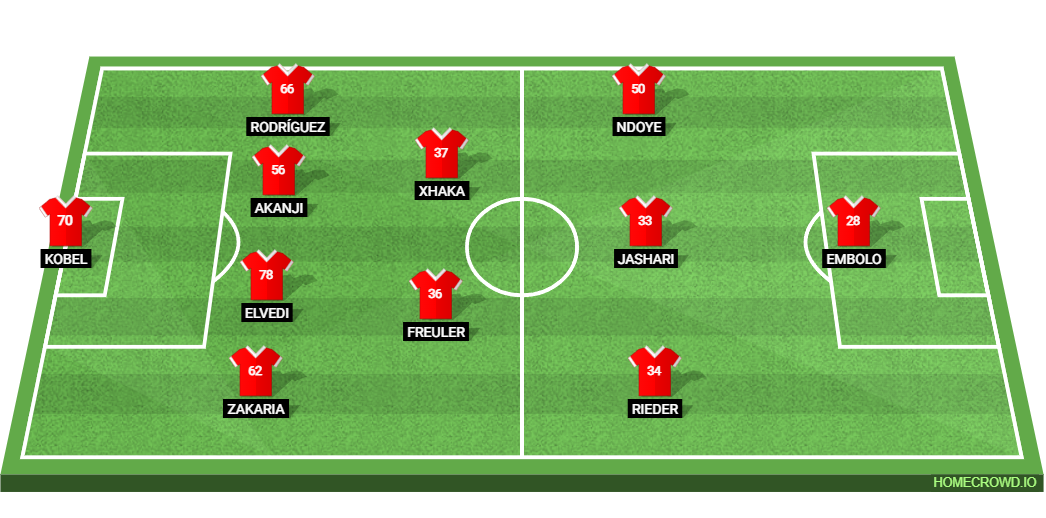
Argentina are likely to line up in a 4-1-3-2 formation, with Emiliano Martinez starting in goal. Nahuel Molina should operate as the right-back, with Cristian Romero and Lisandro Martinez forming the central defensive partnership. Nicolas Tagliafico is expected to start at left-back, giving Argentina a more experienced and defensively reliable option on that side. Leandro Paredes should sit at the base of midfield as the holding midfielder, screening the defence and helping Argentina control possession from deep areas.
Ahead of Paredes, Rodrigo De Paul is likely to start on the right side of midfield, bringing energy, pressing and defensive cover. Alexis Mac Allister should occupy the central midfield role, where his passing range and ability to connect defence with attack will be important. Enzo Fernandez is expected to play from the left side of the midfield three, giving Argentina another progressive passer who can arrive late around the penalty area.
Lionel Messi and Julian Alvarez should lead the attack, with Messi given the freedom to drift between the lines and Alvarez stretching the Swiss defence with his movement behind the back line. Tactically, Argentina will look to dominate the ball and force Switzerland into long defensive spells.
Paredes will be important in dictating the tempo, while Mac Allister and Fernandez must find spaces between Switzerland’s midfield and defensive lines. Messi will again be the creative reference point, but Argentina cannot afford to become too predictable by looking for him with every attack. Alvarez’s runs into the channels could be vital in pulling Swiss defenders out of position and creating room for Messi to receive the ball in dangerous central areas.
The main concern for Argentina will be defensive balance. They have shown vulnerability in transition during the knockout rounds, and Switzerland have enough discipline and physical presence to punish loose possession. Molina and Tagliafico will need to choose their attacking moments carefully, while De Paul and Fernandez must recover quickly whenever Argentina lose the ball. If Argentina control the midfield and protect the spaces behind their full-backs, they should have enough quality to dictate the rhythm of the game.
Argentina are expected to start in a 4-1-3-2 formation with Emiliano Martinez in goal; Nahuel Molina at right-back, Cristian Romero and Lisandro Martinez as the two centre-backs, and Nicolas Tagliafico at left-back; Leandro Paredes as the holding midfielder; Rodrigo De Paul, Alexis Mac Allister and Enzo Fernandez across the advanced midfield line; Lionel Messi and Julian Alvarez as the two forwards.
Probable Lineup (4-1-3-2): Emiliano Martinez; Molina, Romero, Lisandro Martinez, Tagliafico; Paredes; De Paul, Mac Allister, Fernandez; Messi, Alvarez

Switzerland
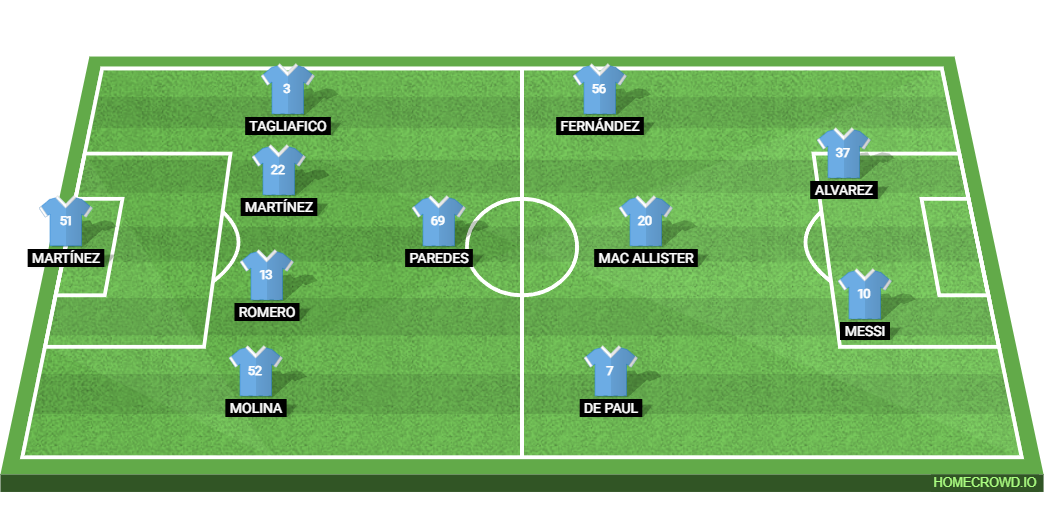
Switzerland’s biggest fitness concern ahead of the quarter-final is Johan Manzambi, who missed the last-16 victory over Colombia because of a knee injury suffered in training. Murat Yakin is hopeful that the midfielder can recover in time, but Switzerland are unlikely to take any unnecessary risk if there is a chance of aggravating the problem.
Apart from Manzambi’s uncertain availability, there are no major suspension concerns reported for Switzerland heading into the meeting with Argentina. They are expected to line up in a 4-2-3-1 formation, with Gregor Kobel starting in goal after his decisive penalty-shootout performance against Colombia.
Denis Zakaria is likely to continue at right-back, with Nico Elvedi and Manuel Akanji forming the central defensive partnership. Ricardo Rodriguez should occupy the left-back role, bringing experience, defensive discipline and calmness in possession.
In midfield, Remo Freuler and Granit Xhaka are expected to operate as the two holding midfielders. Freuler will provide defensive coverage, pressing support and balance, while Xhaka will be responsible for controlling the tempo and helping Switzerland progress the ball from deeper areas.
Fabian Rieder should start on the right side of the attacking midfield line, Ardon Jashari is expected to play centrally as the advanced midfielder, and Dan Ndoye should operate from the left flank, where his pace and direct running can trouble Argentina in transition. Breel Embolo is likely to lead the attack as the centre-forward.
Tactically, Switzerland will look to stay compact and deny Argentina space between the lines. Their main defensive task will be to reduce Lionel Messi’s influence in central areas, which means Freuler and Xhaka must protect the zone in front of the centre-backs. Akanji and Elvedi will need to stay aggressive but disciplined, especially when Julian Alvarez makes runs behind the defensive line.
Switzerland are unlikely to dominate possession for long spells, so their counter-attacking structure will be important. Ndoye’s speed on the left and Rieder’s movement from the opposite side can give them outlets when they win the ball back.
Embolo will also have a major role in holding up possession, drawing fouls and allowing the midfield runners to join attacks. If Switzerland can slow the match down, stay organised and make the most of set-pieces, they have enough structure to frustrate the defending champions.
Switzerland are expected to start in a 4-2-3-1 formation with Gregor Kobel in goal; Denis Zakaria at right-back, Nico Elvedi and Manuel Akanji as the two centre-backs, and Ricardo Rodriguez at left-back; Remo Freuler and Granit Xhaka as the two holding midfielders; Fabian Rieder as the right-sided attacking midfielder, Ardon Jashari as the central attacking midfielder, and Dan Ndoye as the left-sided attacking midfielder; Breel Embolo as the centre-forward.
Probable Lineup (4-2-3-1): Kobel; Zakaria, Elvedi, Akanji, Rodriguez; Freuler, Xhaka; Rieder, Jashari, Ndoye; Embolo
Key Stats
- Argentina have scored 14 goals in five matches at this World Cup, with Lionel Messi contributing eight of them.
- Argentina have conceded in each of their last three games, including twice against Cape Verde and twice against Egypt.
- Switzerland have conceded only three goals in the tournament so far and have kept clean sheets in their last two matches.
- Argentina have never lost to Switzerland in four previous meetings, winning three and drawing one.
Player to Watch
Lionel Messi
There is no overthinking this one as Lionel Messi remains the central figure in Argentina’s World Cup defence and the player Switzerland must solve if they are to reach the semi-finals. Messi is no longer the player who spends 90 minutes running beyond defenders.
Instead, he controls matches through timing, positioning and decision-making. The veteran attacker waits for the right pocket of space, receives under pressure and then changes the rhythm of the attack with one pass or one touch.
Switzerland will try to crowd him and will try to block passing lanes into him. They may even force Argentina to build attacks through other players. But as Egypt discovered, keeping Messi quiet for most of the match is not the same as stopping him.
Prediction
Argentina 2-1 Switzerland
Switzerland have enough defensive organisation and experience to make this a very uncomfortable evening for Argentina. Gregor Kobel’s form, Granit Xhaka’s leadership and the Swiss ability to manage pressure should keep them in the contest for long periods.
However, Argentina’s attacking quality still gives them the edge. They have been vulnerable, but they have also shown the mentality of champions. With Lionel Messi in splendid form and Lionel Scaloni’s side repeatedly finding answers under pressure, Argentina should have just enough to progress.