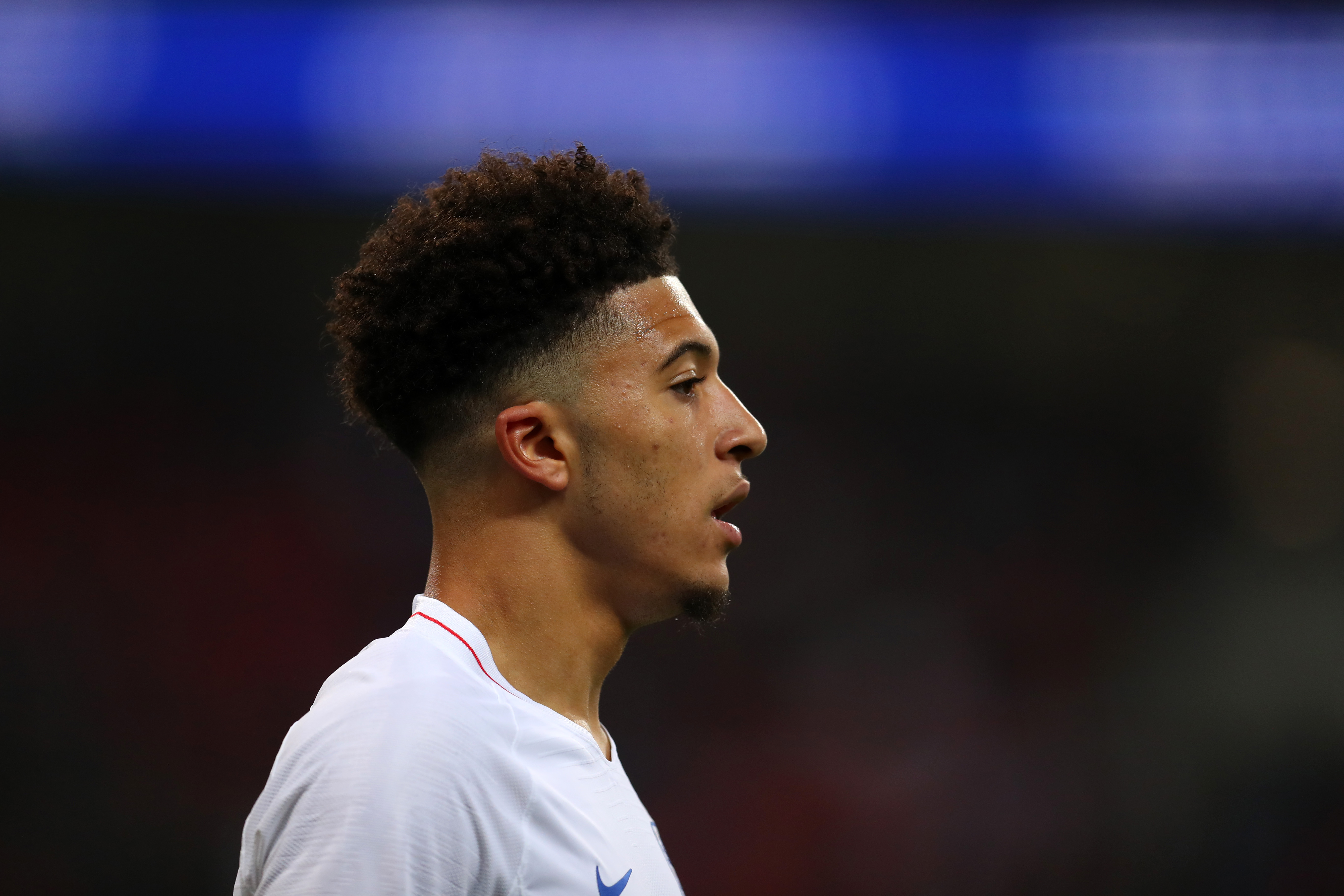
At 26, Jadon Sancho should be entering his prime; instead, he is a free agent searching for a club willing to gamble on a talent that once looked unstoppable.
Jadon Sancho’s story is one of football’s most sobering reminders that talent alone does not guarantee greatness. Once hailed as a generational prospect, the 26-year-old now finds himself without a club, his career derailed by a toxic mix of tactical misfits, personal struggles, and a fractured relationship with management.
A sensational rise, then a steep fall
Sancho’s ascent at Borussia Dortmund was nothing short of spectacular. Between 2017 and 2021, he registered 114 goal contributions in 137 appearances, dazzling in the Bundesliga and Champions League with a maturity beyond his years.
His decision to leave Manchester City’s academy for Germany at 17 was brave, and it paid off handsomely; by 2020, he was one of Europe’s most coveted wingers. That form earned him a £73 million move to Manchester United in July 2021, billed as a dream return to English football.
Instead, it became a nightmare. Over 83 appearances for United, Sancho managed just 12 goals and six assists, a stark drop from his Dortmund output. He completed 90 minutes only 10 times in the Premier League for the club and spent the last two-and-a-half years of his United contract on loan elsewhere.
What went wrong?
Several factors converged to stall Sancho’s progress. First, he was a tactical misfit at Old Trafford. Scouts had identified him as a right-sided threat, but Sancho preferred the left, where Marcus Rashford’s explosive form under Erik ten Hag blocked his path. The result was a player shuffled out of position or to the bench, never allowed to settle into a rhythm.
Second, personal problems intervened. In autumn 2022, Sancho took a three-month break from training, with Ten Hag citing “physical and mental” concerns after the winger missed out on England’s World Cup squad. Though the manager claimed to handle the situation sympathetically, the episode hinted at deeper issues behind the scenes.
The final blow came in September 2023, when Ten Hag omitted Sancho from the matchday squad for Arsenal, criticising his training performances. Sancho hit back on social media, calling himself a “scapegoat” and refusing to apologise.
The rift turned irreparable; he was exiled from first-team facilities and spent months training alone or with academy players before a loan return to Dortmund.
Loans that failed to revive a career
Sancho’s subsequent loan spells offered glimpses of quality but no sustained revival. At Dortmund in 2024, he helped the side reach the Champions League final, yet they could not afford a permanent deal.
A season-long loan to Chelsea followed, with an obligation to buy, but the Blues paid a £5 million penalty to send him back to United after 41 appearances yielded five goals and 10 assists.
His time at Aston Villa under Unai Emery was the least successful. In 39 appearances, he managed just one goal and three assists, often used as a late substitute, including a nine-minute cameo in Villa’s Europa League final win. By summer 2026, United declined to trigger a one-year contract option, leaving Sancho a free agent.
A broader lesson: talent without the right attitude
Sancho’s decline is not unique. Football history is littered with players who possessed bundles of talent but failed to fulfil their potential due to attitude, discipline, or poor choices. Ravel Morrison, once Manchester United’s brightest academy prospect, drifted through clubs without ever establishing himself.
Hatem Ben Arfa, a magician on the ball, clashed with managers and never found consistency. Ricardo Quaresma, despite dazzling technique, could not translate flair into sustained success at the highest level.
Mario Balotelli, once billed as Italy’s next great striker, became football’s archetypal “wasted genius”, brilliant in flashes, but undone by indiscipline, clashes with managers, and a career spent drifting from club to club.
Steven Gerrard summed it up neatly: “He is very talented with the potential to be world class, but he’ll never get there because of his mentality and the people around him.”
Sancho fits this mould. At Dortmund, the structure allowed Sancho to thrive; at United and elsewhere, the pressure, scrutiny, and need for relentless consistency exposed vulnerabilities in his mindset and adaptability.
Where next?
At 26, Sancho still has years ahead, but his options are narrowing. Reports suggest interest from clubs in Europe and the Middle East, though even Borussia Dortmund have reservations about his fitness and output.
A move to Saudi Arabia or Qatar could offer financial security, but it would signal the end of his top-level European ambitions. For any Premier League club, the calculation is simple: does Sancho’s attacking output justify his wage demands and reported behavioural concerns?
With no transfer fee required, a deal could be low-risk if he accepts suitable terms. Yet, as Gabby Agbonlahor bluntly put it:
“I don’t think there’s a club that’s going to offer him £50,000 a week now.”
Sancho’s story is a stark case study for young players: talent opens doors, but attitude, resilience, and the right fit keep them open. Without those, even the brightest prospects can fade into cautionary tales.