Liverpool have lost great managers before. They have lost iconic players before. History suggests the club always finds a way to rebuild.
But the departure of Michael Edwards from Fenway Sports Group (FSG) could prove to be one of the most damaging exits the club has experienced in the modern era, not because he scored goals or won matches from the touchline, but because he was the architect behind almost every major football decision that transformed Liverpool from hopeful challengers into serial winners.
Edwards’s resignation as FSG’s CEO of Football marks the end of a remarkable relationship that reshaped Liverpool’s recruitment strategy, squad planning and long-term vision. More importantly, it exposes a strategic failure by FSG.
Edwards only returned in 2024 after being convinced that Liverpool’s owners would pursue a multi-club ownership model, allowing him to oversee football operations across an expanding network. That project was central to his vision. It was the reason he came back after initially walking away in 2022.
However, after months of exploring potential acquisitions across Europe, FSG abandoned those plans, effectively removing the very project that persuaded Edwards to return. Now Liverpool are left asking a worrying question: what happens when the man responsible for building one of Europe’s smartest football operations walks away?
The genius behind Liverpool’s modern success
Michael Edwards rarely sought the spotlight. Unlike managers and players, he operated behind closed doors, but few executives have influenced a Premier League club more profoundly. When Liverpool appointed him as sporting director in 2016, the club had ambition but lacked consistency in recruitment. Within a few years, they had arguably the finest recruitment department in world football.
The list of players signed during Edwards’s tenure reads like a hall of fame. Virgil van Dijk transformed Liverpool’s defence into Europe’s best. Alisson Becker solved a goalkeeping problem that had plagued the club for years. Mohamed Salah became one of the Premier League’s greatest ever.

Sadio Mane, Andy Robertson, Fabinho, Georginio Wijnaldum, Diogo Jota, Luis Diaz, Ibrahima Konate, and countless others arrived through a recruitment process that combined elite data analysis with traditional scouting. Just as impressive were the departures.
Philippe Coutinho’s £142 million sale to Barcelona became one of the greatest pieces of transfer business football has witnessed. Liverpool reinvested that money into Van Dijk and Alisson, the final pieces of Jurgen Klopp’s title-winning puzzle.
The club consistently sold fringe players at above-market value while avoiding the expensive mistakes that crippled many rivals. Liverpool did not simply buy well. They bought intelligently.
That philosophy carried them to a Champions League triumph in 2019 and Premier League titles, while establishing Liverpool among Europe’s elite. Edwards was not solely responsible, but his fingerprints were everywhere.
Why he came back
When Edwards stepped away in 2022, many believed Liverpool had lost their competitive advantage. His return in March 2024, therefore, came as a huge statement. However, he did not return simply to become Liverpool’s sporting director again. Edwards accepted a much larger position as FSG’s CEO of Football.
His responsibility extended beyond Liverpool. The objective was to create a football empire built around multiple clubs, allowing Liverpool to share talent, data, recruitment networks and player development pathways. That model has become increasingly common.
Manchester City’s City Football Group spans multiple continents. Chelsea’s ownership has rapidly assembled a multi-club network. The Red Bull group has built an integrated football structure across Europe.
Edwards recognised that football’s competitive landscape was changing. Liverpool needed similar infrastructure to remain ahead of rivals over the next decade. By all accounts, that ambition was one of the decisive reasons behind his return.
FSG’s broken promise
This is where Liverpool supporters may feel genuine frustration. Over the past two years, Edwards and his team examined numerous acquisition opportunities, including clubs in France and Spain. Several negotiations advanced significantly. Yet none reached completion.
Eventually, FSG abandoned the project entirely. Reports suggest that concerns about UEFA’s increasingly complex multi-club ownership regulations, alongside financial considerations, contributed to that decision. The owners ultimately concluded that the risks outweighed the rewards.
From a business perspective, FSG may have had legitimate reasons. From Edwards’s perspective, however, the project he had signed up to lead no longer existed. His resignation therefore feels less like an impulsive departure and more like the inevitable conclusion of a partnership built on promises that ultimately disappeared.
That distinction matters. Liverpool have not merely lost an executive. They have lost someone because ownership failed to deliver the strategic vision that convinced him to return.
The timing could hardly be worse
Leadership transitions are always difficult. Liverpool now face one at perhaps the most delicate point since Klopp announced his departure. The Reds are attempting to establish a new era while remaining competitive domestically and in Europe. Maintaining continuity off the pitch is often just as important as maintaining quality on it.
Edwards represented exactly that continuity. He understood Liverpool’s recruitment philosophy and the financial model. He knew how to balance long-term sustainability with elite performance. Replacing that institutional knowledge is far harder than replacing a player.
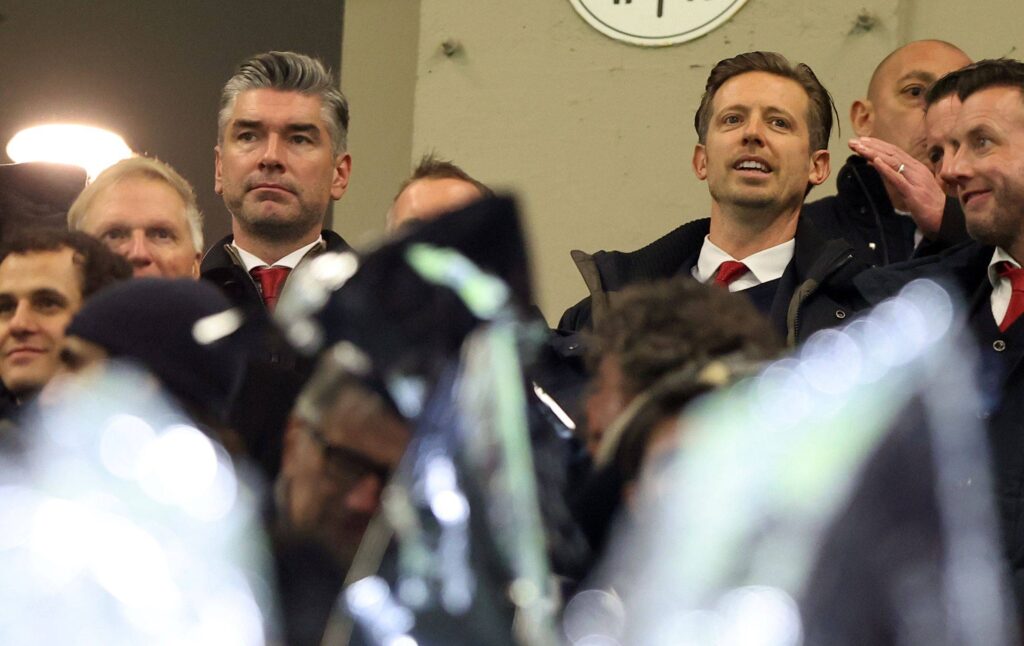
While sporting director Richard Hughes remains responsible for recruitment, reports linking him with a possible departure create further uncertainty surrounding Liverpool’s executive structure. FSG president Mike Gordon is expected to assume greater responsibility, but even experienced ownership cannot instantly replicate Edwards’s expertise.
Recruitment was never just about statistics
One misconception surrounding Edwards is that Liverpool’s success came purely through data. Statistics certainly played an enormous role. But Edwards excelled because he understood when to trust numbers and when to trust football judgment.
Salah was not universally regarded as a future Ballon d’Or contender. Robertson arrived from a relegated Hull City side. Wijnaldum had just suffered relegation with Newcastle United. Mane was admired but not considered among Europe’s elite.
Edwards consistently identified players before their market value exploded. That skill cannot simply be downloaded into a database. It depends upon leadership, decision-making and experience accumulated over years. Liverpool’s recruitment machine became admired worldwide because Edwards combined analytical precision with exceptional football instincts. That combination is exceptionally rare.
Liverpool’s competitive edge is now under threat
For years, Liverpool compensated for financial limitations by consistently making better decisions than wealthier rivals. Manchester City, Chelsea, and Manchester United often spent more. Liverpool stayed competitive because they spent smarter. Edwards embodied that advantage.
His departure, therefore, raises an uncomfortable possibility. What if Liverpool gradually lose the decision-making superiority that allowed them to challenge clubs with greater financial resources? No executive is irreplaceable. But replacing someone of Edwards’s calibre requires exceptional succession planning.
FSG insist Liverpool remain in a strong position, and Edwards himself has spoken positively about the foundations left behind. Nevertheless, elite football evolves rapidly. Standing still can quickly become falling behind.
This is bigger than one resignation
Liverpool supporters naturally focus on players and managers because they influence every weekend. Executives rarely receive similar attention. Yet the modern game increasingly revolves around sporting directors, recruitment departments and long-term strategic planning. Michael Edwards helped redefine how elite football clubs should operate.
He transformed Liverpool into one of the most efficiently run clubs anywhere in Europe. Ironically, his final chapter may become a warning about what happens when strategic alignment between ownership and football leadership breaks down. FSG persuaded one of football’s brightest executives to return by presenting an ambitious long-term vision.
When that vision disappeared, so did the executive. Whether Liverpool immediately feel the consequences remains uncertain. Recruitment structures remain in place. The data department continues operating. Experienced personnel remain throughout the football operation. That said, organisations are rarely defined solely by systems, but by people capable of making the biggest decisions under the greatest pressure.
For nearly a decade, Michael Edwards was that person. Liverpool supporters will hope the foundations he built prove strong enough to survive without him. History suggests replacing Michael Edwards will be far more difficult than replacing almost any player he ever signed.
And if Liverpool’s competitive advantage begins to erode over the coming years, many may look back on FSG’s abandoned multi-club promise as the moment one of the Premier League’s greatest football architects decided his work at Anfield was complete.