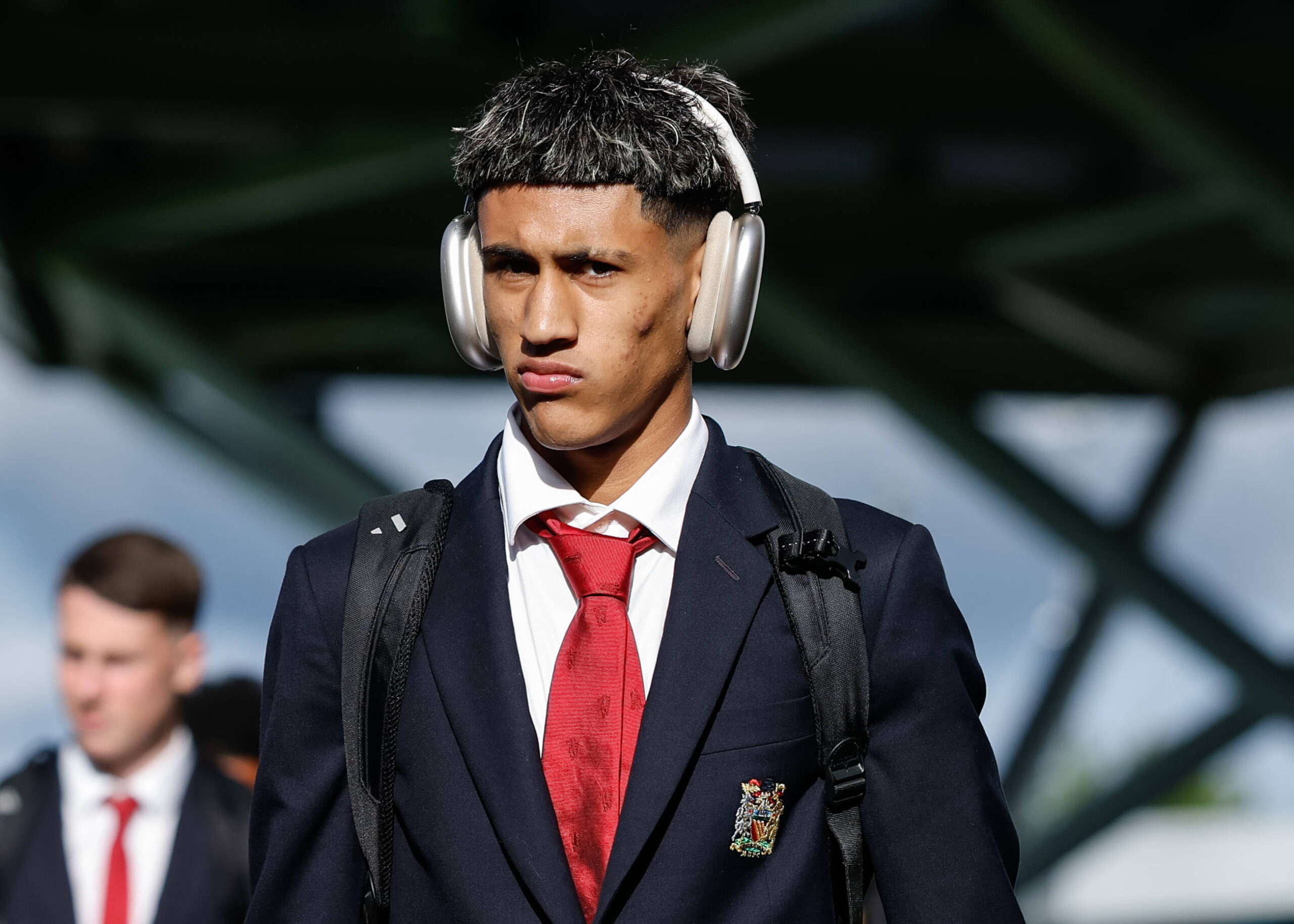
Manchester United wonderkid JJ Gabriel’s move to Real Madrid is a bold gamble on talent, time and opportunity.
JJ Gabriel has spent most of his young career being described as the next big thing. Now, at 16, he appears ready to test that label in the most demanding environment in European football: Real Madrid.
The teenager has reportedly reached a verbal agreement with the Spanish giants, with a move expected to be completed in January, despite still being registered with Manchester United until the end of the season.
On the surface, it is an easy decision to understand. Gabriel is leaving a United side struggling for stability and direction for a club that remains one of football’s true powerhouses.
Real Madrid offer glamour, elite coaching, global exposure and a genuine chance to compete for the biggest prizes. For a player whose stated dream is to win the Ballon d’Or, the temptation is obvious.
But this is not simply a case of a talented youngster choosing a bigger club. It is a gamble on time, patience and opportunity. And at Real Madrid, those three things are never guaranteed.
Why JJ Gabriel is leaving
Gabriel’s frustration at Manchester United appears to centre on one issue: his route into senior football. He and his representatives wanted a clearer first-team pathway, including more involvement with the senior squad and a realistic chance of making his professional debut this season.
United’s approach did not satisfy them, and Gabriel formally asked for his registration to be cancelled in September. That is an understandable demand from a player who has already outgrown much of his age group.
Gabriel was named the Premier League Under-18 Player of the Season despite being only 14 when the campaign began, and he marked his UEFA Youth League debut with a hat-trick against Sabah. He has also represented England up to Under-17 level and carries the sort of reputation that makes every club in Europe pay attention.
Still, leaving United at 16 because first-team chances have not arrived is a risky response. Football careers are rarely linear. A teenager who is not ready at 16 may be ready at 18 or 19, provided he is developing properly, playing competitive football and being handled with care.
Gabriel’s camp clearly believes United cannot offer that route quickly enough. Madrid, meanwhile, have reportedly presented a plan that could fast-track him towards the first team.
La Fabrica is not the issue
One concern often raised about a move to Spain is whether Gabriel will be developed properly. Real Madrid’s academy, La Fabrica, may not have the same global reputation as Barcelona’s La Masia, but it is far from a weak development system.
In fact, La Fabrica has produced more players currently appearing in first-team football across Europe’s top five leagues than any other academy. That statistic matters. Gabriel would not be joining a club with no tradition of developing footballers; he would be joining one with a serious infrastructure for turning promising teenagers into professionals.
The real issue, then, is not whether Madrid can improve him. It is whether Madrid will give him the platform to show that improvement. Castilla, the club’s reserve side, could provide regular football in Spain’s third tier, while the UEFA Youth League would offer high-level European competition. That would be a sensible first stage.
But Gabriel did not leave United simply to become a promising name in a reserve team. He wants senior football, and he wants it soon.
A crowded road to the first team
This is where the move becomes complicated. Gabriel is versatile: he can play as a No. 10, as a striker or on the left wing. That flexibility is a strength, but it does not solve Madrid’s central problem. The club already have elite options in every position he can occupy.
Kylian Mbappe leads the attack, Jude Bellingham operates in the creative midfield areas, and Vinicius Junior remains one of the most dangerous left-sided forwards in world football.
Behind them sit Rodrygo, Brahim Diaz, Endrick, Arda Guler, Carlos Espi and record signing Yan Diomande. Gabriel would not merely be competing with established stars; he would be competing with other highly rated young players who are already further along in their Madrid careers.
A couple of years away from the club, perhaps on loan, could actually be the best possible outcome. Regular senior minutes elsewhere would allow Gabriel to grow physically, learn the demands of professional football and return to Madrid with something more substantial than potential. Without that, he risks becoming another talented youngster trapped between the academy and a first team that has no room for him.
The Bernabeu can be cruel
Real Madrid are not a normal club. The attention is greater, the expectations are heavier, and the criticism arrives faster. Gabriel has already invited enormous pressure by choosing the most glamorous possible destination at such a young age.
Martin Odegaard’s story should give him pause. Odegaard arrived at Madrid as one of the most celebrated teenagers in Europe, became the club’s youngest-ever debutant and still made only 11 senior appearances before leaving permanently. He later described feeling stuck between the B team and the first team, unable to belong fully to either.
Gabriel could be different. Talent is not the question. But Madrid’s history shows that ability alone does not guarantee survival at the Bernabeu. For every Vinicius Junior or Federico Valverde, there are players such as Reinier and Takefusa Kubo who never reached the expected levels.
The right call?
Gabriel’s decision is brave, ambitious and entirely in keeping with a player who believes he belongs among the very best. Madrid’s development structure, European pathway and global platform make the move understandable.
Yet it is only the right call if there is a clear plan beyond the signature. Gabriel needs regular football, a patient environment and a realistic route into senior football. If Madrid can provide that, the move could accelerate his career.
If not, he may discover that leaving United for the brightest lights in football comes with the harshest shadows. At 16, Gabriel has time on his side. What he cannot afford is to waste it waiting for a chance that never comes.