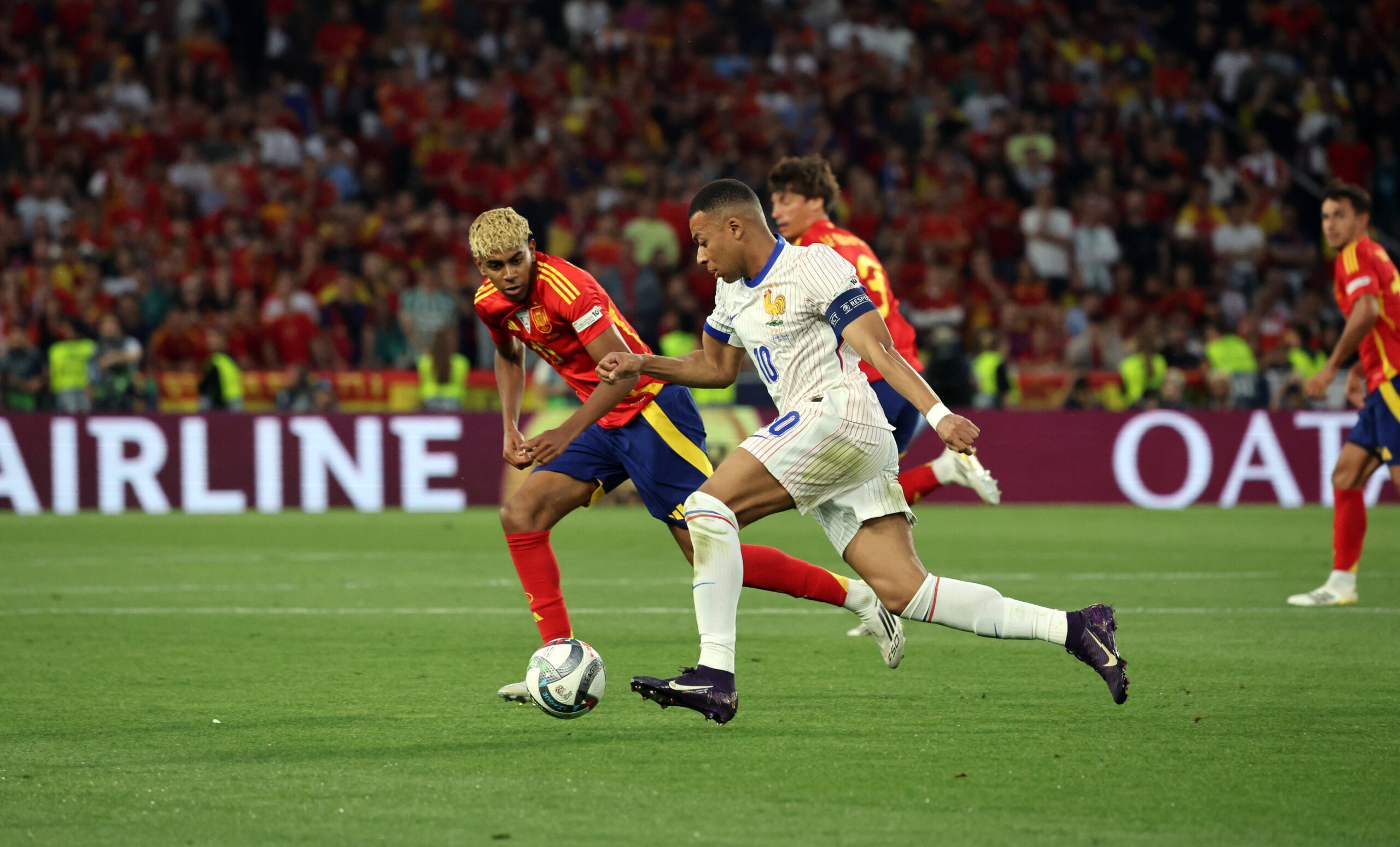
Two heavyweight visions of football collide in a high-stakes World Cup semi-final, where defence meets flair, collective control faces sudden individual brilliance on the biggest stage.
France and Spain have arrived in this FIFA World Cup 2026 semi-final by passing stern examinations rather than strolling into it. Les Bleus had to overcome Morocco and did so through the force of Kylian Mbappe, while Spain found a late answer through Mikel Merino against Belgium, setting up a contest that already feels larger than a routine last-four tie, that is what gives this meeting its weight before a ball is even kicked.
Didier Deschamps’s men eventually won 2-0 in Foxborough. Mbappe broke the deadlock after his first-half penalty was saved, restoring France’s forward momentum before Ousmane Dembélé added the second. Spain’s route was no softer.
Belgium pushed them harder than anyone else had done in the tournament, even becoming the first side to score against La Roja, but Luis de la Fuente’s team still found a way through and did so in familiar fashion, with Merino coming off the bench to score the late winner in a 2-1 victory.
That is why this semi-final carries both inevitability and surprise in equal measure. France have leaned on the brilliance of Mbappe, the sport’s sharpest finisher in transition, while Spain have drawn strength from a collective rhythm that keeps producing the right man at the right moment, Merino included.
Control vs Chaos: Both things can be true
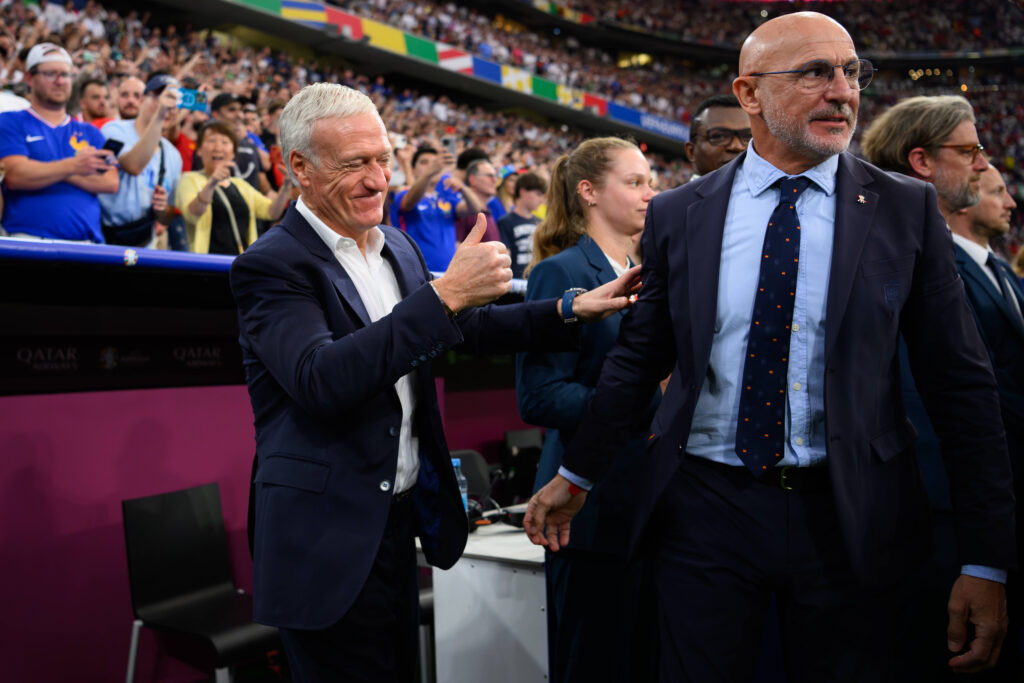
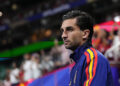
Didier Deschamps and Luis de la Fuente have distinct styles that have worked with elan for their teams (Photo Credit: Imago)
It is hardly shocking to find these nations standing here, because the strongest sides in a major tournament usually reveal themselves through their balance, and both teams have possessed it in abundance. France have kept four clean sheets in six matches and conceded only two goals in the competition, while Spain did not let in a single goal until Charles De Ketelaere’s header for Belgium in the quarter-final.
That defensive authority is one reason this contest feels so difficult to read. France have often been described as an almost untouchable side in this tournament, a team with too much pace, too much power and too many match-winners. But Spain are the sort of opponent who would welcome the challenge rather than shrink from it.
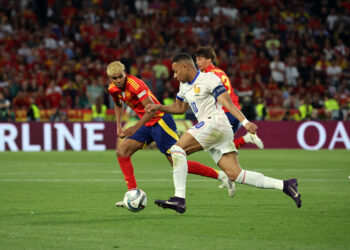
The contrast between individual threat and collective control defines this tie. France can turn a game with one burst from Mbappe, one dribble from Michael Olise, or sudden movement from Dembele. Spain prefer to bend matches to their own rhythm, circulating the ball, owning territory, and drawing the opposition into uncomfortable spaces.
That contrast could define the pattern of the evening. Spain may dominate long stretches and ask France to defend in a lower block than they would like, but France’s attacking talent is so sharp that even a spell without the ball can become dangerous in an instant, and that possibility may stop Spain from committing too aggressively too early.
This is what makes prediction feel more like guesswork than analysis. Neither team has shown a clear weakness so far, and with England and Argentina waiting on the other side of the bracket and the final set for New Jersey, there is every chance that the winner of this tie could be the team that lifts the trophy.
Star names, shadow battles
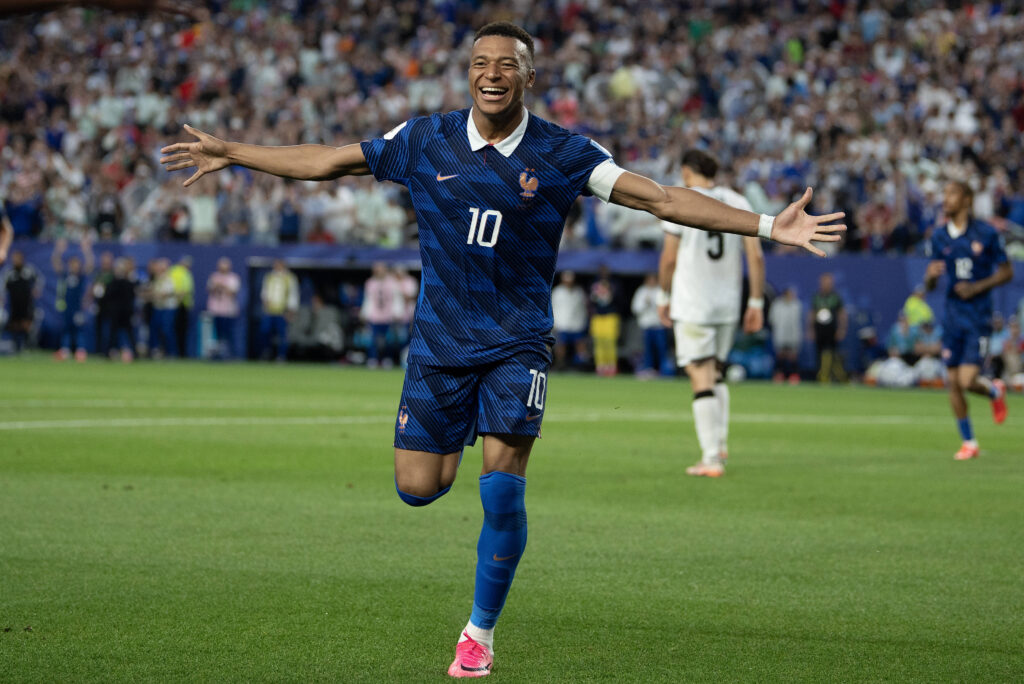
The broadest headline has been written already: Kylian Mbappe against Lamine Yamal. That is understandable, because Mbappe has recorded eight goals so far, taking him to the top of the Golden Boot charts. Meanwhile, Yamal remains the teenage phenomenon around whom so much of Spain’s excitement and imagination revolve.
There is also an irresistible sense of symmetry in the pairing. Mbappe knows this terrain intimately, having starred at the last two World Cups and already built a body of work that defines eras, while Yamal enters what may be the most important match of his young career carrying the glow of a player widely discussed as a generational talent after bursting through during Spain’s Euro 2024 triumph.
Still, reducing this semi-final to a duel between two forwards would miss much of its richness. Rodri’s control in midfield, William Saliba’s command at the back and the work of France’s wider attackers all matter enormously, while Marc Cucurella could face one of the longest nights of his career if Spain leave him too often against the combined threat of Olise and Dembele.
There are mental contests within the technical ones as well. Spain will want Yamal to be brave and expressive, not burdened by occasion. France need Mbappe in the moments that suit him best, isolated against defenders, running into fear, turning one step into a crisis.
That is often how semi-finals are decided, not simply by who plays better for 90 minutes, but by which side can manage the key moments when structure gives way to instinct and the match belongs to the footballers bold enough to seize it.
The view from the dugout
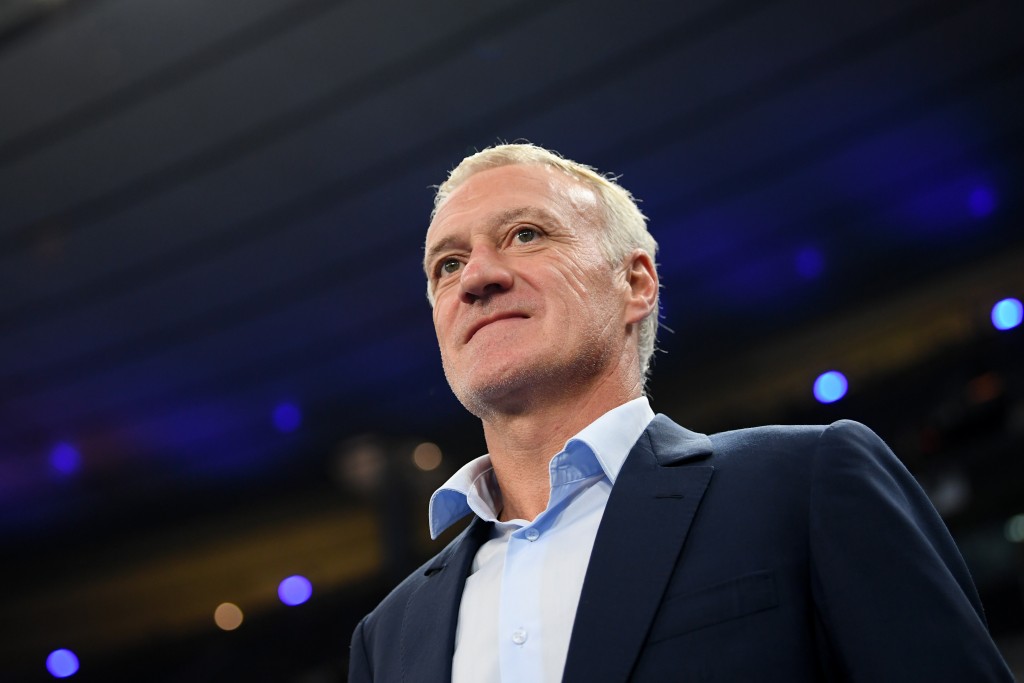
The managerial subplot is every bit as compelling. Deschamps became the head coach with the most World Cup wins during this tournament, a reflection of remarkable durability at the highest level, and France’s latest run has given him the chance to guide them to a third straight World Cup final after lifting the trophy in 2018 and finishing runners-up in 2022.
That experience matters, especially in matches where tension can distort decision-making. Deschamps has long trusted the power of elite individuals and the value of emotional control, and even when France are not at their most fluid, they often look like a side that understand tournament football better than anyone else.
De la Fuente brings a different philosophy. He may be newer to this exact stage, but he is not a novice in big games, having led Spain to Euro 2024 glory and helped shape a side whose identity is grounded in structure, movement and faith in the collective rather than dependence on one man.
That difference in philosophy could be the most interesting tactical fault line of all. Spain appear coached in almost every phase, pressing and passing with an evident design, whereas France can look looser, even deceptively casual, until one of their stars rips the game open and reminds everyone that talent remains the sharpest weapon in football.
For that reason, this has the ingredients of a match that could live in memory for years. Whether it can reach the emotional heights of the 2022 World Cup final is another matter, but in terms of quality, stakes and narrative pull, it is difficult to ask for a richer semi-final.
Which team will carry the weight?
This is the kind of fixture that makes a World Cup feel larger than a tournament and closer to a stage on which football generations pass each other in full view. France arrive with the aura of a side that have mastered knockout football, guarded by a defence that has given little away and armed with forwards who can change the direction of a night with one clean touch, one explosive run or one glimpse of hesitation from the opposition.
Spain, though, have a different but equally persuasive force. They do not need to prove they belong here, because their run has already shown a team capable of controlling matches, enduring discomfort and trusting that their structure will eventually pull the game back into their hands, just as it did when Belgium finally cracked their clean-sheet streak before Merino restored order.
That is why the semi-final feels less like a collision between favourites and challengers, and more like an argument between two credible visions of how modern tournament football should be played. France represent the terrifying value of individual superiority in decisive moments; Spain embody the idea that collective coherence can blunt even the brightest stars and still leave room for brilliance of their own through Yamal, Rodri and the wave of runners around them.
In the end, these matches are often settled by the smallest surrender rather than the biggest flourish. One mistimed step, one transition defended a fraction too slowly, one substitute on cue. Spain may control more of the evening, but France have looked too comfortable in chaos throughout this tournament for that to be decisive on its own, and there remains a faint sense that if the tie tightens, Mbappe’s side may be the one with the colder nerve and the crueler finishing touch.