
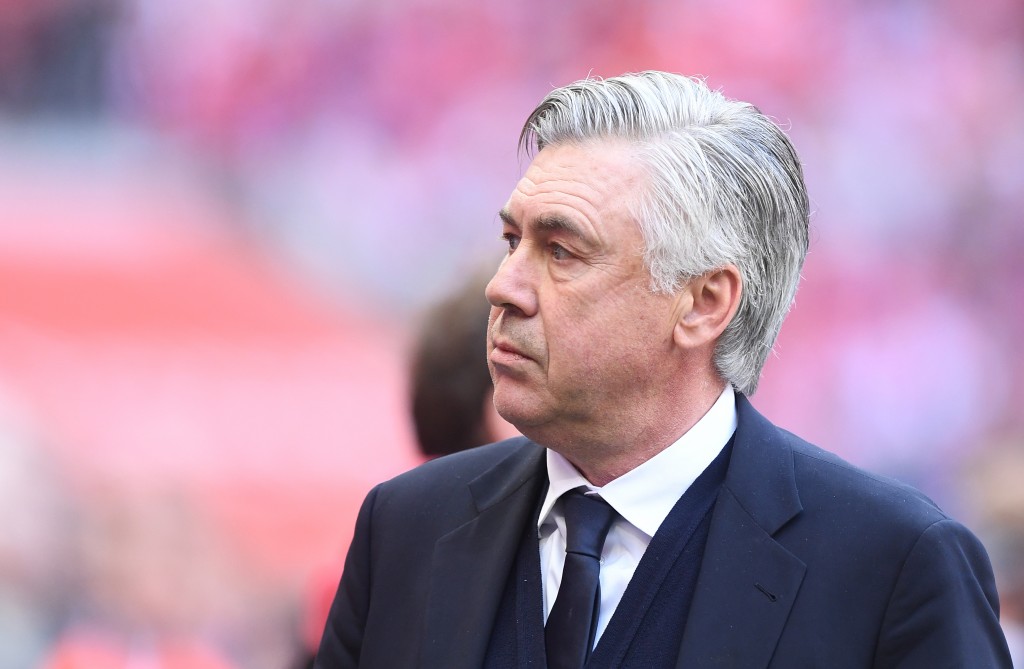
Welcome to Team Spotlight, and today, we analyse Brazil’s style, form, key players, and predictions as Carlo Ancelotti finalises his preparations for the 2026 FIFA World Cup.
Brazil. The name alone evokes images of samba-infused football, rainbow-coloured jerseys, and the most celebrated footballing nation on planet Earth. The five-time World Cup champions stand as the most successful team in FIFA World Cup history, having lifted the coveted trophy in 1958, 1962, 1970, 1994, and 2002. More remarkably, they remain the only nation to have participated in every single World Cup tournament since the competition’s inception in 1930.
Yet, for all their glory, a haunting shadow has loomed over Brazilian football for nearly a quarter-century. The last time the Selecao danced with World Cup triumph was in 2002, when Ronaldo’s two goals sealed victory against Germany. Twenty four years and five World Cups have passed since then, with heartbreak after heartbreak defining their journey, from the 7-1 humiliation on home soil in 2014 to quarter-final exits in 2018 and 2022.
Now, with the 2026 FIFA World Cup in Canada, Mexico, and USA just around the corner, Brazil find themselves at yet another crossroads. But this time, the narrative is different. The CBF has made an audacious, historic decision of appointing Carlo Ancelotti, the first foreign head coach in the national team’s history, to lead them toward their sixth title. The question now on every Brazilian’s lips is simple. Can the Italian master reverse the Selecao’s fortunes after their worst-ever qualifying campaign?
Road to FIFA World Cup 2026: Nothing short of a nightmare
The numbers tell a story that would make even the most optimistic supporter cringe. Brazil’s journey to 2026 will go down as the most embarrassing qualifying campaign in the five-time champions’ history. Finishing fifth in the CONMEBOL qualifiers with just 28 points from 18 matches, the Selecao recorded eight victories, four draws, and a staggering six defeats.
Their goal difference of merely +7 stands as a historically low figure for Brazil, a team that traditionally dominates South American football. In a 32-team World Cup cycle, this performance would have seen Brazil heading toward the intercontinental playoffs, saved only by the slimmest of margins. They conceded the second-most goals among all six automatic CONMEBOL qualifiers, exposing defensive frailties that would worry any manager.
The campaign threatened to spiral completely out of control under Dorival Junior. After a dreadful Copa America 2024, where Brazil crashed out in the quarter-finals on penalties against Uruguay, followed by a humiliating 4-1 thrashing by Argentina in Buenos Aires, the pressure became unbearable. The match in Buenos Aires was not even over before fans were screaming for Dorival’s head, and three days later, it rolled.
Enter Carlo Ancelotti. The Italian arrived like a soft breeze of optimism, steadying the ship and finally securing Brazil’s spot at the World Cup. His arrival marked a painful admission from Brazilian football: the accelerated decline of Brazilian managers and the need to look outside for tactical sophistication. The numbers behind this worst-ever qualifying campaign will haunt Brazil as they head to North America.
The Maestro Arrives: Carlo Ancelotti and his Cup Magic
Carlo Ancelotti’s appointment represents more than just a coaching change. It symbolises Brazil ditching 96 years of tradition, as iterated earlier. The decision sparked controversy among Brazilian coaches, with Antonio Lopes questioning why Brazil needed a foreign coach when they had won five World Cups with five Brazilian managers.
Yet, the logic is undeniable. Over 80% of Brazil’s World Cup squads since 2006 have consisted of players based in Europe, many leaving as teenagers and completing their development on the continent. These are essentially European-minded athletes who respond better to a European coach who understands their world intimately.
Ancelotti’s tactical approach promises a fascinating blend. He has ditched Brazil’s traditional free-flowing, possession-heavy identity for a highly structured, pragmatic system that marries European tactical discipline with Brazilian flair. His emphasis is on intelligent structure, adaptability, and balance rather than outright flamboyance.
The numbers speak for themselves regarding Ancelotti’s elite credentials. The Italian has won an astonishing 22 cup competitions as a manager, including a record five UEFA Champions League titles, more than any other manager in history. His ability to navigate knockout football, particularly in the Champions League, makes him the perfect candidate for World Cup success, where one-off matches and tournament savvy often trump long-term dominance.
Interestingly, Ancelotti has deep bonds with Brazil’s current crop of stars. In particular, he was instrumental in transforming Vinicius Junior from an inconsistent youngster into a world-class forward at Real Madrid. Nearly half a dozen players in Brazil’s current squad have played under the Italian during his illustrious career, including Casemiro, Marquinho, and Vinicius.
The Squad: Neymar’s return and Ancelotti’s choices
Brazil’s squad for the 2026 FIFA World Cup reflects Carlo Ancelotti’s pragmatic approach, blending experienced veterans with exciting young talent. The 26-man roster includes domain experts at every position, though the narrative surrounding Neymar’s selection dominated headlines.
Goalkeepers: Alisson Becker (Liverpool), Ederson (Fenerbahce), Weverton (Gremio)
Defenders: Alex Sandro, Danilo, Leo Pereira (Flamengo), Bremer (Juventus), Ibanez (Al-Ahli), Wesley (Roma), Marquinhos (Paris Saint-Germain), Gabriel Magalhaes (Arsenal), Douglas Santos (Zenit St Petersburg)
Midfielders: Casemiro (captain, Manchester United), Bruno Guimaraes (Newcastle), Danilo Santos (Botafogo), Fabinho (Al-Ittihad), Lucas Paqueta (Flamengo)
Forwards: Vinicius Junior (Real Madrid), Raphinha (Barcelona), Neymar (Santos), Matheus Cunha (Manchester United), Luiz Henrique (Zenit St Petersburg), Endrick (Real Madrid), Gabriel Martinelli (Arsenal), Igor Thiago (Brentford), Rayan (Bournemouth)
The Neymar story is pivotal. Despite battling fitness issues for years, Ancelotti insisted on including him, viewing him as irreplaceable for Brazil’s tournament hopes. The forward’s selection sparked debate, but Ancelotti’s faith in the veteran speaks volumes about his confidence in Neymar’s ability to deliver when it matters most.
Key Players: The stars who could define Brazil’s campaign
Alisson Becker
Alisson Becker remains arguably the world’s finest goalkeeper, and his presence between the posts provides Brazil with a crucial advantage. At Liverpool, the 33-year-old has been exceptional, making crucial saves and demonstrating remarkable distribution skills that fit Carlo Ancelotti’s build-up philosophy. His ability to read the game and position himself perfectly has been instrumental in Brazil’s defensive stability when he is on the pitch.
However, Alisson’s fitness concerns are real and troubling. The veteran goalkeeper has missed several months of action in recent seasons, and he has recently returned from another layoff. If Alisson is not 100% mentally and physically, Brazil’s defensive frailties from qualifying could resurface with devastating consequences.
Gabriel Magalhaes
Gabriel Magalhaes has emerged as one of the Premier League’s most imposing centre-backs during his time at Arsenal. The 28-year-old recorded 3 goals and 4 assists in 32 Premier League appearances during the 2025/26 season, demonstrating remarkable attacking contribution for a defender.
His physical presence, aerial dominance, and improved ball-playing ability make him ideal for Ancelotti’s system. Gabriel’s metrics are impressive, and his excellent positioning allows him to read the game two steps ahead. His partnership with Marquinhos could provide Brazil with the defensive stability they lacked during qualifying.
However, while Gabriel excels at Arsenal, international football operates at a different level. His relatively limited experience with Brazil means he has not faced the same intensity and pressure as his club counterparts. His attacking instincts, while valuable at club level, could sometimes leave him exposed in tight international matches where defensive discipline is paramount.
Casemiro
Casemiro is coming off a season where he belied expectations to become Manchester United’s midfield anchor, and he brings invaluable World Cup experience to Brazil. The veteran midfielder has shown resurgent form this season, demonstrating that his class remains permanent despite advancing age. His defensive intelligence, positioning, and ability to break up play remain elite, making him crucial for Brazil’s midfield stability.
Casemiro’s experience is irreplaceable. He has played in two World Cups already (2014, 2018) and understands the tournament’s unique pressures better than any current Brazilian midfielder. However, age is the cruel reality.
At his age, it is extremely difficult to maintain 90-minute intensity against elite opposition. His pace has noticeably declined, making him vulnerable to fast-breaking attacks. Against teams like France or Argentina, whose wingers possess explosive speed, Casemiro’s slowing legs could be exploited ruthlessly. Ancelotti will need to carefully manage his minutes.
Neymar
Neymar’s journey to the 2026 FIFA World Cup has been nothing short of tragic. The Santos forward has suffered a raft of injuries, and the latest, a calf issue, may rule him out of the start of the World Cup. Yet, when fit, Neymar remains one of the world’s most dangerous players. His creativity, dribbling ability, and capacity to produce moments of magic in crucial matches make him irreplaceable for Brazil.
However, Neymar’s injury history makes him an enormous risk. So, the question remains, can he truly handle 70 minutes of World Cup intensity after such a prolonged run on the sidelines? The psychological toll of constant injuries cannot be underestimated. If Neymar is not 100%, he could become a liability rather than an asset.
Vinicius Junior
Vinicius Junior transformed into one of the world’s best players under Carlo Ancelotti’s guidance at Real Madrid. The 25-year-old has scored 22 goals and provided 14 assists in 53 games for Madrid this season, demonstrating the prolific form that could make him Brazil’s tournament hero.
At Real Madrid, Ancelotti shaped Vinicius’s role to be more structured, assigning him clear zones of operation and improving his decision-making significantly. His transformation from inconsistent youngster to FIFA’s The Best Men’s Player in 2024 was remarkable. Additionally, his pace, dribbling, and finishing make him Brazil’s most dangerous weapon.
However, Vinicius’s record for Brazil is surprisingly modest, as he has managed just 8 goals in 47 appearances. This poor international record raises questions about whether he can replicate his club form on the biggest stage.
The pressure of representing Brazil differs from playing for Real Madrid, and Vinicius has yet to prove he can carry the Selecao’s attacking burden consistently. As he admitted himself, “Brazil haven’t earned the favourites tag”, showing humility that might indicate he’s not yet ready for the weight of expectation.
Notable Absentees: The shock omissions
Several players expected to feature prominently in Brazil’s plans have found themselves on the outside looking in, and these omissions have sparked debate across Brazilian football.
Vanderson: The AS Monaco right-back was highly touted as Brazil’s future at position but has missed out due to limited playing time and Ancelotti’s preference for an experienced option like Danilo.
Ederson: Impressive at Atalanta but not deemed ready for the World Cup stage compared to established options like Bruno Guimaraes, Casemiro, and Fabinho.
Joao Pedro: The Chelsea striker has shown promise in the Premier League but has been unable to convince Ancelotti to get picked for such a crucial tournament.
Richarlison: Perhaps the most controversial omission. Despite being coached by Ancelotti at Everton, the Tottenham striker has been left out. Tottenham’s inconsistent form likely played a role, though his familiarity with Ancelotti’s system made this exclusion surprising.
Fixtures: Brazil’s Group C Challenge
Brazil have been drawn into Group C alongside Morocco, Scotland, and Haiti, making it a relatively manageable group on paper that should see the Selecao advance comfortably.
Brazil’s World Cup 2026 Schedule So Far:
- June 13, 2026: Brazil vs Morocco at MetLife Stadium, New Jersey/New York
- June 19, 2026: Brazil vs Haiti at Lincoln Financial Field, Philadelphia
- June 24, 2026: Scotland vs Brazil at Hard Rock Stadium, Miami
The group-stage fixtures present Brazil with a familiar challenge: Morocco, the AFCON champions who have become increasingly competitive on the world stage after reaching the 2022 World Cup semi-finals. Scotland bring physicality and tactical discipline, while Haiti represent the potential minnow that could cause an upset. Carlo Ancelotti’s experience in navigating tricky group stages will be crucial, and Brazil should comfortably progress to the knockout rounds if they perform to their potential.
Prediction: Quarter-Final Heartbreak Awaits
Despite Carlo Ancelotti’s cup credentials and Brazil’s individual talent, this squad carries too many question marks to go all the way. The historically poor qualifying campaign exposed fundamental issues. Defensive frailties, a lack of cohesion, and over-reliance on individual brilliance rather than systematic excellence may prove their undoing.
Several teams, like France, Argentina, England, Germany, and potentially even Portugal or Spain, possess greater squad depth and tactical coherence than Brazil. Even if Ancelotti can produce his cup magic and navigate the group stage comfortably, the gulf in quality should prove telling in the latter stages of the tournament.
The quarter-final barrier has proven insurmountable for Brazil since 2014, and while Ancelotti’s tactical sophistication and cup expertise provide hope, the underlying issues from qualifying will likely resurface against elite opposition.
Brazil will entertain, they will create chances, and they will have moments of brilliance. But the 24-year World Cup drought will continue, with Ancelotti’s Brazil falling just short of their sixth-title dream in what promises to be another heartbreakingly close but ultimately unsuccessful campaign.
The Selecao’s sixth dream remains just that, a dream waiting to be realized in 2030 or beyond. For now, Brazil must accept that even Carlo Ancelotti’s genius cannot overcome the fundamental question marks hanging over this squad.