
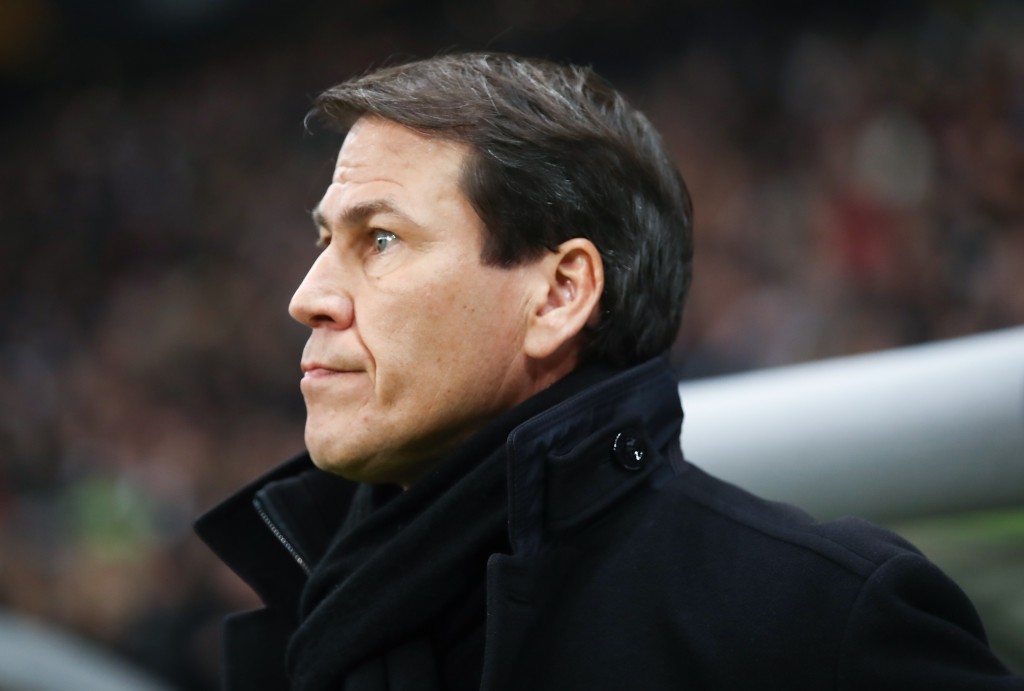
Welcome to Team Spotlight, and today, we analyse Belgium’s style, form, key players, and predictions as Rudi Garcia finalises his preparations for the 2026 FIFA World Cup.
Belgium have long been the nearly men at the World Cup. Across several editions, they have promised much but fallen short of the ultimate prize on each occasion. The so-called Golden Generation, built around a core of elite performers at the club level, arrived with sky-high expectations only to repeatedly stumble at the business end. In Russia 2018, they finished third but never tasted final glory; in Qatar 2022, they imploded in the group stage, mustering a single goal in three matches.
Now, that Golden Generation is on its last legs. Retirements have swept away familiar names like Vincent Kompany, Eden Hazard, Jan Vertonghen, and others, leaving a smaller cadre of veterans to carry the burden. Kevin De Bruyne remains the heartbeat, Thibaut Courtois is the last great wall, and Romelu Lukaku is the enduring spearhead. However, the supporting cast is younger, less proven, and under pressure to prove they are more than just witnesses to a fading era.
Looking towards what’s to come, we take a comprehensive look at Belgium ahead of the 2026 FIFA World Cup. We will dissect their style of play under Rudi Garcia, examine their qualification campaign in raw and underlying terms, assess the manager’s record and tactical philosophy, and analyse the squad in depth. This is Belgium, laid bare, before the biggest stage in football.
Road to FIFA World Cup 2026
Belgium’s qualification journey was straightforward in outcome but occasionally nervy in execution. They topped Group J unbeaten, with five wins and three draws across eight outings, scoring a prolific 29 goals in the process. On paper, that reads like dominance. In practice, the draws against North Macedonia and Kazakhstan hint at a vulnerability: when opponents stay compact, Belgium can struggle to break them down from the outset.
The campaign began with a concerning 1-1 draw away to North Macedonia, a result that immediately raised questions about their ability to convert dominance into goals against defensively resolute sides. The tie with Wales became the campaign’s emotional hinge. After a shaky start, Belgium needed an 87th-minute winner from Kevin De Bruyne, before sealing qualification with a thrilling 4-2 away victory in Wales. Those late goals were defining moments, turning potential crisis into control.
Midway through the campaign, Belgium found their rhythm with resounding 6-0 thrashings of Liechtenstein and Kazakhstan, showcasing their attacking firepower and the sheer volume of chances they can create. The underlying numbers tell a similar story: high expected goals (xG), dominant possession, and relentless pressure in the final third. Yet the fact that their three draws came against lower-ranked opponents suggests that, while Belgium can outgun most teams, they sometimes lack the surgical edge against deep blocks.
Qualification was automatic and unbeaten, but analysts and fans alike were left slightly uneasy about defensive solidity against high-calibre opposition. If the Red Devils face teams that can absorb pressure and punish transitions, they may find the World Cup far more testing than the qualifiers suggested .
The Manager: Rudi Garcia’s Style and Pedigree
Rudi Garcia’s appointment marked a clear tactical direction for Belgium. He favours an attacking, possession-based approach, with an emphasis on quick, vertical transitions immediately after winning the ball. His preferred formation is a 4–2–3–1, which balances defensive organisation with fluid, expressive movement from the attacking midfielders and wingers.
Garcia’s tactical pillars are clear:
- Attacking Possession: He demands his team dominate the ball and dictate tempo. The focus is on offensive creativity and pressing for the extra goal rather than sitting back and counting on a narrow lead.
- Quick Counter-Attacks: Once possession is regained, Belgium are instructed to move vertically and attack space rapidly before the opponent can set up a defensive block.
- Tactical Discipline: While encouraging individual creativity in the final third, Garcia enforces a rigid structure to maintain collective shape and prevent the team from being exposed on the break.
On paper, this fits Belgium’s personnel perfectly. Kevin De Bruyne’s passing range, Jeremy Doku’s pace, and Romelu Lukaku’s movement in behind all suit quick transitions from a possession base. However, Garcia’s cup pedigree is modest.
His only major trophy came way back in 2010/11, when he led LOSC Lille to the Coupe de France. Since then, his recent assignments have been troubled: his spells at Al-Nassr and Napoli ended in failure, with teams underperforming relative to ambition and squad quality.
These setbacks temper expectations for Belgium at the World Cup. If Garcia can instil his philosophy and get the best out of a transitioning squad, Belgium can be dangerous. But his inconsistent record in high-stakes competitions suggests this campaign may be more about potential than guaranteed glory.
The Squad
Belgium’s World Cup squad blends experienced heads with emerging talent, reflecting a team in transition. The core remains built around Kevin De Bruyne, Thibaut Courtois, and Romelu Lukaku. However, younger players such as Diego Moreira, Matias Fernandez-Pardo, and Mike Penders have been included to add energy and fresh perspectives.
The spotlight will be on two figures who have battled injuries in recent years: Kevin De Bruyne and Romelu Lukaku. Both have faced fitness concerns at club level, yet Garcia has backed them to be ready, banking on their quality and experience to lift the team when it matters most . Their inclusion signals confidence that they can recover in time and play pivotal roles, even if their sharpness is not guaranteed.
The full 26-man squad is as follows:
| Position | Players |
|---|---|
| Goalkeepers | Thibaut Courtois (Real Madrid), Senne Lammens (Manchester United), Mike Penders (RC Strasbourg) |
| Defenders | Timothy Castagne (Fulham), Zeno Debast (Sporting Lisbon), Maxim De Cuyper (Brighton & Hove Albion), Koni De Winter (AC Milan), Brandon Mechele (Club Brugge), Thomas Meunier (Lille), Nathan Ngoy (Lille), Joaquin Seys (Club Brugge), Arthur Theate (Eintracht Frankfurt) |
| Midfielders | Kevin De Bruyne (Napoli), Amadou Onana (Aston Villa), Nicolas Raskin (Rangers), Youri Tielemans (Aston Villa, captain), Hans Vanaken (Club Brugge), Axel Witsel (Girona) |
| Forwards | Charles De Ketelaere (Atalanta), Jeremy Doku (Manchester City), Matias Fernandez-Pardo (Lille), Romelu Lukaku (Napoli, vice-captain), Dodi Lukebakio (Benfica), Diego Moreira (Racing Strasbourg), Alexis Saelemaekers (AC Milan), Leandro Trossard (Arsenal) |
The balance suggests a side built to control games, exploit spaces, and rely on individual brilliance in key moments.
Key Players
Thibaut Courtois
Thibaut Courtois remains one of the world’s best goalkeepers, and his presence gives Belgium a last-line fortress. His shot-stopping, command of the penalty area, and ability to change the course of a game with a single save are world-class. For Belgium, he is the anchor that allows the team to play higher and take more risks.
However, the experienced goalkeeper is returning from a serious injury and may lack match sharpness. His recent comeback has been gradual, and the intensity of a World Cup could expose any lingering rust. If he is not at his best, Belgium’s defensive resilience could be compromised at the worst possible time.
Kevin De Bruyne
Kevin De Bruyne is Belgium’s creative engine and undiscovered quarterback. His passing range, vision, and ability to unlock defenses with a single ball make him indispensable. In qualifiers, his late winner against Wales and overall control of the midfield underscored his importance.
However, De Bruyne has had recurring fitness issues and has struggled to sustain long campaigns without dips in form. The World Cup is a gruelling tournament, and if he cannot maintain peak condition, Belgium’s creativity may sputter. His ability to play multiple high-intensity games in a short period is a genuine question mark.
Jeremy Doku
Jeremy Doku is Belgium’s most electrifying wide threat. His pace, dribbling, and ability to take on defenders one-on-one make him a constant danger. In qualifiers and friendlies, he has stretched defenses and created space for teammates.
However, Doku’s output for Belgium is modest, having managed only 7 goals in 41 appearances. He has yet to consistently deliver decisive goals or assists on the international stage. Against top-tier opponents, his final product may not match his entertaining ball-carrying.
Notable Absentees
Two shock omissions stand out: Matz Sels and Mika Godts. Both have delivered impressive performances at club level and warranted serious consideration for the World Cup squad.
Matz Sels has been a reliable and often outstanding goalkeeper in the Premier League, making a strong case for inclusion as a competitive alternative to Thibaut Courtois. His consistency and shot-stopping deserve recognition, and his absence will surprise many observers.
Mika Godts, a young and dynamic winger, has shown promise with Ajax, displaying pace, technique, and an eye for goal. His form suggested he could offer fresh energy on the bench. Yet he was left out, leaving some to question Garcia’s selection criteria.
Fixtures
Belgium’s group stage fixtures at the 2026 World Cup are:
- Belgium vs Egypt at Lumen Field, Seattle
- Belgium vs Iran, at SoFi Stadium, California
- New Zealand vs Belgium at BC Place, Vancouver
These three matches will define Belgium’s trajectory. The tie against Egypt should be a test of their ability to break down a compact side, while Iran and New Zealand are opponents capable of quick transitions and defensive discipline. The schedule offers a balanced but challenging path, where every point matters.
Prediction
Belgium are a team of immense individual quality but also of transition and uncertainty. Rudi Garcia’s philosophy suits their talents, and if Thibaut Courtois, Kevin De Bruyne, and Romelu Lukaku are at or near their best, they can trouble any side. However, the gulf in quality against stronger nations will likely show in the latter stages.
We believe Belgium will not go beyond the quarter-finals. They may reach the knockout rounds and even trouble the last eight, but the cumulative weight of superior opponents and the lingering questions over fitness, sharpness, and tactical consistency in big games will prove telling. The Red Devils may still produce moments of brilliance, but this is likely the frustrating last dance of the Golden Generation, not its triumphant finale.