When a red card becomes a political favour, FIFA stops looking like a guardian of the game and starts looking like a governing body that bends for power.
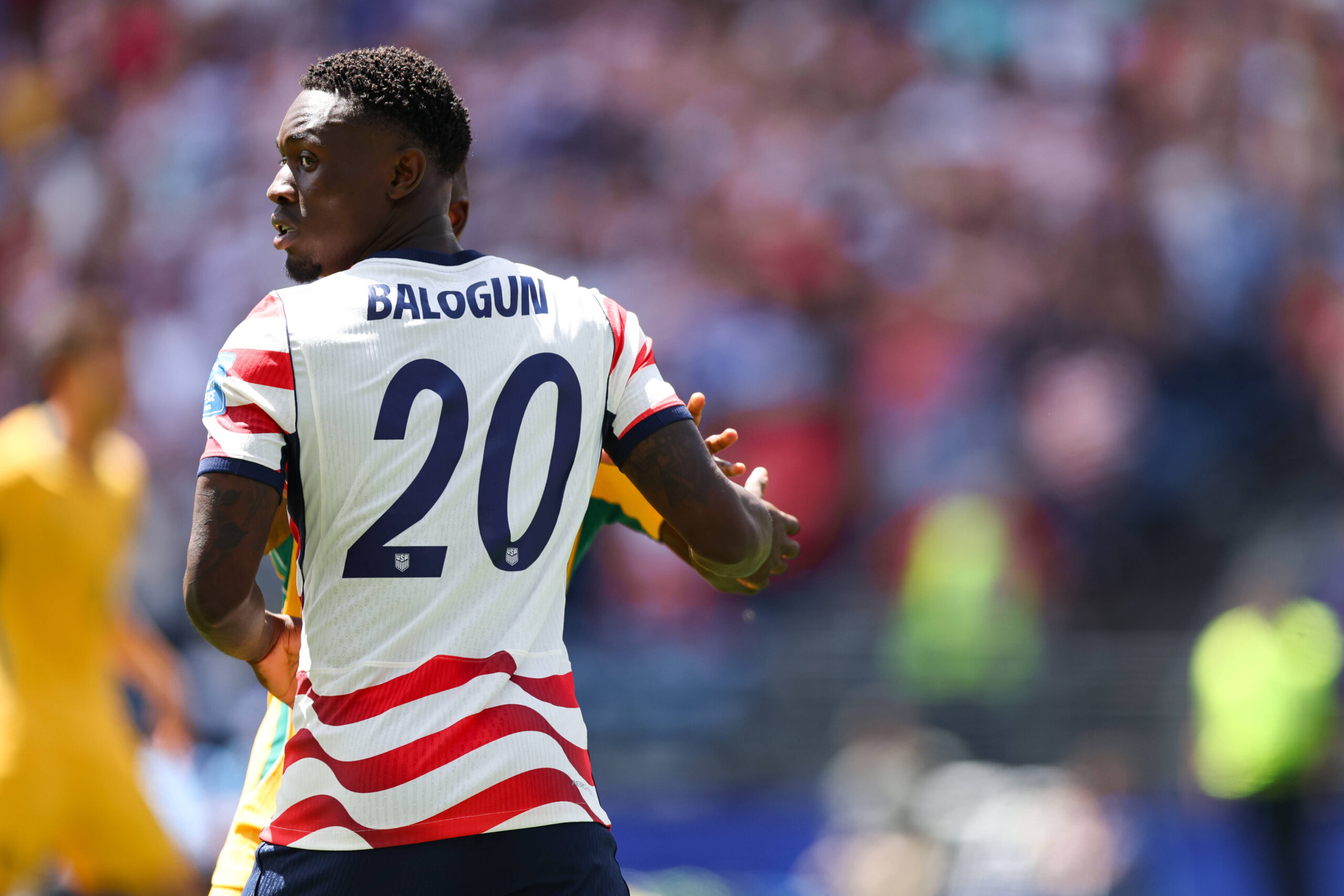
FIFA have managed to turn a dismissal into a referendum on power, politics, and principle. What should have been a simple disciplinary matter has been twisted into one of the most troubling episodes of this World Cup. Folarin Balogun’s dismissal against Bosnia and Herzegovina ended not in clarity, but in a ruling that leaves the game looking pliable, selective and, frankly, absurd.
Balogun’s challenge on Bosnia’s Tarik Muharemovic was straightforward; the referee reviewed it on the VAR monitor, the dismissal stood, and the tournament rules said he would miss the next match. That is how the system is meant to work. That is what players, managers and supporters are told to expect. Yet FIFA has now chosen to suspend the ban, apparently leaning on a rule that allows punishments to be deferred, while offering little in the way of transparent reasoning.
What makes the ruling even harder to swallow is the noise around it. Reuters and other outlets reported that Donald Trump called FIFA president Gianni Infantino, intensifying the sense that football’s most powerful body has allowed external pressure to seep into a sporting judgement that should have been made on footballing grounds alone.
For Belgium, and for anyone who still believes discipline in a World Cup should mean something, this has all the makings of a dangerous precedent. If FIFA can bend here, then where does the line actually sit?
FIFA setting a laughable precedent
FIFA’s handling of Balogun’s dismissal has turned a routine disciplinary matter into an exposé of the gap between what the governing body says and what it does. The way it has processed the suspension reveals far more than any press release could about the organisation’s true operating principles.
What began as a straightforward dismissal after a VAR review for dangerous play against Bosnia and Herzegovina has quickly become a story about power, influence and selective flexibility. Balogun was suddenly available for the match against Belgium after FIFA suspended the one-match ban it had initially imposed.
That alone would have been enough to cause a storm. But once reporting emerged that Donald Trump personally spoke to FIFA president Gianni Infantino, the issue moved far beyond football and into dangerous territory for the game’s governing body.
There is now a larger question hanging over the whole affair; if a dismissal can be softened because the right people pick up the phone, what happens to the next player, the next team, or the next complaint when the World Cup reaches its sharpest stage?
The Folarin Balogun situation
Folarin Balogun was sent off for a challenge on Bosnia’s Tarik Muharemovic after the referee reviewed the incident on the VAR monitor. At the time, the ruling did not appear especially controversial to most observers, and the dismissal brought the usual consequence under the tournament rules: an automatic one-match suspension, with US Soccer initially understanding that there was no normal appeal route available.
Balogun himself appeared to accept the outcome, which made FIFA’s later intervention even more surprising. Instead of simply allowing the sanction to stand, the disciplinary committee suspended the ban for a year, meaning the striker could face Belgium and only serve the punishment if he commits another similar offence within the probationary period.
That kind of outcome may exist in FIFA’s code, but what makes this case so unusual is the timing. This is not a post-tournament administrative tweak. This is a live World Cup ruling, and that is why it feels like a line has been crossed.
The White House involvement
The most uncomfortable part of the story is the reported White House involvement. Reuters reported that Trump personally asked FIFA to review Balogun’s punishment, and the White House then openly celebrated the reversal once it was announced.
That creates a basic but serious question: should a football disciplinary ruling be influenced, even indirectly, by a political leader? In a sport that loves to speak about independence, fairness and due process, the answer ought to be obvious.
FIFA’s position becomes harder to defend when set beside other situations where it has said it could not, or would not, intervene. The accusation of hypocrisy is hard to avoid when one case involving the host nation is treated with notable flexibility while another politically sensitive issue elsewhere was met with silence.
The result is not just awkward optics. It is a precedent that weakens the meaning of dismissals, because it tells the football world that sanction may still be negotiable if the circumstances are dramatic enough and the voices involved are loud enough.
Can Belgium succeed with their appeal?
Belgium have every reason to be furious, and they are not merely complaining because they are unhappy; they are asking a fair question about consistency. Reports say their federation is exploring all possible options, and that is hardly a surprise when FIFA’s own World Cup rules appear to say a straight dismissal automatically means a suspension for the next match. The Belgian side are asking why one federation can benefit from an extraordinary suspension being softened, only to be told another must accept the rules as fixed when the ruling affects them directly.
FIFA now has to explain whether this was a unique case or a new model. If it is unique, the body must say why. If it is not, then every team in the tournament has been handed a route to challenge suspensions that had previously looked automatic and closed.
Belgium’s appeal therefore matters far beyond this one match. It is a crucible: FIFA either restores the suspension and signals that the rules still matter, or it lets the reversal stand and admits that noise can bend what should be fixed.
Ronaldo and Quansah
The Balogun saga is not the first time FIFA has been accused of bending too easily for a high-profile player. Cristiano Ronaldo’s case during qualification is the obvious comparison, because he avoided missing World Cup matches after FIFA softened a dismissal punishment in a way that sparked criticism at the time.
That precedent does not negate the pattern, however: when the player involved is a global star or the team is of major commercial and political interest, FIFA seems capable of discovering flexibility that ordinary teams never appear to enjoy.
England’s Jarrell Quansah now enters the conversation for exactly that reason. If the Three Lions are told they cannot overturn his dismissal, they will be justified in asking why Balogun’s sanction was treated differently, especially when both dismissals followed VAR reviews and both were the kind of incidents that usually lead to a simple suspension.
The wider issue is not whether every dismissal should be reversed. It is whether FIFA can still claim that the law is the law when it seems willing to improvise around certain names, certain countries and certain moments.
The Omar Artan contrast
If FIFA wanted to avoid accusations of hypocrisy, it has failed badly. The treatment of Somali referee Omar Artan earlier in the tournament makes the Balogun ruling look even more indefensible, because here was a man whose World Cup dream was broken by immigration and political realities, while FIFA stood back and spoke in the language of procedure.
Artan was denied entry into the United States despite travelling with valid documents and being on course to become the first Somali referee at a World Cup finals. The official line from the authorities was that the ruling belonged to the host nation, and FIFA, for all its grand talk about the spirit of the game, effectively washed its hands of the matter, thus inviting wider criticism.
That is the point of comparison that should sting most. When the issue involved a referee from Somalia and an immigration ruling from the United States, FIFA suddenly discovered its limits, insisting that it could not interfere in the visa process or overrule the host government. Yet when a dismissal was shown to a player of direct importance to the host nation, the same organisation became flexible, receptive and eager to accommodate.
The contrast is brutal. One man was told the rules were the rules and sent home. Another had his sanction softened after a phone call from the White House. FIFA cannot demand respect for its authority while behaving like one set of principles applies to the powerless and another to the powerful. That is not governance; it is favouritism dressed up as procedure.
Are FIFA crossing a dangerous line?
FIFA has left itself in an awkward position because it has not merely softened a sanction; it has made the punishment look optional. That is a major problem in a tournament built on clarity, because players, coaches and supporters can only trust the system if the system means the same thing for everyone.
This is where the Balogun case becomes bigger than Balogun himself. If the disciplinary code can be stretched here, then it can be stretched elsewhere, and once that idea takes hold, every major ruling at the World Cup becomes vulnerable to suspicion.
Even if FIFA insists that the legal mechanism is valid, the public damage has already been done. The game now looks as though it is being asked to accept both the rule and the exception at the same time, which is not a sustainable position for any governing body.
What next in this case?
FIFA now has a choice, and it needs to make it quickly. It can either cling to a ruling that has already damaged confidence in its own discipline, or it can admit that the Balogun case went too far and correct course before the tournament is warped any further.
Belgium’s appeal forces FIFA to confront a stark choice: a dismissal meant to be automatic, a ban meant to be unavoidable, and a process that became negotiable the moment politics entered. Restoring the suspension would not solve every concern, but it would show that FIFA understands the importance of consistency, especially in a World Cup where every ruling is magnified and every precedent matters.
If FIFA lets this stand without a proper reckoning, the message is bleak: discipline in football is not absolute, only negotiable. That is a lesson the World Cup should never be teaching.