Germany’s humiliating FIFA World Cup 2026 exit at the hands of Paraguay has left the nation demanding change, with Jurgen Klopp likely to be the next head coach.
A penalty shootout defeat in the Round of 32 marked another disappointing chapter in what has been a turbulent decade for one of international football’s greatest powers. The expected departure of Julian Nagelsmann feels inevitable, and attention has already shifted towards the identity of his successor.
There may be several accomplished coaches available, but only one candidate appears capable of restoring Germany’s identity while simultaneously building a team capable of challenging for every major honour. That man is Jurgen Klopp.
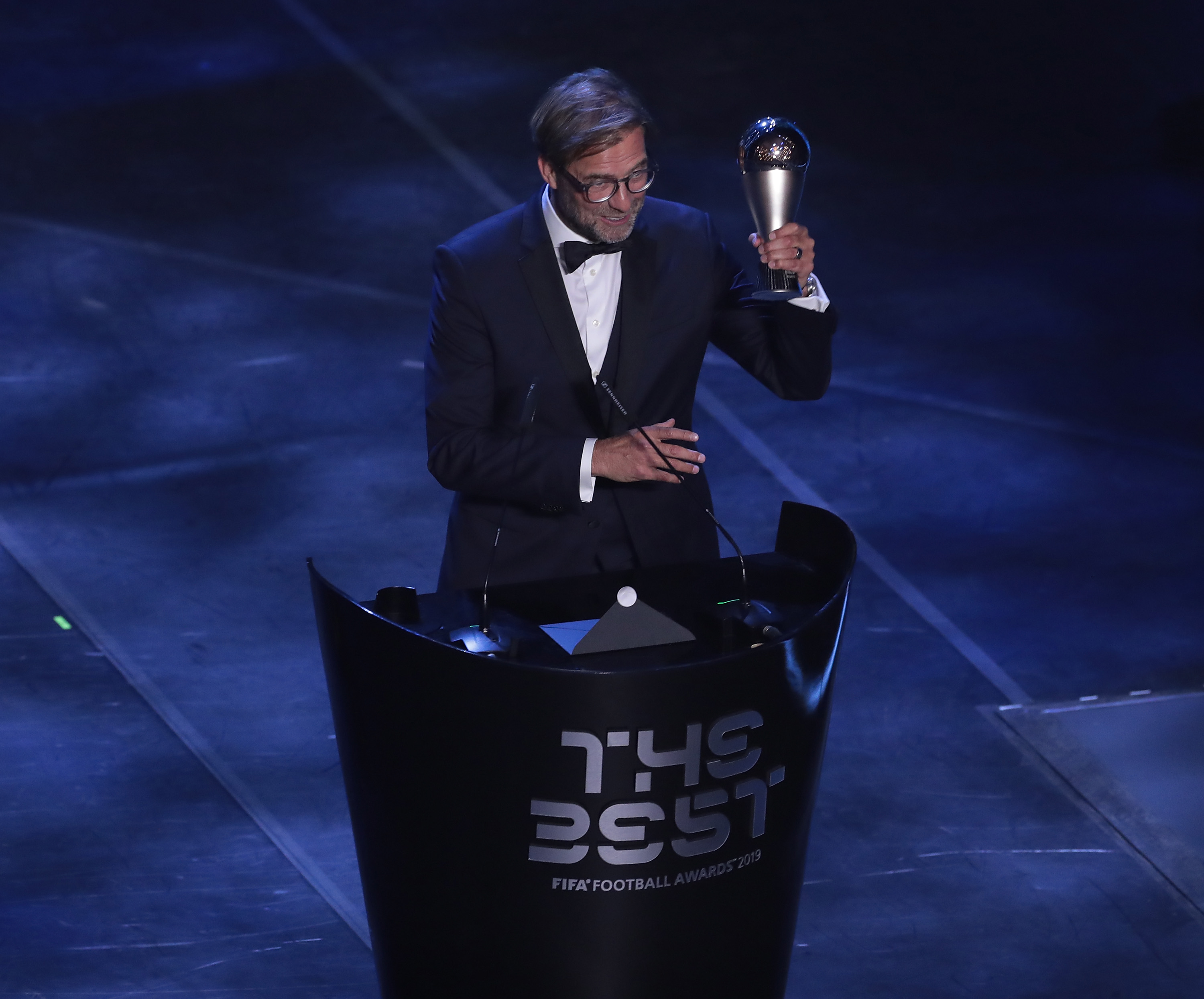
The former Liverpool manager stepped away from coaching after transforming Liverpool into one of Europe’s elite clubs, citing the need for a break after nearly a decade of relentless intensity. While he has repeatedly insisted he would only return for a project that genuinely excites him, the job in Germany offers exactly that. It is not merely another managerial vacancy. It is an opportunity to rebuild an entire footballing culture.
Germany need more than a coach
Germany’s recent struggles have not simply been tactical. Since lifting the World Cup in 2014, they have gradually lost the defining characteristics that once made them feared across the globe. They have remained technically gifted, but the ruthless mentality, relentless pressing and collective discipline that defined previous generations have slowly disappeared.
The talent has never completely vanished. Instead, Germany have repeatedly looked like a collection of excellent footballers rather than a unified team with a clear identity. That is precisely where Klopp excels.
Throughout his managerial career at FSV Mainz 05, Borussia Dortmund, and Liverpool, he has consistently transformed groups of talented players into teams that play with complete belief, emotional intensity and tactical cohesion. His greatest strength has never simply been his tactics.
It has been creating an environment in which every player understands their role and fully believes in the collective objective. Germany desperately need that reset.
A squad built for Klopp’s football
Unlike several international teams that require complete rebuilding, Germany already possess many of the profiles Klopp has traditionally relied upon.
At the back, Antonio Rudiger provides aggression, leadership, and recovery pace, while Nico Schlotterbeck is comfortable stepping into midfield and playing progressive passes. Jonathan Tah offers physical dominance, giving Klopp multiple options depending on the opposition. Full-back has long been one of Klopp’s most important positions.
David Raum has developed into one of Europe’s finest attacking left-backs, constantly delivering dangerous crosses while possessing the energy required to repeatedly overlap. Benjamin Henrichs offers similar athleticism on the opposite flank, while Josha Vagnoman and several emerging Bundesliga talents provide further competition.
In midfield, Germany may possess their greatest strength. Aleksandar Pavlovic has quickly become one of Europe’s finest young controllers. Calm under pressure, technically secure and intelligent in possession, he has all the qualities to become Klopp’s next deep-lying organiser.
Alongside him, Angelo Stiller has developed into an outstanding progressive passer capable of dictating tempo while covering enormous distances without the ball. Then comes the engine room. Felix Nmecha offers athleticism, ball carrying and pressing intensity. These are exactly the kind of midfield profiles Klopp has traditionally trusted.
Germany’s attacking options are equally exciting. Florian Wirtz may already be among the world’s finest attacking midfielders. His ability to receive between the lines, eliminate defenders and create chances would make him the creative heartbeat of Klopp’s system. Jamal Musiala brings unpredictability through dribbling, close control and intelligent movement inside crowded areas.
Rather than forcing either player into rigid positions, Klopp would likely encourage constant positional rotations similar to the fluid attacking systems that made Liverpool so devastating. Out wide, Karim Adeyemi offers frightening pace behind defences.
Deniz Undav has matured into an intelligent forward capable of linking play, while Nick Woltemade, if he regains his form and confidence, provides an entirely different physical dimension when matches require a more direct approach. Germany are not lacking in quality. They are lacking a coach capable of connecting these pieces into a coherent system.
Jurgen Klopp’s Gegenpressing is perfect for international football
One criticism often aimed at Klopp is that his famous gegenpressing requires months of daily coaching. That may have been true during the early stages of his career. However, his final years at Liverpool demonstrated considerable tactical evolution.
Liverpool became more flexible in possession, more selective with their pressing triggers, and significantly better at controlling matches through structured build-up rather than constant chaos. Those adjustments make Klopp even better suited to international management.
Instead of demanding relentless pressing for ninety minutes, Germany could employ carefully coordinated pressing phases designed to force opponents into predictable mistakes. The blueprint is straightforward.
Germany would press aggressively after losing possession, then quickly settle into an organised defensive block when an immediate recovery proves impossible. This hybrid approach allows players to preserve energy across tournament football while still maintaining Klopp’s aggressive philosophy.
Wirtz and Musiala could become the world’s best duo
Few national teams possess two attacking midfielders with the technical quality of Florian Wirtz and Jamal Musiala. Yet Germany have often struggled to maximise both simultaneously. Klopp is uniquely qualified to solve that puzzle.
Rather than assigning fixed positions, he could allow both creators to constantly interchange. Musiala could drift wider to isolate full-backs. Wirtz could operate centrally before arriving late inside the penalty area. Their movement would constantly disorganise the opposition’s defensive structures.
Behind them, overlapping full-backs and energetic midfield runners would create numerical overloads across multiple zones. The result would be an attack built around freedom rather than rigid positioning. That has always been Klopp’s greatest attacking principle.
Restoring Germany’s winning mentality
Perhaps Klopp’s greatest contribution would occur away from the tactics board. Germany have developed a psychological fragility during recent tournaments. Once adversity arrives, confidence quickly disappears. That never characterised previous German teams.
Klopp has repeatedly demonstrated an extraordinary ability to unite dressing rooms through adversity. At Borussia Dortmund, he challenged Bayern Munich’s domestic dominance. At Liverpool, he convinced a club haunted by decades of disappointment that winning the Premier League and Champions League was achievable.
His teams consistently develop extraordinary resilience. Whether trailing in knockout matches or protecting narrow leads, Klopp’s players rarely panic. That mentality is desperately needed inside the German national team.
International tournaments are often decided as much by psychology as by tactics. Few managers in world football influence mentality more effectively.
Building around the next generation
Germany’s greatest advantage heading towards 2030 is the extraordinary quality emerging through their youth system. Players such as Brajan Gruda, Paul Wanner, Assan Ouedraogo, Max Moerstedt, Noah Darvich, and numerous Bundesliga prospects represent one of Europe’s strongest talent pipelines.
Klopp has consistently trusted young players throughout his career. At Borussia Dortmund, he developed Mario Gotze, Mats Hummels, and Robert Lewandowski into global stars. At Liverpool, he transformed Trent Alexander-Arnold, Curtis Jones and Harvey Elliott into first-team regulars while improving countless others.
His ability to accelerate player development would ensure Germany remains competitive not merely for one tournament but throughout the next decade.
Tactical flexibility
Contrary to popular perception, Klopp is no longer married to a single formation. Across his final Liverpool seasons, he comfortably alternated between 4-3-3, 4-2-3-1, 3-2-5 build-up structures and asymmetrical defensive shapes depending on personnel. Germany’s squad offers similar versatility.
Against stronger opponents, Klopp could deploy a compact 4-3-3 emphasising defensive transitions. Against defensive teams, Musiala and Wirtz could operate underneath a striker in a fluid 4-2-3-1.
Should additional control be required, Pavlovic could drop between central defenders while full-backs advance to create numerical superiority during build-up. Such flexibility would make Germany significantly harder to prepare against during tournament football.
The emotional connection matters
Few managerial appointments carry symbolic significance. This one would. Klopp is one of the most universally respected figures in German football. His charisma, authenticity and communication skills extend beyond the dressing room. He reconnects supporters with teams. He creates emotional investment.
Following years of disappointing tournaments, Germany requires someone capable of rebuilding trust between players, supporters and the national team. Klopp possesses that unique ability. His passion is infectious. Players naturally buy into his ideas because they believe in the person delivering them. That emotional leadership cannot easily be measured, but history repeatedly shows how valuable it becomes during major tournaments.
The perfect time
Klopp deliberately stepped away from management to rest after years of emotional and physical exhaustion. The timing now appears ideal. International football offers fewer matches, a significantly reduced day-to-day workload, and longer preparation cycles than club management does.
It provides the opportunity to coach at the highest level without the relentless demands of Premier League competition. For Klopp, the Germany job represents perhaps the only role capable of reigniting his competitive fire.
For Germany, it represents the chance to appoint arguably the greatest German coach of the modern era at precisely the moment they need transformational leadership.
A new beginning
Germany’s World Cup elimination cannot simply be viewed as another disappointing tournament. It must become the catalyst for long-term renewal. Replacing Julian Nagelsmann with another tactician would merely continue the cycle. Appointing Jurgen Klopp would represent something entirely different.
It would signal a commitment to rebuilding Germany’s footballing identity around intensity, unity, tactical intelligence and fearless attacking football. The squad already possesses elite technical quality. It contains world-class creators in Musiala and Wirtz, athletic midfielders, experienced defenders and one of Europe’s brightest emerging generations. What it lacks is a leader capable of bringing all the pieces together.
Klopp has spent his entire career proving he can build winning cultures, elevate talented players into champions and unite clubs behind a common purpose. Germany no longer need incremental improvement. They need transformation.
If the DFB truly wants to make Die Mannschaft an international superpower once again, there may never be a better opportunity than this. Jurgen Klopp is not simply the best available candidate. He is the manager Germany have been waiting for.