
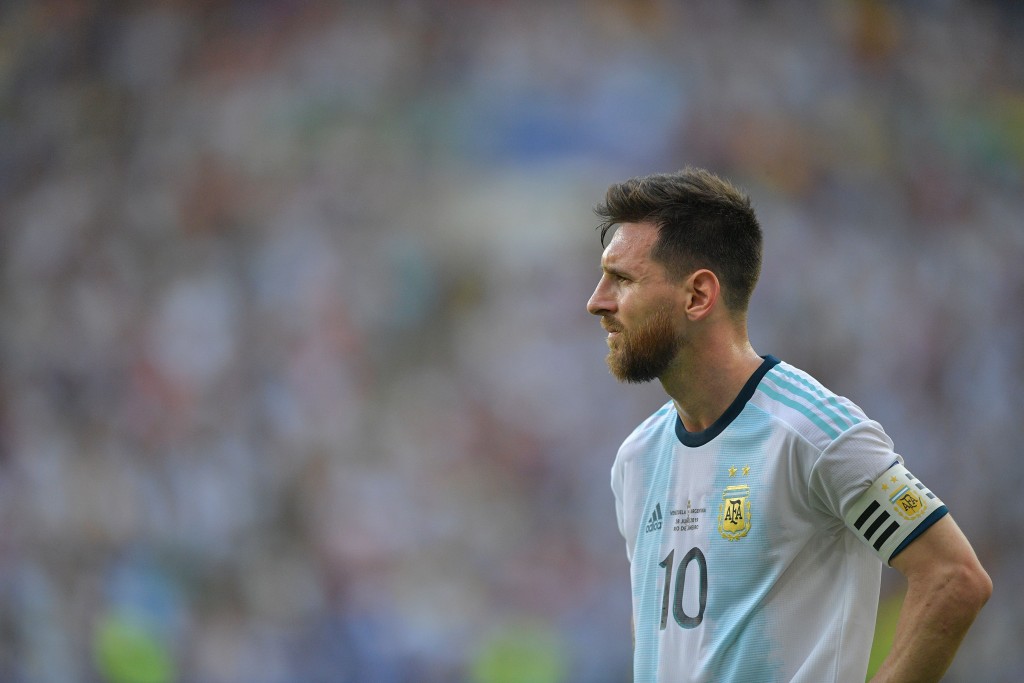
Defending a FIFA World Cup is one of the most difficult feats in football, but Argentina have the ingredients to make it happen.
The tournament’s history is littered with champions who arrived four years later burdened by expectation, only to fall well short of repeating their triumph. Argentina, however, look different and primed to win the 2026 FIFA World Cup.
The reigning world champions have navigated the group stage with the authority of a team that knows exactly what it is doing. They have not simply relied on moments of individual brilliance but have displayed balance, tactical discipline and a collective belief that has become the hallmark of Lionel Scaloni’s side.
While every World Cup inevitably throws up surprises, there are compelling reasons to believe Argentina are capable of doing something no nation has achieved since Brazil in 1962, successfully defending the biggest prize in international football.
Three factors, in particular, stand out; a liberated Lionel Messi producing some of his best football, a defence that has become increasingly difficult to breach, and a knockout draw that appears significantly kinder than many of their direct rivals.
A carefree Messi is a terrifying proposition
For nearly two decades, Lionel Messi carried perhaps the greatest burden in world football. Every international tournament came with the same question: could he finally emulate Diego Maradona and deliver the World Cup for Argentina?
The pressure was relentless. Every missed chance, every disappointing campaign, and every defeat in a major final was magnified. Despite winning virtually every club honour imaginable, his legacy was unfairly judged through the prism of one trophy that had remained elusive. That burden disappeared in Qatar in 2022.
Messi completed football by lifting the World Cup, and everything that has followed has reflected a player enjoying every moment rather than carrying the weight of an entire nation on his shoulders. That freedom has been evident throughout the group stage.
The 39-year-old has already scored six goals, making him the tournament’s leading scorer. More importantly, he has looked sharp, inventive and completely in control of matches. There is no sign of a player pacing himself or feeling overwhelmed by expectations. Instead, he is dictating the pace of games, drifting into dangerous pockets of space, and punishing opponents with the efficiency that has defined his extraordinary career.
Opponents now face the worst possible version of Messi, a footballer with nothing left to prove. That psychological shift cannot be underestimated.
In previous tournaments, there was often a sense of urgency in Argentina’s play whenever Messi was on the pitch. Everything revolved around helping him finally achieve football immortality. Now, the objective is simply to win another World Cup, and ironically, that relaxed environment seems to have elevated the captain’s performances even further.
His movement has been fluid, his decision-making almost flawless, and his finishing ruthless. Perhaps most importantly, he is smiling again. Football history is filled with examples of elite players becoming even more dangerous once external pressure disappears. Messi appears to have reached that stage. Every assist, every dribble and every goal seems to come naturally, without the emotional baggage that followed him throughout much of his international career.
If this version of Messi continues into the knockout rounds, Argentina will possess the tournament’s single biggest match-winner.
Championship-winning teams are built on defence
Goals grab headlines, but history repeatedly proves that World Cups are won by organised, disciplined teams capable of shutting opponents down. Argentina have done precisely that. They have conceded just one goal across their three group-stage matches, underlining the defensive platform upon which Scaloni has built his side.
There is an old saying in football that attack wins games, but defence wins championships. Argentina are demonstrating why that cliche continues to ring true. Their defensive structure has been outstanding.
Rather than relying solely on individual brilliance from their centre-backs or goalkeeper, Argentina defend collectively. Their midfield works tirelessly to close passing lanes, their full-backs recover quickly, and the forwards press intelligently to prevent opponents from building attacks comfortably. Every player understands his role without possession.
The backline has shown remarkable composure under pressure, rarely panicking even when opponents attempt to increase the tempo. They are comfortable defending deep when necessary but equally capable of holding a high line when Argentina dominate possession. That flexibility makes them exceptionally difficult to break down. Equally important is their game management.
Championship-winning sides know when to slow matches down, when to control possession and when to frustrate opponents. Argentina have mastered those moments throughout the tournament. Rather than chasing spectacular victories, they have focused on efficiency.
Clean sheets build confidence. Every successful defensive performance reinforces trust between players. Goalkeepers gain belief in their defenders, defenders trust the midfield’s protection, and the entire team becomes increasingly comfortable in difficult situations.
That confidence becomes invaluable in knockout football, where one defensive lapse can end an entire campaign. Scaloni has also developed impressive squad depth. Fresh legs can be introduced without disrupting the team’s structure, allowing Argentina to maintain their defensive intensity regardless of the opponent or stage of the competition.
While other contenders barring Spain have shown defensive vulnerabilities, Argentina have looked consistently organised. That reliability could ultimately prove decisive once the margins become increasingly fine.
A favourable route could make all the difference
Every World Cup winner needs quality, resilience and, occasionally, a favourable draw. Argentina appear to have received one thus far at the 2026 FIFA World Cup. While knockout football always carries risks, their projected route to the final is considerably less intimidating than many would have anticipated before the tournament began.
Their Round of 32 clash against Cape Verde represents a fixture they will be overwhelming favourites to win. Cape Verde deserves immense credit for reaching this stage, but Argentina possess superior quality across virtually every position.
Victory there would likely set up a Round of 16 meeting against either Egypt or Australia. Both nations are capable of causing problems, but neither possesses the depth, experience or overall quality to seriously frighten the defending champions over 90 minutes. The quarter-finals could bring Colombia, Ghana, Switzerland, or Algeria.
Among those teams, Colombia arguably represent the sternest examination, yet even that would be a fixture Argentina would expect to negotiate successfully given their recent performances and tournament pedigree. Only in the semi-finals does the calibre of opposition significantly increase.
Potential opponents could include Mexico, Brazil, Norway, or England. Naturally, none of those fixtures would be straightforward. Brazil remain one of football’s traditional heavyweights, England possesses arguably their deepest squad in decades, Norway have developed into an exciting force, and Mexico are always capable of producing memorable tournament performances.
However, by that stage, Argentina would ideally have built momentum through three knockout victories while avoiding physically exhausting encounters against Europe’s elite. That could prove invaluable.
World Cups are often decided by freshness as much as talent. The teams forced through gruelling early knockout ties frequently enter the latter stages carrying fatigue, suspensions or injuries. Argentina’s relatively smoother path could allow Scaloni to rotate intelligently, manage workloads and keep key players fresh for the decisive matches.
Confidence also tends to grow with every victory. Each successful knockout performance reinforces belief within the squad and creates psychological momentum that opponents find increasingly difficult to halt. Should Argentina reach the semi-finals without expending excessive physical or emotional energy, they would enter the competition’s biggest matches in an ideal position.
Experience remains their greatest advantage
Beyond those three major factors lies another important ingredient: experience. Most of this Argentina squad knows exactly what it takes to win the World Cup. They have experienced the pressure of knockout football, survived penalty shootouts, overcome setbacks, and lifted the trophy on the sport’s biggest stage. The same group has also won two Copa America titles.
That knowledge cannot be manufactured overnight. There will undoubtedly be moments later in the tournament when matches become tense, opportunities become scarce, and nerves begin to creep in. Argentina have already lived through those situations. Instead of panicking, they understand how to navigate them.
That composure, combined with Messi’s brilliance, defensive organisation, and a favourable knockout path, makes them arguably the most complete team remaining in the competition.
Winning consecutive World Cups remains an enormous challenge, and football has a habit of punishing complacency. Yet there is little evidence of complacency within this Argentina squad. Instead, they appear focused, balanced and quietly confident.
Messi is playing with complete freedom, the defence continues to provide an outstanding foundation, and the tournament bracket has opened up, giving the reigning champions every opportunity to gather momentum before facing the strongest contenders.
If those trends continue, Argentina may well achieve something that has eluded every World Cup winner for more than six decades. Rather than merely defending their crown, they are positioning themselves to build a lasting dynasty, one that could be remembered alongside the greatest international teams the game has ever seen.