
The Hard Tackle discusses the three major talking points from Day 17 of the 2026 FIFA World Cup, which produced a lot of goals and led to more discussions around Lionel Messi and Cristiano Ronaldo.
Day 17 of the 2026 FIFA World Cup served up drama, individual brilliance and a fair share of anxiety for a few favourites. England edged through choppy waters to secure a hard-fought 2-0 win over Panama and top Group L, while Croatia continued a late surge to beat Ghana and seal second place, with the Black Stars advancing as one of the best third-placed teams.
Colombia and Portugal played out a taut draw in which Los Cafeteros looked the more dangerous team, yet could not convert their superior chances. DR Congo finished Group K with a flourish, coming from a goal down to beat Uzbekistan 3-1 to take third place in the pool, Yoane Wissa making his mark yet again.
Finally, Group J produced two of the day’s most engrossing contests. Algeria and Austria traded late blows in a 3-3 classic, and Argentina, with Lionel Messi introduced from the bench, rounded off a perfect group stage when Messi curled home a free-kick to put the gloss on a 3-1 win over Jordan.
England’s encounter with Panama was scrappy for long stretches, as the Three Lions found themselves pinned back at times by a compact, physical Panamanian team that defended in numbers and threatened on the break. However, the Three Lions’ quality in the final third ultimately proved decisive, allowing Thomas Tuchel’s team to top Group L with a performance that masked continuing questions about consistency and control.
Croatia’s win over Ghana felt like a continuation of a late crescendo rather than a breakthrough. Zlatko Dalic’s team have grown into this tournament, their cohesion and pressing tempo lifting in the final group fixture. Ghana, though eliminated from top-two contention, displayed the resilience that has become their hallmark.
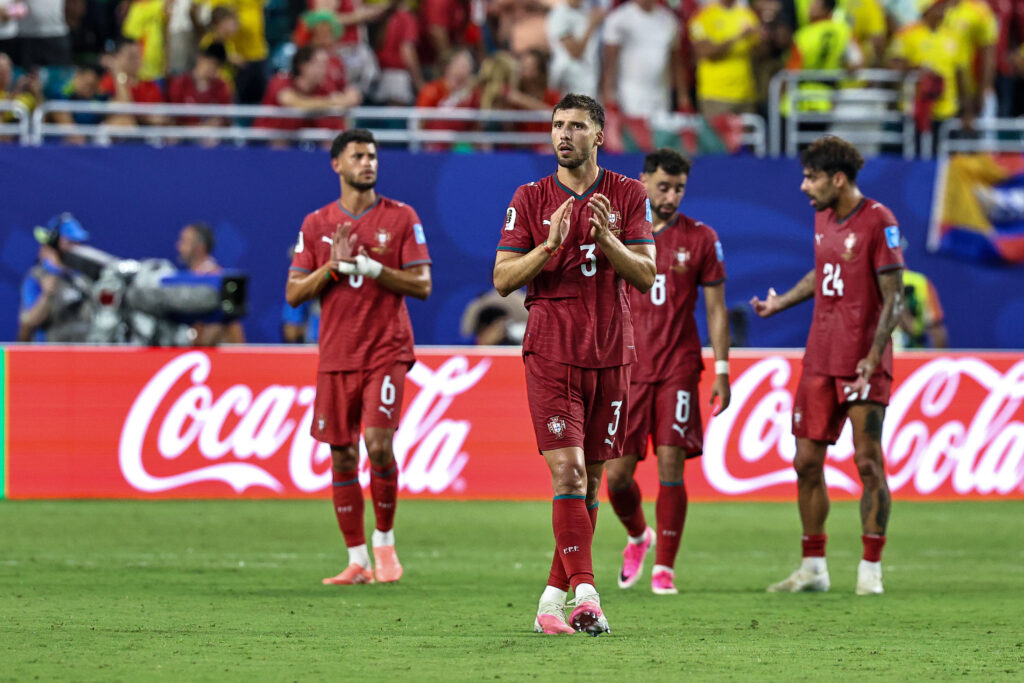
Meanwhile, Colombia were the more assertive side for large periods against Portugal, generating the clearer opportunities and putting together sustained passages of dangerous play. The match finished 1-1 but the underlying numbers favoured the South Americans, and their total xG outstripped Portugal’s by a decisive margin (around 1.63 to 0.70), signalling that they were the side creating the better chances even if finishing was imperfect. The stalemate now leaves Portugal with a trickier knockout pathway and prompts questions about whether their attacking structure is overly reliant on familiar names rather than collective dynamism.
DR Congo closed out Group K in fine fashion, beating Uzbekistan 3-1 to secure third place and provide a reminder that the performance that frustrated Portugal earlier was no one-off. Uzbekistan showed spirit and created moments of their own but could not match Congo’s cutting edge on the day.
Algeria vs Austria was, by any reckoning, one of the 2026 FIFA World Cup’s most entertaining fixtures. Austria twice took the lead and twice surrendered it as Algeria’s late resilience kept hope alive. Riyad Mahrez’s injury-time strike had even appeared to put Iran in contention in the mini-table of third-placed teams before the very last kick. Sasa Kalajdzic’s dramatic equaliser at the death made it 3-3, a result that flipped permutations and effectively extinguished Iran’s slim hopes of progressing.
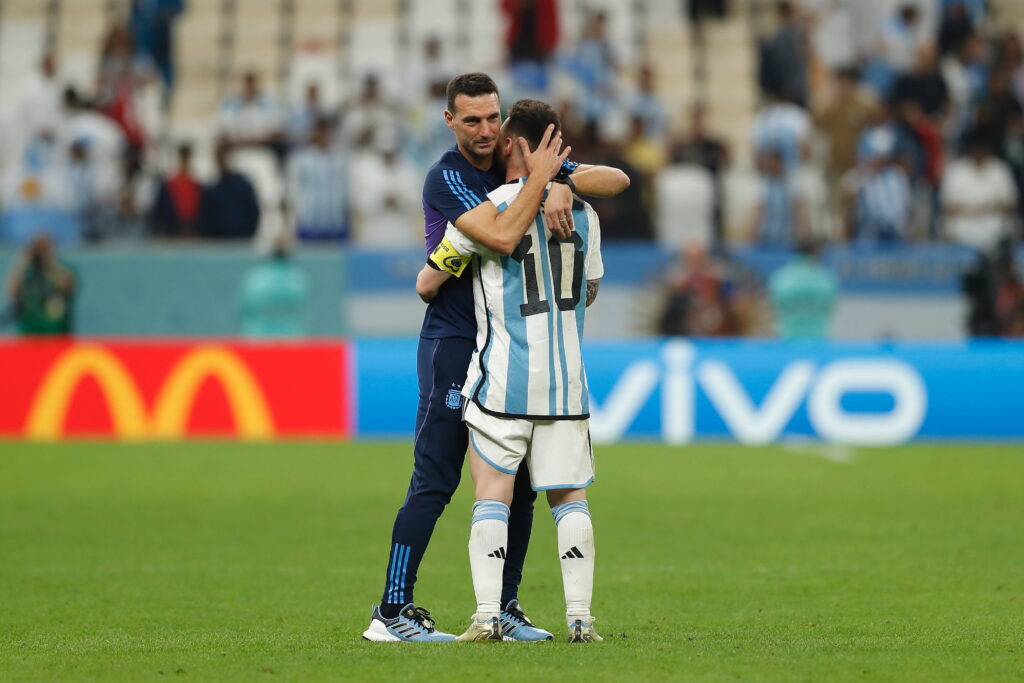
Finally, Argentina ended the group stage with a statement of sorts. Deft work from Giovani Lo Celso and a penalty from Lautaro Martinez put La Albiceleste comfortably positioned, but Lionel Messi delivered the headline after Jordan threatened to mount a comeback. Introduced as a second-half substitute, he produced a sumptuous free-kick to cap a 3-1 victory and, in doing so, became the first player to score in seven successive World Cup matches.
Seventh heaven for Messi; Ronaldo’s worrying signs
On a day when the world is scanning every touch from two players whose careers have defined an era, Messi and Ronaldo delivered contrasting headlines. Messi’s free-kick against Jordan was more than a highlight-reel moment; it was a piece of history. By scoring in a seventh consecutive World Cup game, Messi has pushed his legacy into rarefied territory, an achievement that frames his 2026 campaign as arguably the most sustained display of big-game consistency in World Cup history.
Beyond the record, the strike illustrated Messi’s remaining repertoire; pinpoint technique, calm under pressure and the capacity to alter a match from limited minutes. Argentina’s management of his workload and choosing only to bring him on to close out the group with a decisive moment was tactically astute and emotionally resonant.
Cristiano Ronaldo, by contrast, had a muted night as Portugal laboured to a draw with Colombia. The underlying data tells a stark story: Colombia out-created the <em>Selecao</em> across underlying measures (approximately 1.63 to 0.70 on xG), suggesting Roberto Martinez’s men were second-best in meaningful chance creation. Ronaldo‘s influence has been a frequent talking point this tournament and the broader performance of his team raised familiar concerns.
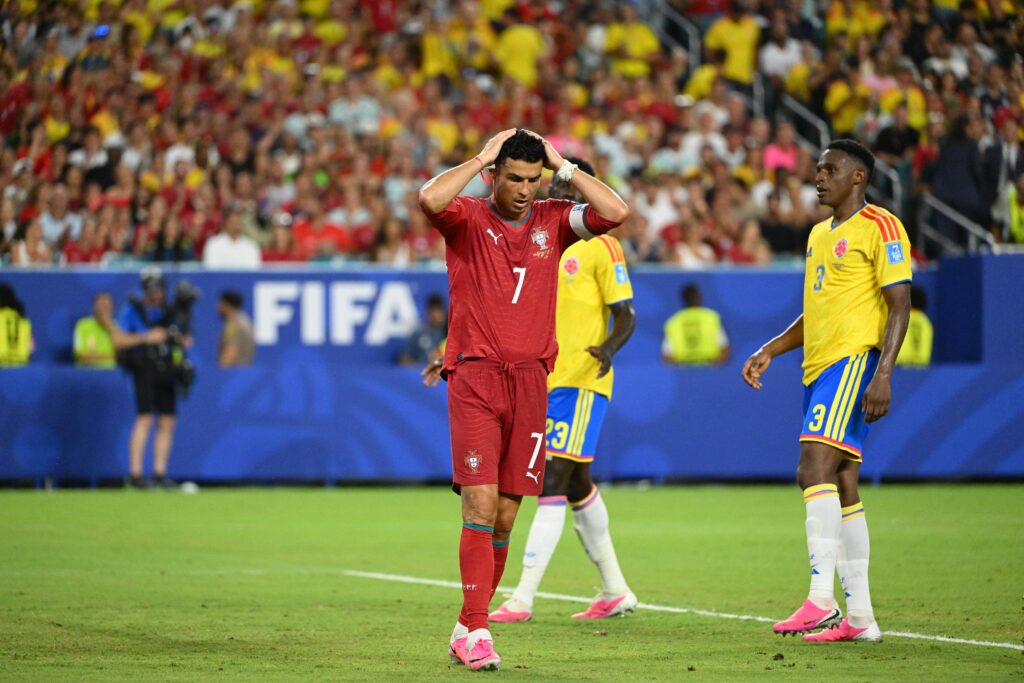
Portugal had limited link-up play, relatively little space to exploit and looked like a team that lacked coherent shape through the lines. Midfield runners were sparse, leaving Ronaldo isolated as the primary focal point rather than express collective attacking variety. With the team drawn into a tougher knockout route as a result of their second-place finish in Group K, the pressure increases on Ronaldo and his teammates to find different attacking solutions; and for the veteran attacker personally, this World Cup may well determine whether his remarkable career includes the one major trophy that has eluded him.
The round of 32 race went down to the wire
The expanded World Cup format means the race to become the eight best third-placed teams is a tournament within the tournament, and Day 17 underlined just how volatile those permutations can be. Ghana and DR Congo had already sewn up their advancement earlier in the day, but Group J’s thriller between Algeria and Austria rewired the final standings for other nations, notably Iran, who watched with mounting anxiety.
Austria twice took the lead to appear set to carry on into the Last 32, only for Algeria’s resilience and late rallies to overturn the table twice. Riyad Mahrez’s late intervention briefly swung the balance before Sasa Kalajdzic’s injury-time equaliser made the game, and the final mini-table, even more febrile. Iran thus had a late heartbreak, as a win for any one team would have sent them through to the FIFA World Cup 2026 round of 32.
The expanded format was always going to produce scenarios like this. A dramatic finish can scuttle months of planning and national hope. For teams peering in on the periphery of qualification, the lesson is clear; goal difference, late goals and even minute-by-minute dynamics in other stadiums matter. Managers must now account for broader permutations when planning substitutions and risk strategies.
Two pre-World Cup favourites with genuine concerns
Beyond individual narratives, Day 17 left two heavyweight nations with sizeable question marks. Portugal’s draw, and their underwhelming attacking output, raises tactical questions about Roberto Martínez’s system and whether it leans too heavily on marquee names rather than the midfield balance needed to unlock tight defences.
Facing Croatia in the knockouts, and a potential meeting with Spain after that, Portugal’s road is precarious. Collected xG and chance-creation metrics indicate the team must rediscover cohesion, bring midfield runners into the game and diversify avenues to goal if they hope to live up to pre-tournament billing.
Meanwhile, England’s victory perhaps papered over cracks rather than solving them. Panama’s approach in the match resembled the blueprint Ghana had offered earlier: deep organisation, disciplined pressing and attempts to neutralise space between the lines. For long spells, the Three Lions struggled to impose themselves.
Jude Bellingham’s goal masked deeper structural issues, as the transitions were sluggish, the midfield lacked tempo, and Panama’s compact press repeatedly herded the Three Lions sideways. In the round of 32, they will face DR Congo, a team that has already proved capable of upsetting a favourite. England cannot afford to treat that as a straightforward tie. If Tuchel fails to tweak structure, particularly in transitions and build-up through midfield, the Three Lions could be vulnerable to a shock elimination.
Three key takeaways from Day 17 of FIFA World Cup 2026
- Messi’s consistency remains unmatched: Seven straight World Cup games with a goal cements his tournament legacy and keeps Argentina a match-winner away from any opponent.
- The expanded format’s volatility is real: Late goals in other groups reshaped qualification paths, proving that every minute across all games carries tournament-wide consequences.
- Some big teams need tactical clarity: Portugal’s blunt attack and England’s periods of disjointed play underline that pre-tournament favourites can look fragile without coherent midfield structure and fluid attacking transitions.
What to watch next
- Portugal’s knockout path: Will Roberto Martinez tweak the system to free his attackers and reduce reliance on Cristiano Ronaldo as the sole focal point?
- England vs DR Congo: Whether Tuchel can address England’s midfield balance and tempo to avoid a potential surprise from a physically dynamic DR Congo.
- Argentina’s minute management: How Lionel Scaloni continues to deploy Messi in knockout stages and whether substitutes can maintain momentum when starters need some rest.