
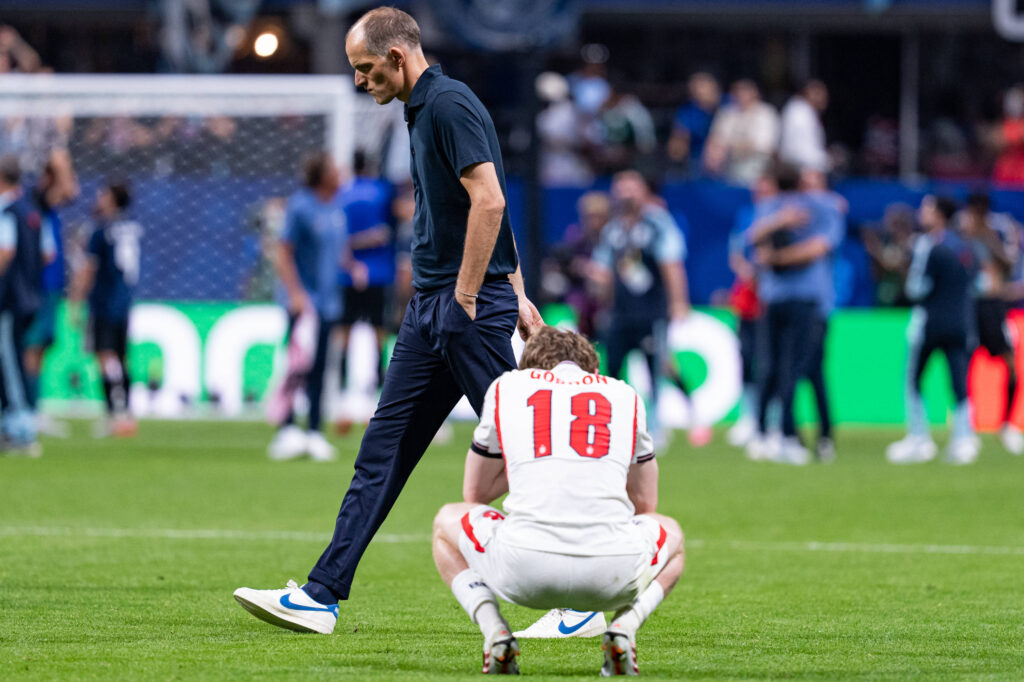
England’s World Cup dream did not die because they lacked talent. It did not disappear because Argentina were simply too good. And it certainly did not end for lack of match-winners.
England’s current squad had enough quality to lift the trophy. They had world-class attackers, elite midfielders, a deep squad, and arguably more individual talent than the team that eventually knocked them out. But when the biggest moment arrived, Thomas Tuchel’s decisions turned a team capable of winning the World Cup into one that looked terrified of losing it.
The semi-final defeat to Argentina was not just about one tactical mistake. It was the culmination of a series of questionable choices that started long before the ball was kicked in the tournament.
From squad selection to game management, Tuchel repeatedly moved away from England’s strengths and towards caution. And when the pressure reached its peak, his instincts betrayed him. The most damaging criticism of Tuchel’s England is simple; he never truly trusted his own team.
The Maguire decision that made no sense
Perhaps the strangest decision of Tuchel’s entire tenure was leaving Harry Maguire out of the squad. It was not because the veteran centre-back is the most talented defender England have ever produced. It was not because he was guaranteed to start every game. But Tuchel’s own tactical approach made Maguire almost impossible to ignore.
England’s semi-final collapse was built around defending deep, protecting the penalty box and surviving long periods without the ball. If that was always going to be the plan, then excluding one of the best aerial defenders in international football was baffling.


Maguire has spent years proving his value in exactly those situations. When teams sit deep, when opponents attack with crosses, when the game becomes a physical battle inside the box, his strengths become even more valuable. Instead, Tuchel selected a squad that suggested he wanted defensive security but removed one of England’s greatest specialists in that area. It became a contradiction.
If the plan was to dominate possession and play a high defensive line, then maybe Maguire’s omission could be justified. But if the plan was what we eventually saw against Argentina (40 minutes of absorbing pressure), then leaving him at home was impossible to explain. It was a decision that looked even worse when England were desperately trying to protect a lead, and Argentina were throwing everything forward.
The Henderson selection sent the wrong message
The inclusion of Jordan Henderson was another controversial choice that revealed something deeper about Tuchel’s thinking. The former Liverpool captain was reportedly highly valued for his leadership qualities and personality in the dressing room. But at a World Cup, selections cannot simply be based on who makes the group feel comfortable.
The message it sent was uncomfortable, that England needed experienced voices to compensate for a lack of mentality rather than selecting players who had earned their place through performances. There is nothing wrong with valuing leadership. Every successful tournament team needs characters. But leadership should complement quality, not replace it.
When Tuchel left out players who could have added technical ability, creativity and energy, while making room for a veteran whose best qualities were psychological, it raised questions about Tuchel’s priorities. A manager’s squad selection tells players what he believes.
By picking Henderson, Tuchel appeared to suggest that England needed calming figures more than they needed more match-winning ability.
The attacking talent Tuchel ignored

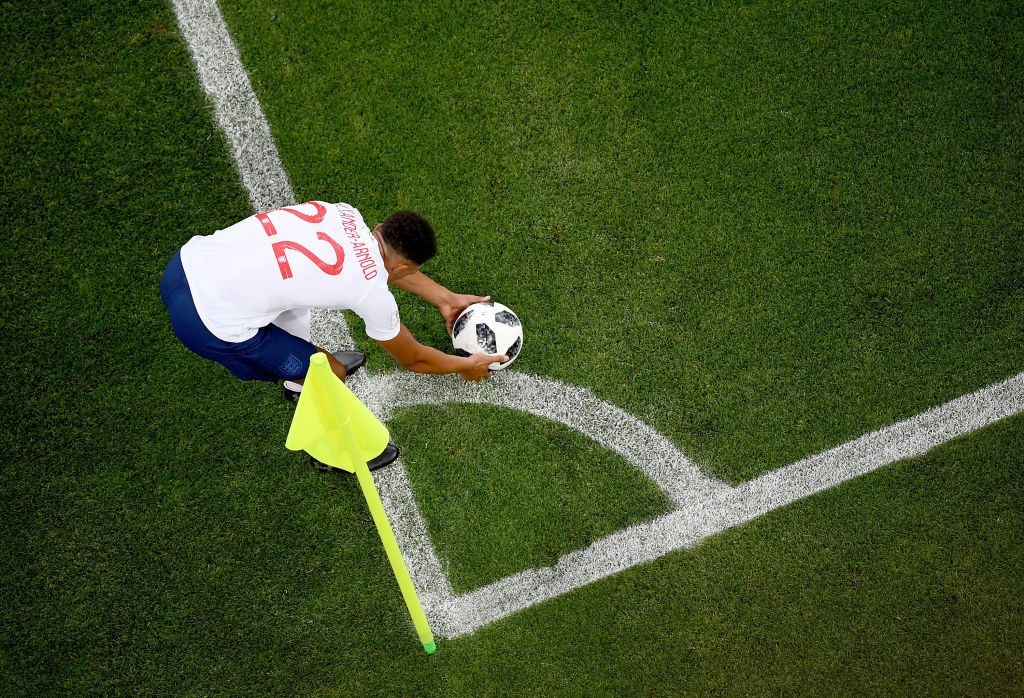
The frustrating part of England’s failure was not a lack of options. It was that several players who could have changed the game were either ignored or underused. Harry Maguire and Trent Alexander-Arnold were obvious omissions. Leaving the latter out was particularly painful in a game where England eventually needed creativity from unlikely sources.
As Argentina defended deeper and deeper, England needed someone who could unlock a stubborn defence with passing range, crossing ability and invention. Instead, their solution became Ezri Konsa sending crosses into the box. It was a painful symbol of Tuchel’s own squad decisions. One of the most creative full-backs football has ever produced was watching from home while England searched desperately for inspiration.
The same argument applies to Adam Wharton. The Crystal Palace midfielder’s ability to dictate tempo, progress the ball and play through pressure could have offered England something different in midfield. Against Argentina, especially after taking the lead, England needed someone comfortable keeping possession and slowing the game down. Instead, they surrendered control.
Jarrod Bowen was another player who deserved consideration. His direct running, pressing ability and goal threat could have offered England an outlet when Argentina pushed numbers forward. Morgan Gibbs-White was another option who represented creativity and unpredictability, qualities England lacked when the match became tense.
The problem was not that Tuchel had no solutions. The problem was that he consistently chose caution over possibility.
The Messi mistake that changed everything

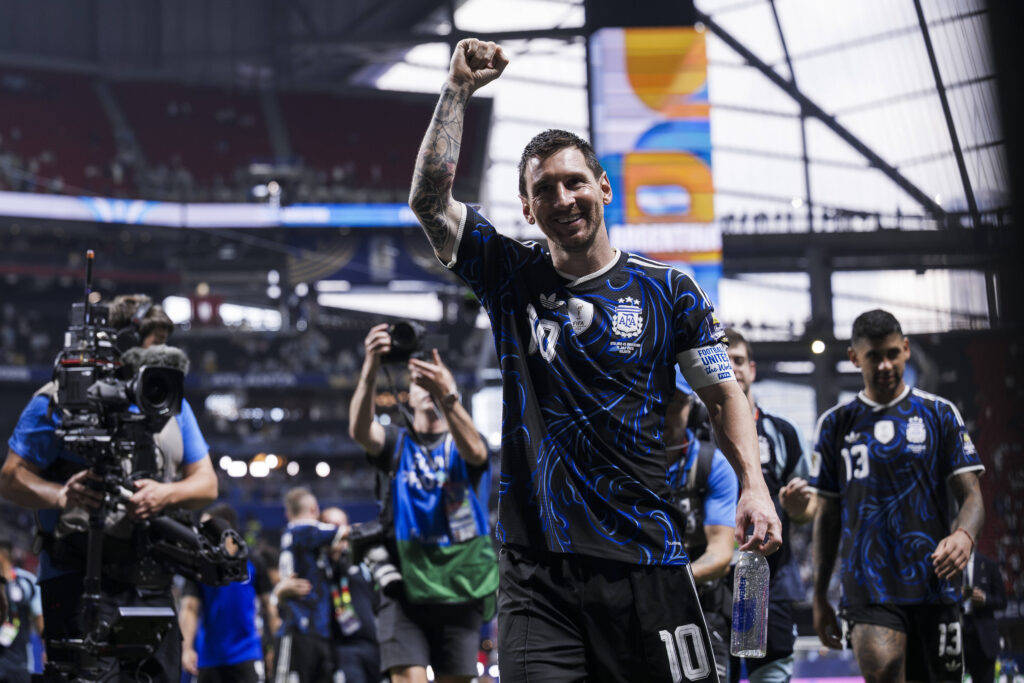
The most unforgivable moment of the semi-final came after England scored. They had gone toe-to-toe with Argentina. They looked dangerous and capable, yet they retreated. Instead of continuing to play, the Three Lions invited Argentina onto them. And such a decision means inviting Lionel Messi into the game.
Giving Messi time and space is football’s oldest mistake. Yet England effectively handed him the keys. For half an hour, the diminutive genius was allowed to influence the game freely. The greatest player of his generation was given exactly what every manager tries to prevent: time on the ball, freedom between the lines and opportunities to dictate attacks.
It was almost as if England forgot who they were playing. Argentina did not need an invitation. They took control immediately.
The difference between courage and fear
The comparison with Spain after scoring against France highlighted England’s biggest problem. Luis de la Fuente’s team scored and continued attacking. They controlled the game, kept possession, and refused to allow France back into the match. England did the opposite.
After taking the lead, they effectively said, “Can Argentina break us down?”
Against an average team, that might work. Against Argentina, with Messi, it was asking for trouble. The statistics told the story. After Anthony Gordon’s goal, England had only 12% possession before Enzo Fernandez equalised. That is not controlling a World Cup semi-final, but surviving one. And eventually survival became impossible.
Argentina recorded 10 shots in just 32 minutes after England dropped deeper. The pressure was inevitable.
The substitutions that showed Tuchel had lost belief
The biggest criticism of Tuchel’s match management was not simply that he defended. Managers are allowed to change tactics. Sometimes protecting a lead is the correct decision. The issue was that Tuchel’s changes appeared to show fear rather than strategy.
Bringing on three defenders in a World Cup semi-final sent a clear message. England were no longer trying to win. They were trying to avoid losing. At that level, mentality matters. The players feel it. The opponent feels it. Argentina suddenly knew England were vulnerable. And when you give elite players confidence, they punish you.
As Michael Owen pointed out after the match, the difference between Spain and England after going ahead was courage. Spain trusted themselves. England did not.
England lost because Tuchel made them smaller
The painful reality is that England may genuinely have been the better team. They had the talent. They had the depth. They had the attacking weapons. But football’s biggest tournaments are not won by the team with the best squad on paper. They are won by managers who make brave decisions when the pressure is highest.
Tuchel’s biggest failure was that he built a team that feared opponents rather than one that imposed itself on them. The irony is that England’s greatest strength was their depth and attacking quality. Yet when the World Cup reached its defining moment, Tuchel moved away from those strengths.
He left creative players out. He removed attacking options. He selected experience over impact. And when England needed courage most, he chose caution. Argentina did not beat England because England was unbeatable. They beat England because Tuchel let them.
A World Cup semi-final is decided by fine margins. Thomas Tuchel’s margins were his own decisions. And those decisions ultimately cost England the biggest prize in football.