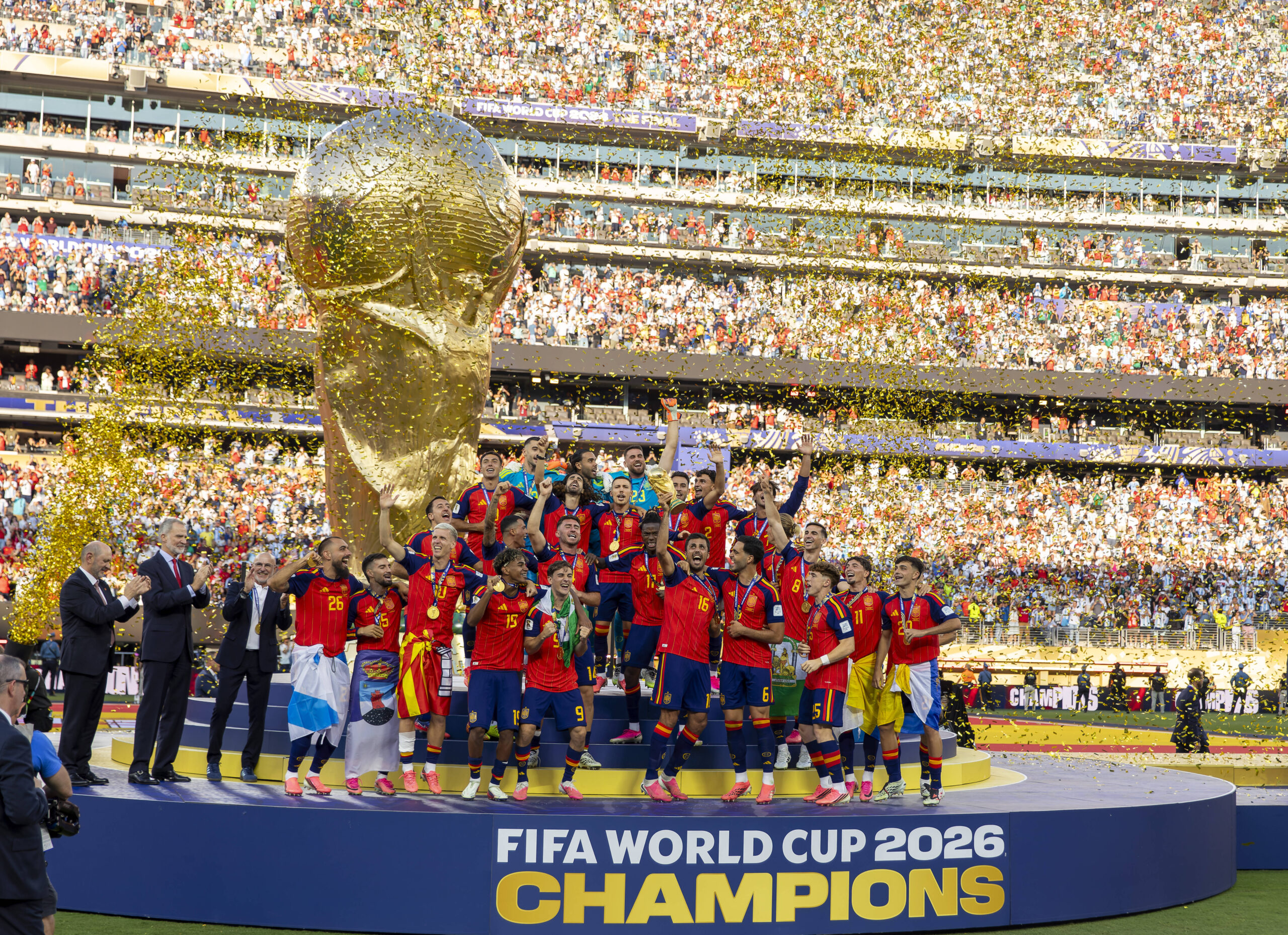
On paper, it was a 1-0 squeaker; on the pitch, Spain spent 120 minutes turning a World Cup final into a training drill while Argentina and Lionel Messi chased shadows.
Spain’s 1-0 win over Argentina in the 2026 FIFA World Cup final looked tight on the scoreboard, but on the pitch it was a mismatch that La Roja controlled almost from first whistle to last.
A final that was one-sided in everything but the score
For all the pre-match noise around Lionel Messi versus Lamine Yamal, this was not a classic duel but a defence-versus-attack exercise. Spain finished with 20 shots to Argentina’s two, underlining how often one team was asking the questions and the other just hanging on.
Even more damning, Argentina did not attempt a single shot in normal time, becoming the first team on record to go 90 minutes of a World Cup final without a shot; their first effort was a Messi volley deep into extra time, followed by Giuliano Simeone’s late miss over the bar.
Spain’s superiority was clear in where the game was played. They completed far more passes in the final third than Argentina, repeatedly pinning La Albiceleste back and turning possession into territory.
Pau Cubarsi and Rodri alone completed well over a hundred passes each, figures rarely seen in a World Cup final and a sign of how calmly Spain recycled the ball under pressure.
Spain came to play; Argentina came to spoil
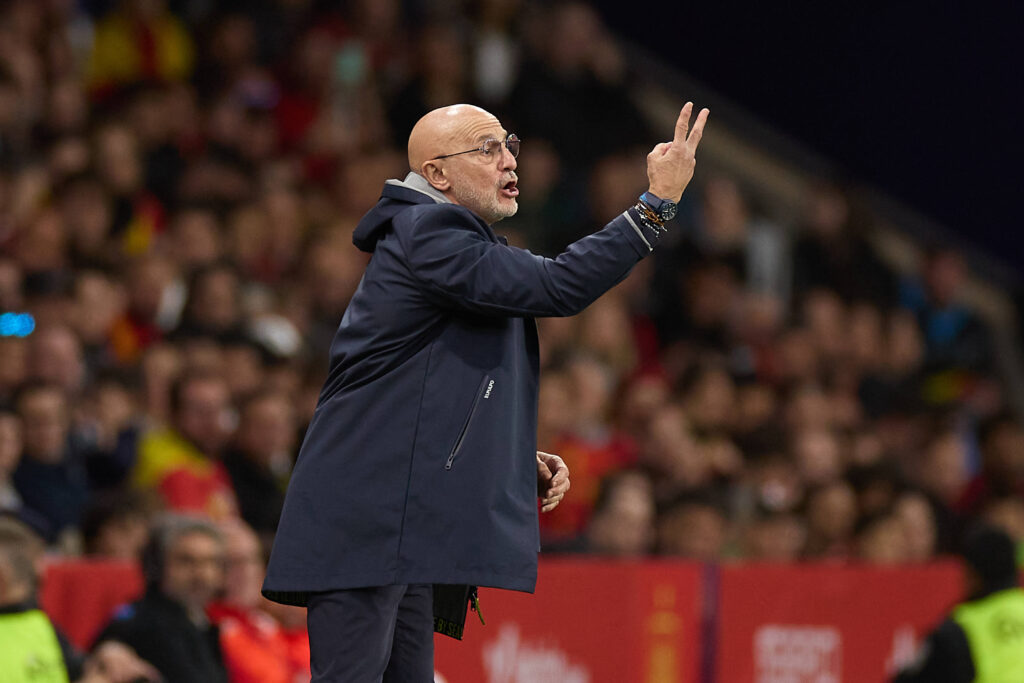
- Luis de la Fuente masterminded a commanding win for Spain (Photo Credit: David Ramirez/Imago)
From the outset, Luis de la Fuente’s plan was obvious: a high press, aggressive territorial play and a patient search for the opening, even if it meant wearing down Argentina rather than blowing them away early. Spain built through Rodri and Cubarsi while full-backs Pedro Porro and Marc Cucurella pushed high and wide, constantly finding passing lanes into the half-spaces rather than resorting to hopeful long-range efforts.
Argentina, by contrast, set up to spoil. They tried to disrupt rhythm with fouls, physical duels, and time-wasting, committing an extremely high number of fouls, echoing their approach in the 2022 final against France.
Lionel Scaloni kept his team compact, often with eight men behind the ball, and relied on individual battles in midfield to slow Spanish attacks at source. That helped them stay level for 105 minutes, but it rarely looked like a plan designed to win the match.
Even Messi, usually the heartbeat, was largely reduced to a spectator in open play. Midway through the second half he had barely misplaced a pass, yet had hardly touched the ball or influenced the contest, symbolising how effectively Spain cut off the supply lines to their main man.
Argentina did not manage a touch in Spain’s box before half-time and finished regulation time without a single attempt on goal, a staggering statistic for the defending champions.
Defensive control and Argentina’s self‑inflicted wounds
Spain’s dominance rested on an outstanding defensive structure that had been the story of their tournament. Across eight games they conceded just one goal and allowed a tiny expected goals total, the best of any World Cup-winning side.
They never trailed at any point, and the final followed that pattern. Argentina’s threat was limited to hopeful clearances towards isolated forwards, all calmly dealt with by an organised backline.
Cubarsi, still a teenager, was imperious, making more clearances than anyone on the pitch and winning most of his duels while retaining an elite pass completion rate. Aymeric Laporte and the full-backs backed him up, stepping out to win possession and compressing the space so that counter-attacks died quickly.
1 – 19-year-old Pau Cubarsí led all players in the 2026 FIFA World Cup final for:
Touches (139)
Passes successful (121)
Passing accuracy (96%)
Line-breaking passes (21)
Clearances (6)Unfazed. pic.twitter.com/C7oMgwIcgo
— OptaJoe (@OptaJoe) July 19, 2026
Unai Simon faced only two shots all night, both in extra time, whereas Emiliano Martinez at the other end was forced into a double-figure tally of saves, an extraordinary workload for a goalkeeper in a World Cup final.
Argentina’s attempt to drag Spain into a dogfight eventually backfired. Their physical approach and constant protests frayed tempers and culminated in Enzo Fernandez’s dismissal in stoppage time of normal time, when he clattered into Cubarsí and earned a second yellow card after an earlier booking for dissent.
Going down to ten men turned a difficult task into an almost impossible one, and extra time became an exercise in survival, with Messi left up front alone and almost everyone else behind the ball. Spain continued to create, seeing a Nico Williams goal ruled out and Mikel Merino head wide, while Martínez’s heroics briefly kept the scoreline level. Yet the pattern could not hold forever.
Early in the second period of extra time, Pedro Porro’s deep cross was nodded down by Williams and smashed into the roof of the net by Ferran Torres, one of Spain’s substitutes.
Spain’s collective era, Argentina’s fading script
This final also said something about the wider direction of international football. Spain now hold both the European Championship and the World Cup, joining a select group of nations to do so and underlining a remarkable unbeaten run at this level.
Their success is built not on one superstar but on a deep collective, where teenagers like Yamal and Cubarsi can step into the biggest games alongside seasoned operators and look entirely at home.
Argentina, meanwhile, finished runners-up once again and left the pitch furious and fragmented, with tensions spilling over at the final whistle. Messi, at 39, became only the second man to play in three World Cup finals, but this one may be his last, and it ended with him in tears in front of the fans rather than lifting the trophy.