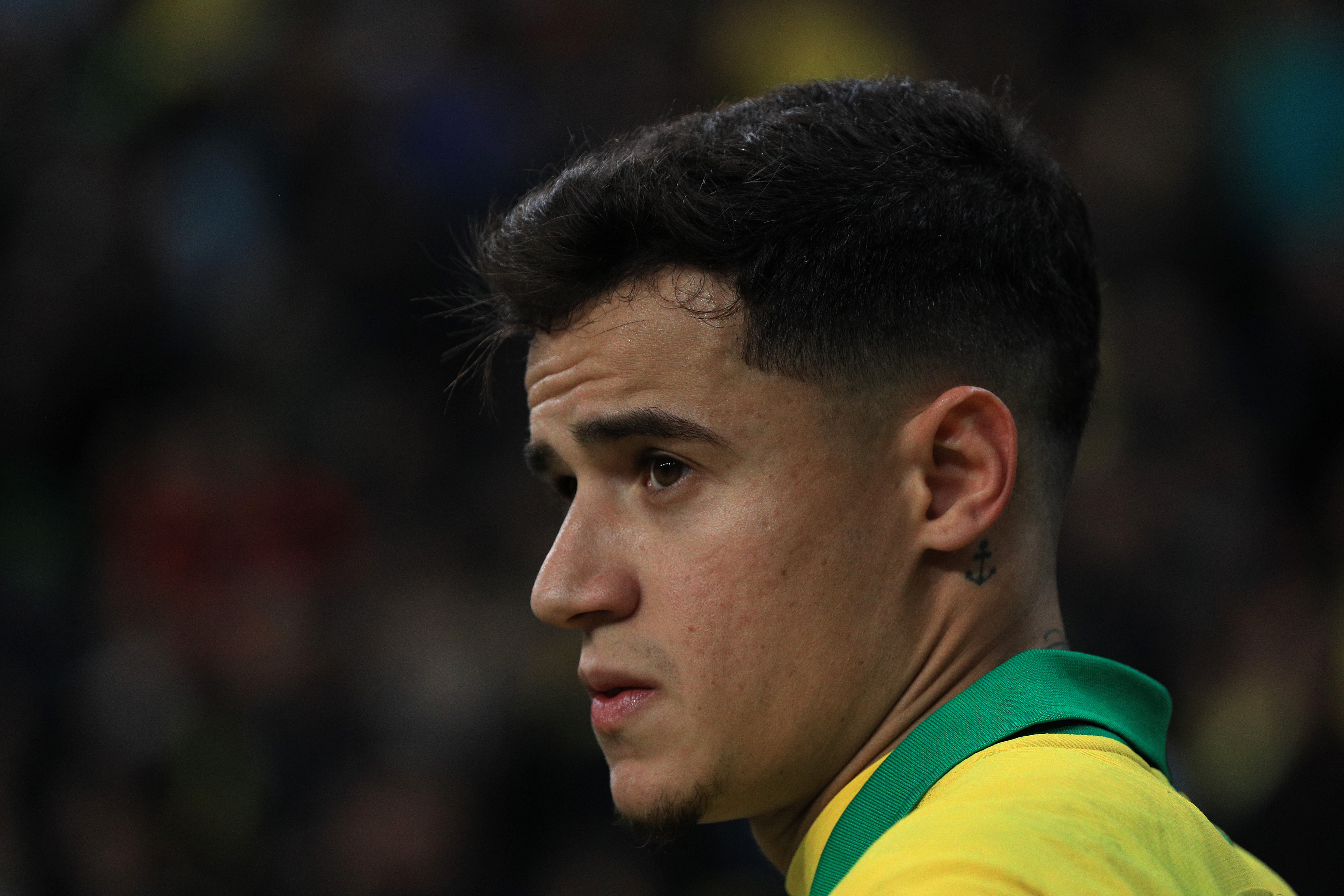
Philippe Coutinho is now a free agent after mutually terminating his contract with Vasco da Gama, walking away from his boyhood club, citing “mental exhaustion” and the need to protect his mental health.
It is a deeply symbolic flashpoint for a career that once promised Ballon d’Or contention but has instead become a modern parable of how one transfer decision can completely alter a player’s trajectory. We are talking about Philippe Coutinho.
The boy from Vasco who lit up Anfield
Philippe Coutinho’s story has always started in Rio, with Vasco da Gama, where he emerged as one of Brazil’s brightest teenage playmakers before Inter Milan moved to secure his rights at 18. He bounced between Inter and a loan at Espanyol, but it was only after joining Liverpool in January 2013 that his career truly exploded.
At Anfield, he grew from a talented dribbler into the heartbeat of a rebuilding side, combining vision, press resistance and that trademark curling shot from the left half-space. He was named in the PFA Team of the Year in 2014/15 and twice swept Liverpool’s internal player of the season awards, establishing himself as one of the Premier League’s standout attacking midfielders.
By 2016/17, the former Brazilian international was no longer just a fan favourite; he was being spoken of as one of the best players in the world outside the Messi‑Ronaldo bracket.
Jurgen Klopp’s statue warning and the Barcelona gamble
Jurgen Klopp recognised exactly what he had. In 2017/18, as Philippe Coutinho pushed for his dream move, the German tactician delivered the now‑famous warning: “Stay here and they will end up building a statue in your honour. Go somewhere else, to Barcelona, to Bayern Munich, to Real Madrid, and you will be just another player. Here you can be something more.”
It was as clear a crossroads as football offers: be the symbol of Liverpool’s new era, or chase a long‑held ambition at one of Spain’s giants. Coutinho chose Barcelona, joining in January 2018 for a fee that would ultimately rise north of £100 million and instantly reshaping Liverpool’s own project as they reinvested in Virgil van Dijk and, later, Alisson.
On paper, it was the natural next step for a Brazilian playmaker: follow the path of Ronaldinho and Neymar, wear the number 7 or 14 at Camp Nou, link with Lionel Messi, and compete annually for the UEFA Champions League.
Coutinho at Barcelona: Never quite the missing piece
The reality was harsher. Barcelona signed Coutinho to be both an Andres Iniesta heir in midfield and, at times, an inverted left winger to complement Lionel Messi and Luis Suarez. Neither role ever fully fit: as a midfielder, he lacked the control and tempo of a traditional interior, and as a wide forward, he often drifted into the same zones Messi wanted to occupy, blunting both players.
There were flashes, with long‑range goals, clever combinations, a respectable first half‑season, but he never felt indispensable in the way he had at Liverpool. The price tag, combined with an unbalanced Barcelona squad and shifting coaches, meant that his performances were judged through the lens of “world‑record fee” rather than “elite creator,” and the criticism grew accordingly.
Bayern Munich, Aston Villa and the slow spiral
In 2019, Barcelona cut their losses temporarily and loaned Philippe Coutinho to Bayern Munich, hoping that a new environment would rekindle his best form. Bayern did win a treble with him, Bundesliga, DFB‑Pokal and Champions League, but he was more luxury depth than an automatic starter, coming off the bench in the 2020 Champions League final and famously scoring twice against his parent club in the 8-2 humiliation of Barcelona.
Even that iconic cameo felt bittersweet: it was a reminder of his talent but also of how far he had drifted from being a team’s main reference point. Bayern chose not to trigger a permanent move, and Coutinho returned to a Barcelona still searching for identity and battling financial chaos.
A serious knee injury at the end of 2020 then robbed him of continuity, explosiveness and, crucially, confidence. A Premier League return with Aston Villa in 2022, initially on loan and then permanent, brought another brief surge.
Working under Steven Gerrard, he produced a handful of vintage displays, goals, no‑look passes, a sense of joy, but those moments became increasingly sporadic, and he soon slipped down the pecking order. A loan to Al‑Duhail in Qatar in 2023/24 felt like a reset away from European pressure more than a revival.
Back to Vasco, and a mental breaking point
When Philippe Coutinho returned to Vasco da Gama on loan in 2024 and then on a free transfer in 2025, it looked like the perfect closing circle: the prodigal son, back home, ready to lead his boyhood club. He delivered reasonable output, goals and assists, a run to the Brazilian Cup final, but the wider context was difficult, with Vasco underperforming in the league and tensions running high in the stands.
In early 2026, after boos from sections of the support and years of injury and scrutiny, Coutinho asked to have his contract terminated. In a heartfelt Instagram statement, he spoke of his love for Vasco but admitted he was “mentally very exhausted,” “mentally drained,” and that his cycle at the club had ended, stressing the need to prioritise his mental health.
At 33, with no club and openly acknowledging the toll of the game on his mind as well as his body, he stands at a crossroads between some form of reinvention or a quiet fading out of top‑level football.
One of football’s great unfulfilled talents
What makes Coutinho’s story so striking is that it is not one of outright failure. He has a UEFA Champions League, a Bundesliga, multiple domestic cups and a place in the 2018 World Cup Best XI with Brazil. Many players would give anything for that medal collection and those peaks.
Yet for those who watched him at Liverpool, the lingering feeling is that his ceiling was even higher, that he could have been the defining creative force of an era rather than a gifted supporting act in other people’s projects.
The line from Klopp about a statue now reads like prophecy: had Coutinho stayed, he might have been at the heart of Liverpool’s Champions League and Premier League‑winning sides under a manager who built the team around his strengths. Instead, he became the textbook example of a “wrong move at the wrong time”, not in terms of ambition, but in terms of tactical fit, emotional environment and how a club planned to use him.
In the broader landscape of the last decade, Coutinho will sit alongside Eden Hazard and others in the unofficial category of “greatest unfulfilled potential,” players whose best versions were world‑class but fleeting. His Liverpool prime showed a footballer capable of dictating games at the highest level; what followed showed how delicate that status can be when environment, health and confidence begin to slip.
As a free agent now, Coutinho may still choose one last chapter, MLS, the Middle East, or a more low‑key role in Brazil or Europe. But whatever comes next, his legacy will be defined not just by what he did, but by what he might have been: the player who could have had a statue at Anfield and instead became a cautionary tale about how quickly a star’s path can spiral away from its peak.