A campaign built on habit and heavy expectation ended in silence and a president’s combative mic-drop that turned failure into a public fight.
Real Madrid’s season will end trophyless, and Florentino Perez’s extraordinary press conference felt like the culminating low point; the president’s combative remarks and calls for elections crystallised a chaotic campaign that produced a lot of noise but little silverware.
Los Blancos went into this campaign with expectation, resources and habit; three things that normally translate into trophies for a club that has made winning almost routine. Yet, the season will close without a major prize, leaving a vacuum of achievement that made every controversy feel bigger than it should have been.
This empty cabinet is not merely an absence of hardware; it is the magnifying glass through which every misstep, miscommunication and miscalculation has been examined, amplified and weaponised by rivals, pundits and sections of the media. The result is a narrative of decay that is as much about perception as it is about results.
The press conference as capstone
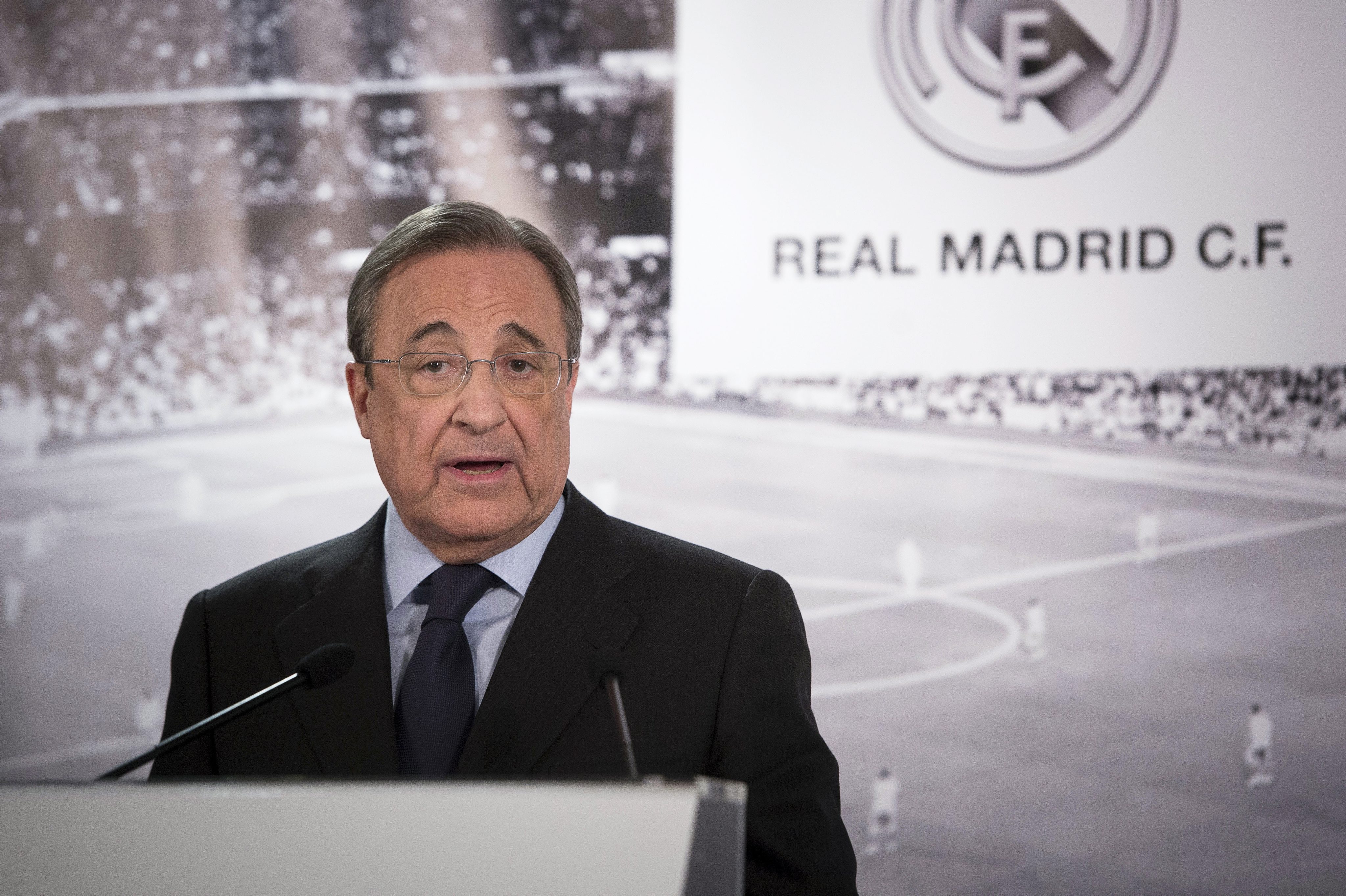
When Florentino Perez called an emergency press conference in the wake of a failed campaign, it should have been a moment for calm explanation and a roadmap for recovery; instead, it became the season’s public capstone, theatrical, combative and deeply political.
Perez did not choose modesty. He opened and closed with defiance, and in doing so reframed the club’s problems as an external siege rather than an internal reckoning. As he told the assembled media:
“I’m not going to resign.”
He went further, casting blame outwards and insisting that campaigns against the club and against him personally had forced his hand. That argument was central to the tone of his remarks:
“I have taken this decision because an absurd situation has arisen, caused by campaigns against the interests of Real Madrid and against me.”
And, seeking to anchor his legitimacy in past achievement, he reminded listeners of Real Madrid’s trophy haul under his stewardship:
“Under my presidency, we’ve won 37 football titles and 29 basketball titles.”
Those lines turned a press conference that might have been used to accept responsibility into a combative political rally. Whether intended as defence or diversion, the spectacle crystallised the club’s internal turmoil for public consumption and gave critics a symbolic totem for a season that had already been unraveling.
A season built to win, and how it failed
Real Madrid started 2025/26 carrying the usual freight of expectation. Talent, budget, and institutional memory usually convert into silverware for a club so accustomed to success; this year, those assets did not. Instead of forging a coherent identity, the team produced fits of excellence and stretches of disarray.
On paper, the squad remained among Europe’s best, but on the pitch it lacked the ruthless consistency that turns good teams into champions. Dropped points at key moments, moments of tactical confusion and an inability to close out vital ties combined to produce a season measured more by missed opportunity than by outright collapse.
Timeline of the season:
-
August 2025 — Season opener at the Bernabeu vs Osasuna: the campaign began under a bright spotlight and with the implicit demand that momentum be immediate. Behind the scenes, there were already reports of unease around tactical clarity and training methods, small fissures that would widen as results and rotation choices failed to settle the dressing room.
-
October 2025 — First Clasico at the Bernabeu: although Real Madrid secured the three points on the night, the match exposed underlying inconsistency in high-stakes fixtures and highlighted early signs of tension between the coaching staff and some senior players over tactical roles and minutes (Vinicius Junior’s rift with Xabi Alonso).
-
November–December 2025 — Rising tensions: as inconsistent results accumulated, reports of friction in the dressing room increased; questions over rotation, minutes, and tactical clarity fed growing disquiet among some senior figures.
-
January 2026 — Xabi Alonso leaves: the club parted ways with Alonso amid mounting pressure and reported breakdown in relations with certain players. The decision followed a period of strained relations and internal dispute over tactics and player usage, and represented a clear acknowledgement from the hierarchy that the managerial relationship had become untenable.
-
March 2026 — Fixture congestion, injuries, and interim adjustments: after Alonso’s exit, the team coped with compressed fixtures and bodywork issues while attempting tactical tweaks under the interim leadership of Alvaro Arbeloa; the cumulative effect exposed limits in squad depth and left little time to build cohesion.
-
April 2026 — Champions League exit: Real Madrid’s European exit exposed tactical shortcomings and the cost of mid-season upheaval, intensifying scrutiny of recruitment, coaching structure and the decision to change managers mid-campaign.
-
May 10, 2026 — Second Clasico at Camp Nou: the defeat handed La Liga crown to rivals Barcelona and made a trophyless season inevitable; the earlier managerial disruption and lingering dressing-room divisions were visible in the team’s lack of coherence.
-
May 12, 2026 — Emergency press conference and fallout: Perez’s public denunciation of media and institutions crystallised the club’s problems into a national spectacle and set the political calendar in motion; the presser landed after a season marked by early tension, a January managerial rupture, and continued on-field inconsistency.
What went wrong on the pitch
Tactically, Real Madrid rarely stuck to a single, coherent plan. Possession often failed to translate into control; the midfield could not consistently dictate tempo and shield the backline, and transitions from defence to attack too frequently looked improvised rather than rehearsed.
Moments that in previous seasons would have been calmed by veteran leadership instead spiralled, exposing a lack of on-field authority. Those cumulative technical and leadership lapses, in a club that prizes ruthlessness, defined the season far more than any single error.
What went wrong off the pitch?
Off the field, the noise became corrosive. Boardroom rows, contract sagas, and persistent rumours about dressing-room fractures migrated from whispers to headlines, turning background noise into a distraction that affected preparation and morale.
The president’s press conference, with its litany of grievances and historic recitation, hardened a public perception that the club’s hierarchy was both defensive and under siege. That environment made constructive, internal review harder and amplified every poor result.
The rhetoric of crisis: blame, grievance and identity
Language matters because it shapes reality. Perez’s choice to lean on grievance, to call out unnamed opponents and to anchor his authority in past trophies shifted debate from diagnosis to contest.
His insistence, “I’m not going to resign,” and his challenge to critics to stand openly in elections reframed the issue as one of legitimacy and loyalty rather than of technical correction. For a club in need of clear-headed reform, that rhetorical posture risks foreclosing the candid conversations necessary for change.
A trophyless season brings immediate and measurable costs: damaged reputation, anxious sponsors, recruitment friction and a sceptical fanbase. Perez’s announcement that he would call elections instead of stepping down introduces a governance timetable that could stall transfers and managerial planning, creating months of uncertainty when decisive action is required. For a club whose sporting projects depend on continuity, those delays matter.
A route back to coherence
Rebuilding requires two parallel responses. First, a forensic football audit: precise findings on recruitment, tactical philosophy, medical management and on-field leadership must lead to accountable decisions.
Second, organisational repair: replace theatrical public displays with transparent, institutional processes; channel dissent through electoral mechanisms rather than into public spectacles; and restore communication protocols that protect sporting preparation from political drama . If the club harnesses the crisis into disciplined reform, its structural advantages make recovery a realistic prospect.
Why Perez’s presser will matter in memory
The emergency press conference will not be remembered as an isolated outburst; it will stand as the public symbol of a campaign that failed to meet its own standards. By declaring “I’m not going to resign” and invoking the club’s past haul of trophies, Perez converted a season-long sporting failure into a political moment that will shape both the coming election and the narrative of who should rebuild the club.
That rhetorical choice narrows some options and magnifies the stakes of the forthcoming internal contest. Real Madrid’s DNA is renewal and relentless expectation. When that default collapses, the institution must treat the episode as more than a short-term setback.
If the press conference’s aftermath is used to catalyse honest, disciplined reform on and off the pitch, Madrid’s resources and heritage make a return to the summit likely. If grievance remains the dominant response, the club risks letting a season of missed chances harden into a longer slide rather than the catalytic shock that forces renewal.