
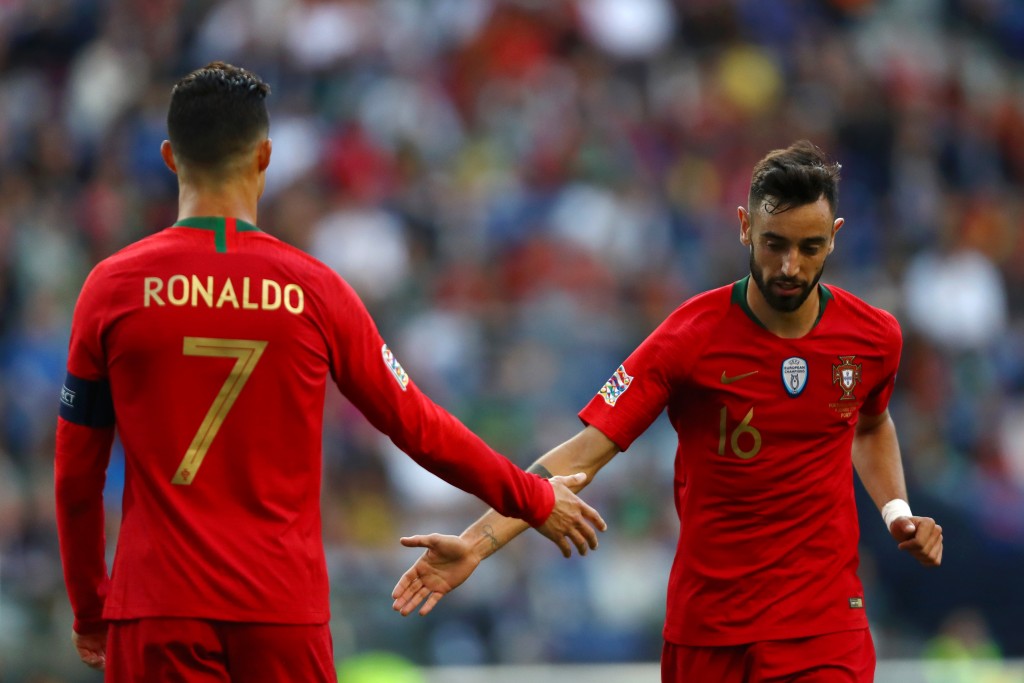
Portugal enters 2026 with Roberto Martinez’s free-flowing side and Cristiano Ronaldo’s final World Cup bid; could this finally be their year for World Cup glory?
Portugal’s World Cup story is one of heartbreak, brilliance, and unfulfilled promise. The Selecao first graced the tournament in 1966, where Eusebio’s nine goals propelled them to a stunning third-place finish. That remained their best performance for four decades until 2006, when a young Cristiano Ronaldo watched his team reach the semi-finals before falling to France and later losing to Germany in the third-place playoff.
Since then, Portugal has become a fixture at every World Cup since 1998, yet they’ve struggled to convert talent into trophy glory: exiting in the round of 16 in 2010 and 2018, stumbling at the group stage in 2014, and falling in the quarter-finals just two years ago in Qatar.
Despite winning Euro 2016 and claiming the Nations League twice, Portugal remains the perennial underdog when the World Cup rolls around, a team with world-class players but a nagging question mark over their biggest-stage performance.
Now, at 41 years old, Cristiano Ronaldo stands on the verge of his sixth and almost certainly final World Cup, chasing the only major trophy that has eluded his incredible career. The stage is set in North America, and Portugal arrives under Roberto Martinez with a squad that blends legendary experience with explosive young talent.
The question haunting Portuguese football fans is simple yet weighty: Will 2026 be the year the curse finally breaks? With a near-perfect qualifying campaign, a manager who has reshaped the team’s identity, and a midfield that could be the best in the tournament, Portugal has all the pieces. But football at the World Cup is cruel, and history suggests that talent alone doesn’t guarantee success.
Road to FIFA World Cup 2026: A Near-Perfect Campaign
Portugal’s journey to Canada-Mexico-USA 2026 was anything but flashy, but it was undeniably effective. The Selecao topped UEFA Group F with 13 points from six matches, securing direct qualification with a game to spare thanks to a humiliating 9-1 thrashing of Armenia. Their record reads 4 wins, 1 draw, and 1 loss, a tally that, while not flawless, demonstrated the kind of consistency that only a team with widespread favorites’ tag can afford.
The numbers tell the story of dominance. Portugal scored 20 goals in six qualifiers, averaging more than three goals per game, while conceding just seven. Their goal difference of +13 was the second-best in their group, three points clear of the Republic of Ireland. The campaign started strong with victories over Armenia, Hungary, and Ireland, but a 2-2 draw at home to Hungary and a shocking 2-0 defeat in Dublin introduced nervy moments that briefly threatened Martinez’s perfect record.
Yet, there was never genuine doubt about Portugal’s qualification. Bruno Fernandes and Joao Neves both scored hat-tricks in the final match against Armenia, showcasing the squad’s remarkable depth even without Ronaldo, who was suspended. The 9-1 victory wasn’t just about scoreline; it was a statement that Portugal could ruthlessly punish weaker opposition while maintaining their possession-heavy identity.
Martinez’s reign has been defined by steady improvement. In 21 official matches, he has recorded 17 victories, conceding just two draws and two defeats, both in Euro 2024. This qualifying campaign reinforced that consistency, proving Portugal can win big games while controlling the tempo. The team’s ability to bounce back from the Ireland defeat with such a commanding performance against Armenia demonstrated mental resilience that will be crucial in North America.
Roberto Martinez and Portugal’s Tactical Evolution
Roberto Martinez arrived in January 2023 as the third foreign coach to lead Portugal, succeeding Fernando Santos with a clear mandate: modernize the team and extract maximum potential from a generation of world-class talent. Two years later, the transformation is unmistakable. Martinez has evolved Portugal from a defensively cautious side into a free-flowing, possession-heavy team that dominates the ball and attacks with multiple threats.
The Spaniard’s tactical identity is built on versatility. He generally opts for a 4-3-3 formation, but his game plan flexes depending on the front three’s identity. Sometimes he prioritizes width, with Rafael Leao, Pedro Neto, or Francisco Conceicao on the wings supplying Cristiano Ronaldo. At other times, he deploys a more balanced, fluid attack with Francisco Trincao, or Gonçalo Ramos leading the line. This tactical flexibility allows Portugal to adapt mid-game, a crucial asset in knockout football.
Martinez’s record in World Cup qualifiers is elite. He became the first Portuguese coach to complete a qualifying phase with a perfect win record during Euro 2024, scoring 10 wins from 10 games. His overall record with Portugal stands at 20 victories in 26 matches including friendlies, with only two draws and four losses. However, his tournament record carries a blemish: Euro 2024 ended in disappointment when Portugal failed to score in both knockout games before losing to France on penalties in the quarter-finals.
The UEFA Nations League final against Spain in 2024-25 revealed Martinez’s tactical acumen. Portugal adapted mid-game, shifting to a more orthodox 4-3-3 with Joao Neves playing centrally, which nullified Spain’s attacking threat and ultimately led to a 5-3 penalty victory after a 2-2 draw. This ability to adjust during high-pressure matches will be vital at the World Cup.
At the upcoming tournament, expect Portugal to control possession, press high, and utilise the full creative bandwidth of their midfield. Martinez has built a team that can dominate weaker opponents while having the flexibility to Park the bus if needed against elite sides.
The Squad: Ronaldo’s Swan Song and a Generation in Waiting
Roberto Martinez confirmed Portugal’s 26-man World Cup squad on May 19, 2026, and the headline is unmistakable: Cristiano Ronaldo, at 41, is back for one last dance. The selection sparked debate, but Fernandes defended it, noting Ronaldo remains Portugal’s all-time leading scorer with 143 international goals and an irreplaceable leader. Beyond Ronaldo, the squad reads like a who’s who of European football’s elite.
Goalkeepers – Diogo Costa (Porto), Jose Sa (Wolves), Rui Silva (Sporting), Ricardo Velho (Genclerbirligi)
Defenders – Diogo Dalot (Man United), Matheus Nunes (Man City), Ruben Dias (Man City), Nelson Semedo (Fenerbahçe), Joao Cancelo (Barcelona), Nuno Mendes (PSG), Goncalo Inacio (Sporting), Renato Veiga (Villarreal), Tomás Araujo (Benfica)
Midfielders – Ruben Neves (Al-Hilal), Samu Costa (Mallorca), Joao Neves (PSG), Vitinha (PSG), Bruno Fernandes (Man United), Bernardo Silva (Man City)
Forwards – Cristiano Ronaldo (Al-Nassr), Joao Felix (Al-Nassr), Francisco Trincao (Sporting), Francisco Conceicao (Juventus), Pedro Neto (Chelsea), Rafael Leao (AC Milan), Goncalo Guedes (Real Sociedad), Goncalo Ramos (PSG)
The midfield is arguably Portugal’s greatest strength. Bruno Fernandes, Bernardo Silva, Vitinha, and Joao Neves form a unit that could rival any in the tournament. Diogo Costa is expected to start in goal after heroics in the Nations League final, while Ruben Dias anchors a defense that includes versatile full-backs Joao Cancelo and Diogo Dalot
Key Players: The Stars Who Will Define Portugal’s Campaign
Cristiano Ronaldo
At 41, Ronaldo arrives with 143 international goals and a burning desire to win the World Cup. His leadership and experience are invaluable, and he remains a threat in the box, having scored 16 goals in the 2025-26 Saudi Pro League season. Ronaldo’s brace in the title-clinching match against Damac proved he can still deliver when it matters.
Ronaldo’s age is a legitimate concern, and the competitive level of the Saudi Pro League remains questionable compared to Europe’s top five leagues. While his goal tally is impressive, the quality of opposition he faces daily may not prepare him for the intensity of World Cup knockout football
Bruno Fernandes
Fernandes arrives in sensational form, having scored 12 goals and provided 24 assists across all competitions in 2025/26. His hat-trick against Armenia secured Portugal’s qualification, earning a perfect 10 WhoScored rating. As Manchester United’s skipper, he brings leadership and creative genius, making him Portugal’s most influential player after Ronaldo.
Fernandes has faced criticism for inconsistency at club level, and his tendency to take too many touches in critical moments can slow Portugal’s attacks. His defensive work rate has also been questioned, which could be exploited by faster counter-attacking teams.
Bernardo Silva
The Manchester City midfielder brings 717 career appearances, 118 goals, and 125 assists. Silva’s control, dribbling, and ability to play multiple positions make him indispensable. In 2025/26, he contributed 4 goals and 6 assists across all competitions.
Silva’s defensive contributions are limited, and at 31, he may struggle with the tournament’s physical demands over three weeks. His tendency to drop deep can sometimes leave Portugal’s attack disconnected.
Vitinha
The PSG midfielder sets the tempo in Portugal’s midfield, with 7 goals and 7 assists in 60 appearances in 2024/25. His passing accuracy and vision make him crucial to Martinez’s possession-heavy system. In 2025/26, he added 6 goals and 1 assist in Champions League action.
Vitinha’s physicality is a weakness, and he can be exposed by aggressive pressing teams. His defensive positioning has also been inconsistent at times.
Joao Neves
The 21-year-old PSG sensation is Portugal’s future, with 10 goals and 4 assists in 38 appearances in 2025/26. His partnership with Vitinha at PSG has been successful, and he earned a perfect 10 rating alongside Fernandes against Armenia. In Champions League action, he maintained 91.5% pass accuracy.
Despite his PSG success, Neves’ status as a sure starter for Portugal is debatable. Competition from Rúben Neves and Samu Costa is fierce, and his inexperience at major tournaments could be exposed
Notable Absentees: The Shock Omissions
Joao Palhinha
The Tottenham defensive midfielder was a shocking omission despite his Premier League prowess and reputation as one of Europe’s top ball-winners. Palhinha’s ability to break up play and protect the defense seemed like a perfect fit for Martinez’s system, yet the manager opted for Joao Neves and Ruben Neves instead, signaling a preference for more progressive midfielders over a pure destroyer.
Pedro Goncalves
Sporting CP’s attacking midfielder missed out despite scoring 13 goals and providing 8 assists in the 2025-26 season, a tally that demonstrated his creative output and goal threat. His exclusion came after a lingering injury disrupted his form toward the end of the club season, and Martinez likely felt his place was too risky given the competition from Pedro Neto and Francisco Conceicao on the wings.
Ricardo Horta
The 31-year-old Braga winger earned his spot in past tournaments but was left out due to intense positional competition from younger, more explosive options like Rafael Leao and Francisco Conceicao. Horta’s experience and work rate were valuable assets, but Martinez appears committed to building around youth, and Horta’s pace may not fit the high-pressing identity the coach is pursuing at this World Cup.
Antonio Silva
The 22-year-old Benfica defender was surprisingly omitted despite earning call-ups in recent friendlies and showing promise as a future cornerstone of Portugal’s defense. His exclusion suggests Martinez prefers the experience of Rúben Dias and the versatility of Gonçalo Inácio, leaving the young defender to watch from home despite his potential to become a key player in upcoming tournaments.
Rodrigo Mora
The versatile forward’s exclusion adds to the list of controversial decisions, as he provides depth and tactical flexibility across multiple attacking positions. While not as established as Ronaldo, João Félix, or Gonçalo Ramos, Mora’s energy and ability to play as a false nine or wide attacker made him an intriguing option, and his absence leaves Portugal with few
Fixtures: Group K Challenges
The opening match against DR Congo should be a routine victory, but Colombia poses the real test. The South Americans, returning after missing 2022, could challenge Portugal’s top-spot ambitions.
Portugal’s World Cup 2026 Schedule So Far:
- June 17, 2026: Portugal vs DR Congo at NRG Stadium, Houston.
- June 23, 2026: Portugal vs Uzbekistan at NRG Stadium, Houston.
- June 27, 2026: Colombia vs Portugal at Hard Rock Stadium.
Prediction: Quarter-Finals at Minimum, Semifinals Within Reach
Portugal should reach the quarter-finals at minimum. Their squad depth, midfield quality, and Martinez’s tactical flexibility give them an edge over most opponents. If the draw opens up favorably, they have the quality to reach the semi-finals.
However, France, Spain, and England may have slightly higher ceilings, and Portugal’s reliance on Ronaldo in big moments could become a liability against elite opposition. The prediction is a quarter-final exit, with Ronaldo’s final World Cup ending in heartbreak rather than glory.
Yet, football is unpredictable. If Portugal clicks, they could finally end the 60-year World Cup curse and bring glory to the Selecao.