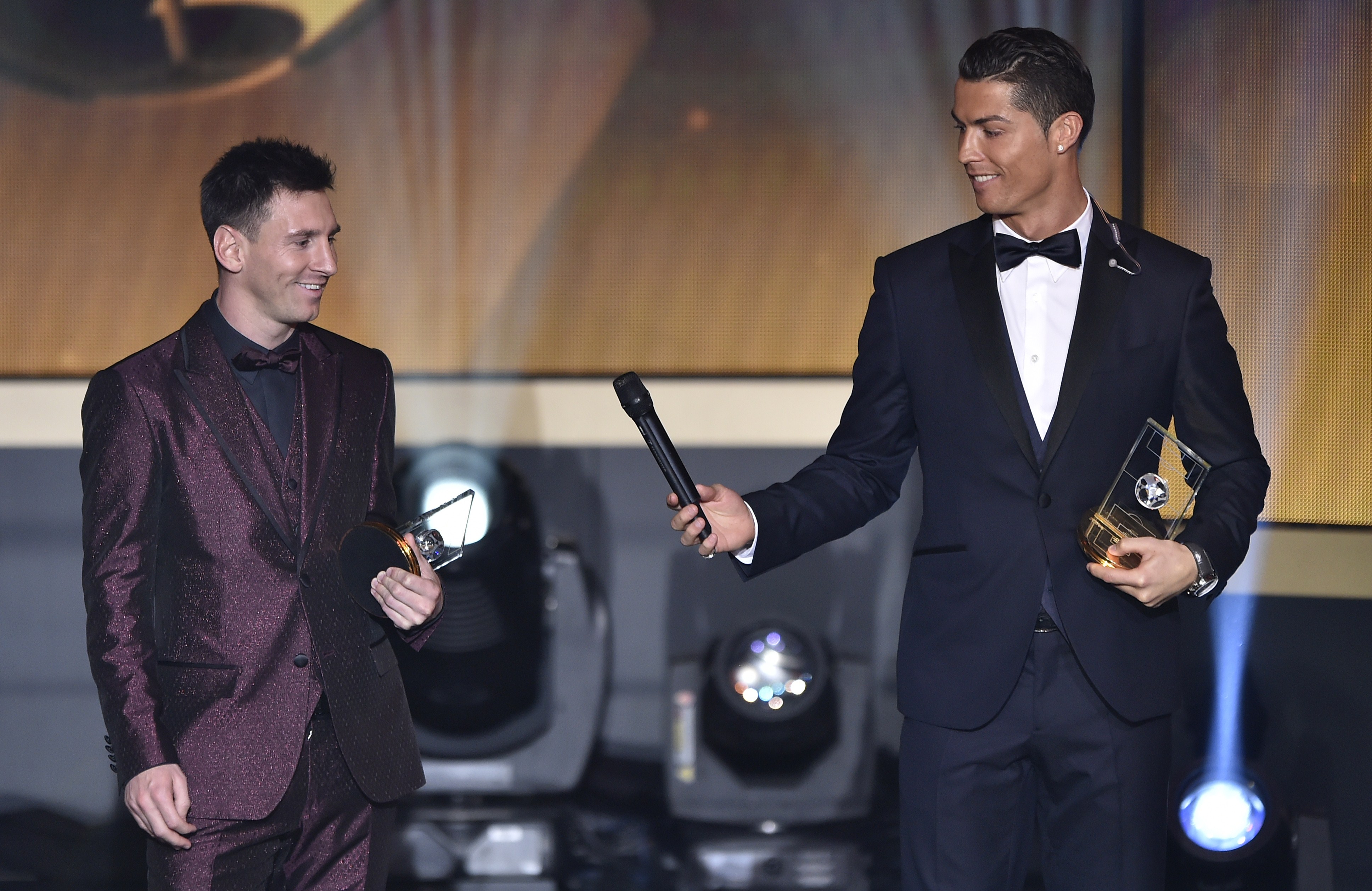
Lionel Messi’s Argentina and Cristiano Ronaldo’s Portugal have both received groups that should allow them to progress, but their paths and ceilings differ.
Lionel Messi’s Argentina look better placed for a deep defence of their title, while Cristiano Ronaldo’s Portugal profile as a dangerous, but slightly more volatile, contender built around an ageing icon.
The expanded format, with three teams from some groups and the safety net of best third‑place qualifiers, further strengthens both nations’ probability of reaching the knockout rounds and keeping alive the possibility of a long‑awaited World Cup meeting between Messi and Ronaldo.
Tournament format and paths
The 2026 FIFA World Cup will feature 48 teams split into 12 groups of four, with each side playing three games and the top two plus the eight best third‑placed teams advancing to a new round of thirty‑two. This structure reduces jeopardy for heavyweights like Lionel Messi’s Argentina and Cristiano Ronaldo’s Portugal because even an early slip does not necessarily mean elimination, and seeding is designed to keep them apart until the latter rounds.
From the round of 32 onwards, the tournament becomes a straight knockout, adding one extra hurdle compared with previous editions and marginally increasing the randomness that can derail favourites. However, the larger field also means a broader range of opponent quality, which typically benefits well‑coached, star‑heavy squads able to manage tournament rhythm.
Argentina’s group and difficulty
Argentina have been drawn into Group J alongside Algeria, Austria, and Jordan, a section that on paper looks manageable for the reigning champions. Algeria and Austria are capable sides with European and African pedigree, but neither has the depth, tournament nous or recent record to match an Argentina team that won in 2022 and has largely maintained its core.
Jordan enter as clear underdogs, making them outsiders to take points off Lionel Scaloni’s side unless Argentina underperform dramatically or rotate heavily. Overall, this is widely assessed as an “easier” group compared with sections containing multiple top‑ten nations, which should allow Argentina to control minutes, manage physical load and still finish first.
Argentina’s chances of progression
Given their status as defending champions, current ranking position and relative group quality, Argentina’s probability of reaching at least the round of sixteen is extremely high and progression to the last eight will be the internal benchmark. The expanded format means that even a second‑place or strong third‑place finish in Group J would be enough to keep them alive, further insulating them from a shock early exit.
Where Argentina’s campaign becomes more uncertain is from the quarter-finals onwards, when they will almost certainly encounter another global heavyweight such as France, Brazil, England, Spain or Portugal.
Squad evolution since Qatar has seen younger players integrated but core leadership still rest with Lionel Messi, Rodrigo De Paul and key defenders, so the balance between continuity and freshness will shape whether they can sustain another month‑long peak.
Messi’s World Cup narrative
This tournament is widely expected to be Messi’s last World Cup, and Argentina’s entire structure still tilts subtly towards maximising his influence in controlled phases rather than relying on his constant physical output. Group J’s profile – limited elite pressing, few sides able to dominate possession against Argentina – should allow Messi to conserve energy while dictating games through set pieces, final‑third passing and controlled tempo rather than long sprints.
In the knockouts, opponents will almost certainly devise plans to funnel Argentina away from central zones and force others to beat them, making the performance of supporting attackers crucial if Messi is to reach another semifinal or final.
Psychologically, the narrative of a back‑to‑back title attempt at age thirty‑eight adds emotional weight, but it also risks creating dependence; how well Lionel Scaloni balances sentiment with tactical pragmatism will be decisive.
Portugal’s group and difficulty
Portugal were placed in Group K with Colombia, Uzbekistan and the winner of Inter‑continental Playoff 1, most likely the Democratic Republic of Congo, though Jamaica or New Caledonia remain possibilities. On rankings, Portugal are clear favourites, but Colombia represent a significant, high‑intensity test with familiar European‑based talent such as Luis Diaz and Richard Ríos capable of exploiting defensive lapses.
Uzbekistan and the playoff winner are less heralded but tactically awkward opponents, combining physical commitment with relatively low expectations, which can create tense, low‑margin games if Portugal fail to score early. Even so, the group has been broadly labelled “kind” compared with Brazil’s section or England;s, with the consensus that Portugal should qualify and are favoured to top the group if they approach Colombia with proper caution.
Portugal’s chances of progression
Given their depth, recent qualifying form and the cushioning effects of the new format, Portugal would need a major collapse to miss the round of thirty‑two and are strong candidates for at least a Last‑16 appearance. The real question is whether they have the tactical balance and in‑game management to navigate three or four consecutive high‑level knockout matches, something they have struggled with at recent major tournaments.
With a spine featuring experienced names and an emerging generation that includes attacking talent in multiple positions, Portugal possess the raw quality to beat any side on a given day. However, the presence of an ageing Ronaldo in the starting structure demands careful adjustment of pressing schemes and transition defence, and any misalignment there will be ruthlessly targeted by elite opposition.
Ronaldo’s World Cup narrative
Cristiano Ronaldo is expected to feature in a record sixth World Cup, transforming the tournament into a personal farewell tour as much as a competitive campaign that may also feature a battle with Lionel Messi. Group K opponents, none of whom are traditional superpowers, offer Ronaldo realistic opportunities to score and remain central to Portugal’s narrative, especially from set plays and penalty situations.
The key tactical question is whether Portugal commit to a structure that protects Ronaldo out of possession, for example a medium block with wingers working back, while still leveraging his penalty‑box instincts rather than asking him to repeat the all‑action wide‑forward role of his peak.
If the coaching staff strike that balance, Cristiano Ronaldo could remain decisive in moments even if he no longer dominates full matches, though any loss of mobility will be more brutally exposed in the latter knockout rounds.
Chances of a Messi‑Ronaldo knockout clash
The bracket has been set up in such a way that an Argentina‑Portugal meeting is most likely in the quarter-finals, assuming both win their groups and navigate the first knockout hurdle, a possibility explicitly highlighted by major broadcasters and analytics previews.
If either side slips to second or qualifies as one of the best third‑placed teams, the potential collision point could shift earlier or disappear entirely depending on how other favourites finish, underlining how thin the margins are despite the apparent clarity of the draw.
From a competitive standpoint, such a tie would pit Argentina’s more cohesive, settled collective against Portugal’s higher‑variance, talent‑rich ensemble, with the Messi‑Ronaldo storyline overlaying a classic control‑versus‑transition tactical clash.
In betting and predictive models, Argentina currently carry a slightly higher title probability than Portugal, which would translate into marginal favourite status in a neutral‑venue quarter=final, though the presence of one decisive moment from either superstar could tilt the balance.
Can Messi or Ronaldo win the World Cup?
Among leading contenders, Argentina sit firmly in the inner circle of favourites alongside France, Brazil and possibly England and Spain, reflecting both their current title and the relative softness of their group draw.
Their route still demands surviving at least three high‑intensity knockout matches, but the combination of tactical clarity, proven big‑game mentality and a workable travel schedule across North America gives them a credible shot at defending the trophy, even if history shows how hard back‑to‑back triumphs are.
Portugal, by contrast, are more commonly placed on the second tier of contenders: a side with enough talent to win the tournament if things fall their way, but with greater structural and age‑profile questions than Argentina.
For Ronaldo, realistic success markers might be leading Portugal to a semi-final and finally playing a World Cup knockout tie against Messi; anything beyond that would elevate 2026 into a late‑career apotheosis to match or even rival his Euro 2016 triumph.