
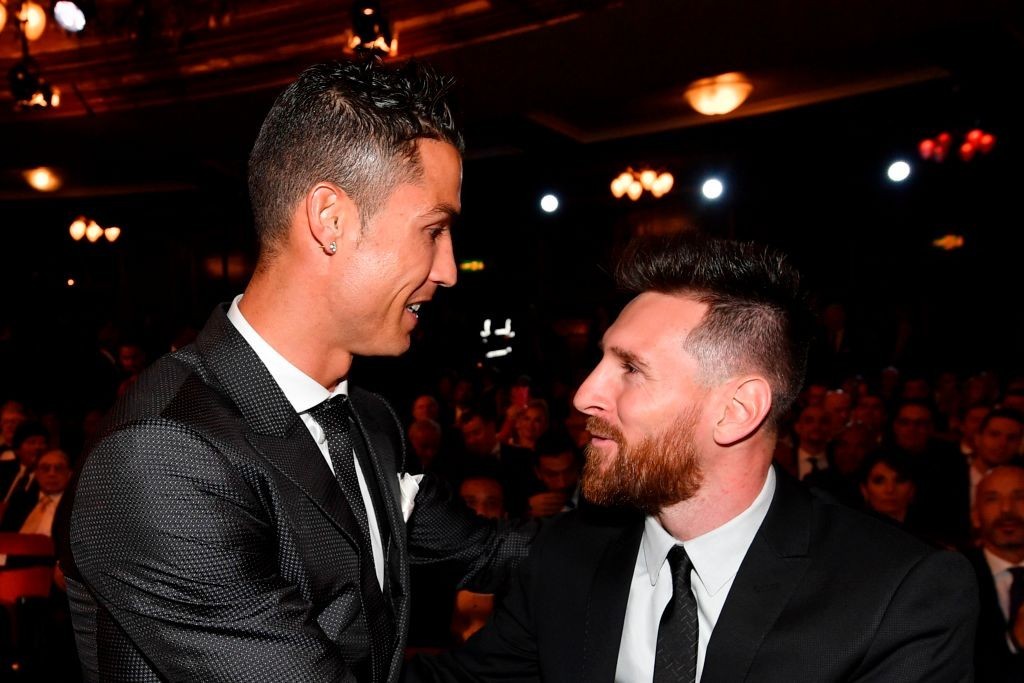
Lionel Messi dazzled, Cabo Verde resisted and early World Cup shocks rewrote expectations as the first group games crowned clear winners and losers.
The first round of the 2026 FIFA World Cup group stage has already done what every World Cup promises and so rarely sustains. It has upset reputations, inflated belief and reminded everyone that one night in June can change the mood of an entire campaign.
The opening fixtures have not merely given us results; they have offered clues about who is ready for the pressure, who can live with the tournament’s strange rhythms and who may already be chasing the competition rather than shaping it.
Some of those clues have come from household names, none louder than Lionel Messi, whose hat-trick against Algeria supplied the clearest answer to doubts about his age and influence. Others have come from teams and players with far less global attention, such as Australia resisting wave after wave of Turkish pressure, Cabo Verde producing the sort of collective defensive performance that becomes part of national memory, and DR Congo refusing to accept the script written for Portugal.
There was also the emergence of Ayyoub Bouaddi, the Moroccan teenager who looked entirely at ease against Brazil’s experienced midfield and played as though the occasion belonged to him.
At the other end of the scale sit some of the tournament’s early disappointments: Cristiano Ronaldo, whose influence barely registered in Portugal’s draw; Switzerland, whose wastefulness cost them dearly; Spain, who could not turn dominance into incision; and Turkey, who discovered that possession means very little without precision. This is only matchday one, but World Cups are shaped by emotion as much as mathematics, and these first impressions already feel significant.
Winners
Lionel Messi
If there were doubts about whether Messi could still bend a World Cup to his will at 38, Argentina’s 3-0 win over Algeria supplied the clearest answer possible. He scored all three goals, recorded his first-ever World Cup hat-trick and became the oldest player to manage one in the tournament, while also drawing level with Miroslav Klose on 16 World Cup goals.
The performance had rhythm and authority to it: the first goal came after 17 minutes when he surged on to Rodrigo De Paul’s pass and whipped a left-footed strike into the roof of the net, and the third arrived on the counter late on to complete a night that felt both historic and emphatic. More than the numbers, though, it was the tone of the display that mattered.
Messi did not look like a legend trying to preserve himself; he looked like the central force in the defending champions’ attack, dictating tempo, choosing moments and making Argentina look calmer whenever the game threatened to loosen. For a player trailed by questions over age and level, this was not just a strong opener but a reminder that tournament football still bends towards genius.
Australia
Few expected the Socceroos to begin their FIFA World Cup 2026 campaign by beating Turkey, and even fewer would have imagined them doing it in a game where they spent so much of the night without the ball. Turkey finished with 72 per cent possession and 30 shots, eight of them on target, yet Australia won 2-0 through goals from Nestory Irankunda and Connor Metcalfe.
That makes the result impressive on its own, but the manner of it is what earns Australia a place here. They absorbed pressure without panic, made 55 clearances and never lost their structure, which meant Turkey’s dominance became increasingly frustrating rather than truly threatening.
Then, when the moments came at the other end, Australia were clinical and composed, exactly the qualities underdogs need in tournament football. A win like this does more than provide three points; it gives a squad confidence that its discipline can survive elite pressure and that its route to the knockouts is real, not imagined.
Cabo Verde
The headline will belong to Vozinha, and rightly so, because the 40-year-old goalkeeper made seven saves and protected Cabo Verde’s 0-0 draw against Spain with a performance of remarkable calm and courage. Yet to focus only on him would miss the deeper achievement.
Spain had 27 shots, seven on target, and still could not prise open a defence that understood exactly what the match required from first whistle to last. Cabo Verde did not simply survive; they defended spaces intelligently, kept their concentration under constant stress and turned every Spanish attack into a fresh test of collective discipline.
For a World Cup debutant, and against the reigning European champions, that kind of emotional control is extraordinary. The draw was treated like a victory because, in practical and symbolic terms, it was one: a point on the board, belief in the dressing room and the sense that this team belongs on the stage it has worked so hard to reach.
Ayyoub Bouaddi
One of the most striking individual displays of the opening round came from Morocco’s teenage midfielder, who played against Brazil with the assurance of a seasoned international. In the 1-1 draw, Bouaddi led his side with 87 touches and 60 accurate passes, completed three successful dribbles and brought order to a game that could easily have been swallowed by Brazil’s experience.
Other post-match numbers were just as revealing: 91 per cent passing accuracy, perfect completion in the final third, six recoveries, five interceptions, and nine duels won. Those figures matter because they describe more than tidy possession.
Bouaddi was progressive when Morocco needed calm, combative when Brazil tried to impose themselves and smart enough to keep finding the right spaces even with Casemiro and company around him. Alongside Neil El Aynaoui, he helped Morocco make the centre of the pitch a battleground Brazil never fully controlled, and that is an enormous compliment given the quality of the opposition. For a young player already attracting interest from major clubs, this was the sort of night that turns promise into proof.
DR Congo
Portugal’s early lead, taken through Joao Neves after six minutes, appeared to confirm every pre-match assumption about how this contest would unfold. DR Congo had other ideas. Yoane Wissa’s equaliser in first-half stoppage time was not only their first-ever World Cup goal but the foundation for a draw that felt earned rather than stolen.
Portugal still had more of the ball and completed far more passes, yet DR Congo never folded into passive resistance and carried enough threat to keep the European side uneasy in the second period. That balance is why they belong in the winners column.
A point against the strongest name in the group changes the emotional map of the section: it means DR Congo can approach the next two games with conviction and a realistic belief that qualification, either through the top two or via the best third-placed route, is no fantasy.
Losers
Cristiano Ronaldo
For all the attention on Ronaldo arriving at another World Cup, his opener against DR Congo became a study of diminishing influence. He played the full 90 minutes, managed three shots and failed to put any of them on target, while one report noted that he had only 25 touches and won just one duel. Portugal’s problem was not that Ronaldo alone caused the draw, because the whole side faded after a bright start.
Still, when a team with Bruno Fernandes, Bernardo Silva, Vitinha, and Joao Neves around him produces so little sharpness in attack, the senior figure at centre stage will shoulder the blame. On this evidence, he looked less like the spearhead of a contender and more like a passenger in a side that needs greater mobility and connection in the final third. He is now ten successive games in major tournaments without a goal.
Switzerland
Few teams left the opening round with more regret. Switzerland drew 1-1 with Qatar despite recording 26 shots, their highest tally in a World Cup match since at least 1966, and yet they turned all that invention into only one goal. The punishment arrived late, with a stoppage-time own goal allowing Qatar to claim their first-ever World Cup point, after which Swiss coach Murat Yakin admitted his side had “lost two points”.
That phrase feels exactly right. Switzerland were good enough to control the match creatively, but tournament football is ruthless with teams that confuse control with completion. Now the margin for error has shrunk, and what should have been a platform result has become a source of pressure.
Spain
A goalless draw with Cabo Verde is not a disaster in the mathematical sense, but it is still one of the opening round’s most deflating results. Spain had 74 per cent possession and 27 shots, yet the European champions never found the incision required to beat a World Cup debutant.
Vozinha’s excellence was part of the story, but Spain also looked short of surprise in the final third, as if domination alone would eventually be enough. It was not. They remain strong favourites to top the group, and one draw should not erase the quality in the squad, but the opener still exposed a familiar World Cup danger for Spain, showing how sterile superiority can become anxiety when the breakthrough does not arrive.
Turkey
Dark-horse labels can disappear very quickly at a World Cup, and Turkey’s 2-0 defeat to Australia was a sharp lesson in why. On paper, 72 per cent possession and 30 shots should be enough to win most matches, or at least avoid losing them.
In reality, Turkey were wasteful in front of goal, vulnerable to transitions and unable to turn territorial pressure into emotional control of the contest. That matters because opening games shape the rest of a group. Instead of building from a likely win, Turkey now face the possibility that every remaining fixture carries qualification anxiety, including the uncomfortable thought that even the best third-placed route may become complicated if this bluntness continues.