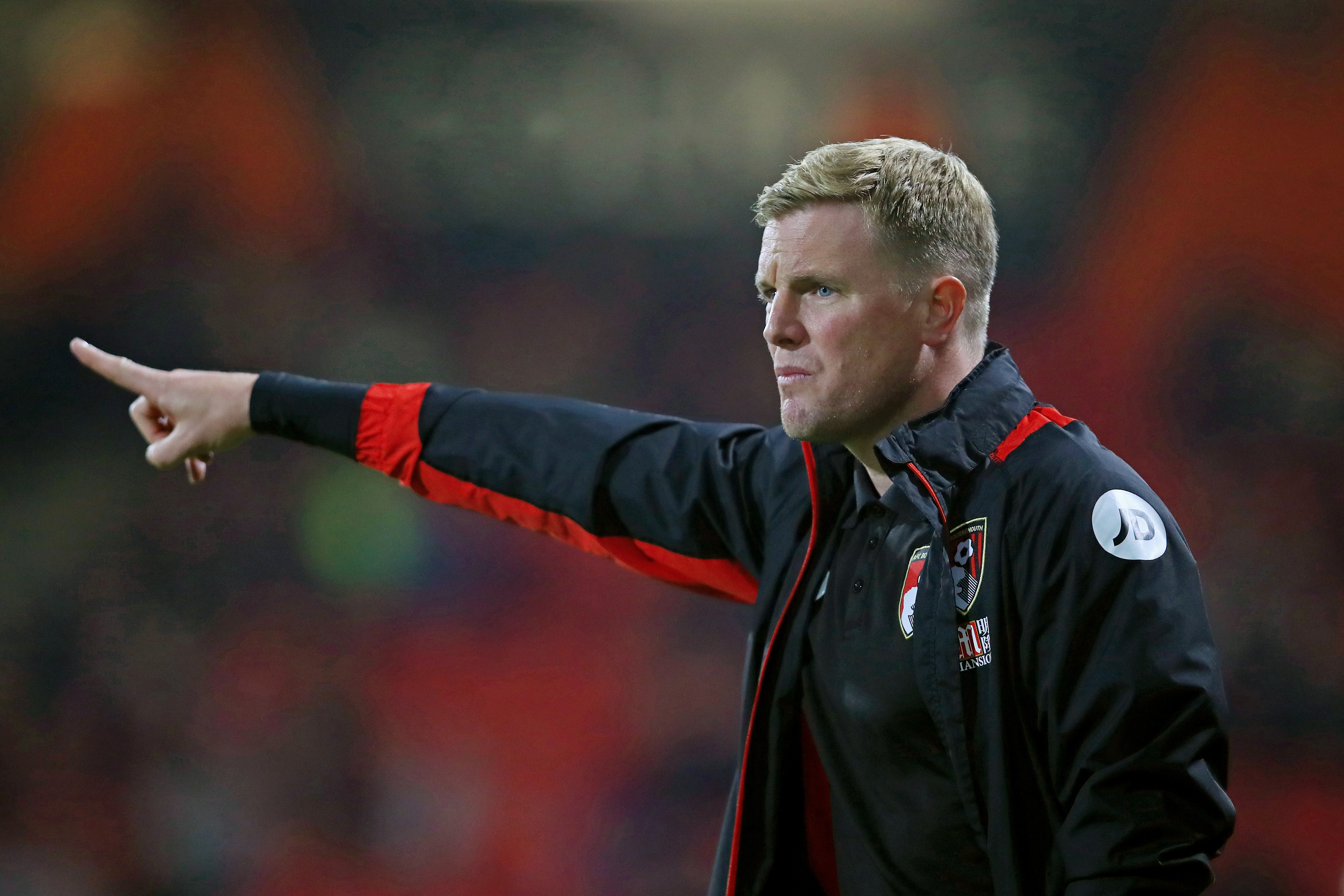
Eddie Howe has come under the scanner for a dismal season so far, as there could be doubts whether the Newcastle United project has stagnated under his tutelage.
Newcastle United’s season has hit a choppy stretch at exactly the wrong time, and the noise around Eddie Howe is no longer just background. With results sliding, performances wobbling, and the calendar refusing to ease up, the next few games feel like they could shape not only their league position but also Howe’s immediate future.
For weeks now, Newcastle United have looked like a side stuck between two identities: the high-energy, front-foot team that once overwhelmed opponents, and a more tentative version that seems to lose control of matches in key moments. The slide has been underlined by a run without a win in five games across all competitions, a sequence that has tightened the mood around St. James’ Park and sharpened the questions being asked of Howe.
Saturday’s 3-2 home defeat to Brentford, sealed late and greeted with boos, was not just another bad result; it felt like a release of frustration that has been building all season. Howe, to his credit, did not hide from it, admitting he has to do more and describing a “harsh reality” as Newcastle’s levels have dropped below what he expects.
The timing is brutal: their EFL Cup defence ended tamely at the semi-final stage at Manchester City, and the schedule keeps coming with no time to reset. In the Premier League, they have been sitting 12th, which is miles away from the standard their recent progress has created. If the next results do not arrest the drift, it’s fair to wonder if the club’s hierarchy might consider drastic action
Where has it gone wrong for Eddie Howe and Newcastle United?
The most alarming theme has been how quickly Newcastle United can unravel inside games, even after doing the hard part. Eddie Howe has pointed to the baffling pattern of the team playing worse after scoring, and he has suggested it can be a mentality issue that spreads when one or two players drop their level. The other red flag is defensive fragility; not just errors, but a collective looseness that undermines the whole system Howe wants to run.
This has also started to look like a side that is not consistently hitting its trademark physical intensity, the very thing that once made Newcastle feel non-negotiable to play against. When that edge goes, their press becomes easier to bypass and their attacks become more dependent on moments rather than waves.
Champions League load, squad depth
Newcastle United are still juggling big nights alongside the weekly grind, and Eddie Howe’s own camp has referenced “injuries and fatigue” taking their toll. ESPN also noted they remain in contention for a place in the Champions League knockout stage, which tells you the club’s ambitions are still alive, but also that the workload hasn’t gone away.
This is where the boardroom question bites: if you expect a team to be a serious Premier League force while also surviving Europe, you need depth that does not collapse when two or three starters go missing. That is not only about money; it is about building a squad with enough variety (profiles, experience, durability) to rotate without losing your playing style. And if the squad is just short of that standard, the manager ends up wearing the blame anyway, especially when expectations have risen as sharply as they have at Newcastle.
Injuries and the thin margins
Eddie Howe has had to manage games and training around key absences, with late checks needed on Anthony Gordon (hamstring) and Lewis Miley (knee), while Joelinton has been out with a groin issue. Those are not small problems: they affect pressing intensity, ball-carrying, and the ability to change the rhythm from the bench.
The deeper issue is that Newcastle United’s system is demanding, and Howe has admitted it only takes one or two players being off physically for the whole structure to falter. In a season where the margins are already tight, that kind of drop-off turns “one bad half” into a bad month.
Conclusion
Eddie Howe’s defence of himself is simple: he believes he is still the right man, and he insists he would step aside if he did not think he could take the club forward. There is real merit in that stance, because it speaks to accountability rather than entitlement, and it matches how he has fronted up publicly, accepting responsibility when Newcastle have fallen short.
It also matters that the standards around Newcastle have changed; being 12th and winless in five feels like a crisis precisely because he helped lift the baseline. But football does not award credit for yesterday’s trajectory.
The current Newcastle United look uncertain: their intensity has flickered, their in-game control has slipped, and the crowd’s patience has started to fray in a way that can turn quickly. If the board believe the squad is good enough and the slump is mainly coaching and confidence, they may feel a new voice is required.
If they believe injuries, fatigue and squad depth are central, then ripping out the manager risks repeating the cycle with someone else. The project has not necessarily died, but it has stalled. The question now is the one that will define the coming weeks: will Newcastle United be better off without Eddie Howe, or do they need to back him through the storm?