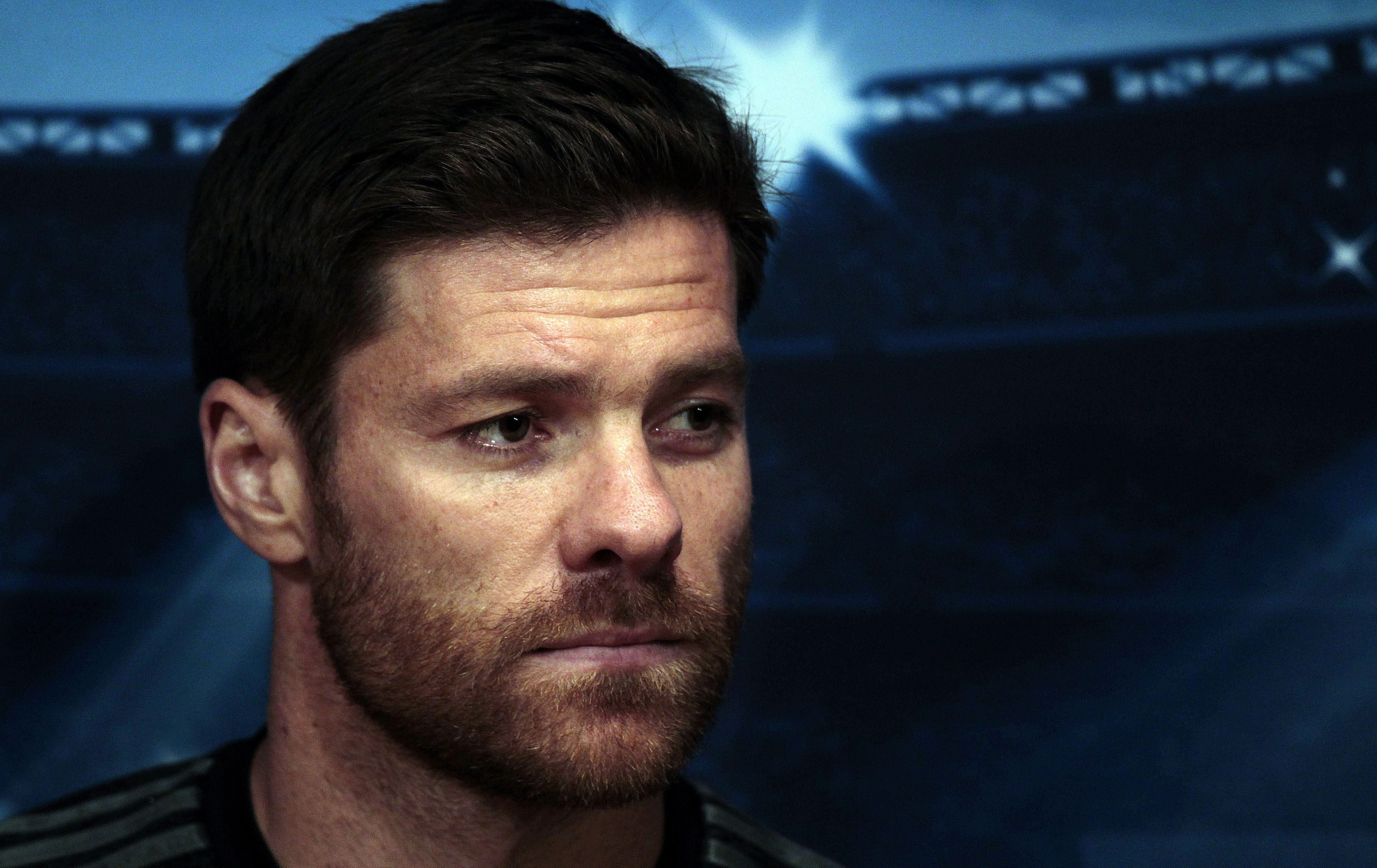
Players, not Florentino Perez, showed Xabi Alonso the exit; a Super Cup snub and Vinicius Junior tantrums ended his dream stint at Real Madrid.
Xabi Alonso did not leave Real Madrid because of one defeat in Saudi Arabia or a sudden change of heart in the boardroom; he walked away from a club where the players, and the dynamics around them, made his position almost impossible to sustain.
A short reign, a messy ending
Xabi Alonso’s time in charge lasted just eight months, yet it felt like an entire cycle compressed into two-thirds of a season. The Spaniard arrived as the architect of Bayer Leverkusen’s historic unbeaten domestic triumph, sold to fans as the coach who would modernise real Madrid’s football and lead a new Mbappe‑Bellingham era.
On paper, the situation at the time of his exit was not catastrophic. Real Madrid were four points off the top of La Liga, in good shape to qualify for the UEFA Champions League :ast 16 and still alive in the Copa del Rey. The 3-2 Spanish Super Cup final defeat to Barcelona in Jeddah hurt, but it was not seen internally as a sack‑or‑stay moment for Florentino Perez.
Instead, the separation was presented as a mutual decision, and the speed with which Alvaro Arbeloa was elevated from within only underlined that the club knew a break was coming, even if the timing surprised the outside world. The key question is why Alonso himself decided there was no way back.
When the dressing room stops listening
To understand that, the lens has to move from tactics and league tables to personalities and power. At Real Madrid, managers are judged as much on how they navigate egos as on how they draw arrows on a tactics board.
Even Zinedine Zidane, with three UEFA Champions Leagues in the bank, never truly had full control of every call; Carlo Ancelotti is the only modern coach who has looked completely at ease because his greatest strength is man‑management.
Xabi Alonso walked into a very different environment. He tried to reset hierarchies, introduced a more structured, pressing style and was not afraid to make hard calls on status players. In theory, that sounded like exactly what Real Madrid needed. In practice, it put him on a collision course with a dressing room used to being treated as the main actors in every drama.
The first obvious crack came with Vinicius Junior. The Brazilian’s form had dipped compared to his Ballon d’Or‑contending peak, and Alonso responded by rotating him more, demanding better off‑ball discipline and occasionally benching him in big games. What followed were three high‑profile tantrums:
-
the Espanyol match, where Vinicius Junior reacted angrily to being substituted, arguing on the touchline and hurling a bottle;
-
El Clasico in October, when he shouted “Always me, always me” as he came off in a match Real Madrid still went on to win, before muttering “I’m leaving the team” on his way down the tunnel;
-
the Sevilla flashpoint, when he was booed by parts of the Bernabeu and responded with cryptic social media posts and a Brazil‑themed profile picture that many read as a dig at the club.
Each episode chipped away at the perception of Xabi Alonso’s authority. Publicly, he played down the incidents and tried to protect his player. Privately, those scenes created a dressing‑room split: some backed the coach’s standards, others saw a superstar being pushed too hard and too publicly. At Real Madrid, once a key attacker appears to be at odds with the manager, the ground beneath the coach’s feet starts to move.
Mbappe, the guard of honour and a lost battle
If Vinicius Junior tested Xabi Alonso’s authority, Kylian Mbappe unintentionally exposed how little of it he truly had left by the time the Super Cup final ended. In Jeddah, after Barcelona lifted the trophy, Alonso suggested to his players that they form a guard of honour for the new champions; a small act of sportsmanship.
Before the idea could take shape, Mbappe cut across his manager. Cameras caught the Frenchman gesturing strongly to teammates, signalling that there would be no guard of honour and effectively overruling Alonso in front of the world. The squad followed Mbappe’s lead, not their coach’s instruction.
For any manager, that is painful. At Real Madrid, it is fatal. In a single clip, the footballing world saw where the real power lay: with a global superstar who knows the club has built its present and future around him, not with a coach still trying to establish his word as law. That moment went far beyond a disagreement over etiquette.
-
It told the president that Mbappe was prepared to publicly defy Alonso on an issue that touched the club’s image.
-
It told the rest of the squad that if push came to shove, siding with the star would carry fewer consequences than siding with the coach.
-
It told Alonso himself that even symbolic gestures – the sort of small details great coaches obsess over – were no longer fully his to decide.
When that happens, the job stops being about football and turns into daily damage control.
The football never quite looked “Real Madrid”
Even if the dressing room politics had been perfect, questions about the football were not going away. Real Madrid under Xabi Alonso never became the free‑flowing, ruthless machine many expected after his Bayer Leverkusen spell. Some numbers illustrate the tension between process and perception:
-
Real Madrid averaged higher possession and more controlled pressing phases compared to the previous campaign, with their share of the ball in recent league games rising into the 60s.
-
Yet, results in crunch periods sagged: dropped points against Rayo Vallecano, Elche, and Girona, plus back‑to‑back home defeats to Manchester City and Celta Vigo, fuelled a narrative of “anodyne, point‑dropping football”.
-
In the Spanish Super Cup final itself, Real Madrid created enough to take the game to penalties – Alvaro Carreras and Raul Asencio both missed clear late chances – but the defeat still landed like a verdict on Alonso’s style.
To the board, that cocktail was still manageable. To parts of the squad, especially attacking stars used to a more transition‑heavy, star‑centric approach, it felt less natural. Mbappe often found passing lanes blocked off and had stretches where he looked isolated high up the pitch; Vinicius Junior saw his numbers drop and his role redefined; even Jude Bellingham had to tweak his game to fit a more structured, positional framework.
At Bayer Leverkusen, Alonso built his authority day by day, with a group that bought into being moulded. At Real Madrid, he had to reshape players who already see themselves as finished products and who know that, historically, the club bends more often to them than to the coach.
Too much, too soon for Xabi Alonso
Placed against that backdrop, talk of Xabi Alonso being “rushed” into the job does not feel unfair. His tactical ideas are sophisticated, his playing career gives him natural gravitas, and his work in Germany showed he can build a collective that overwhelms opponents.
But joining Real Madrid is not just another step up; it is a different sport altogether. The club has sacked ten permanent coaches under Florentino Perez before they completed a full season, often while the team still had chances in major competitions.
Managing up – dealing with an all‑powerful president, an aligned media pack and a fanbase that whistles even legends – is almost as important as managing the eleven on the pitch. Alonso never fully adapted to that side of the job.
Reporters described him as cool and distant in early press conferences, slow to build alliances in a media landscape that often reflects the president’s moods. He softened that stance only when he felt his position under threat, opening up more and showing a lighter side, but by then the club had already spent months weighing alternatives.
Inside the dressing room, it was similar. Some senior players publicly backed him after tough nights, but others, notably Vinicius Junior, effectively challenged his authority in front of teammates and fans. When Kylian Mbappe added his own public veto in Jeddah, the image of Alonso as an undisputed leader was shattered.
For a coach used to being revered, as a player, as a title‑winning manager in Germany, as a thinker, peers like Pep Guardiola openly admire, Real Madrid was the first place where his word did not automatically become law.
In that sense, the separation feels less like a brutal firing and more like an honest admission from Alonso that he had walked into this storm too early in his coaching life.
Vinicius, Mbappe and the power shift
The common thread through all of this is that Xabi Alonso was not let down primarily by the board; he was slowly, and then suddenly, undermined by the dynamics around his stars.
-
With Vinicius Junior, he tried to enforce standards and rotation, and instead found himself framed as the obstacle to a fan favourite rediscovering his best form.
-
With Kylian Mbappe, he inherited a project built around the Frenchman and discovered that in key symbolic moments, the new face of the club could overrule him without fear of repercussion.
At most clubs, that would lead to the president choosing the coach and enforcing discipline. At Real Madrid, history points the other way. Florentino Perez wants Vinicius Junior to renew at all costs, has placed Kylian Mbappe at the centre of his sporting strategy and knows that changing coaches has often preceded successful cycles rather than chaos.
So while official statements talk of mutual respect and thanks, the reality is harsher: Alonso left because he could not bend the biggest personalities in the squad fully to his will, and because in that power struggle, the institution has repeatedly shown whose side it will take.
Arbeloa, and where Real Madrid go from here
Álvaro Arbeloa’s promotion is less about tactics and more about recalibrating the internal temperature. As a former captain, long‑time squad player and youth coach, he understands the club’s politics, its media rhythms and the personalities in the dressing room. His appointment can play out in two ways.
-
It could unlock the squad. A “club man” with deep roots and fewer radical tactical demands might make Vinicius Junior and Kylian Mbappe feel more central, lower the emotional temperature and produce an immediate bounce in results, especially in the league.
-
Or it could expose deeper structural problems. If the same patterns re‑emerge – mood swings from stars, tactical inconsistency, heavy reliance on moments of individual brilliance – the post‑Alonso bump could fade quickly and leave Arbeloa facing the same questions with less experience to draw upon.
Either way, Xabi Alonso’s departure sends a clear message for the rest of this season. The players have effectively chosen their line in the sand: certain behaviours will be tolerated, even when they undercut the coach, and the institution will once again try to solve tension by changing the man on the touchline rather than those on the pitch.
The irony is that Alonso arrived as the symbol of a “reset”, the coach asked to move Los Blancos beyond the old Galactico habit and towards a more collective idea. Eight months later, his exit underlines a different truth: at Real Madrid, the power of the dressing room remains as strong as ever, strong enough that even a coach with his pedigree can be pushed towards the door without the president ever needing to fire the starting shot.