
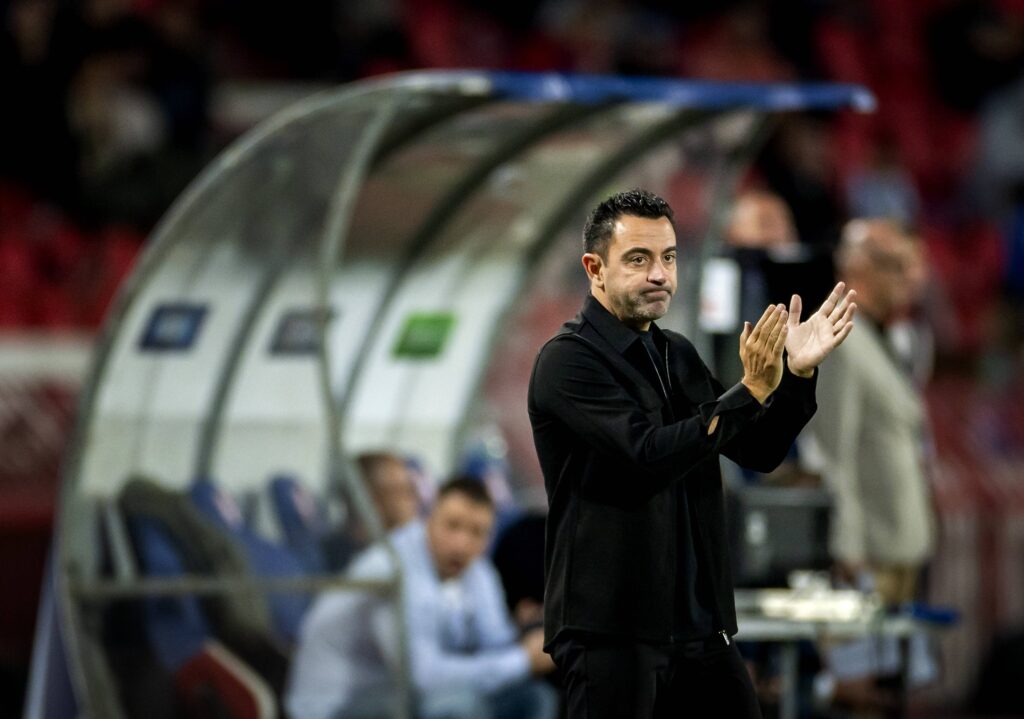
Greece will welcome the Netherlands to Stadio Toumbas on Thursday night with the hosts sitting proudly at the top of League A Group 2 after a perfect opening to their UEFA Nations League campaign.
Ivan Jovanovic’s side have collected six points from six, while the Netherlands sit second on four points after a draw and a victory from their opening two fixtures. A win for the visitors would see Xavi’s side move above Greece and into first place.
Greece’s current position would have been difficult to envisage earlier this year. After failing to qualify for the 2026 World Cup, the Piratiko endured a difficult first half of 2026, winning only one of four friendlies while losing two and drawing the other.
Their Nations League campaign, however, has been completely different. Greece produced a dramatic comeback against Serbia on Matchday 1, with Anastasios Douvikas scoring in the 94th minute to complete a 2-1 victory. They then produced an even bigger statement by defeating Germany 1-0, with Dimitris Kourbelis scoring the decisive goal.
Two matches, six points and only one goal conceded have put Jovanovic’s team in an excellent position. The challenge now is maintaining that defensive discipline against a Netherlands side that has created chances at an impressive rate under Xavi. The Netherlands have also made a promising start to life under their new manager.
Xavi’s first match ended in a 1-1 draw with Germany, but the result arguably did not reflect the balance of play and they followed that performance with a 2-1 victory over Serbia. Mex Meerdink scored twice, giving the young forward a memorable introduction to international football and helping the Netherlands move onto four points.
The result also extended the Netherlands’ unbeaten run in normal time to seven matches, including four victories and three draws. Their wider record is even more impressive as the Oranje have lost only one of their last 22 matches after 90 minutes across all competitions.
The Netherlands have traditionally enjoyed considerable success against Greece and have won nine of the 11 previous meetings between the nations, giving them a significant historical advantage. That said, Greece’s current form means the historical record may have limited relevance on Thursday.
Jovanovic’s team have won their opening two games without conceding from open play, while the home crowd should create a demanding environment for Xavi’s side. The central tactical question will be whether Greece can reproduce the compact defensive structure that frustrated Germany.
The hosts are unlikely to dominate possession against the Netherlands, so their ability to remain organised without the ball will be critical. Greece can then look to transition quickly when possession changes hands. The Netherlands, meanwhile, should attempt to move the ball rapidly and create overloads around Greece’s defensive block.
Their performance against Germany demonstrated their ability to generate high-quality opportunities, but converting those chances consistently will be important against a Greece side that has conceded just once across its opening two matches. The battle could therefore become one of patience versus defensive resilience.
If the Netherlands score early, Greece may be forced to abandon the conservative approach that has brought them success but if the hosts remain level deep into the second half, the pressure could shift towards Xavi’s side. The Hard Tackle takes a look at how both sides could line up and what tactics they might employ on the day.
Team News & Tactics
Greece
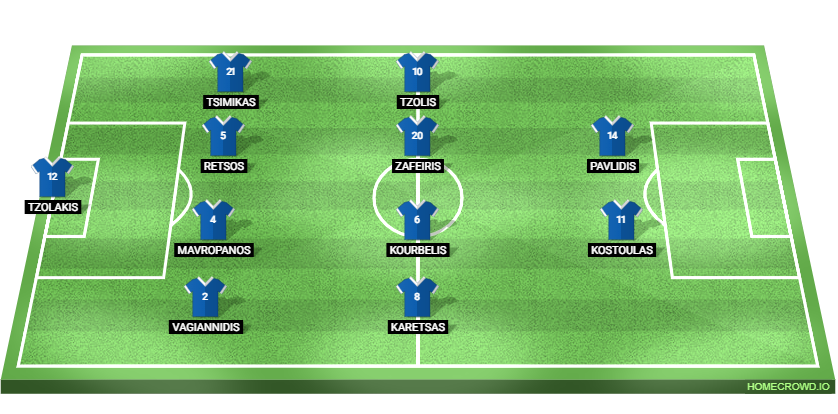
Greece are expected to retain the core of the side that produced back-to-back victories over Serbia and Germany, with Ivan Jovanovic showing considerable faith in the group that has delivered six points from the opening two Nations League matches.
There could nevertheless be a couple of changes and Charalampos Kostoulas is in contention to return to the starting XI, while Dimitrios Kourbelis could also come back into midfield after scoring the decisive goal against Germany. Greece are expected to maintain their 4-4-2 formation, with Konstantinos Tzolakis in goal and Georgios Vagiannidis, Panagiotis Retsos, Konstantinos Mavropanos, and Kostas Tsimikas forming the defensive line.
Konstantinos Karetsas, Dimitrios Kourbelis, Christos Zafeiris, and Christos Tzolis should make up the midfield, while Kostoulas and Vangelis Pavlidis are expected to form the front two. The biggest strength of Greece’s current setup is its structural discipline. The 4-4-2 gives Jovanovic two compact defensive lines, making it difficult for opponents to find straightforward passing lanes into the centre.
Kourbelis could be particularly important if he returns. His ability to screen the defence would allow the more progressive midfielders to press higher while maintaining protection in front of the centre-backs. On the wings, Karetsas and Tzolis can provide an important outlet when Greece regain possession.
Rather than attempting to dominate the Netherlands territorially, Greece could look to release them quickly into the spaces behind the Dutch full-backs. The front two also offer tactical flexibility. Pavlidis can provide the physical focal point, while Kostoulas can drop deeper and link with the midfield. That movement could be useful when the Netherlands attempt to press high.
The major challenge will be maintaining their defensive distances. The Netherlands produced 3.18 expected goals against Germany, so Greece cannot afford to allow Xavi’s side to repeatedly receive between the midfield and defensive lines. If the home side can remain compact and force the Netherlands wide, they will have opportunities to counter through their wingers and attack quickly before the Dutch defensive structure is fully established.
Probable Lineup (4-4-2): Tzolakis; Vagiannidis, Mavropanos, Retsos, Tsimikas; Karetsas, Kourbelis, Zafeiris, Tzolis; Kostoulas, Pavlidis

Netherlands
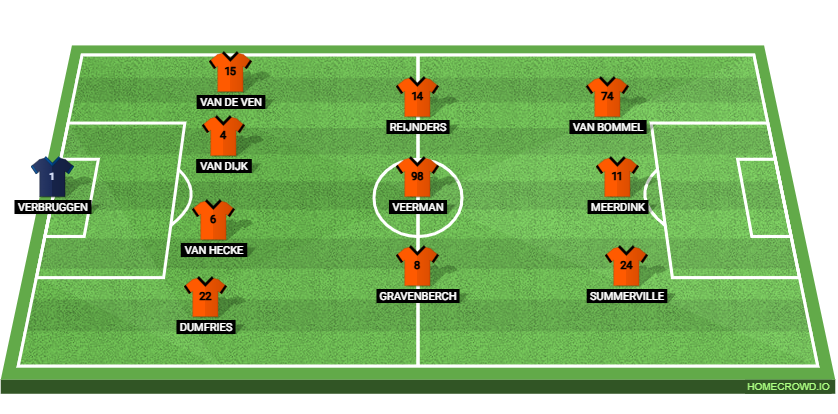
The Netherlands will have to cope without two important attacking options, with Cody Gakpo and Brian Brobbey both sidelined through injury. That should open the door for Ruben van Bommel and Mexx Meerdink to join Crysencio Summerville in the front three. Meerdink is particularly interesting after scoring twice in the Netherlands’ 2-1 victory over Serbia, giving him considerable momentum heading into this fixture.
At the back, Xavi is expected to retain the same defensive unit. Denzel Dumfries, Jan Paul van Hecke, Virgil van Dijk, and Micky van de Ven should continue in front of goalkeeper Bart Verbruggen. The Netherlands are expected to use a 4-3-3, with Ryan Gravenberch, Joey Veerman, and Tijjani Reijnders forming the midfield three.
The absence of Gakpo and Brobbey significantly changes the attacking profile of the Netherlands. Rather than having an established focal point and one of their most experienced wide forwards, Xavi could be forced to rely on a younger and more mobile front three.
Meerdink should be the central reference point after his two-goal performance against Serbia. His movement will be important against Greece’s compact 4-4-2 because dropping away from the centre-backs could create room for Summerville and van Bommel to attack inside.
The midfield trio also offers an interesting balance. Gravenberch can carry the ball through midfield, Veerman provides progressive passing from deeper positions, while Reijnders can make forward runs and occupy the spaces around Greece’s midfield line.
The Netherlands will probably try to stretch Greece horizontally. Dumfries can push high on the right, allowing Summerville to move inside and create an additional central attacking presence. On the opposite side, Micky van de Ven’s pace gives the Netherlands some insurance against Greece’s counter-attacks.
That could be particularly important because Greece are likely to look for quick passes into the channels whenever they win possession. The key battle may therefore be between the Netherlands’ movement and Greece’s compactness.
If Xavi’s side can move Greece’s midfield four out of position, Meerdink, Reijnders and the wide forwards should find opportunities between the lines. If Greece maintain their distances, the Netherlands may have to rely more heavily on crosses and combinations around the penalty area.
Probable Lineup (4-3-3): Verbruggen; Dumfries, van Hecke, van Dijk, van de Ven; Gravenberch, Veerman, Reijnders; Summerville, Meerdink, Van Bommel
Key Stats
- Greece have won both of their opening Nations League matches, beating Serbia 2-1 before producing a 1-0 victory over Germany.
- The Netherlands are unbeaten in their last seven matches in 90 minutes, recording four wins and three draws. They have also lost just once in their last 22 matches after 90 minutes.
- The Netherlands have won nine of the 11 previous meetings with Greece, with one draw and one Greek victory. Across those encounters, Oranje have scored 24 goals to Greece’s three.
- The Netherlands have scored in their last seven matches, while their recent attacking output has been strong enough to produce four wins and three draws during their current unbeaten run.
- Greece’s defence has been particularly difficult to break down in this Nations League campaign, conceding just one goal across their two victories.
Player to Watch
Mexx Meerdink
The young forward has momentum on his side after scoring both goals in the Netherlands’ 2-1 victory over Serbia. With Cody Gakpo and Brian Brobbey unavailable, Meerdink is expected to lead the Dutch attack again. His movement will be particularly important against Greece’s compact 4-4-2.
Rather than remaining between the centre-backs, Meerdink can drop into deeper areas to link with Tijjani Reijnders and Joey Veerman, while creating space for Crysencio Summerville and Ruben van Bommel to attack from wider positions. Greece have conceded only once in their opening two Nations League matches, so Meerdink’s ability to find small pockets of space and convert limited opportunities could be crucial.
Prediction
Greece 1-2 Netherlands
Greece’s perfect start and home advantage make this a considerably tougher assignment for the Netherlands than the historical head-to-head record suggests. However, the visitors have created excellent attacking numbers under Xavi, while their seven-match unbeaten run in normal time demonstrates their current consistency.