
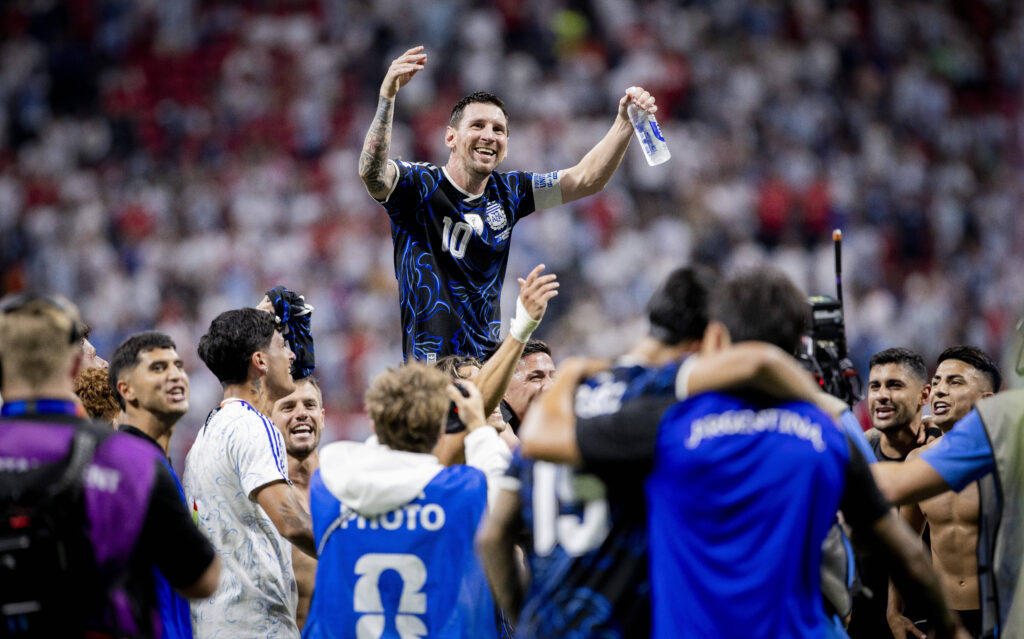
The 2026 FIFA World Cup reaches its grand conclusion on Sunday evening as reigning European champions Spain face defending world champions Argentina at MetLife Stadium in New Jersey.
For the first time in men’s World Cup history, the holders of the European Championship and the Copa America will meet in the final, ensuring football’s biggest prize will be contested by two sides at the peak of the international game.
For Spain, victory would secure only their second World Cup title and crown a remarkable era under Luis de la Fuente. Argentina, meanwhile, are chasing an even greater place in football history. Lionel Scaloni’s side are attempting to become the first nation since Brazil in 1962 to successfully defend the World Cup, while also completing an unprecedented sequence of four consecutive major international trophies following their Copa America triumphs in 2021 and 2024 and World Cup success in Qatar.
Spain arrive in the final as arguably the tournament’s most complete team. Since recovering from an opening-day setback against Cape Verde, La Roja have won six consecutive matches and established themselves as the benchmark for defensive excellence. They have conceded just one goal throughout the tournament and have recorded six clean sheets, the most ever by a team in a single men’s World Cup edition.
Their semi-final victory over France perfectly encapsulated their evolution. Rather than relying solely on possession, Spain combined defensive organisation with clinical finishing to produce a composed 2-0 victory. Mikel Oyarzabal calmly converted from the penalty spot before Pedro Porro capped a flowing move to send La Roja into their first World Cup final since 2010.
Perhaps most impressively, Spain completely neutralised one of the tournament’s most feared attacks. Kylian Mbappe, Ousmane Dembele, and Michael Olise were restricted to just 0.31 xG collectively, highlighting the defensive structure that has become the foundation of de la Fuente’s side. Rodri continues to dictate matches from deep, while Pau Cubarsi, Aymeric Laporte, and Marc Cucurella have formed one of the competition’s most reliable back lines.
Although Lamine Yamal has understandably attracted headlines, Spain’s success has been built on collective balance rather than individual brilliance. Rodri controls the tempo, Dani Olmo finds pockets between the lines, Alex Baena stretches defences from the left, and Mikel Oyarzabal’s intelligent movement continues to create space for those around him. Every player understands their role, allowing Spain to dominate possession without sacrificing defensive stability.
The numbers underline just how extraordinary Spain’s run has been. They are unbeaten in 37 consecutive international matches dating back to March 2024 and now stand on the verge of setting a new record for the longest unbeaten streak in senior men’s international football. Victory on Sunday would not only bring another World Cup title but also cement this Spanish generation among the greatest international teams ever assembled.
Standing opposite them are the defending champions, who have taken a very different route to the final. Argentina have once again demonstrated why knockout football is as much about mentality as tactics. Lionel Scaloni’s men have repeatedly found ways to survive difficult moments before producing decisive bursts of quality when it matters most.

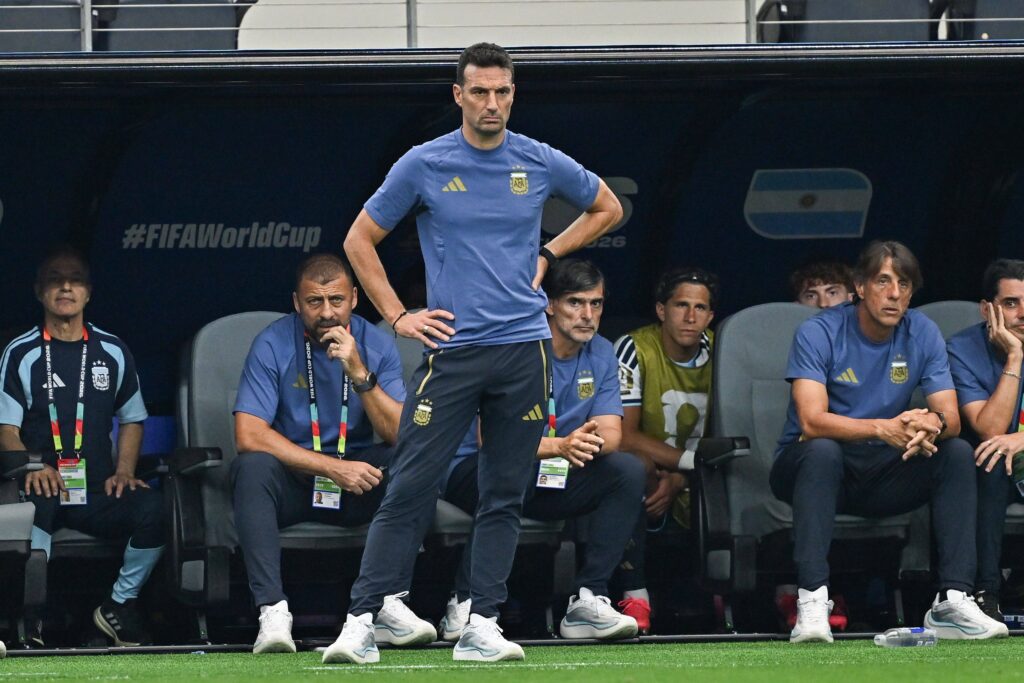
The semi-final against England was another perfect example. After falling behind to Anthony Gordon’s early strike, Argentina gradually seized control as Lionel Messi orchestrated yet another comeback. The eight-time Ballon d’Or winner created goals for Enzo Fernandez and substitute Lautaro Martinez to send La Albiceleste into a second successive World Cup final.
Unlike Spain, Argentina have not relied on defensive control. Instead, they have embraced chaos. They have failed to keep a clean sheet in their last five matches but have scored at least twice in every game throughout the knockout rounds. Their tournament-leading tally of 19 goals is already the highest Argentina have ever managed at a single World Cup, surpassing the 18 scored by the runners-up of 1930.
Messi remains the emotional and tactical centrepiece. Potentially preparing for his final World Cup appearance, the legendary captain enters the final with eight goals and countless decisive moments already behind him. His understanding with Julian Alvarez and Lautaro Martinez has continually unlocked stubborn defences, while Rodrigo De Paul, Alexis Mac Allister, and Enzo Fernandez provide the energy required to support Argentina’s relentless attacking approach.
The tactical battle promises to be fascinating because of the contrasting philosophies on display. Spain will seek to monopolise possession, patiently moving the ball through Rodri before creating overloads around Lamine Yamal and Dani Olmo. Argentina, by contrast, are likely to remain compact without the ball before accelerating quickly through Messi, Alvarez and the late runs of Fernandez and Mac Allister.
The duel between Rodri and Messi may ultimately define the final. Rodri’s positional discipline allows Spain to sustain pressure high up the pitch, but Messi’s tendency to drift into the right half-space has repeatedly destabilised organised defences throughout his career. If Rodri succeeds in limiting the Argentine captain’s influence, Spain should enjoy long spells of territorial dominance. If Messi can escape his marker and draw defenders out of position, Argentina possess enough attacking quality to punish even the smallest lapse.
Wide areas could also prove decisive. Lamine Yamal will test Nicolas Tagliafico throughout the evening with his direct running, while Argentina will look to exploit spaces left behind Spain’s adventurous full-backs whenever possession changes hands.
This final feels like a meeting between the tournament’s two defining identities. Spain have reached New Jersey through structure, control and defensive perfection. Argentina have arrived through resilience, individual brilliance and an unrivalled ability to produce defining moments under immense pressure. Both approaches have been equally effective, but only one will leave the United States as world champions.
With Spain boasting the competition’s strongest defensive record and Argentina possessing its most prolific attack, the final promises to be a compelling tactical battle worthy of football’s greatest stage. Fine margins, individual quality and composure under pressure are likely to separate the two outstanding teams of the tournament. The Hard Tackle takes a look at how both sides could line up and what tactics they might employ on the day.
Team News & Tactics
Spain
Spain head into the World Cup final with a fully fit squad and no suspension concerns, giving Luis de la Fuente an enviable selection headache. There was a brief injury scare when Lamine Yamal trained separately with a bandage on his left leg earlier in the week, but the issue has been described as purely precautionary and the teenage winger is expected to start without restriction.
Likewise, right-back Pedro Porro experienced muscular fatigue following the semi-final victory over France and was rested during a recovery session, although the Spanish medical staff have confirmed there are no concerns over his availability. With no fresh injuries and no players suspended, Spain are expected to field the same starting XI that comfortably defeated France.
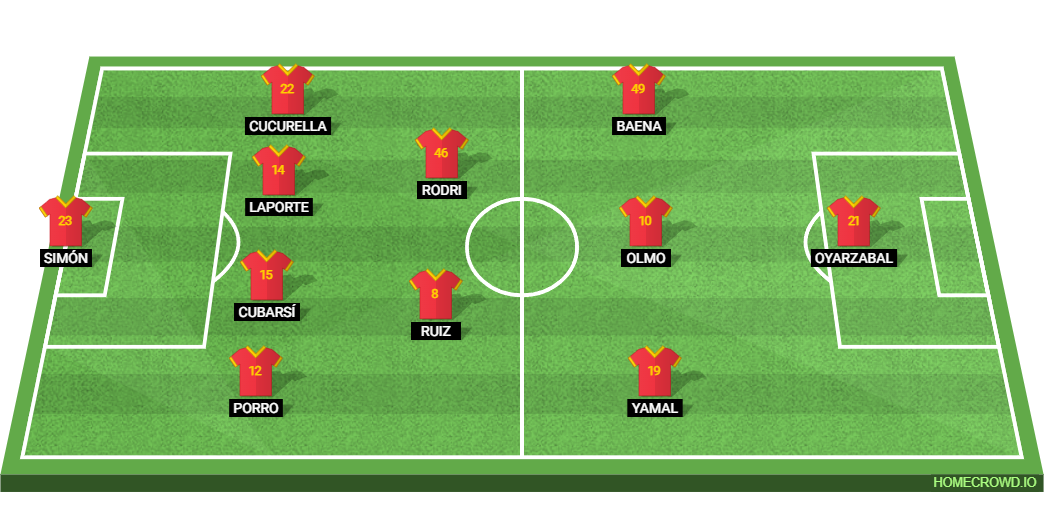
De la Fuente is unlikely to deviate from the 4-2-3-1 system that has carried Spain to the final. Built around patient possession, structured pressing and positional discipline, the system allows Spain to dominate the ball while remaining exceptionally difficult to break down. Rodri dictates the tempo from deep midfield alongside Fabian Ruiz, allowing the attacking trio to operate with freedom behind lone striker Mikel Oyarzabal. Out of possession, Spain press aggressively from the front before quickly reorganising into a compact defensive block, a structure that has yielded just one goal conceded throughout the tournament.
In goal, Unai Simon continues as Spain’s first-choice goalkeeper behind a settled back four consisting of Pedro Porro at right-back, Pau Cubarsi and Aymeric Laporte as the central defensive pairing, and Marc Cucurella at left-back. Rodri and Fabian Ruiz operate as the double pivot, combining defensive stability with progressive distribution.
Lamine Yamal starts on the right wing, Dani Olmo occupies the central attacking midfield role as the primary creator, while Alex Baena provides width and creativity from the left flank. Leading the attack is Mikel Oyarzabal, whose intelligent movement and pressing have been vital to Spain’s success throughout the tournament.
Probable Lineup (4-2-3-1): Simon; Porro, Cubarsi, Laporte, Cucurella; Rodri, Ruiz; Yamal, Olmo, Baena; Oyarzabal

Argentina
Argentina enter the World Cup final with a fully fit squad and no suspension concerns. Cristian Romero and Leandro Paredes both recovered from cramp after the quarter-final and completed the semi-final victory over England without any recurrence of the problem. Lionel Scaloni therefore has all 26 players available, allowing him to make tactical changes based on performance rather than necessity.
Changes are expected in the wide areas following the semi-final. Giuliano Simeone struggled to influence the match in possession and could make way for Rodrigo De Paul, whose work rate, tactical intelligence and understanding with Lionel Messi make him better suited to the demands of this final. Gonzalo Montiel is also likely to replace Nahuel Molina at right-back after Molina endured a difficult evening against England’s pace on the flank. Lautaro Martinez, despite scoring the winning goal from the bench, is expected to remain among the substitutes, with Julian Alvarez continuing alongside Messi in attack.
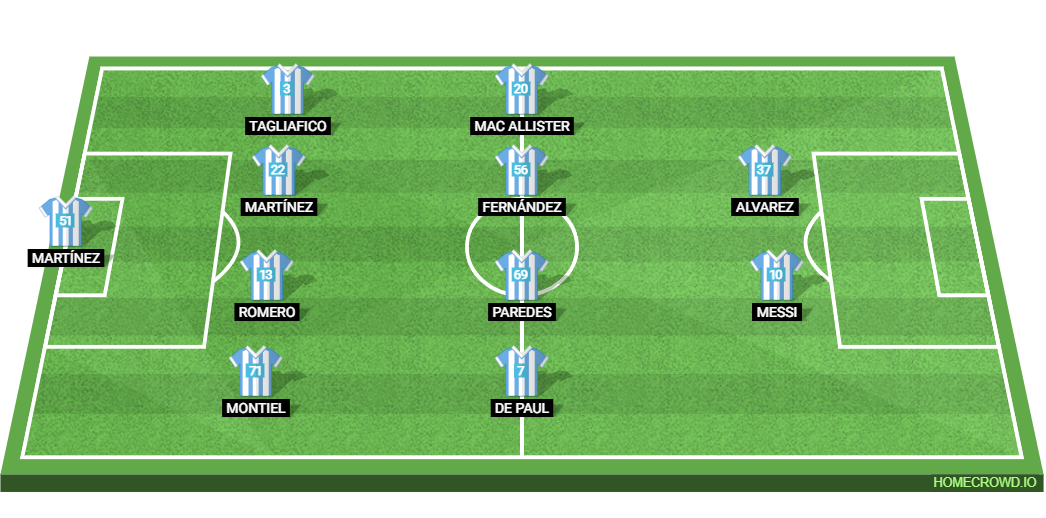
Scaloni is likely to retain a 4-4-2 formation, although Argentina’s shape will be fluid in possession. Emiliano Martinez will start in goal, with Gonzalo Montiel at right-back, Cristian Romero and Lisandro Martinez in central defence, and Nicolas Tagliafico at left-back.
Rodrigo De Paul should operate from the right side of midfield, combining defensive support with forward runs, while Leandro Paredes anchors the centre alongside Enzo Fernandez. Alexis Mac Allister is expected to begin from the left but will frequently drift infield to help Argentina create numerical superiority in midfield.
In attack, Lionel Messi will occupy a free role rather than functioning as a conventional striker. He is likely to drop into the right half-space to receive between Spain’s midfield and defensive lines, while Julian Alvarez stretches the back line with his pressing, movement and runs beyond the defence. This asymmetry should allow Argentina to defend in a compact 4-4-2 before transforming into a narrower attacking structure when Messi moves into midfield.
Probable Lineup (4-4-2): Emiliano Martinez; Montiel, Romero, Lisandro Martinez, Tagliafico; De Paul, Paredes, Fernandez, Mac Allister; Messi, Alvarez
Key Stats
- Mikel Oyarzabal has scored 18 goals in his last 20 games for Spain. His penalty made him the sixth man to reach 30 goals for Spain after David Silva (35), Alvaro Morata (37), Fernando Torres (38), Raul (44) and David Villa (59),
- Spain kept their sixth clean sheet in seven matches at this tournament. They have conceded just two goals in North America. The record for a triumphant team in a World Cup is two shared by France in 1998, Italy in 2006 and Spain themselves in 2010.
- Spain are unbeaten in 37 consecutive internationals since losing to Colombia in March 2024 and would set a new senior men’s international record by avoiding defeat in the final.
- Lionel Scaloni’s side have scored at least twice in every match at this tournament, although they have failed to keep a clean sheet in their last five outings.
- Argentina have lost three of their four meetings with Spain in the 21st century, including a 6-1 friendly defeat in their most recent encounter in 2018
Player to Watch
Lionel Messi
There could be no more fitting protagonist for the 2026 FIFA World Cup final than Lionel Messi. Potentially playing the final World Cup match of his legendary career, the Argentina captain enters the showpiece with eight goals and a series of match-defining performances that have once again underlined why he remains one of football’s greatest players. His creativity, composure under pressure and ability to influence the biggest occasions have been instrumental in guiding the defending champions back to the final.
Messi’s battle against Spain’s disciplined midfield and defence will be the defining tactical contest of the evening. If he can find space between the lines and combine effectively with Julian Alvarez and the late runs of Enzo Fernandez and Alexis Mac Allister, Argentina possess the quality to unlock even the tournament’s best defence. With the Golden Boot, the Golden Ball, and a second consecutive World Cup title all within reach, expect Messi to embrace the biggest stage once again as he looks to deliver one final masterpiece in Argentina colours.
Prediction
Spain 2-1 Argentina
Spain’s exceptional defensive organisation and midfield control give them a narrow advantage in a final likely to be decided by the finest of margins. Rodri and Fabian Ruiz should help La Roja dictate possession, while Lamine Yamal and Dani Olmo possess the technical quality to stretch Argentina’s compact shape. Having conceded just once throughout the tournament, Spain have repeatedly demonstrated that they can protect a lead against elite opposition.
Argentina’s attacking quality means Spain are unlikely to dominate without resistance. Lionel Messi should find moments of space between the lines, while Julian Alvarez’s movement and Lautaro Martinez’s potential introduction from the bench could create problems late in the contest. However, Argentina’s run of five matches without a clean sheet suggests that Spain will eventually create decisive opportunities.
The defending champions have repeatedly survived difficult knockout matches through resilience and individual brilliance, but Spain appear better equipped to control the rhythm of the final. La Roja are backed to withstand a late Argentine response, reclaim the World Cup for the first time since 2010 and complete a historic European Championship-World Cup double.