
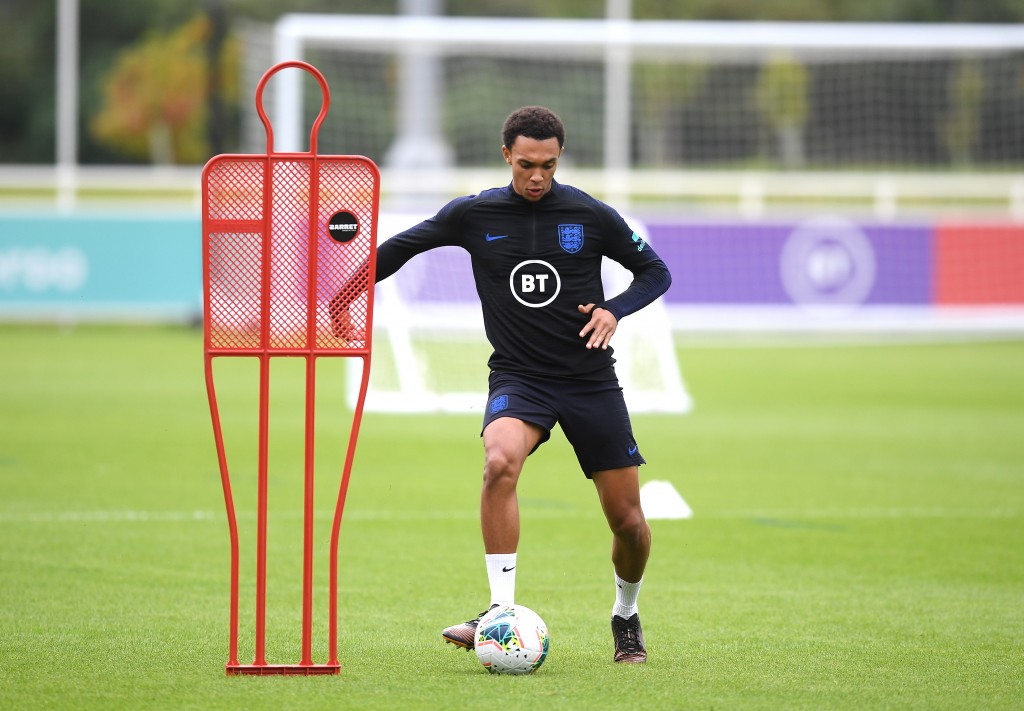
Trent Alexander‑Arnold looks set to miss the 2026 FIFA World Cup, and it might end up being a big blunder by Thomas Tuchel.
Leaving Trent Alexander‑Arnold out of England’s 35‑man extended squad for the upcoming friendlies against Uruguay and Japan is more than just a selection tweak. It is a statement that he is not being seriously considered for the 2026 FIFA World Cup this summer.
Since this is the last window before the final 26‑man roster, Alexander‑Arnold’s omission at such a stage effectively sidelines one of the most creative right‑backs in world football from a potential tournament role, and under Thomas Tuchel, that could end up looking like a genuine blunder rather than a tactical gamble.
Why this Trent Alexander-Arnold omission matters
England’s March 2026 camp is specifically framed as the final “audition” for places on the plane to the World Cup in North America. Tuchel has assembled a 35‑man squad precisely to open up competition and let fringe players make their case, so the decision not to even include Alexander‑Arnold is read as a blunt sporting verdict rather than an oversight.
The narrative is clear: if he is not in this group, he is not realistically in the conversation for the final tournament. Trent Alexander‑Arnold’s last senior appearance for England came in June 2025. Since then, he has been in and out of consideration, sometimes benched, sometimes injured, which has already given his World Cup prospects a stop‑start rhythm.
A 27‑year‑old with his pedigree and trajectory would usually be expected to be protected in squads of this nature, especially given the historical difficulty of right‑back depth in England. Instead, he now finds himself on the outside, needing a Tuchel rethink he may not get.
The “creative right‑back” problem
What makes this omission particularly hard to defend is what Trent Alexander‑Arnold is, and what he is not. He is not a classical, conservative defender who simply tracks wide and stays narrow. He is a progressive right‑sided operator whose best football is built on release passes, cross‑field diagonals, arriving late in the box, and layering tempo‑switching passes into the half‑spaces.
At his peak for Liverpool, he turned the half‑space right channel into a personal creative hub, and that DNA has travelled with him to Real Madrid, where his first‑season numbers still show improved passing accuracy and a more measured role in build‑up.
Thomas Tuchel, however, has instead leaned on Tino Livramento, Djed Spence, and Jarell Quansah as his right‑back options in the latest international break. All three are solid, hard‑working defenders with pace and defensive discipline, but none of them carries the same level of elite‑level creative output that Alexander‑Arnold brings.
Livramento is a tenacious, mobile full‑back; Spence is a powerful, overlapping runner; Quansah is a centre‑back‑by‑trade sometimes deployed at right‑back. None of them is a natural stand‑in for the kind of vertical, line‑breaking passing that the Liverpool graduate can offer from a wide defensive starting position.
Reece James was long seen as a natural alternative or complement on the right, but his hamstring injury and absence muddy the waters further. If James were fully fit, one could at least argue that Tuchel has a couple of different profiles he can juggle. With James sidelined, to leave out Trent Alexander-Arnold narrows England’s options even more, not only in terms of defensive solidity but particularly in terms of creative versatility from the right flank.
Big‑game experience and proven pedigree
One of the subtle but crucial points often overlooked in these debates is what Trent Alexander‑Arnold has already achieved, not just in terms of trophies but in pressure‑cooker environments. He has played in UEFA Champions League finals, multiple domestic title races, and high‑stakes club football occasions that test players in ways that qualifiers rarely do.
The Englishman’s move to Real Madrid, league‑winning campaigns with Liverpool, and consistent exposure to the very top tier of European football provide a kind of mental and tactical maturity that younger right‑backs are still accruing.
For England, that kind of experience is not just a comfort factor; it can be a strategic asset. In a World Cup, where games are often decided by half‑chances and fine margins, having a player who can both defend a tight lead and then unlock a packed defence with a single pass is a rare luxury.
Alexander‑Arnold’s ability to change the game from a deep position, whether by opening up the pitch with a diagonal, dropping a pass over the top, or simply controlling the tempo of build‑up from the right, is something that Tino Livramento, Djed Spence, and even other senior options cannot fully replicate.
Tuchel has spoken about the importance of balance, control, and structure in England’s system, and in theory, those principles are understandable. The problem is that this approach has often led to a flattening of attacking textures, especially on the right flank.
Without a genuinely creative right‑sided option, the risk is that England’s over‑reliance on the left (or through centrally‑based creators) becomes predictable, giving opponents a clearer blueprint for containing them in key knockout moments.
The “fit” argument and its limitations
Thomas Tuchel’s camp has framed the snub as a “sporting decision”, implying that the selection is based on how the player fits the current system and the managerial read on the squad. On paper, that is a reasonable line: managers must pick players who they believe can execute their ideas, not just those who have famous names.
The issue is that “fit” can easily become a euphemism for a philosophical preference that ignores the specific profile a player can offer. Trent Alexander‑Arnold’s defensive lapses have never completely disappeared from the conversation, and there is still a fair debate about how he sits in a very high‑risk, high‑line system.
But at Real Madrid, his role has been recalibrated rather than rejected: he has been used more as a half‑back or midfield‑adjacent right‑sided option in some games, allowing him to operate in pockets where his passing can be weaponised without exposing him to constant 1v1 burn‑backs.
That level of tactical nuance is exactly what a World Cup manager should be able to exploit, not something that should disqualify a player entirely from a 35‑man list. Tuchel’s preference for physically robust, defensively minded full‑backs is not in itself wrong, but it becomes a structural problem when it rules out a genuinely unique creative profile altogether.
Football is not a “one‑type‑only” tournament, especially in the modern game, where the ability to switch modes—ball‑retention, direct attack, and tempo variation—is as important as sheer discipline. Leaving out someone who can offer that kind of variation from the right flank looks less like a strict tactical choice and more like a self‑imposed limitation of England’s attacking palette.
What omitting Trent Alexander-Arnold means for England’s World Cup outlook
If Thomas Tuchel sticks with the current trajectory, England’s World Cup squad will likely head into the tournament with a narrower set of right‑back options, none of whom can bring the same level of creative spark as Trent Alexander‑Arnold.
That is not just a midfield‑profile problem; it is a problem for the entire attack, because it restricts how the team can progress the ball from the right and how it can relieve pressure when opponents sit deep.
In a tournament where margins are razor‑thin, leaving behind a player who can change the game with a single pass, even if he is not a perfect fit for every phase of the match, is a risk that feels larger than it needs to be. England has already invested in Alexander‑Arnold over several years, sending him to major tournaments and then questioning his role in the mix.
To now effectively write him out of contention at the last pre‑tournament window, while his club form has stabilised and his defensive discipline has improved, borders on a self‑inflicted handicap.
A chance to correct course
Thomas Tuchel still has the authority to reverse course between now and the final squad announcement. Injury crises, tactical shifts, and even a single high‑profile game can change a manager’s view. But the symbolic weight of leaving Trent Alexander‑Arnold out of the 35‑man group is difficult to discount.
It sends a message to the player, to the dressing room, and to the football‑watching public that one of England’s most naturally gifted right‑flank operators is not being treated as a serious option for the biggest stage. For a squad that wants to be taken seriously as a genuine World Cup contender, that kind of erasure is hard to justify.
If England eventually struggle to create clear‑cut chances from the right, or if they find themselves short‑changed on big‑game creativity, critics will not need to look far for a possible explanation. Leaving Trent Alexander‑Arnold out of the equation does not just hurt his personal ambitions, it could end up hurting England’s chances of making a deep run in the 2026 tournament.