
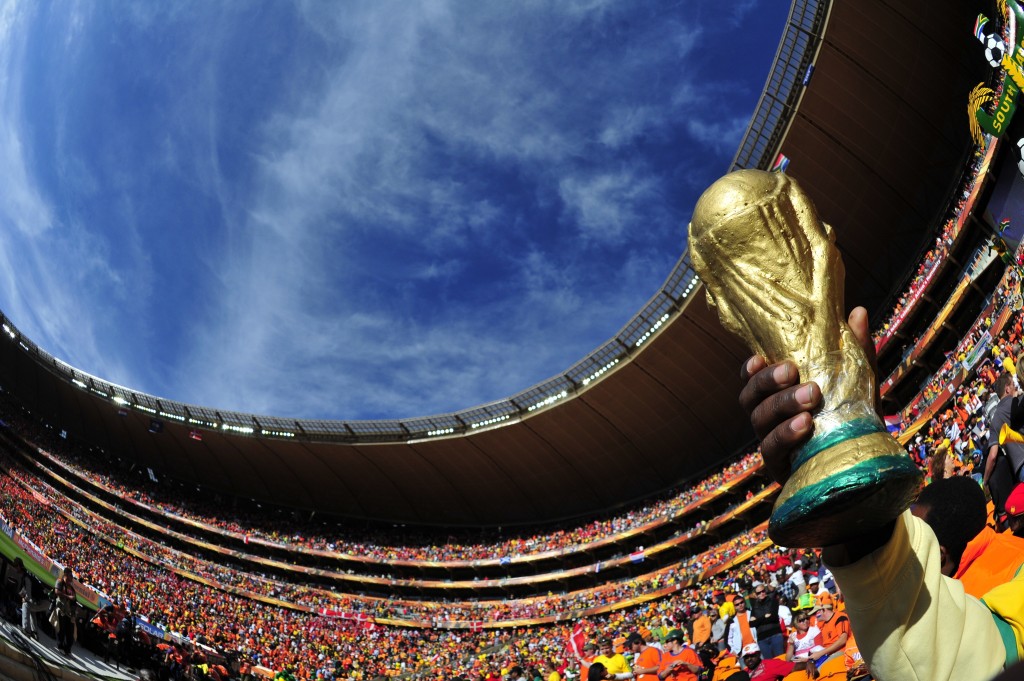
Group B of the 2026 FIFA World Cup promises a fierce battle, with Canada, Bosnia, Qatar, and Switzerland each carrying distinct hopes, pressure and momentum.
The 2026 FIFA World Cup promises scale, noise and no shortage of storylines. With the competition spreading across North America and a larger field stepping into view, the tournament already feels like one in which identity will matter almost as much as talent.
Teams who know exactly what they are will fancy themselves, while those still wrestling with balance and direction could find the group stage unforgiving. That is what makes the opening phase so compelling.
The first three games are rarely just about points; they are also about handling pressure, absorbing momentum swings and finding ways to stay emotionally stable when the stakes rise. At a World Cup, that edge often separates teams who merely arrive from teams who truly compete.
Group B of the 2026 FIFA World Cup carries that tension in a particularly interesting way. Canada come in with the weight and energy of co-host status, Bosnia and Herzegovina have earned their place through a qualification run that has restored belief, Qatar are trying to prove they belong at this level after their 2022 experience, and Switzerland once again enter the tournament as one of the game’s most dependable international outfits.
There is no traditional superpower here, but there is enough contrast in style and temperament to make this one of the more layered groups in the competition. Each side also arrives with its own internal pressure point.
Canada must justify expectation in front of home support, Bosnia and Herzegovina need to show their recent rise is sustainable, Qatar have to demonstrate progress rather than simply participation, and Switzerland must prove that continuity still gives them an edge when the margins tighten.
Group B Fixtures
- Match 3: Canada vs Bosnia and Herzegovina — June 12, BMO Field, Toronto
- Match 8: Qatar vs Switzerland — June 13, Levi’s Stadium, Santa Clara
- Match 26: Bosnia and Herzegovina vs Switzerland — June 18, SoFi Stadium, Inglewood
- Match 27: Canada vs Qatar — June 18, BC Place, Vancouver
- Match 51: Canada vs Switzerland — June 24, BC Place, Vancouver
- Match 52: Bosnia and Herzegovina vs Qatar — June 24, Lumen Field, Seattle
Canada
Canada’s place at the 2026 FIFA World Cup was secured automatically by virtue of being co-hosts. However, that does not make their path into the tournament any less complicated. In many ways, it adds another layer of expectation.
This is only the third World Cup appearance in their history. While that gives the campaign a celebratory sheen, it also raises the obvious question of whether they are truly ready to embrace the pressure of performing in front of a home crowd on football’s biggest stage.
There is also recent tournament memory to wrestle with. Canada’s return to the World Cup in 2022 was historic, but it also exposed the distance between being a rising side and being an accomplished one. They showed courage, intensity and flashes of attacking ambition, but there were still key moments in both boxes where greater maturity was needed. That is now the challenge in 2026: to turn excitement into efficiency and talent into tangible progress.
Much of that responsibility will fall on Jesse Marsch. Les Rouges are not short of athleticism, front-foot intent or emotional energy, but they still need a sharper competitive identity in tournament football. Marsch’s experience across different levels of the game makes him a significant figure here, because this team requires more than adrenaline; it needs a plan that can survive chaos.
If Canada can negotiate the group with confidence, they may carry that momentum further. If they wobble early, the pressure could become the defining feature of their campaign.
What to expect
- Canada should look to play with tempo, use the crowd and force games into physical, emotional contests where their athleticism can make a difference.
- At the same time, there may be moments when they need to resist the temptation to overplay the occasion, especially against the more tactically settled sides in the group, which makes control in midfield and efficiency in front of goal especially important.
Managerial imprint
Jesse Marsch’s instincts have often leaned toward intensity, verticality, and proactive pressing, and that makes him a natural fit for a Canada side built on pace and aggressive transitions.
He is also tasked with something more nuanced here: keeping that aggression intact while making the team more measured in possession and less vulnerable when the game opens up, because tournament football punishes recklessness far more quickly than qualifiers or friendlies do.
Key players
- Alphonso Davies: The star man remains the face of modern Canadian football, though his influence for the national side often feels broader than his club role. At Bayern Munich, he can be one of several high-level weapons; with Canada, he frequently becomes the emotional driver, the ball-progressor and the attacking spark all at once. Even after two injury-hit seasons, dsaDavies remains the player most capable of transforming the tone of a game in an instant, and that sense of possibility will be central to Canada’s hopes at the 2026 FIFA World Cup.
- Jonathan David: The striker enters the World Cup under a different kind of spotlight. Questions around his club form only sharpen the importance of what he can deliver for Canada, because he is still widely expected to be their leading striker and the cleanest finisher in the squad. If he rediscovers the reliable scoring rhythm he has often shown in national colours, Canada’s hopes of reaching the round of 32 of FIFA World Cup 2026 become far more realistic; if not, they risk wasting promising attacking sequences without enough end product.
Can Canada progress from the group stage?
Canada should still be regarded as a strong contender to reach the round of 32, because home support, Jesse Marsch’s high-energy approach and the star quality of Alphonso Davies and Jonathan David give them enough tools to edge the tighter games in Group B. However, much will depend on whether they can handle the pressure of expectation and convert promising attacking spells into goals with greater consistency than they have managed in recent major-tournament moments.
Bosnia and Herzegovina
Bosnia and Herzegovina have taken the most satisfying route into Group B of the 2026 FIFA World Cup: qualification earned, belief restored, and momentum built through performances rather than sentiment. The shock win over Italy in the playoffs final gave real weight to the idea that this side is moving in the right direction under Sergej Barbarez, and it has put them back on the World Cup map for only the second time in their history after the 2014 appearance in Brazil.
That alone makes Bosnia one of the more compelling stories in this group. Yet the bigger point is that they do not arrive in North America as tourists or romantics trading on old memories. The qualification campaign suggested a team with improved clarity, stronger collective buy-in and enough edge to make life difficult for any opponent in a balanced group.
Their squad also carries a useful blend of seasoned personalities and players who now seem far more comfortable carrying competitive responsibility. For the Dragons, the challenge now is translating qualification confidence into tournament resilience.
The World Cup asks harder questions, often at greater speed, and sides with less recent experience can be caught by the emotional scale of the occasion. But if Barbarez can preserve the authority and discipline that marked their road to 2026, Bosnia have every reason to believe they can compete for a place in the next round.
What to expect
- Bosnia and Herzegovina should be expected to play with conviction, physical commitment and a willingness to stay compact before springing forward through experienced attacking references.
- They may not dominate every game territorially, but they look capable of making matches uncomfortable, forcing opponents into duels and capitalising on moments where structure and composure matter more than pure flair.
Managerial imprint
Sergej Barbarez appears to have given Bosnia and Herzegovina a clearer emotional and tactical direction. The team’s rise is tied closely to a renewed sense of collective discipline and self-belief.
His instincts seem rooted in making Bosnia hard to play against first and expressive second. That may not always be glamorous, but it is often exactly the sort of approach that serves emerging tournament teams well.
Key players
- Edin Dzeko: The veteran remains one of the most recognisable Bosnian footballers of the last two decades, and even now there is a stubborn competitive energy to his game that makes him impossible to dismiss. Age may have altered the shape of his contribution, but not his spirit. In a tournament setting, that sort of experience matters, especially for a side that may need someone to absorb pressure, win difficult duels and drag the team forward emotionally.
- Sead Kolasinac: The former Arsenal defender brings a different but equally valuable sort of authority. As the only remaining defender of Bosnia and Herzegovina’s 2014 World Cup squad, he embodies continuity, and his years at elite club level give him a leadership presence that extends beyond words. At the back, where tournament games can be decided by one lapse or one brave intervention, that experience could prove fundamental to Bosnia’s hopes of staying in contention deep into the group.
Can Bosnia and Herzegovina progress from the group stage?
Bosnia and Herzegovina look capable of making this a very uncomfortable group for everyone else, and their qualification momentum under Sergej Barbarez suggests they will be competitive throughout, but the likeliest outcome is that they fall just short of the top two because, while they have experience and resilience through figures like Edin Dzeko, tournament football often punishes the smallest lapses, especially for teams without Switzerland’s continuity or Canada’s home advantage.
Qatar
Qatar head into their second-ever World Cup carrying a very different burden from the one they bore in 2022. Back then, the story revolved around hosting and visibility; now, it is about proving competitive substance away from home. Their route to 2026 demanded greater resilience and offered a truer measure of where they stand as a national team, and that alone makes this campaign more revealing than the last one.
There is enough talent in this squad to believe Qatar can trouble teams, but there are still doubts over whether they can sustain a high enough level across an entire group-stage run. Under Julen Lopetegui, the side appears to be chasing a more coherent balance between structure and attacking freedom, and that will be essential because Group B is full of teams who can punish uncertainty.
Qatar’s strengths still lie in their technical players, their combinations in advanced areas and their capacity to create moments through individual quality. However, the weaknesses remain just as clear when defensive control slips. That makes this tournament an examination of growth.
Qatar have the experience of a recent World Cup and several players accustomed to carrying international responsibility, yet they still need to show they can impose themselves in games rather than simply react to them. If they can do that, they could stay alive in the race for qualification longer than many expect. If not, the campaign may again underline how difficult the jump to this level really is.
What to expect
- Qatar are likely to lean on patient spells in possession, combinations around the final third and the hope that their leading creators can unlock games from wide or half-space positions.
- The concern is whether they can withstand sustained pressure when opponents raise the pace, which means their tournament may hinge on how well they manage the game state after conceding momentum.
Managerial imprint
Julen Lopetegui brings recognisable top-level coaching habits, particularly a preference for organisation, technical security and a team shape that does not lose itself in transition.
His task with Qatar is to make those principles work without blunting the improvisational qualities of their best attackers, because their route to upsetting stronger teams will almost certainly involve moments of invention layered onto a disciplined base.
Key players
- Akram Afif: The experienced playmaker remains Qatar’s outstanding attacking reference. He is not merely a dangerous winger, but the primary playmaker in many of their best attacking sequences, a player who can carry from wide, create overloads and turn controlled possession into something genuinely threatening. Because so much of Qatar’s forward thrust runs through his imagination and decision-making, his influence on the tournament could be enormous.
- Hassan Al-Haydos: The skipper offers another kind of value. As the holder of Qatar’s international appearances record, he brings leadership, calm and institutional memory to a side that will need emotional control as much as tactical discipline. In a group where fine margins may define the standings, that experience could become vital in helping Qatar stay composed in high-pressure moments.
Can Qatar progress from the group stage?
Qatar should have enough technical quality and creative inspiration through Akram Afif to remain dangerous in stretches of all three matches, but over the full course of the group stage they still appear the least complete side in terms of defensive authority and all-round balance, which is why a fourth-place finish feels the most probable even if they are good enough to push one of the bigger contenders uncomfortably close.
Switzerland
Switzerland enter another World Cup in familiar fashion: well-drilled, well-stocked and quietly credible. Their regularity on this stage has become one of the defining features of the modern national side, and qualification for the 2026 finals only strengthened the sense that Murat Yakin continues to oversee one of Europe’s most dependable international setups.
This is their sixth straight World Cup appearance, a run that reflects both consistency in development and real competitive competence. That continuity gives Switzerland a natural advantage in a group like this. They know the rhythms of major tournaments, they rarely lose tactical clarity, and they have enough experience in key areas to manage difficult passages without panicking.
This may not always be a side that overwhelms opponents with brilliance, but it is usually one that makes very few mistakes and demands genuine precision from those trying to beat them. Murat Yakin’s squad again looks strong on paper, with leadership through the spine, balance across the pitch and enough attacking variation to approach matches in more than one way.
That does not guarantee smooth progress, but it does explain why Switzerland look like the team best equipped to navigate Group B without losing themselves to the chaos that tournament football often creates.
What to expect
- Switzerland should be expected to play with maturity, compactness and a strong understanding of when to control a game and when to accelerate it.
- They may not chase spectacle, but they are likely to be efficient, physically reliable and capable of punishing opponents who overextend or lose concentration in midfield and transition zones.
Managerial imprint
Murat Yakin’s managerial instincts are rooted in order, adaptability and game intelligence, qualities that have repeatedly made Switzerland difficult to break down and awkward to control.
He tends to favour structures that protect the team against disorder while still giving his most experienced players room to dictate key phases, which is one of the main reasons Switzerland so often look comfortable in tournament settings.
Key players
- Granit Xhaka: The veteran midfielder is still the reference point around which this Swiss side is emotionally and tactically built. As the team’s most capped player, he provides leadership almost by default, but his real value lies in how he shapes the game from midfield, controlling tempo, distributing under pressure and bringing structure to Switzerland’s possession. In a balanced group, that sort of command can be decisive
- Noah Okafor: The Leeds United star represents a more forward-looking dimension to this squad. He is one of the rising attacking figures in Swiss football, and his recent club form has only increased the sense that he is ready for a bigger international role. If he can convert his movement and goalscoring instincts into World Cup output, Switzerland gain a sharper cutting edge and a player capable of carrying them through difficult spells
Can Switzerland progress from the group stage?
Switzerland look the best equipped team to win Group B because Murat Yakin’s side bring proven tournament experience, tactical control and leadership through Granit Xhaka, and with this being their sixth consecutive World Cup appearance, they seem the most likely to navigate the group with calm authority and secure top spot without needing to rely on emotion or momentum swings in the way some of their rivals might.
Final thoughts
- Switzerland appear the strongest bet to top Group B because they combine tournament experience, structural clarity and leadership in the most convincing way of the four sides.
- Behind them, Canada look best placed to take the second qualification spot, largely because home support, individual quality and sheer emotional momentum could give them enough of an edge in the key moments.
- Bosnia and Herzegovina have the tools to challenge that prediction and may prove to be the group’s most disruptive side, especially if their qualification form carries over cleanly into the finals.
- Qatar should have threatening moments and enough craft to influence the group, but over three games, they still look the least complete side in defensive and competitive terms.