
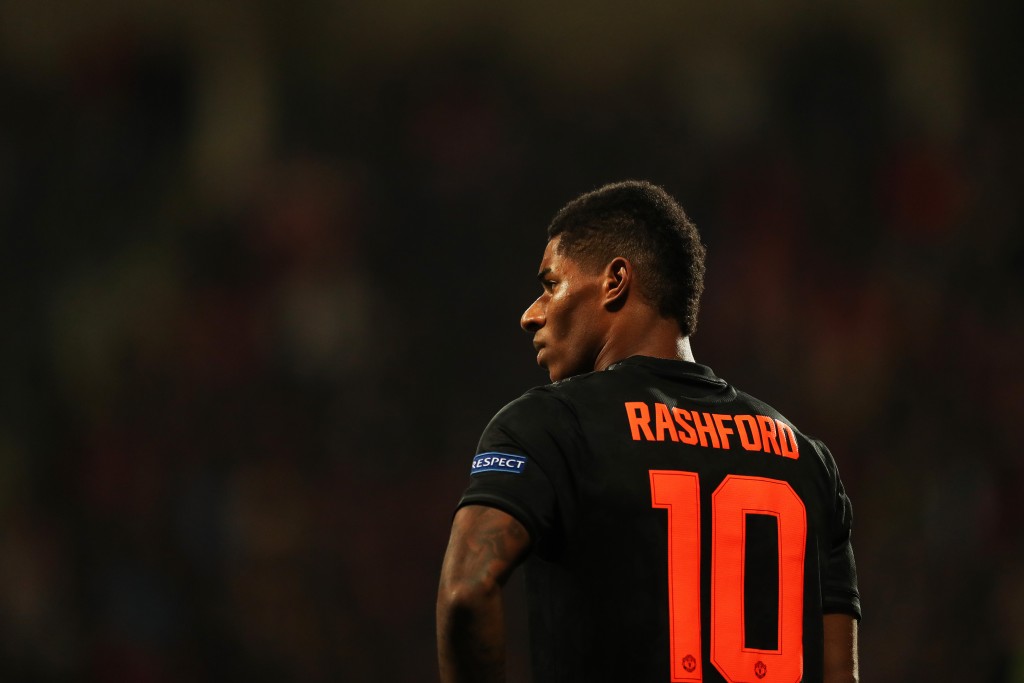
Marcus Rashford’s story is no longer just about goals and minutes; it is a €30 million tug‑of‑war between Manchester United and Barcelona.
Marcus Rashford’s story this season has begun to read like a negotiated script rather than a straightforward footballing arc. On the pitch, he is still producing, still scoring, and still looking like the kind of forward who should feature regularly in a side challenging to win La Liga and reach the latter stages of the UEFA Champions League.
Off the pitch, the narrative is more about leverage, timing and a summer transfer that feels both inevitable and frustratingly stuck in limbo. At the heart of it: Barcelona have a €30 million option to sign him permanently from Manchester United, but so far they have not pressed that button.
Instead, they are talking about another loan, while United insist any sale must come at the full price. And in the middle of all this, Rashford is playing less, starting fewer games, and, depending on how cynical you feel, either being protected, being eased in, or being quietly used as a bargaining chip in a much larger numbers game.
Marcus Rashford’s season in numbers
On pure output, Rashford’s 2025/26 campaign has been strong. Across all competitions for Barcelona, he has 23 goal contributions, split across La Liga and the Champions League.
In the Champions League, he has played nine matches, averaging around 48 minutes per outing, which means he is often used in the first half or from the bench rather than playing an entire match.
That pattern is even more pronounced in recent weeks. In the Champions League, he started each of Barcelona’s first four group‑stage games, then played the second half in the next two, slotting in around the 46th minute. Since then, across four subsequent Champions League fixtures, he has featured for only about 67 minutes in total.
In La Liga, he began the season as a regular starter, but in the last 11 league games, he has started just two, and in two others, he was named on the bench but did not get on at all. Those numbers do not scream out‑of‑favour misfit.
Form has not dipped, even when the clock is ticking
One of the more interesting contradictions here is that Marcus Rashford’s recent form has actually been quite good, even when he is not starting every game. In the Champions League, he continues to chip in with goals and assists, and his overall shot volume and goal involvement remain aligned with a frontline attacker rather than a peripheral option.
For England, too, he has shown glimpses of the quick, direct movement and creativity that first made him a mainstay. In the recent friendly against Uruguay, he was particularly lively in the first half, driving at defenders and creating space with his runs, even if he did not end up with a goal or an assist.
That kind of performance tends to reinforce, rather than undermine, a player’s reputation ahead of a World Cup, which is exactly the kind of shop‑window opportunity Rashford will need if he wants to stay in the national‑team picture.
For a forward whose reputation took a dent in his last few seasons at Manchester United, being able to point to strong performances at club level and for England matters not just for his ego, but for his market value. Which brings us to the next question: why is someone in this kind of form not starting more often?
A “developing” relationship with Barcelona and Manchester United
Barcelona’s position is fairly straightforward on paper: they want Marcus Rashford to stay, but they do not want to pay the full €30 million. The Blaugrana have already benefited from his loan spell; he has helped them sit at the top of La Liga, progress through the Champions League, all while offering versatility across the front three.
In public, Barcelona officials have spoken warmly about him, with president Joan Laporta reportedly being a big admirer of the Englishman’s impact and personality. However, the club’s financial situation means that paying €30 million, especially for a player who is not yet an automatic starter, feels like a significant investment.
So instead, they are exploring another season‑long loan, hoping to keep him without triggering the buy‑option clause. This is standard barter in modern football: the selling club wants its fee, the buying club wants a discount, and the player sits in the middle trying to secure his preferred destination.
Manchester United’s stance is equally direct. They know that Rashford is not part of their first‑team plans, and they are only too happy to see him leave permanently. The Red Devils have reportedly told Barcelona that they are not willing to accept any offer below the €30 million figure written into the loan agreement, treating that clause as a floor, not a ceiling.
In that sense, the Premier League club’s strategy is actually quite relaxed: use the loan spell to rehabilitate his image, keep him away from the Manchester United dressing room, and then cash in when the market is right.
Could limited minutes be a negotiation tactic?
Is the drop in Marcus Rashford’s playing time this season simply a reflection of Barcelona’s tactical needs, or could it be a subtle way of nudging the price down?
From Manchester United’s perspective, limiting his minutes in Europe and the league could serve a few purposes. It protects him from potential injuries that might complicate a summer sale. It leaves the door open for other clubs to step in.
If Barcelona refuse to pay €30 million, United can happily sell to another buyer, knowing that the Englishman has spent a season in a top‑level league and shown he can still deliver. From Barcelona’s side, having him on the bench rather than always in the starting XI might also be a way of saying, “We appreciate him, but we are not desperate.”
If the Catalan giants are genuinely trying to renegotiate, playing him as a super‑sub rather than a fixed starter can both save money and avoid the perception that they are over‑relying on a player whose buy‑option clause is sitting in the contract.
None of this is proven, but structurally it adds up. The fewer minutes he gets now, the easier it becomes for each side to justify their position: Manchester United insist he is still valuable despite not starting every game, while Barcelona argue that he is not so crucial that they must pay a premium.
The World Cup and Barcelona’s changing landscape
Another factor that tilts the balance in Rashford’s favour is the World Cup. If he continues to perform well for England and for Barcelona, it is hard to see him missing out on a summer‑tournament squad. For a player who has been on the fringes of the national team in recent years, a World Cup appearance can be a career‑defining moment: it can boost his confidence, his market value, and his bargaining power in any transfer.
Barcelona know this as well. If Rashford goes to the World Cup and plays a key role, his price tag will not go down. That is why they are likely to be even more cautious about paying €30 million now, hoping either to keep him on loan or to negotiate a lower fee before the tournament.
Manchester United, on the other hand, know that a strong World Cup can push his price higher, which is why they are comfortable sitting tight and insisting on the clause amount for now. All of this is happening against a backdrop of injury news that could shift the dynamics.
Barcelona’s Raphinha, who operates in a similar wide‑forward role, has picked up a hamstring injury that is expected to sideline him for around five weeks. That opens up more space in the attacking lineup and, in theory, more opportunities for Rashford to start, which could either strengthen Barcelona’s case that he is essential or prove that he can still be rotated without disrupting the team.
The Raphinha situation does not resolve the Rashford saga, but it does add another layer: if Barcelona need extra attacking bodies, they might lean on Rashford more, which could either justify his price in United’s eyes or make him even more attractive to other clubs.
Rashford’s personal desire: a Camp Nou stay
Then there is the human element. All reports suggest that Rashford wants to stay at Barcelona. After a difficult spell at Manchester United, including a fractured relationship, the move to Spain has been a kind of reset. He has spoken positively about life in Catalonia, about the style of play, and about the support he has received from fans and coaching staff.
That desire to stay gives Barcelona a bit of extra leverage. If Rashford is willing to sign for them, rather than force a move elsewhere, the club can afford to be more patient about the price. Manchester United, meanwhile, are privately aware that if he ends up back at Old Trafford next season, they will still have to sell him eventually, so they are not in a rush to accept a reduced offer.
In many ways, Rashford is the one with the least control over the outcome. His performances might be good, his minutes might be carefully managed, and his future might be shaped more by club presidents and accountants than by managers.
Yet his choice is clear: he wants Camp Nou, he wants another season in Spain, and he wants to be part of a project that is trying to reclaim its place at the top of European football.
The bigger picture
The Rashford situation is not unique, but it is a very modern kind of football story. A player struggling for relevance at his home club is dispatched on loan to a top European side, where he revives his career, then finds himself stuck in a contract that feels too cheap for the selling club and too expensive for the buying club.
The minutes are carefully managed, the media and the fans speculate, and the player’s international form quietly but steadily keeps his market value afloat. At the heart of it is a simple question: is Rashford being used, or is he being protected? Is the reduced playing time a sign that he is not fully trusted, or is it a calculated way of negotiation?
The answer is probably somewhere in the middle: he is useful to Barcelona, but not indispensable enough to justify paying €30 million without a fight; and he is unwanted at Manchester United, but too valuable to be sold for a bargain.