
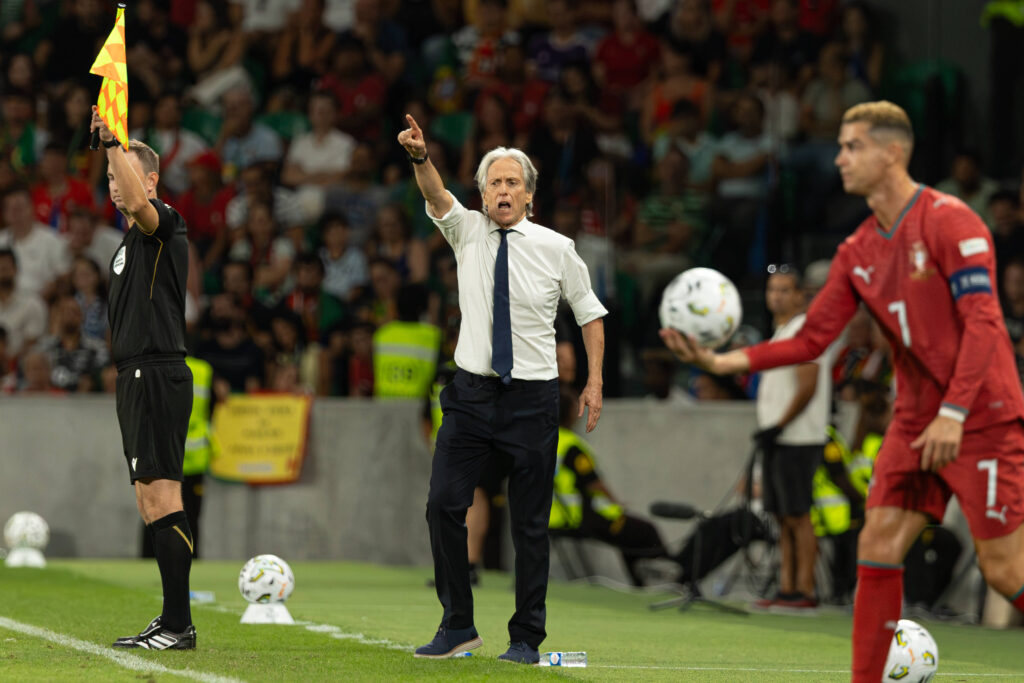
Cristiano Ronaldo’s exit has turned a selection call into a national debate over legacy, loyalty and Portugal’s future, with Jorge Jesus firmly in the spotlight.
Cristiano Ronaldo’s premature departure from the Portugal squad has turned a routine international break into a full-blown national debate. The trigger was simple enough on the surface: a new manager, Jorge Jesus, made a selection call that left the captain on the bench and, against Norway, out of the match altogether.
What followed was not the quiet acceptance Ronaldo had once promised, but a dramatic exit from camp that has split opinion across the country. It is the kind of story that goes beyond one match or one decision.
Portugal are no longer just discussing tactics, form or squad balance; they are now arguing about authority, legacy and whether a footballing icon can still demand a place on name alone. The football itself has almost been drowned out by the noise around it.
Cristiano Ronaldo went back on his word
The uncomfortable part for Ronaldo is that this row seems to test the very stance he had taken before the break. He had suggested that he would do whatever the coach wanted, whether that meant starting or sitting out, and that he would be fine either way. Yet leaving the camp after one game as an unused substitute makes those words look fragile in hindsight.
That contrast matters because it shapes how his decision is seen. If a player says he accepts selection as the manager’s call, then walking away the moment that call goes against him invites criticism. In that sense, Ronaldo has not just left the camp; he has also left a question mark over his own consistency.
To his supporters, of course, this is less about inconsistency and more about respect. They will argue that a player with his standing deserves clearer treatment and a more careful hand. But the problem for Ronaldo is that the more the issue becomes about respect for him personally, the less it resembles a normal team matter.
It’s a Jesus or Judas question on the manager
Jorge Jesus has not escaped the fallout either. In the stands and on social media, Portugal fans appear split, with one side backing the manager’s right to pick the team and the other defending Ronaldo as the nation’s greatest modern footballer. Inside that split sits a very public pressure test for Jesus, who has only just begun his spell in charge.
There were clear signs of that division around the Denmark match. Some supporters showed backing for Jesus, while others openly displayed support for Ronaldo, and the atmosphere turned into a referendum on who should define the next phase of Portugal’s identity. That is a difficult position for any manager, especially one who has inherited a squad built in the shadow of a global superstar.
Jesus, though, has made the strongest possible football argument for his side. He has said he wants energy, movement and players who suit the team’s needs now, rather than a line-up based on reputation alone. That is a fair principle, and in many ways it is exactly what a modern international side should demand.
The team should be priority No.1
The heart of the matter is not whether Ronaldo has been important to Portugal. He has been beyond important; he has shaped the country’s football for years and delivered a standard that few can match. But international football does not stay still, and a team cannot forever be built around a player’s past.
Ronaldo’s recent contributions have also made the debate harder to dodge. He remains a monumental name, but the team now has to ask whether his presence still raises its level or whether it has become a distraction that consumes more oxygen than it creates on the pitch. When a squad starts to revolve around one player’s status rather than the collective, the balance can begin to slip.
That is why Jesus’s point carries real weight. If Portugal are trying to build something sustainable, then they must choose the path that helps them most in the next two years, not the one that best honours a glorious past. Ronaldo has every right to feel aggrieved, but the team has every right to move on if they believe that is what progress requires.
What next for Ronaldo and Portugal?
Cristiano Ronaldo should not necessarily be forced out of Portugal, but he should think seriously about whether he still wants to serve the team in a reduced role. If he cannot accept being selected sparingly, or if every omission becomes a crisis, then stepping away would be the cleaner and more honest solution. Portugal cannot keep reliving the same argument every time the coach makes a difficult call.
For the moment, Jorge Jesus deserves backing. He may be under pressure, and he may be judged harshly if results dip, but his responsibility is to the whole squad rather than to one legend, however famous. Ronaldo has been a giant for Portugal, yet the national team must now decide whether its future lies in protecting legacy or in trusting the manager to shape a new one.
In that sense, this saga is bigger than a single walkout. It is a test of whether Portugal can finally separate sentiment from selection. If they want a national team that looks forward, then Jesus must be allowed to lead, and Ronaldo must decide whether he is still willing to be part of that future on new terms.