
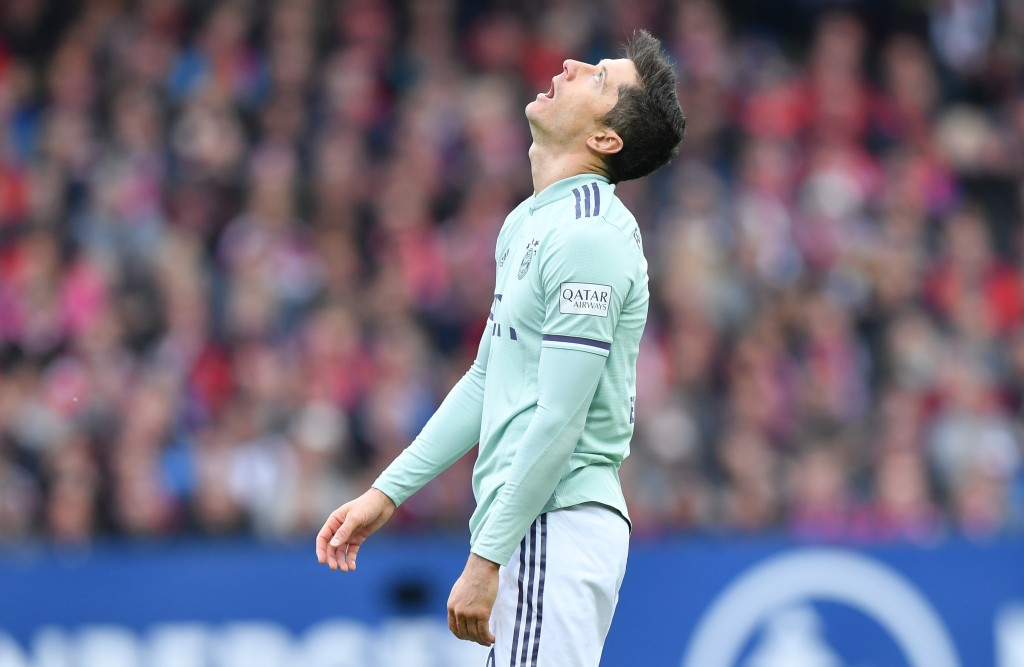
The World Cup has always been football’s ultimate stage, a theatre where legacies are either cemented or cruelly left incomplete.
For some, the FIFA World Cup offers redemption; for others, a final bow. And then there are those who, despite glittering careers and unquestionable greatness, are denied even the chance to say goodbye.
The 2026 FIFA World Cup will go on without several familiar names, but few absences feel as poignant as those of Robert Lewandowski, Alexis Sanchez, Christian Eriksen, and Jorginho. Four players, four very different journeys, yet one shared reality. This was likely meant to be their last dance.
The cruel timing of greatness
Football is unforgiving when as time passes by. Unlike club football, where elite players can extend their careers with careful management, the international game offers windows that, once closed, rarely reopen.
By 2030, Robert Lewandowski will be nearing 42, Alexis Sanchez 41, Christian Eriksen 38, and Jorginho 38. Even for the most dedicated professionals, the physical demands of international tournaments at that age are almost insurmountable.
The 2026 FIFA World Cup, expanded and grander than ever, felt like one final opportunity not just to compete, but to conclude their international stories on their own terms. Instead, qualification failures have written a harsher ending.
Robert Lewandowski: A giant without a stage
For Robert Lewandowski, the World Cup has always been an elusive arena. Statistically, he stands among the greatest strikers in football history a relentless goalscorer, a model of consistency, and a player who redefined the role of a modern No. 9. For Poland, he has been everything captain, leader, talisman.
His international record speaks volumes, as he has netted over 80 goals for his country, a figure that places him among the elite in global football. Yet, paradoxically, the World Cup never truly showcased his brilliance.
Poland’s campaigns during his era were often constrained by structural limitations a lack of depth, tactical rigidity, and inconsistency on the biggest stage. Lewandowski carried the burden of expectation, often isolated and over-marked, his influence diluted by circumstances beyond his control.
At 37, he would have known that the 2026 edition represented his final realistic chance to rewrite that narrative. One last tournament to demonstrate that his greatness was not confined to club football. One last chance to lead Poland deep into the competition. Instead, the curtain falls without that moment. And for a player of his stature, it feels like a chapter left painfully unfinished.
Alexis Sanchez: The Heart of a Golden Generation
If Robert Lewandowski’s story is one of individual brilliance constrained by circumstance, Alexis Sanchez represents the emotional core of a generation that once conquered a continent.
Chile’s golden era defined by back-to-back Copa America triumphs in 2015 and 2016 was built on intensity, fearlessness, and an unwavering belief. Sanchez was its beating heart. Tireless, explosive, and endlessly creative, he was the player who turned moments into magic.
For Chile, Sanchez was never just a key attacker. He was the system. He pressed, created, scored, and inspired. His performances in major tournaments were often heroic, carrying his nation to heights it had never previously imagined.
But time has not been kind to Chile’s transition, let alone the former Arsenal and Manchester United forward. The golden generation aged together, and the failure to regenerate has been stark. Missing out on yet another World Cup confirms what many feared that the era has ended without a proper farewell.
For Sanchez, now 37, the 2026 World Cup would have been more than just another tournament. It would have been a tribute a final showcase of a player who gave everything to his country. Instead, his international career may fade away not under the bright lights of a World Cup, but in the quiet aftermath of a failed qualification campaign.
Christian Eriksen: The comeback that deserved a final act
Few stories in modern football carry the emotional weight of Christian Eriksen.
His collapse during UEFA Euro 2020 was a moment that transcended sport, a stark reminder of football’s fragility. What followed, however, was nothing short of extraordinary. Eriksen’s return to professional football, and subsequently to the Danish national team, became a symbol of resilience and human spirit.
On the pitch, Eriksen has long been Denmark’s creative nucleus. Vision, intelligence, and technical precision define his game. The former Manchester United playmaker is the player who dictates tempo, unlocks defences, and elevates those around him.
Denmark’s run to the semi-finals of Euro 2020, fuelled in part by Eriksen’s story, felt like a team and a nation united by purpose. It seemed inevitable that the journey would culminate in one more World Cup appearance a fitting final act for a player who had already defied the odds. But football does not always follow narrative logic.
At 34, Eriksen’s window was already narrowing. Missing out on 2026 means that his remarkable comeback story may never receive its intended conclusion on the biggest stage. There will be no final World Cup performance, no last opportunity to orchestrate play against the world’s best. And that absence feels particularly cruel not just for Eriksen, but for the sport itself.
Jorginho: The conductor without an encore
For Jorginho, international football brought the ultimate high and now, perhaps, the ultimate frustration.
As the metronome of Italy’s midfield, Jorginho was instrumental in their triumph at Euro 2020. His composure, positional intelligence, and ability to control tempo made him indispensable. The former Chelsea and Arsenal midfielder was not a player defined by flair, but by precision, the kind of footballer who makes a system function.
That success, however, has been followed by a period of decline for Italy. Failure to qualify for a third consecutive World Cup has cast a shadow over a nation synonymous with footballing excellence.
For Jorginho, now 34, the 2026 World Cup represented a final opportunity to restore balance, ensuring that his international legacy was not defined solely by missed opportunities but also by redemption.
He would have brought experience, leadership, and tactical clarity to a team in transition. More importantly, he would have relished the chance to compete once more at the highest level, to prove that his influence had not waned. Instead, like many of his Italian teammates, he is left watching from afar a participant in one of football’s most unexpected and prolonged absences.
The unwritten farewell
What unites these four players is not just their quality, but the sense of incompleteness surrounding their international careers. Each of them has contributed immensely to their nation:
- Robert Lewandowski as Poland’s greatest-ever goalscorer
- Alexis Sanchez as the face of Chile’s golden generation
- Christian Eriksen as Denmark’s creative soul and symbol of resilience
- Jorginho as the architect of Italy’s European triumph
Yet, none of them will have the opportunity to close their stories at a World Cup the one stage that defines footballing immortality. There is something uniquely poetic about a “last dance” at a World Cup.
It offers closure, a moment for fans to celebrate careers, for players to leave everything on the pitch one final time. Think of Zidane in 2006, Iniesta in 2018, or Messi in 2022 narratives that found their natural conclusion under the global spotlight.
For Lewandowski, Sanchez, Eriksen, and Jorginho, that moment will remain unwritten.
Football moves on relentlessly
The reality is that football does not pause for sentiment. New generations emerge, new stars rise, and the game evolves. Poland will look to rebuild, Chile will attempt a desperate regeneration, Denmark will transition, and Italy will search for identity once more. But as these nations move forward, they leave behind players who defined an era.
The absence of these four names in 2026 will not just be a statistical footnote, it will be a reminder of how fleeting opportunity can be. How even the greatest players are at the mercy of timing, circumstance, and the collective strength of their teams.
A legacy beyond the World Cup
Perhaps, in the end, their legacies do not need a final World Cup appearance to be validated.
Rober Lewandowski’s goals, Alexis Sanchez’s passion, Christian Eriksen’s courage, and Jorginho’s intelligence have already left an indelible mark on the game. They have inspired teammates, captivated fans, and contributed to some of football’s most memorable moments. Still, there will always be a sense of what might have been.
Because for players of this calibre, the World Cup is not just another tournament, it is the ultimate stage. And to miss out on it, at what was likely the final opportunity, is a reminder that even greatness does not guarantee a perfect ending. Sometimes, the game simply moves on.